API
API
API
API
API
API
API

BSG використовує HTTP-cookies (а також подібні або додаткові технології), щоб:
1) забезпечити безпечну, стабільну та доступну роботу сайту (через використання обов’язкових cookies) та
2) зрозуміти, як ви користуєтеся сайтом (через використання необов’язкових cookies) — з метою покращення вашого досвіду та надання персоналізованого контенту.

Інформація у cookie-файлах може бути пов’язана з вашими уподобаннями або пристроєм і допомагає сайту працювати так, як ви очікуєте. Зазвичай ці файли не ідентифікують вас безпосередньо, але дозволяють забезпечити більш персоналізовану взаємодію з сайтом.

Відповідно до вимог Загального регламенту про захист даних (GDPR), який регулює обробку та передачу персональних даних осіб у ЄС, ми надаємо вам можливість заборонити використання певних типів cookies під час відвідування нашого сайту.

Ознайомтеся з нашими Правилами використання cookies та Політикою конфіденційності, щоб дізнатися більше про те, як BSG збирає та використовує cookies.
Зверніть увагу, що заборона певних типів cookies може вплинути на роботу сайту та обмежити доступ до деяких сервісів. Оберіть відповідну категорію нижче, щоб дізнатися більше або вимкнути cookies.

Прийняти всі cookies*
*Рекомендовано для комфортного користування сайтом
Прийняти лише необхідні cookies
Прийняти лише вибрані cookies
Необхідні cookies
Соціальні мережі
Аналітика
Маркетинг

AI-to-Human Handoff

What is an AI-to-human handoff?

An AI-to-human handoff is the moment a live customer conversation moves from an AI assistant to a human agent, together with the context the AI has already collected.

How does an AI-to-human handoff work?

An AI-to-human handoff is the point where an AI voice or chat assistant stops handling a conversation and passes it to a person. It is not a failure of the AI. It is a designed step that decides whether the customer gets help faster or has to start again.

A good handoff has two parts. The first is the trigger: a clear rule for when the transfer must happen. Common triggers are a direct request for a person, a complaint, a dispute about money, rising emotion, signs that the customer is vulnerable, a request the AI cannot understand after two attempts, and any fraud, safety or legal risk. The second part is the context package: the caller’s identity, the reason for the call, the trigger that fired, the steps already completed, a tone flag and the transcript.

Example

A customer calls about a damaged delivery. The AI confirms the order and the return window, then hands the call to an agent, who opens with a decision instead of identification questions.


Зацікавлені у спеціальній пропозиції?

Готові розширювати можливості?
Давайте обговоримо.

Надіслати

Корисні Матеріали

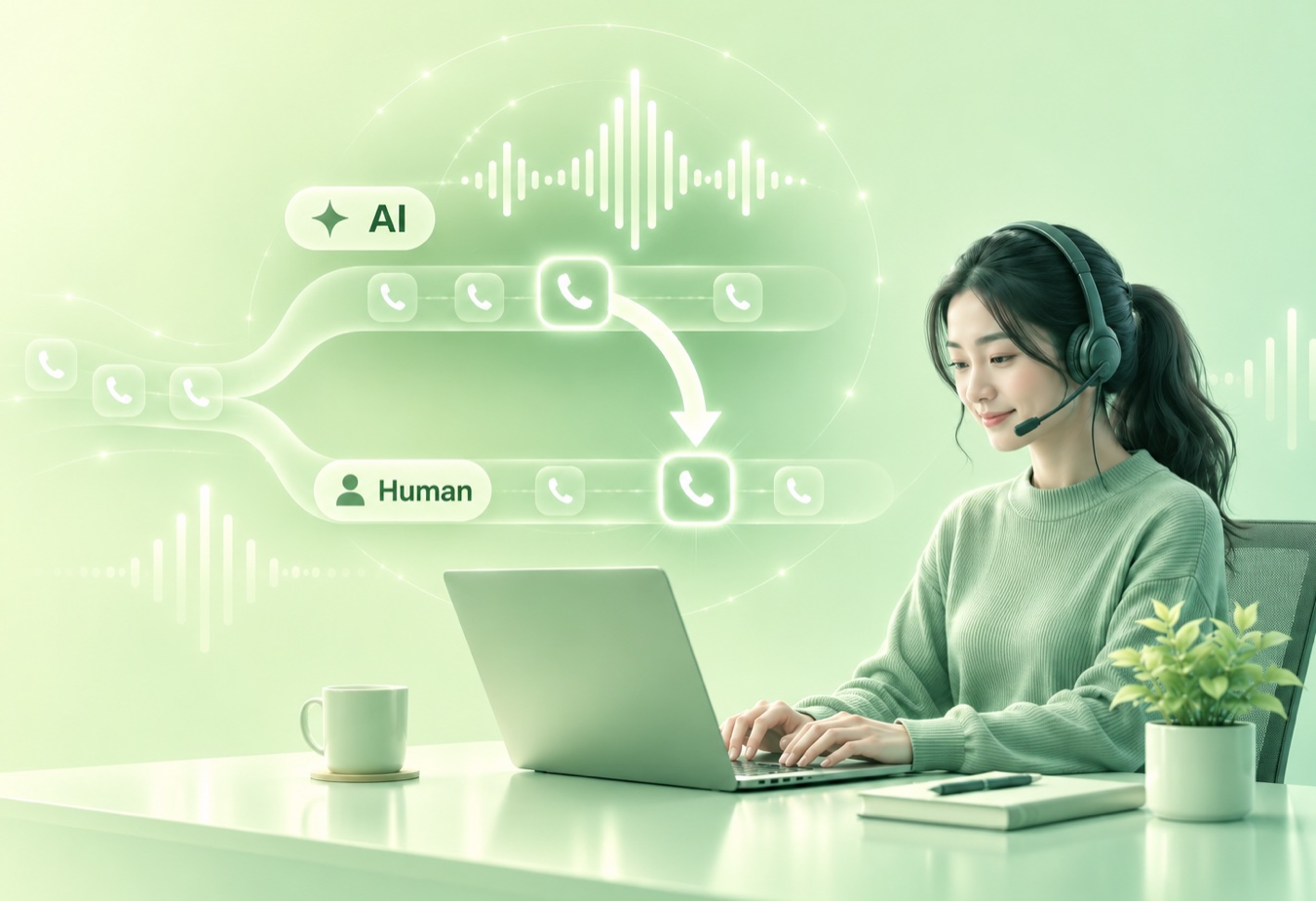
Support agent in a headset at a laptop while incoming calls split into AI and Human lanes with a handoff arrow
Which Calls to Give an AI Voice Assistant — and Which to Keep Human

Three lanes, a call matrix for four niches, 7 handoff triggers and what the agent receives on transfer.
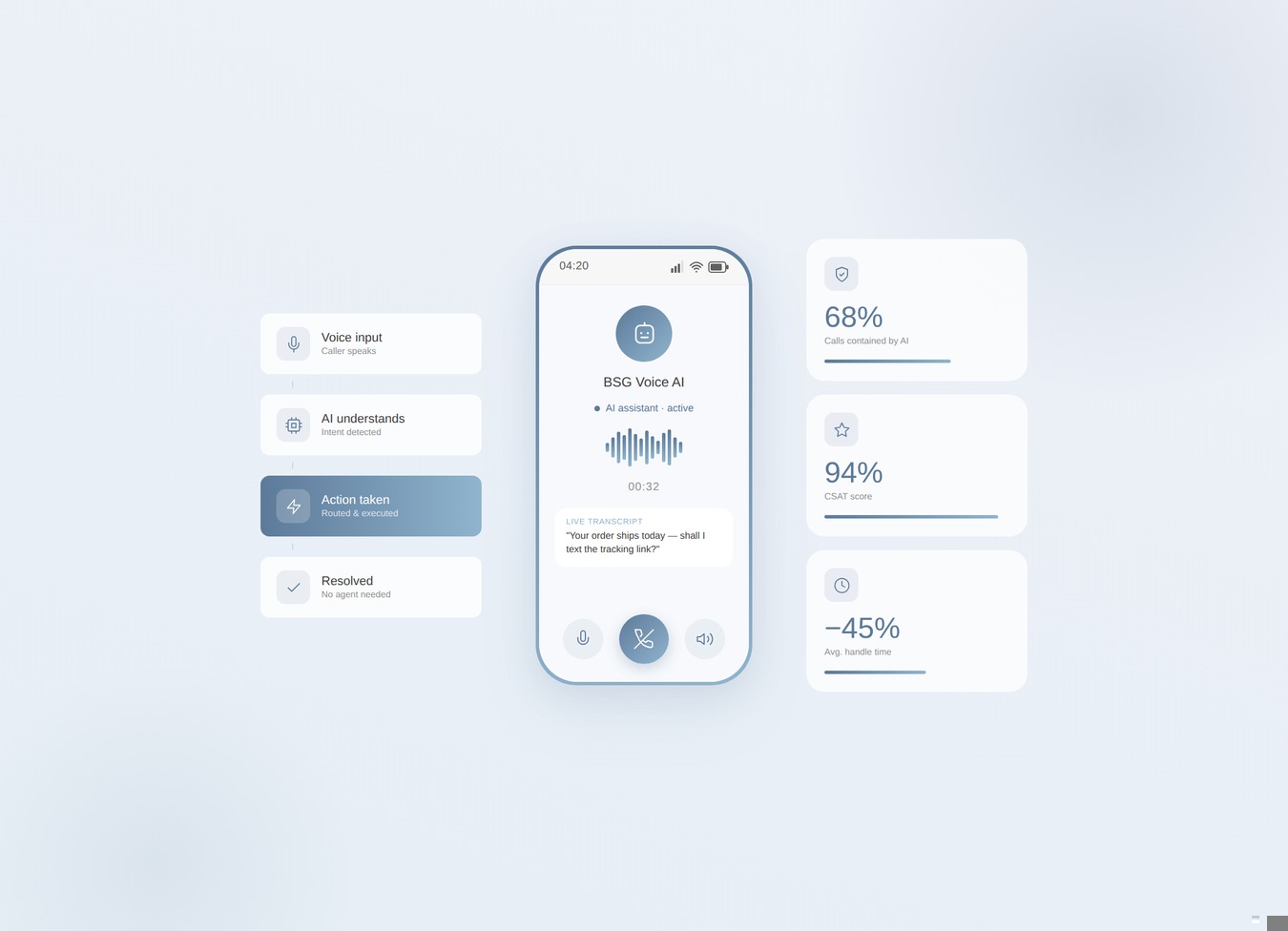
AI Voice Assistant for Sales & Support: 2026 Guide
AI Voice Assistant for Sales & Support: The Complete Guide [2026]

From STT to action: how an AI voice assistant handles sales and support calls end to end.
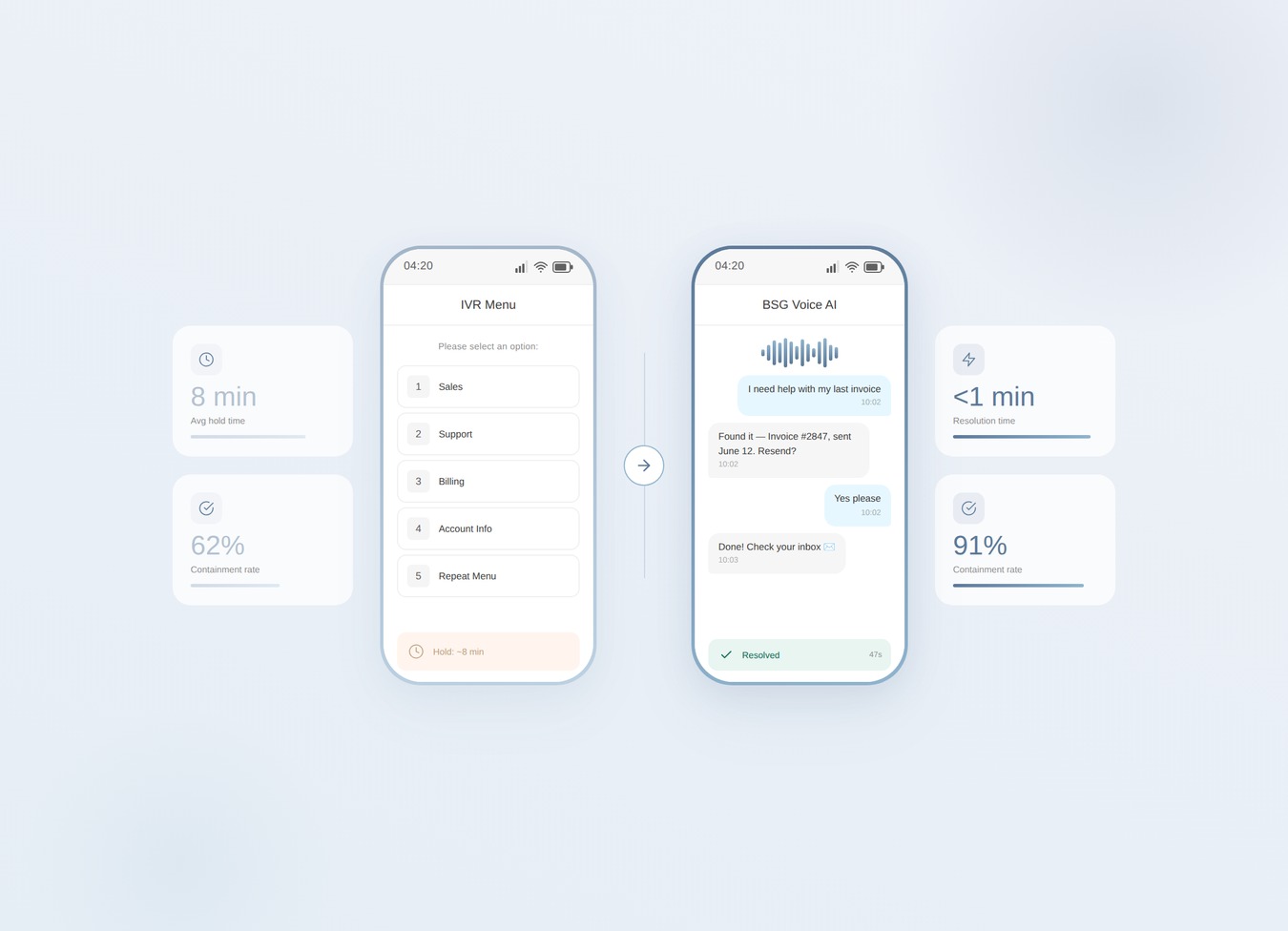
AI Voice Agent vs IVR: Why Conversational Voice Wins
AI Voice Agent vs IVR: Why Conversational Voice Wins in 2026

Seven in ten IVRs contain under 30% of calls. Conversational voice changes that math.