




Interactive Voice Response (IVR)
What is Interactive Voice Response (IVR)?
IVR (Interactive Voice Response) is an automated telephony system that greets callers, plays menu prompts, and routes or answers calls based on keypad (DTMF) or spoken input.
IVR (Interactive Voice Response) is the automated layer that answers a business phone line before a human does. A caller hears a recorded menu — “press 1 for sales, 2 for support” — and navigates with keypad tones (DTMF) or, in newer systems, spoken commands. Companies use IVR to route calls to the right team, answer simple questions, and keep agents off repetitive interactions. It works well when a caller's need maps cleanly onto a short menu: checking an account balance, reaching a department, confirming opening hours. It breaks down when the need is ambiguous or urgent, because the caller has to translate their problem into the company's menu structure. Deeply nested menus push callers to “press 0” for an agent, which drives low containment and high drop-off. For example, a bank might use IVR to authenticate a caller and capture their reason for calling, then hand the call to an agent with context — a partial-automation use that saves time without frustrating the customer.
This is explored further in BSG's Voice Bot vs. Chatbot: Selecting the Ideal Conversational AI for Your Business.
Related terms
Related BSG products


Зацікавлені у спеціальній пропозиції?
Готові розширювати можливості?
Давайте обговоримо.


Схожі терміни
Рішення BSG
Корисні Матеріали
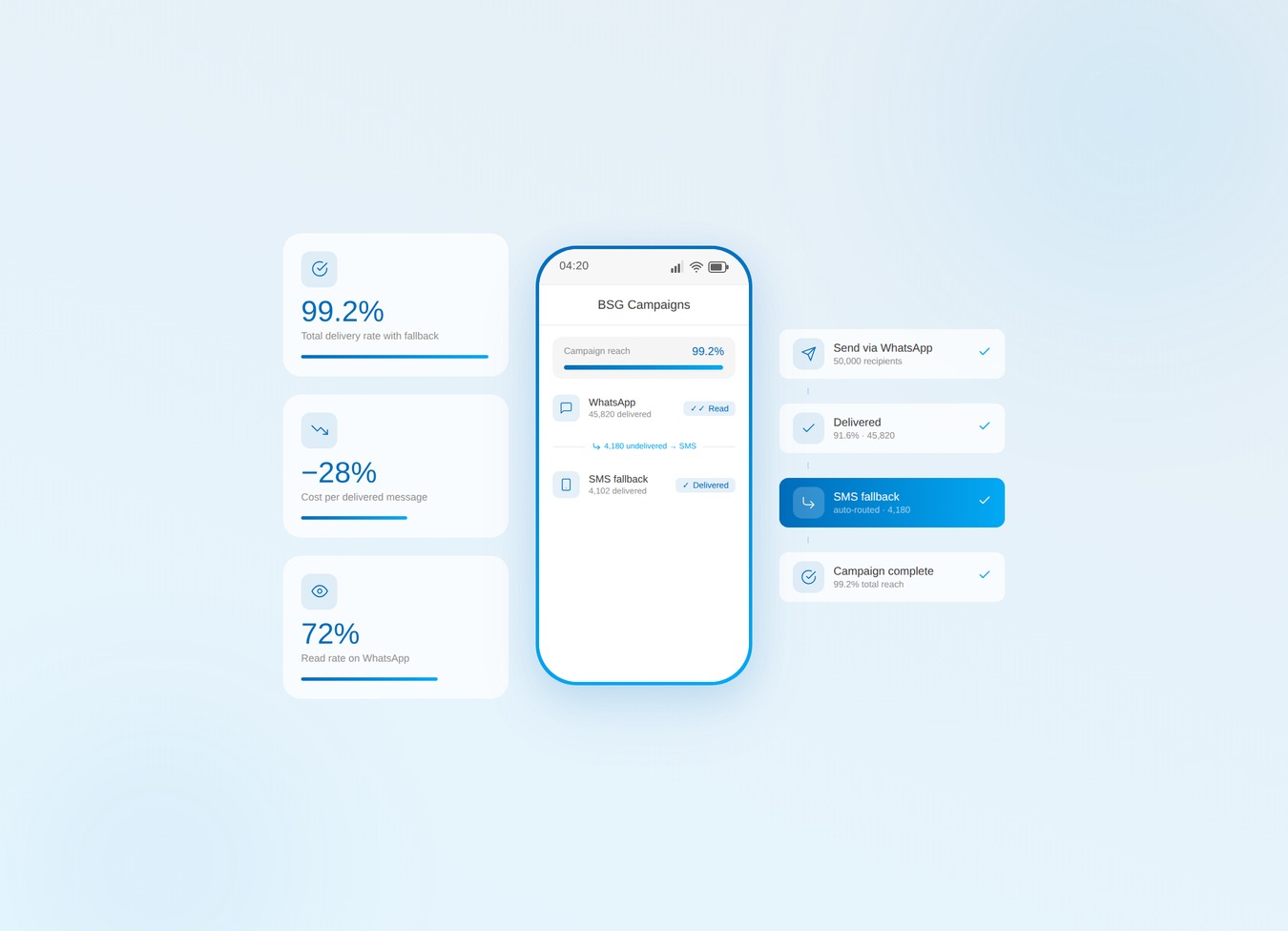
Bulk SMS alone leaks budget. Verify the list, then run WhatsApp-first with SMS fallback.
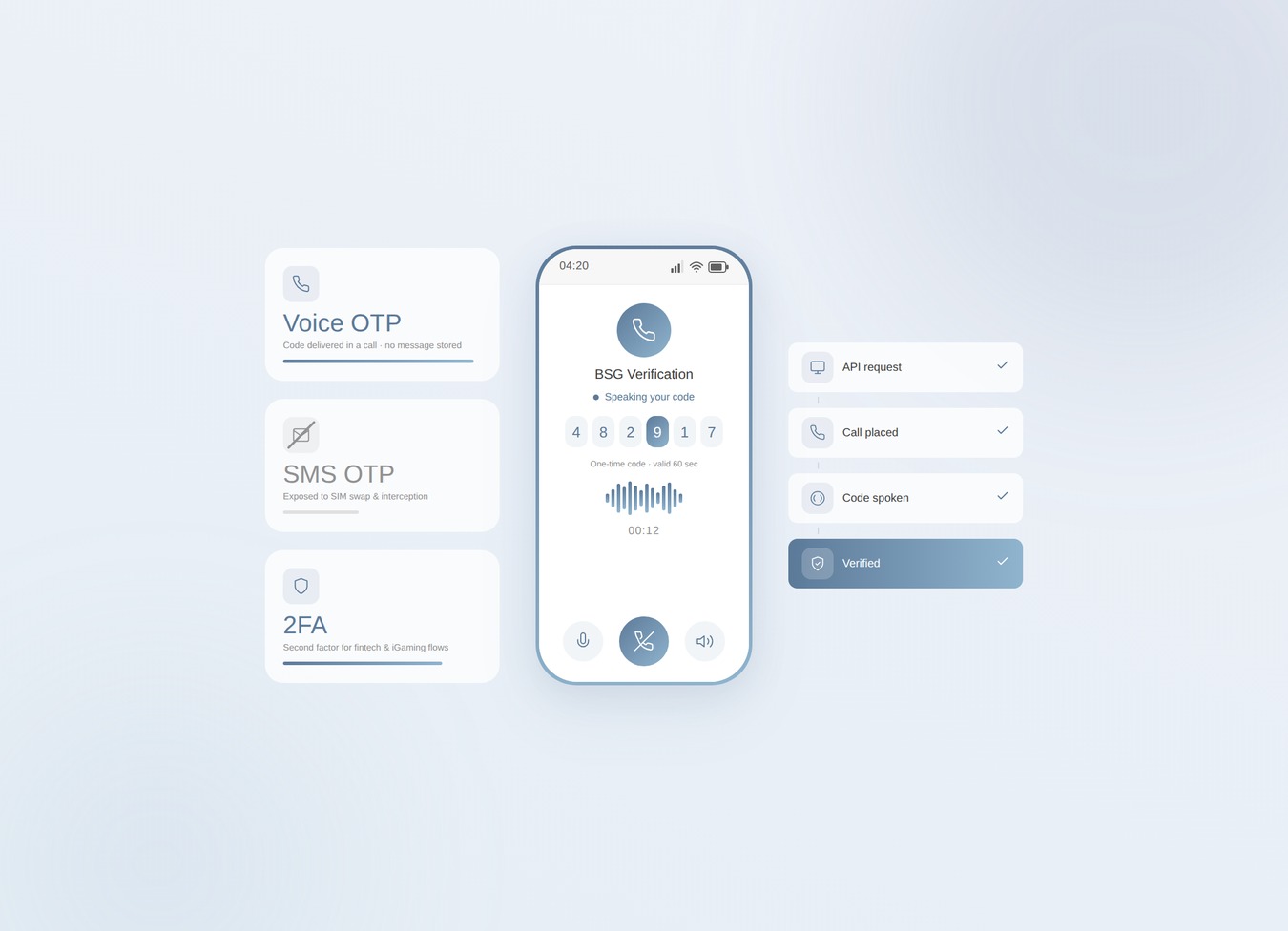
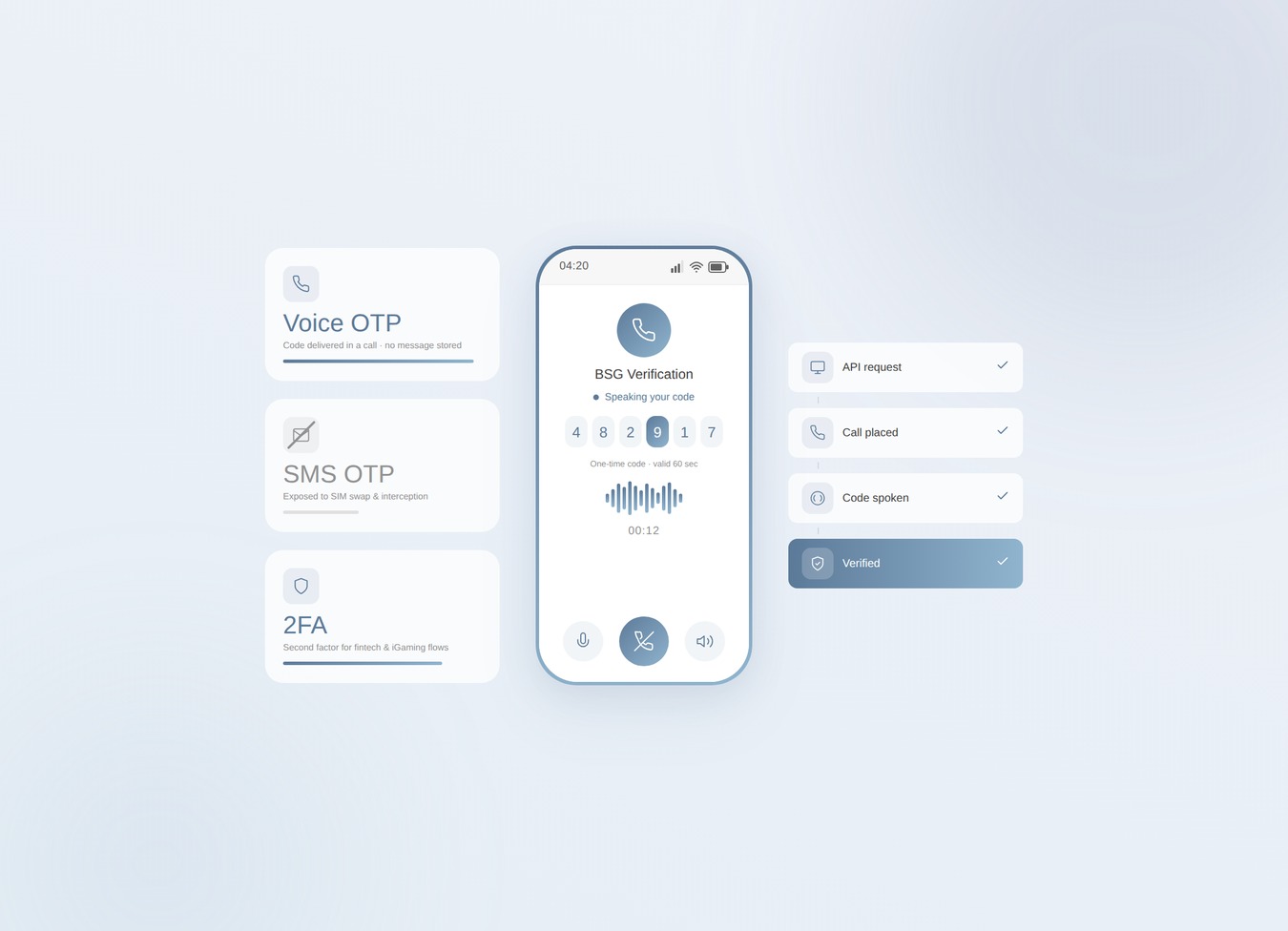
SIM swaps jumped 1,055% in a year. Voice OTP takes your riskiest codes off the SMS rail.
Telegram OTP is free — until it silently fails. Know the limits and when to add fallback.