




2G Mobile Connection
What IS 2G Mobile Connection?
Second-generation cellular network, often known as 2G or cellular networks, is a series of technical standards used for cellular networks. The earlier mobile wireless network technologies were retrospectively referred to as 1G with the introduction of 2G. Whereas 2G networks employ digital signaling to link cellular radio towers to the rest of the mobile network system, 1G networks use analog radio signals, while 2G networks use digital radio signals.
The first-generation (1G) mobile networks were superseded by the second-generation (2G) digital mobile networks. Text messages (SMS), phone conversations, and a small amount of mobile data services were all made possible by 2G networks. Beginning in the 1990s, 2G networks were implemented using various global digital technologies.
For the practical side of this, check out BSG's How Does the SMS API Work and What Are the Benefits?.
Is it still possible to use a 2G cellular phone?
Although new devices cannot be activated, 2G cellular devices may still connect to the network; however, since carriers are re-allocating the spectrum to allow new networks to be established, these devices may not operate as effectively as they did previously.
Why Is 2g Used?
2G provided cellular services, such as Short Message Service (SMS), multimedia messaging, and encrypted voice communication, to meet the growing demand for mobile phones.
Is 2G the same as LTE?
2G and LTE are distinct from one another. LTE stands for Long Term Evolution, a service which follows the 2G network and is notably faster than its predecessor. 2G was established in the early 1990s as the second generation of mobile networks, only offering support for text and limited audio communications. This was done through a variety of digital technologies such as GSM, D-AMPS and IS-95.
Which Global Digital Technologies were employed in the implementation of 2G?
GSM & D-AMPS
The Global System for Mobile Communications is the most widely utilized technology standard for second-generation mobile networks (GSM). Interim Standard 95 (IS-95) and Digital Advanced Mobile Phone System (D-AMPS) are the other technologies employed in the establishment of 2G mobile networks.
TDMA & CDMA
The second generation of mobile networks employed TDMA (Time Division Multiple Access) and CDMA (Code Division Multiple Access) access technologies. A cellular handset can wirelessly connect to the mobile network via radio waves, facilitated by the access technologies that form part of the mobile radio infrastructure. Being circuit-switched systems, the initial GSM and D-AMPS networks were not optimized to deliver efficient data services.
GPRS
In order to provide efficient mobile data services, GSM networks integrated an enhancement known as General Packet Radio Service (GPRS). By introducing additional network nodes into the GSM architecture, GPRS enabled the eventual use of 3G data services with the same network nodes. As such, GPRS is often classified as a second-generation upgrade, or 2.5G. Within the mobile core network, the Serving GPRS Support Node (SGSN) and Gateway GPRS Support Node (GGSN) are both components of GPRS.
EDGE
The Enhanced Data for Global Evolution (EDGE) technology was subsequently introduced after GPRS and before the third-generation UMTS network. EDGE was designed to significantly enhance peak download rates from 171.2 kbps (GPRS) to 384 kbps. It is sometimes referred to as a 2.75G bridge between GPRS and 3G UMTS.
IS-95
IS-95, more commonly known as cdmaOne in the marketplace, is another prominent 2G technology. The first CDMA network, IS-95, was designed to manage mobile data. There are two different versions of IS-95, A and B.
IS-95 A offers peak download data rates of up to 14.4 kbps, while IS-95 B can boost speeds up to 115 kbps. This technology also served as the precursor to CDMA2000, making it a significant development in 3G cellular services.
Зацікавлені у спеціальній пропозиції?
Готові розширювати можливості?
Давайте обговоримо.


Схожі терміни
Рішення BSG
Корисні Матеріали
![WhatsApp Business API: повний гайд — налаштування, ціни, сценарії [2026]](/assets/img/blog/whatsapp-business-api-setup-pricing-use-cases-guide_avatar.jpg)
WhatsApp Business API for 2026 — setup steps, the new per-message pricing model, and proven use cases by industry.
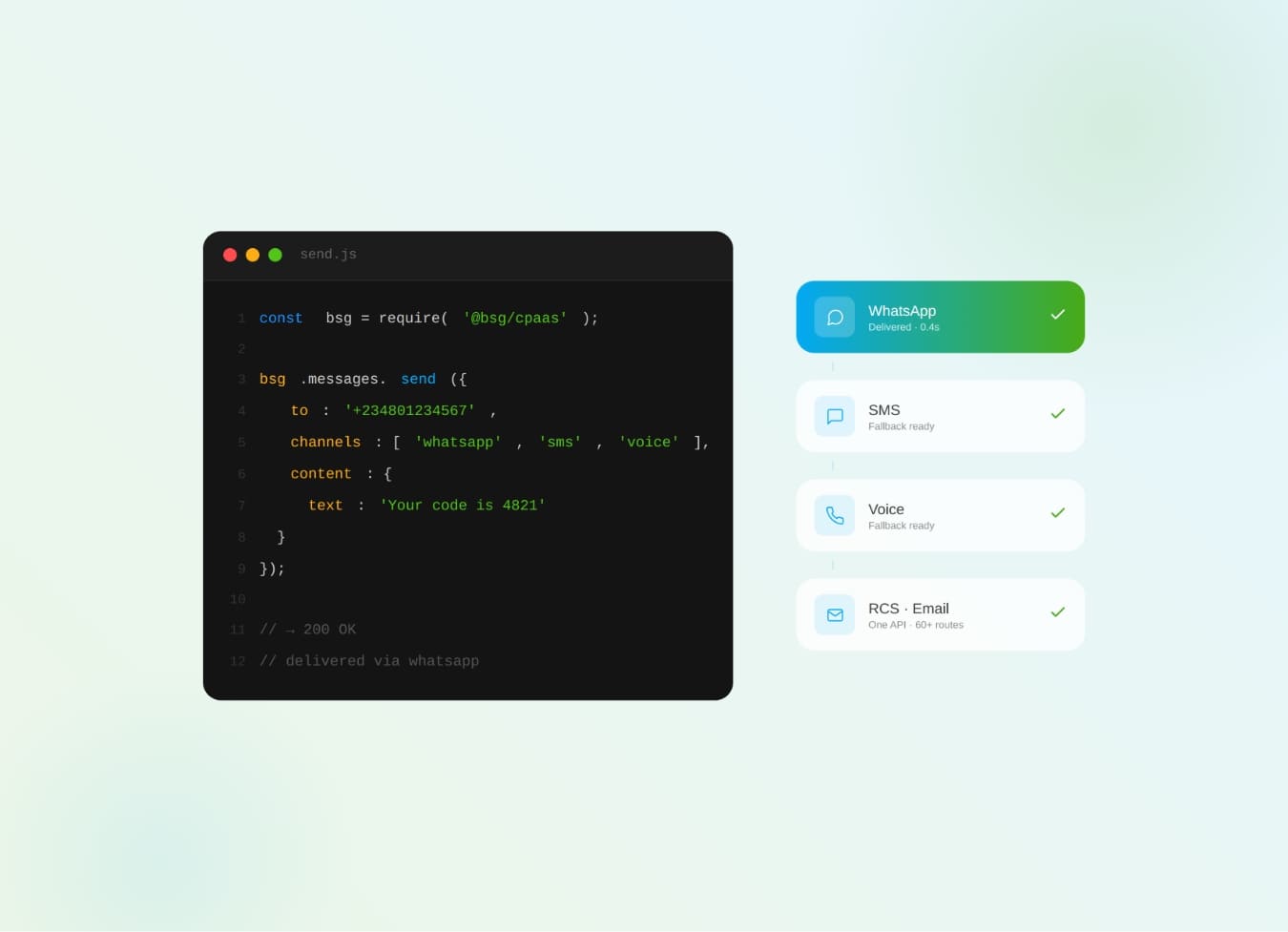
What is CPaaS? The cloud API layer that adds SMS, WhatsApp, voice & OTP to your apps — how it works and why it beats a multi-vendor stack.
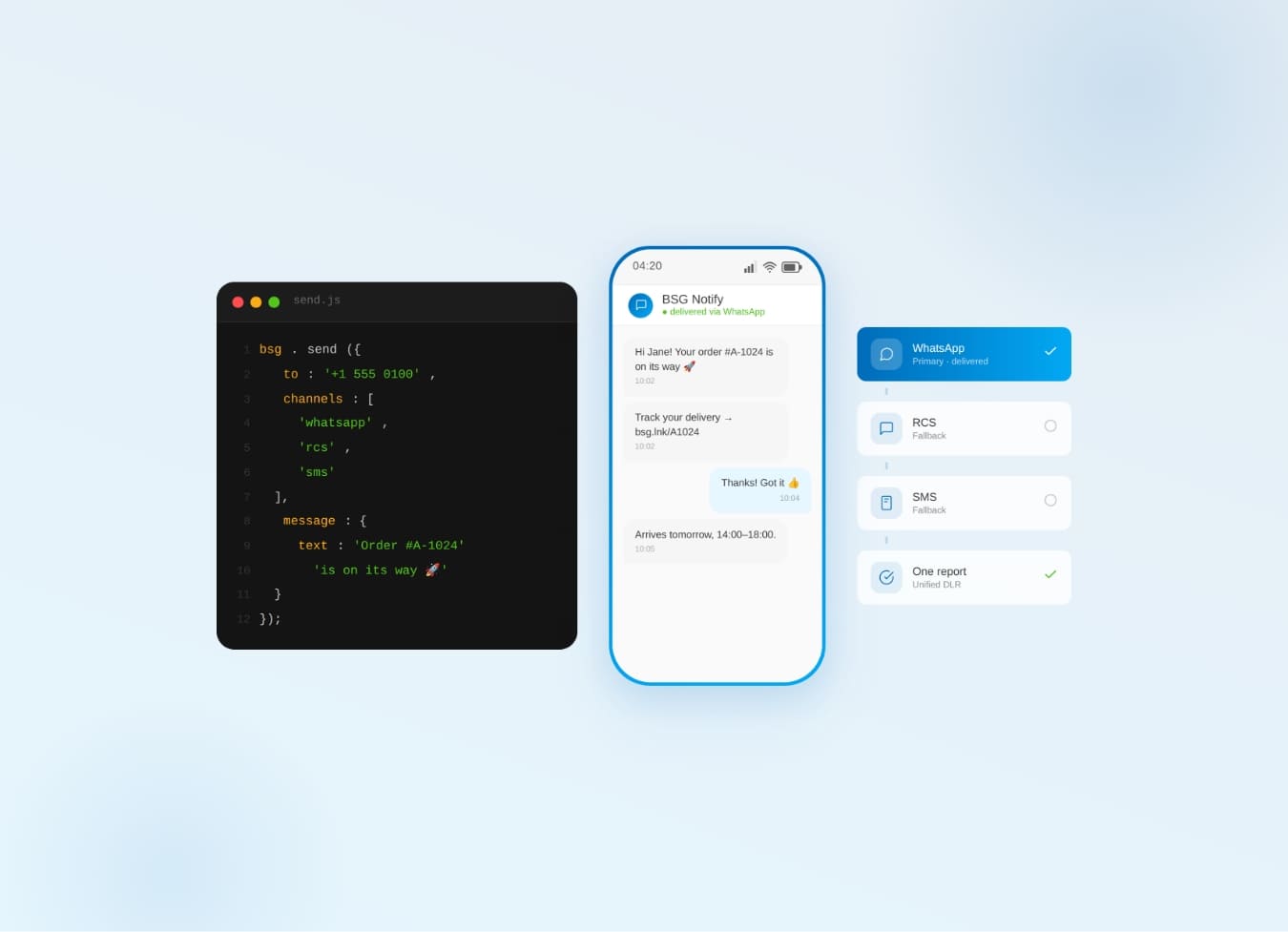
Why one communication API for SMS, WhatsApp, Viber & RCS beats five separate integrations — cascade fallback, unified reports.