




Message Cascade Fallback
What is message cascade fallback?
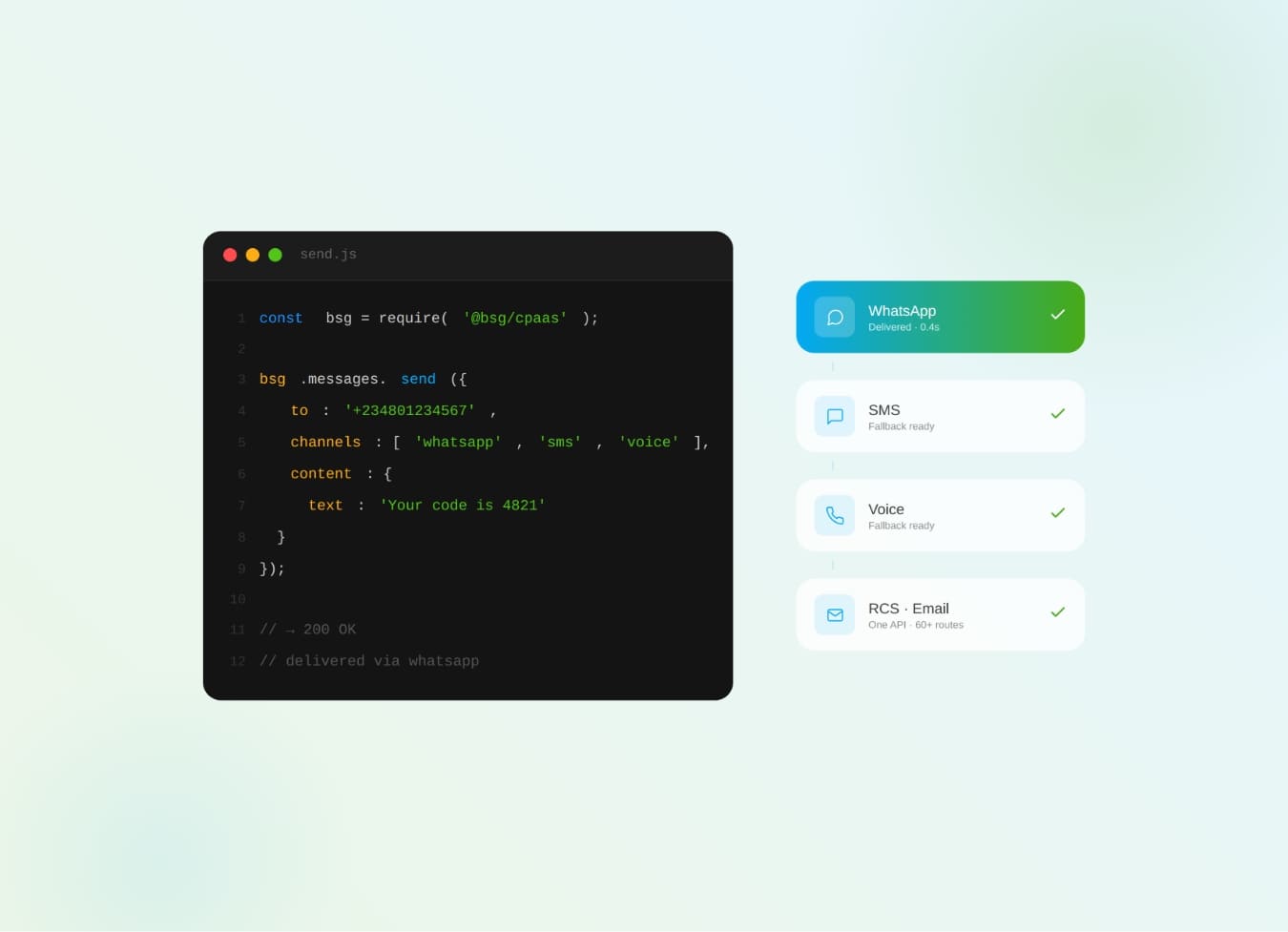
Message cascade fallback is an automated messaging strategy that routes a message through a prioritized chain of channels — typically WhatsApp, then RCS, then SMS — advancing to the next channel only when the previous one fails to deliver within a defined time window.
How does message cascade fallback work?
Message cascade fallback is a delivery optimization pattern used in A2P messaging. Instead of relying on a single channel, the system attempts delivery via the most cost-effective or feature-rich channel first — commonly WhatsApp Business API — and only falls back to the next channel in the chain (such as RCS or SMS) if the first attempt fails or times out. Each step in the cascade waits for a delivery confirmation (DLR) within a configurable time window, typically 15-60 seconds. If confirmation arrives, the cascade stops. If not, the next channel fires automatically.
Why does message cascade fallback matter?
This approach solves two problems simultaneously: it keeps costs down by prioritizing cheaper OTT channels over SMS, and it maximizes delivery rates by ensuring every message has a fallback path to SMS, which has near-universal reach.
When is message cascade fallback used?
Cascade fallback is especially valuable for transactional messages like OTP codes, payment confirmations, and shipping notifications — scenarios where both speed and guaranteed delivery matter — the exact use case behind BSG's 2FA product. Most CPaaS providers, including BSG, implement cascade logic at the API level, so a single API call triggers the entire sequence without requiring client-side retry logic.


Зацікавлені у спеціальній пропозиції?
Готові розширювати можливості?
Давайте обговоримо.


Схожі терміни
Рішення BSG
Корисні Матеріали
![WhatsApp Business API: повний гайд — налаштування, ціни, сценарії [2026]](/assets/img/blog/whatsapp-business-api-setup-pricing-use-cases-guide_avatar.jpg)
WhatsApp Business API for 2026 — setup steps, the new per-message pricing model, and proven use cases by industry.
What is CPaaS? The cloud API layer that adds SMS, WhatsApp, voice & OTP to your apps — how it works and why it beats a multi-vendor stack.
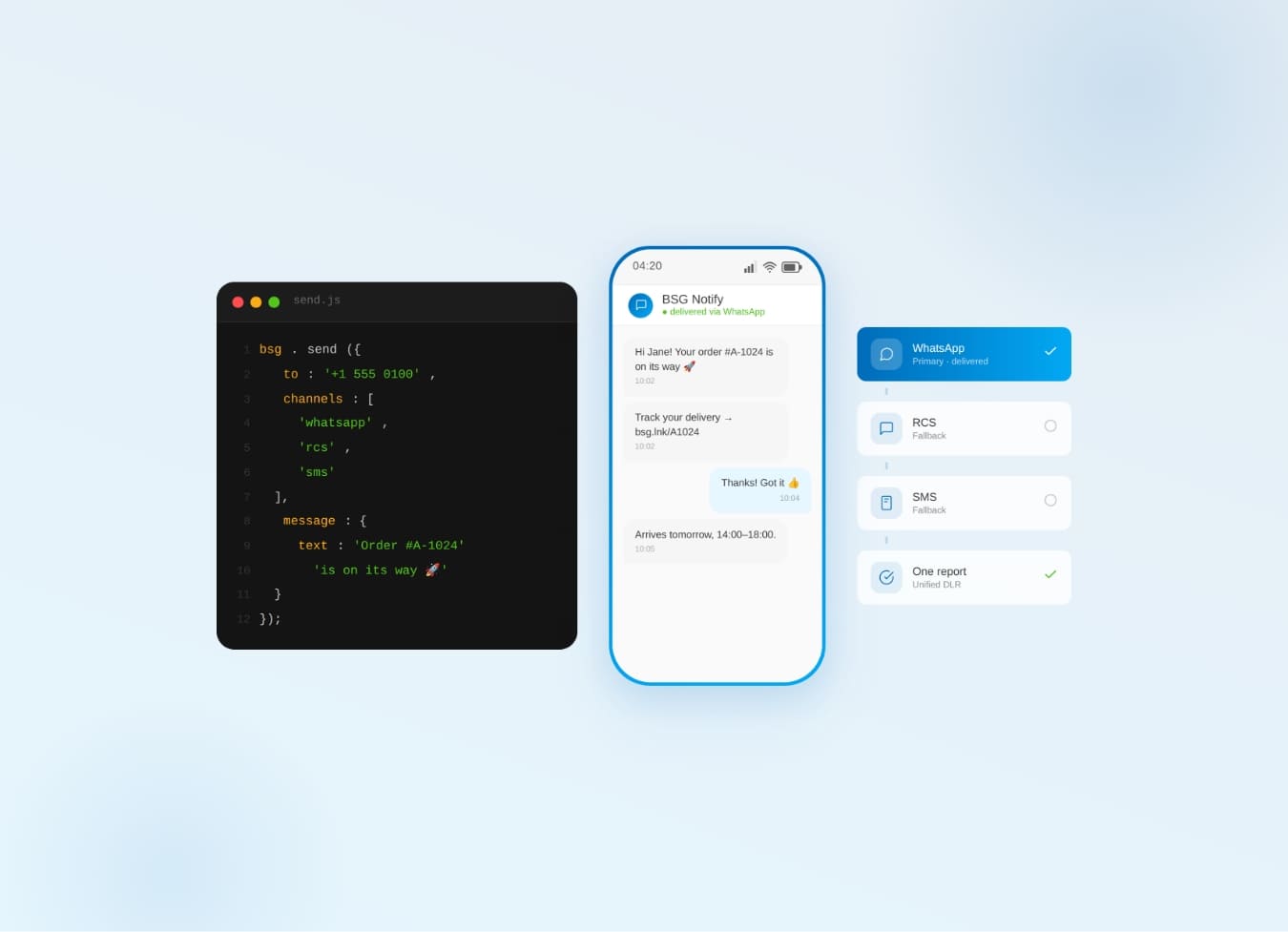
Why one communication API for SMS, WhatsApp, Viber & RCS beats five separate integrations — cascade fallback, unified reports.