




MO (Mobile Originated) message
What is MO (Mobile Originated) message?
MO (Mobile Originated) message is a type of message sent from a mobile device to a network. It typically includes a request for a service such as sending a text message or making a phone call. MO messages are sent from the mobile device to the mobile network and are typically used to initiate a communication session.
MO messages are used to initiate a communication session with a network provider, such as when a user sends a text message or makes a phone call. MO messages are typically sent using the Short Message Service (SMS) protocol, which allows users to send and receive text messages over the mobile network. Additionally, MO messages can be used to activate services or applications, such as an alarm or a reminder. MO messages are also used to initiate data services, such as web browsing, downloading music or videos, or accessing web-based applications.
MO traffic is the mirror image of A2P messaging, where the business sends first and the person's device only replies. For more on this, see BSG's How Does the SMS API Work and What Are the Benefits?.
How does it work?
When a mobile device sends an MO message, the message is first sent to the mobile network. The network then routes the message to the service that the user requested, such as a text message, phone call, or application. Depending on the service, the message may then be routed to a third-party provider or a server that processes the request. Once the request is processed, the response is sent back to the mobile device.


Зацікавлені у спеціальній пропозиції?
Готові розширювати можливості?
Давайте обговоримо.


Схожі терміни
Рішення BSG
Корисні Матеріали
![WhatsApp Business API: повний гайд — налаштування, ціни, сценарії [2026]](/assets/img/blog/whatsapp-business-api-setup-pricing-use-cases-guide_avatar.jpg)
WhatsApp Business API for 2026 — setup steps, the new per-message pricing model, and proven use cases by industry.
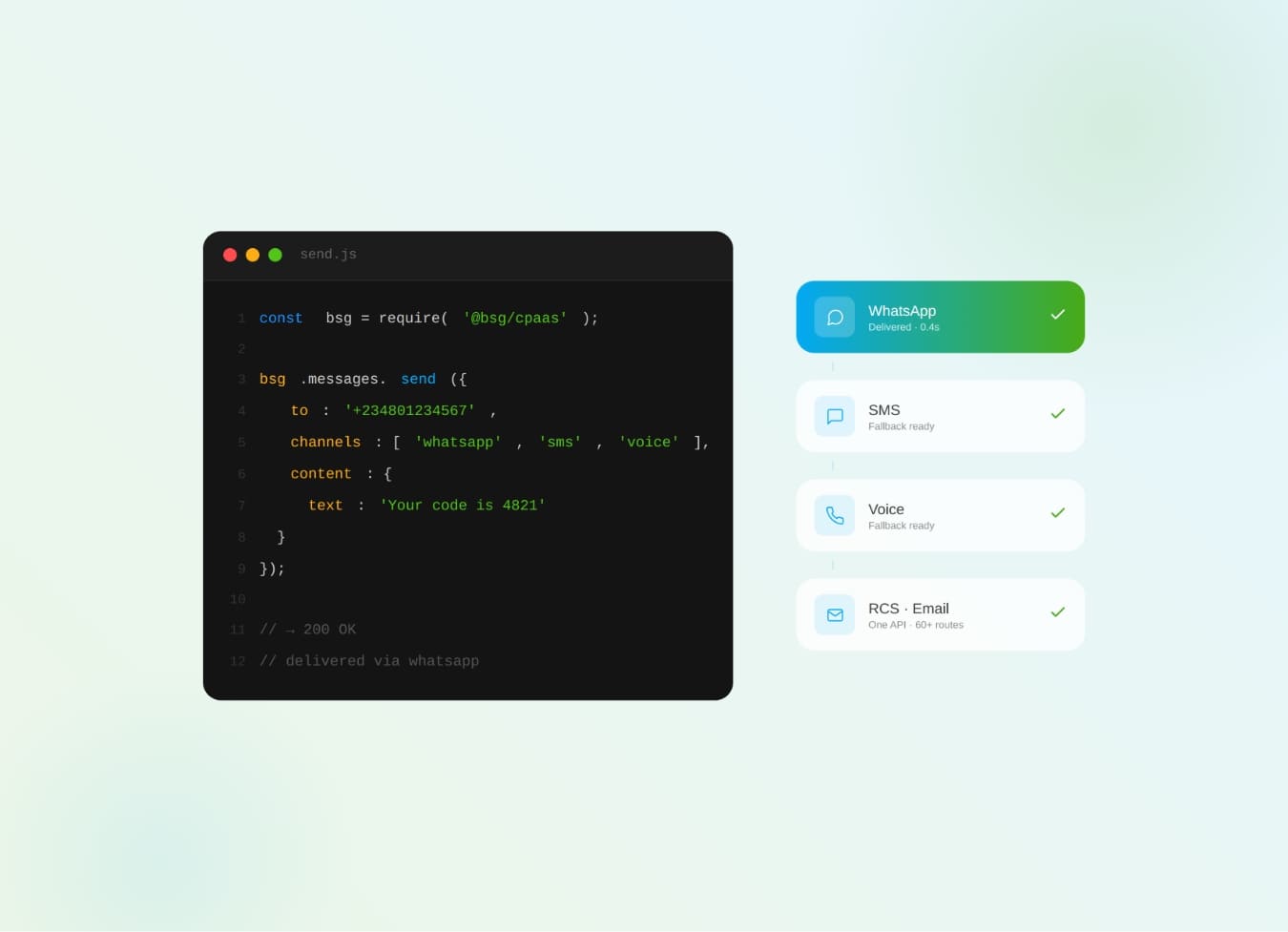
What is CPaaS? The cloud API layer that adds SMS, WhatsApp, voice & OTP to your apps — how it works and why it beats a multi-vendor stack.
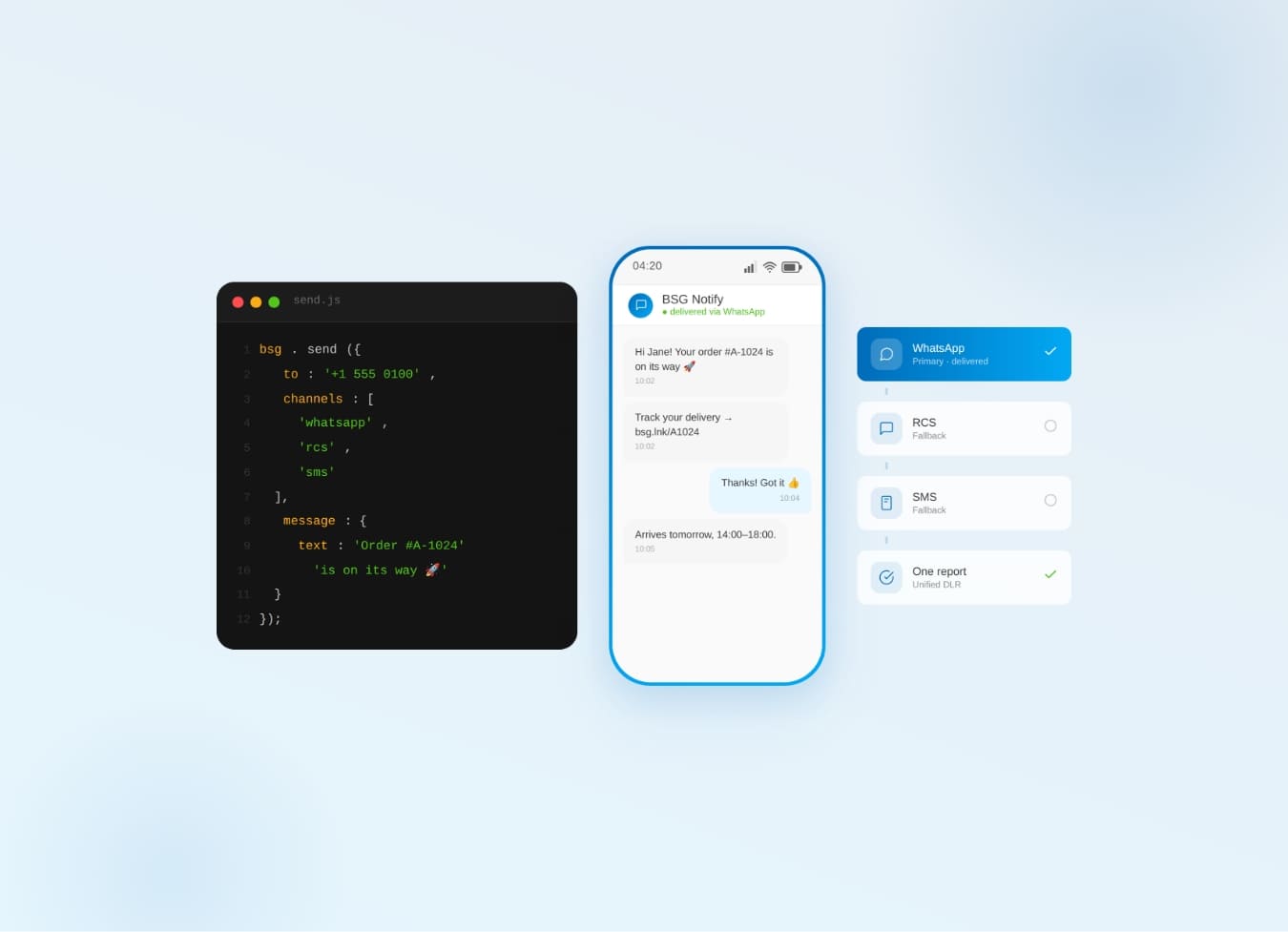
Why one communication API for SMS, WhatsApp, Viber & RCS beats five separate integrations — cascade fallback, unified reports.