




Artificially Inflated Traffic (AIT)
What is artificially inflated traffic (AIT)?
Artificially inflated traffic (AIT) is a type of SMS fraud in which bots generate fake message requests, usually one-time passwords, to numbers that fraudsters control or profit from.
How does AIT affect businesses?
Artificially inflated traffic, also known as SMS pumping, targets forms that send messages automatically: sign-up, login and password reset. Bots submit large volumes of phone numbers, the business sends a code to each one, and the fraudsters earn a share of the termination fees the business pays.
The damage is financial and operational. Messaging bills spike without any growth in real users, verification budgets drain, and analytics fill with fake sessions. Because every request looks like a legitimate OTP, AIT is hard to spot from the application side alone.
Businesses limit exposure by rate-limiting verification requests per number, IP address and device, blocking destination countries they do not serve, validating numbers before sending and monitoring the ratio between codes sent and codes entered.
Example
An app sees thousands of OTP requests overnight to numbers in a country where it has no customers, while almost none of the codes are entered. That combination is a typical AIT signal.


Зацікавлені у спеціальній пропозиції?
Готові розширювати можливості?
Давайте обговоримо.


Схожі терміни
Рішення BSG
Корисні Матеріали
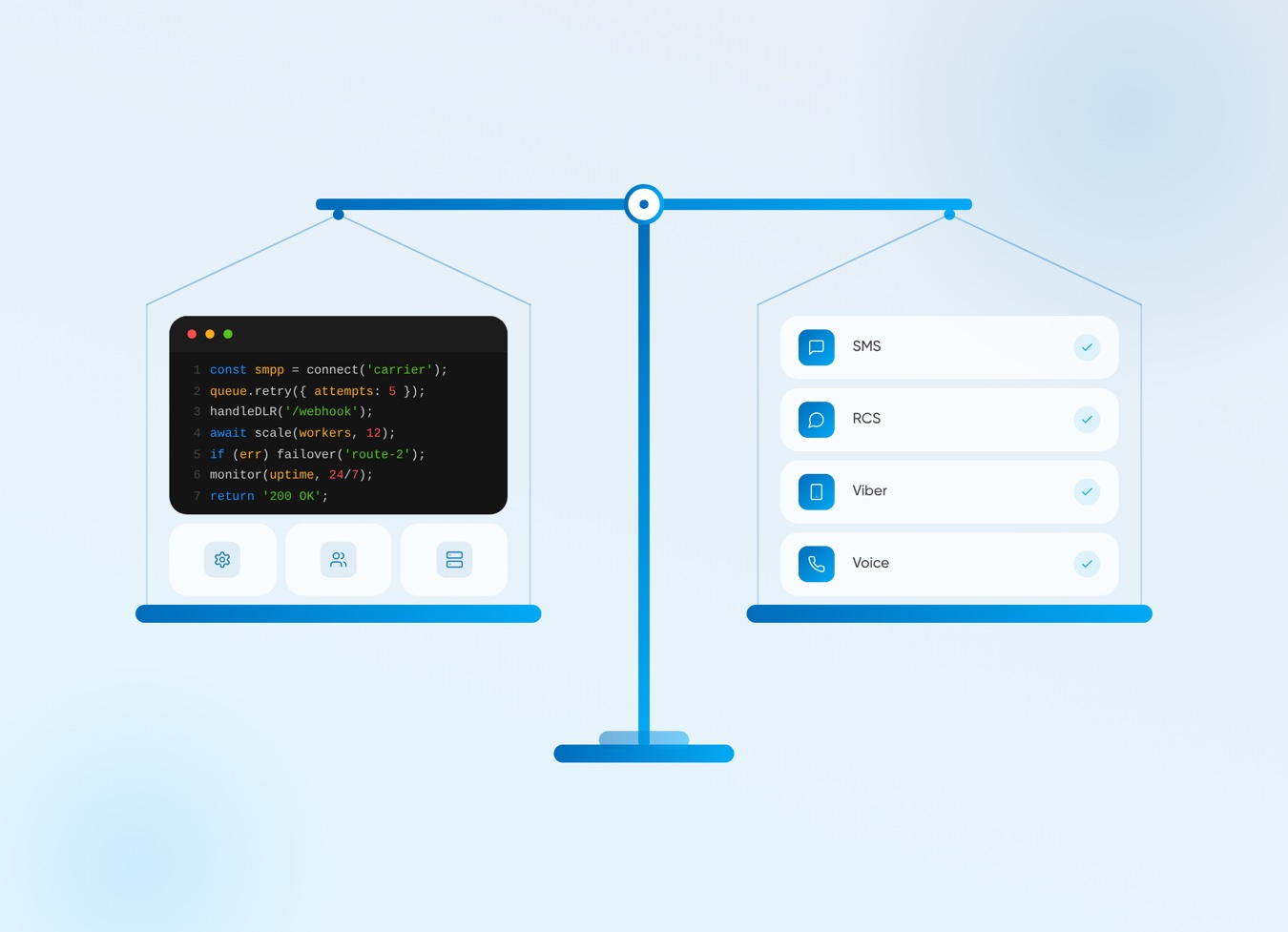
Build messaging in-house or buy a CPaaS? Time, cost, support, compliance and scale compared for EU and UK teams.
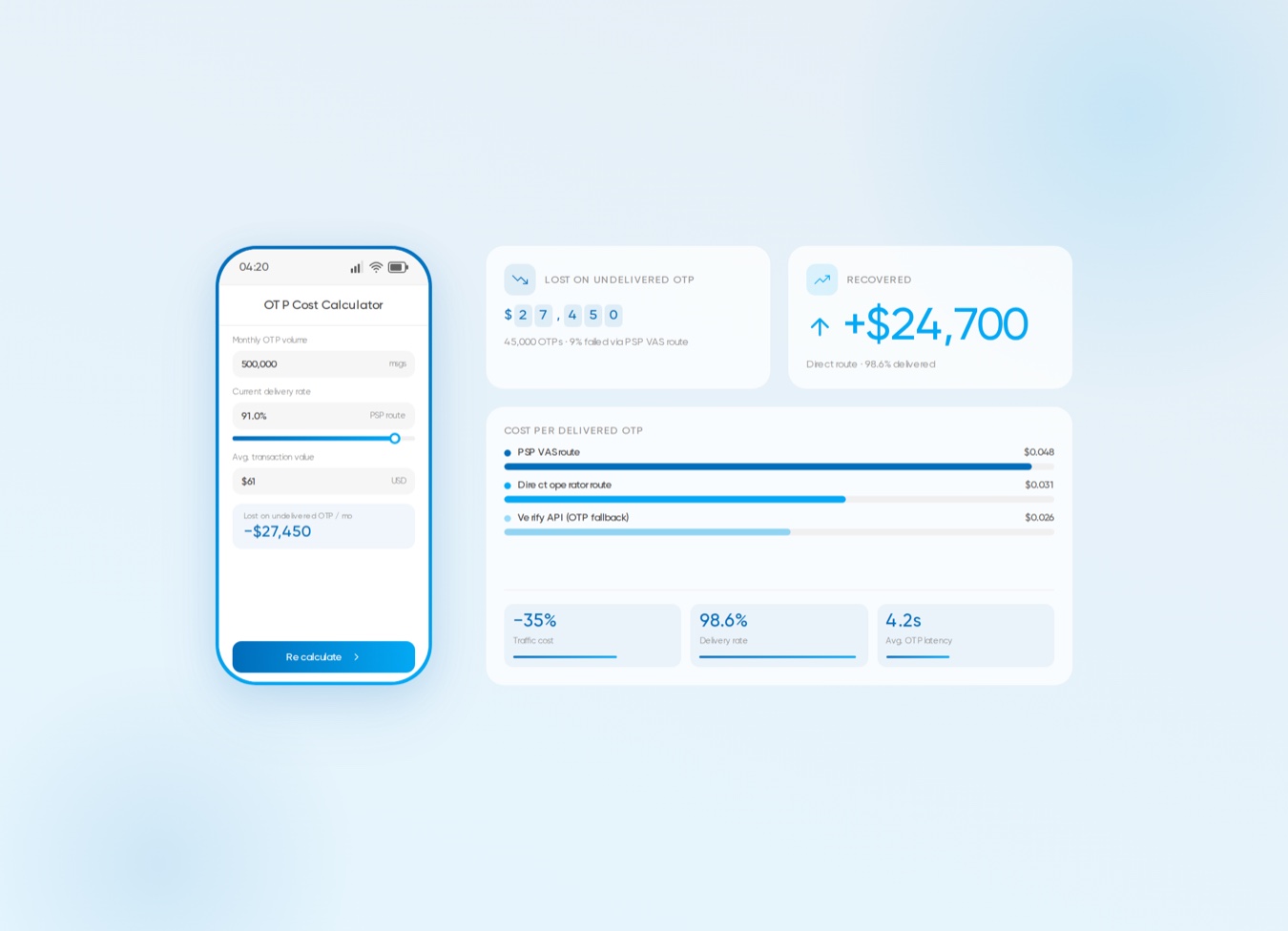
You pay per SMS sent, but only delivered OTPs work. A worked example shows why the cheapest vendor costs more.
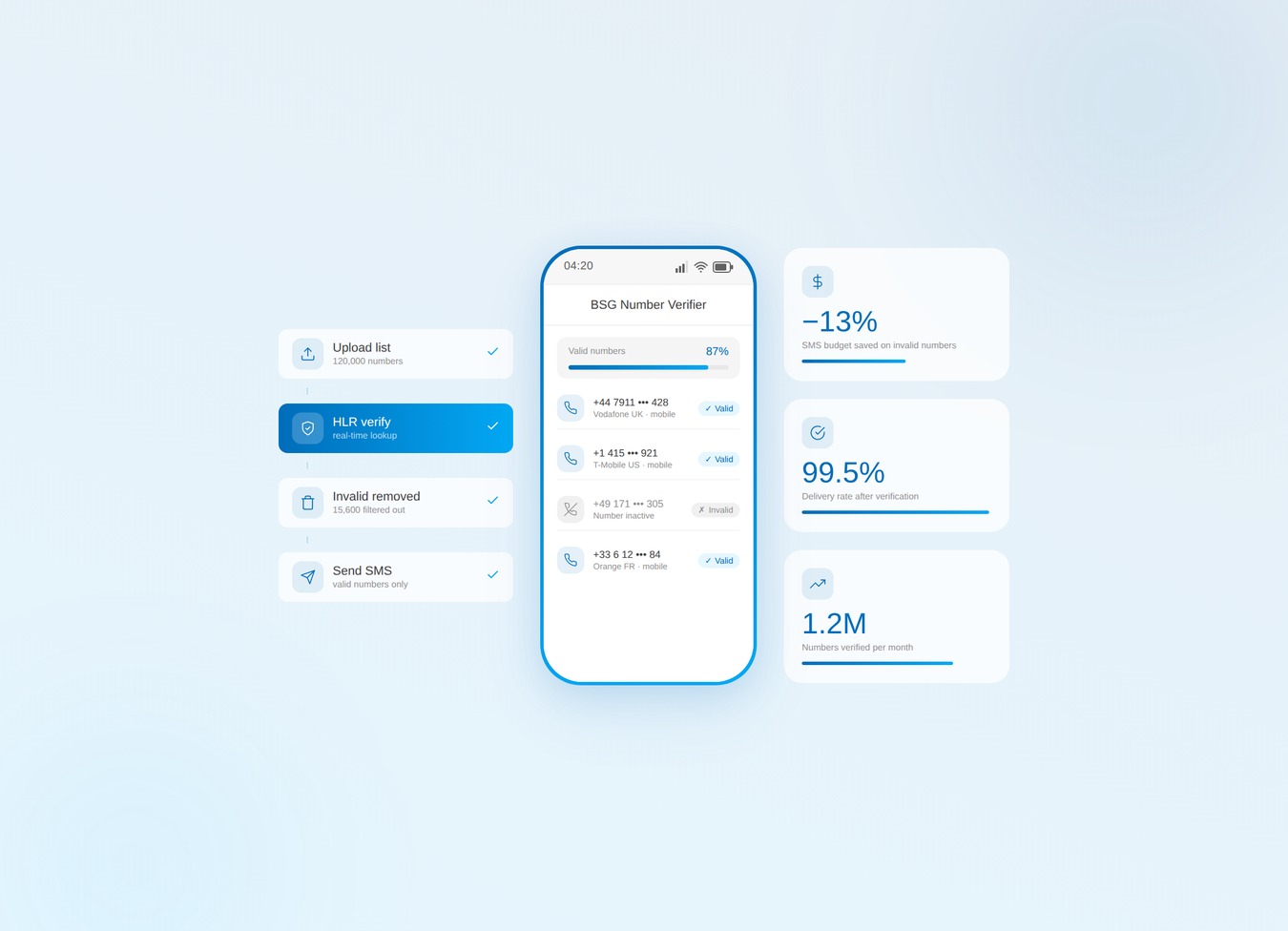
Up to 10% of your SMS budget dies on dead numbers. Verify the list first, then send.