




Sender ID
What is Sender ID?
Sender ID is a way to identify the source of a message or transaction. It is usually composed of a unique code or name that is used to identify the sender. This code is usually assigned to a person, organization, or device to ensure that the message or transaction is coming from an authorized source.
Sender ID is used to authenticate the source of a message or transaction to verify that it is coming from an authorized sender. It is important to ensure that the sender is trustworthy and not a malicious user or bot.
Additionally, sender ID can help prevent spam and phishing attacks by verifying that a message or transaction is coming from a legitimate source. It can also be used to protect the privacy of the sender, as the sender ID will not reveal any personal information.
On SMS specifically, the Sender ID is what a recipient sees as the "from" name instead of a phone number. This is explored further in BSG's 6 Key Insights and Trends Shaping SMS Marketing.
How does it work?
Sender ID works by assigning a unique code or name to the sender. When a message or transaction is received, the code is checked against a database to ensure that it is coming from an authorized sender. If the code matches, then the message or transaction is accepted as valid. If the code does not match, then the message or transaction is rejected as invalid.


Зацікавлені у спеціальній пропозиції?
Готові розширювати можливості?
Давайте обговоримо.


Схожі терміни
Рішення BSG
Корисні Матеріали
![WhatsApp Business API: повний гайд — налаштування, ціни, сценарії [2026]](/assets/img/blog/whatsapp-business-api-setup-pricing-use-cases-guide_avatar.jpg)
WhatsApp Business API for 2026 — setup steps, the new per-message pricing model, and proven use cases by industry.
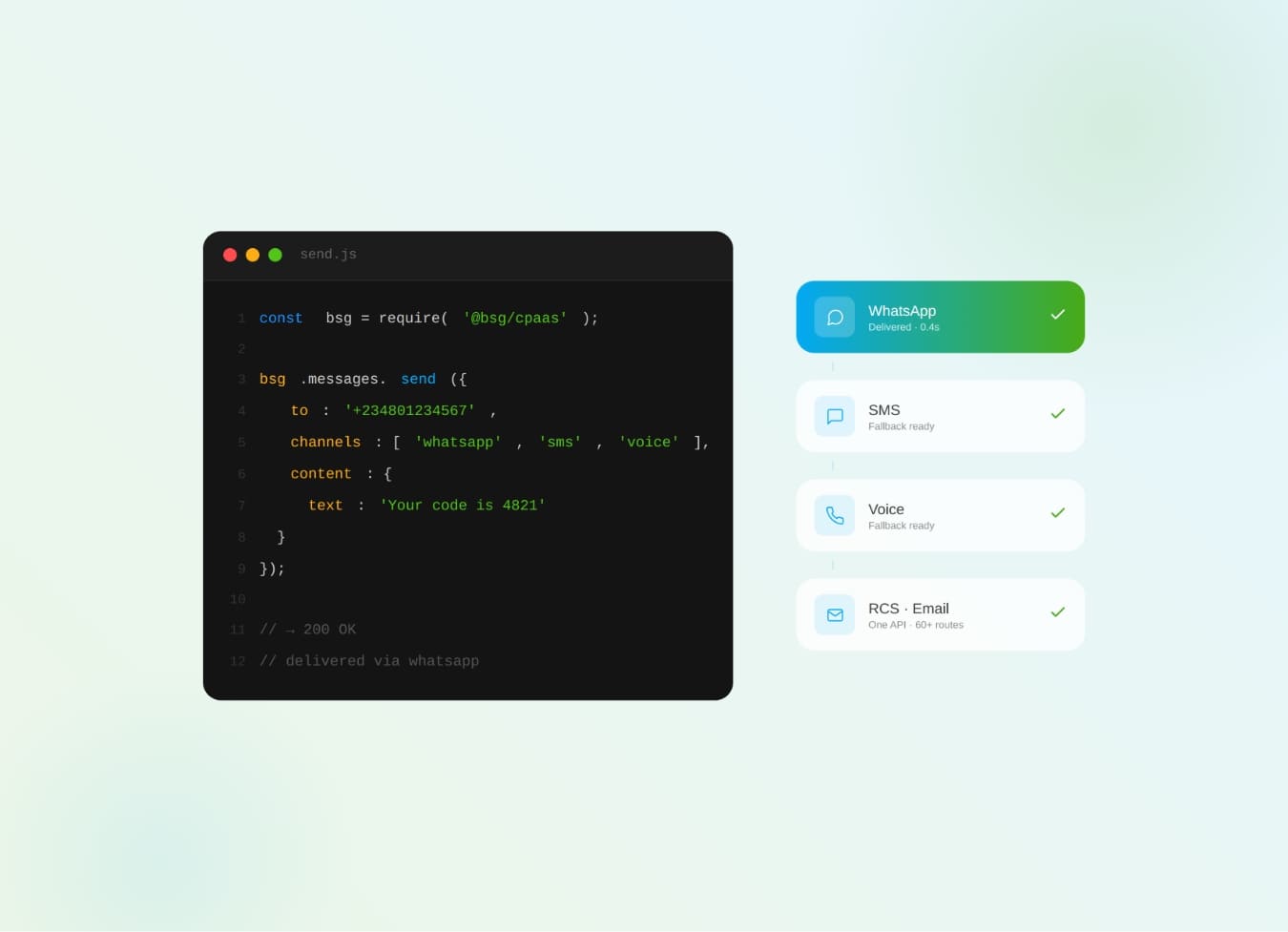
What is CPaaS? The cloud API layer that adds SMS, WhatsApp, voice & OTP to your apps — how it works and why it beats a multi-vendor stack.
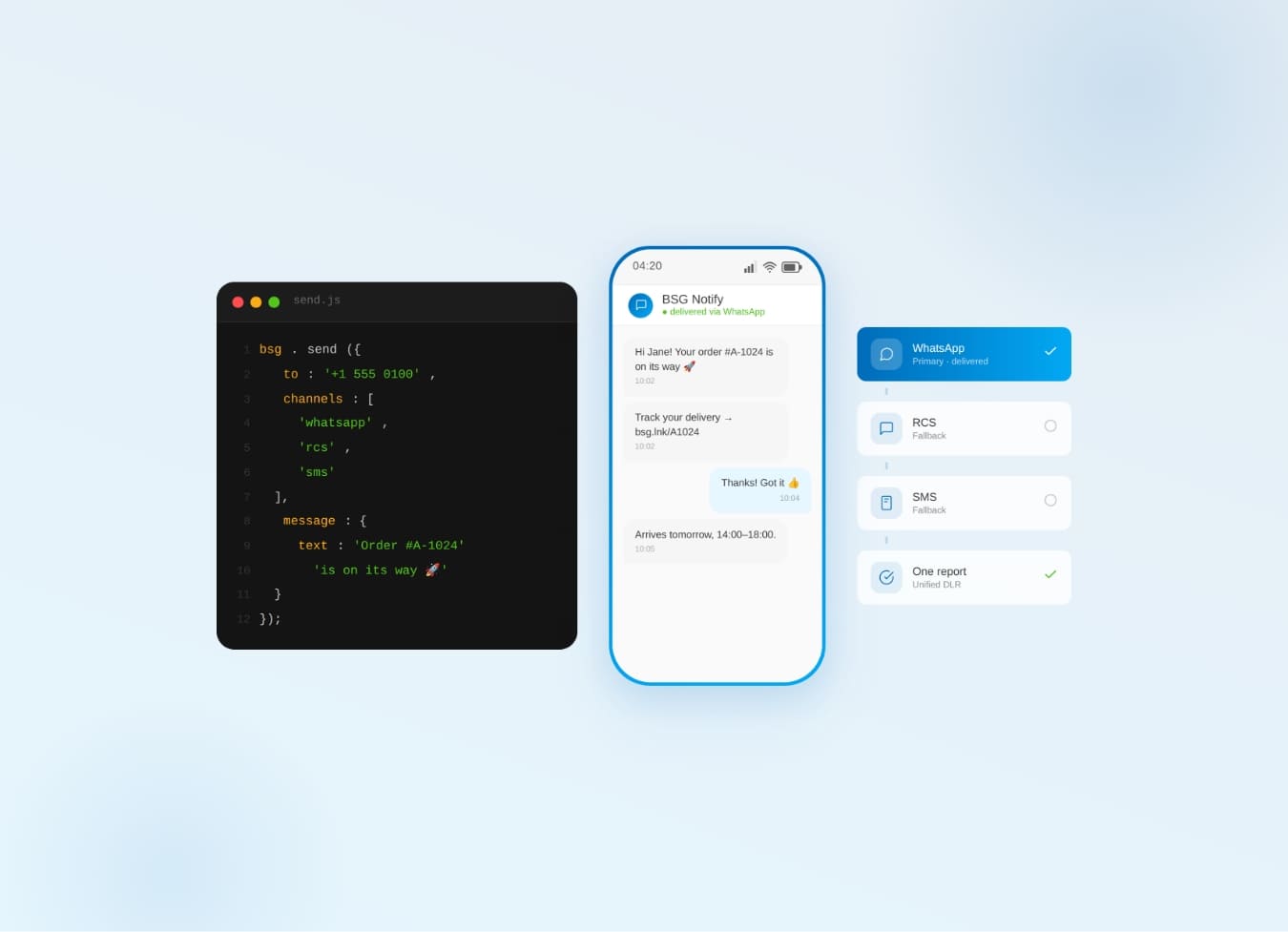
Why one communication API for SMS, WhatsApp, Viber & RCS beats five separate integrations — cascade fallback, unified reports.