




Sender ID Registration
What is Sender ID Registration?
Sender ID registration is the process of declaring an SMS sender name to a mobile operator or national registry, together with the sending company's identity and use case, so that the operator recognises the sender as legitimate.
Sender ID registration is the procedure by which a business declares the sender name that will appear on its A2P SMS — usually an alphanumeric name such as a brand — to a mobile network operator, an aggregator acting for it, or a national registry. The operator records the name together with the legal entity behind it, the type of traffic (transactional or promotional), sample content and, in many countries, a signed Letter of Authorization. From that point the operator's SMS firewall can match incoming messages against a known identity instead of treating the sender as unknown.
Requirements are set per country and often per operator. Some markets accept dynamic senders without any registration; others charge a setup or monthly fee, require a local registration number, or overwrite unregistered senders with a generic or numeric name. Registration raises operator trust and deliverability on the registered routes, but it does not exempt traffic from anti-spam, opt-in or content rules.
Example: a fintech sending OTPs into Romania registers its brand sender with Vodafone, Orange and Digi separately, pays a one-off fee per operator and submits a stamped contract form; until then its messages arrive from a short code instead of the brand name.
Related terms
Related BSG products
Further reading


Зацікавлені у спеціальній пропозиції?
Готові розширювати можливості?
Давайте обговоримо.


Корисні Матеріали
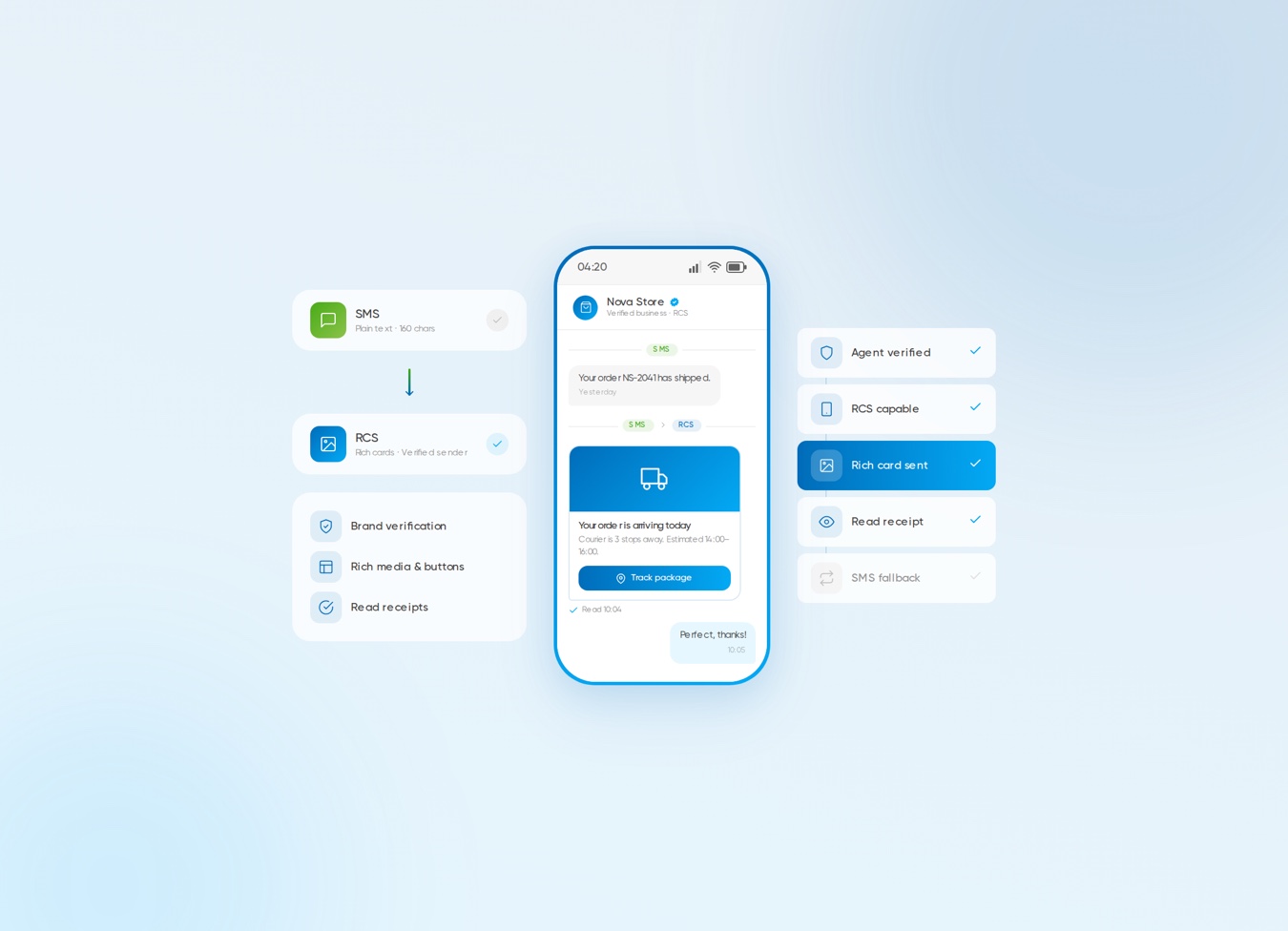
Apple RCS is live on iPhone. Which EU and UK carriers support it and how to plan campaigns with SMS fallback.
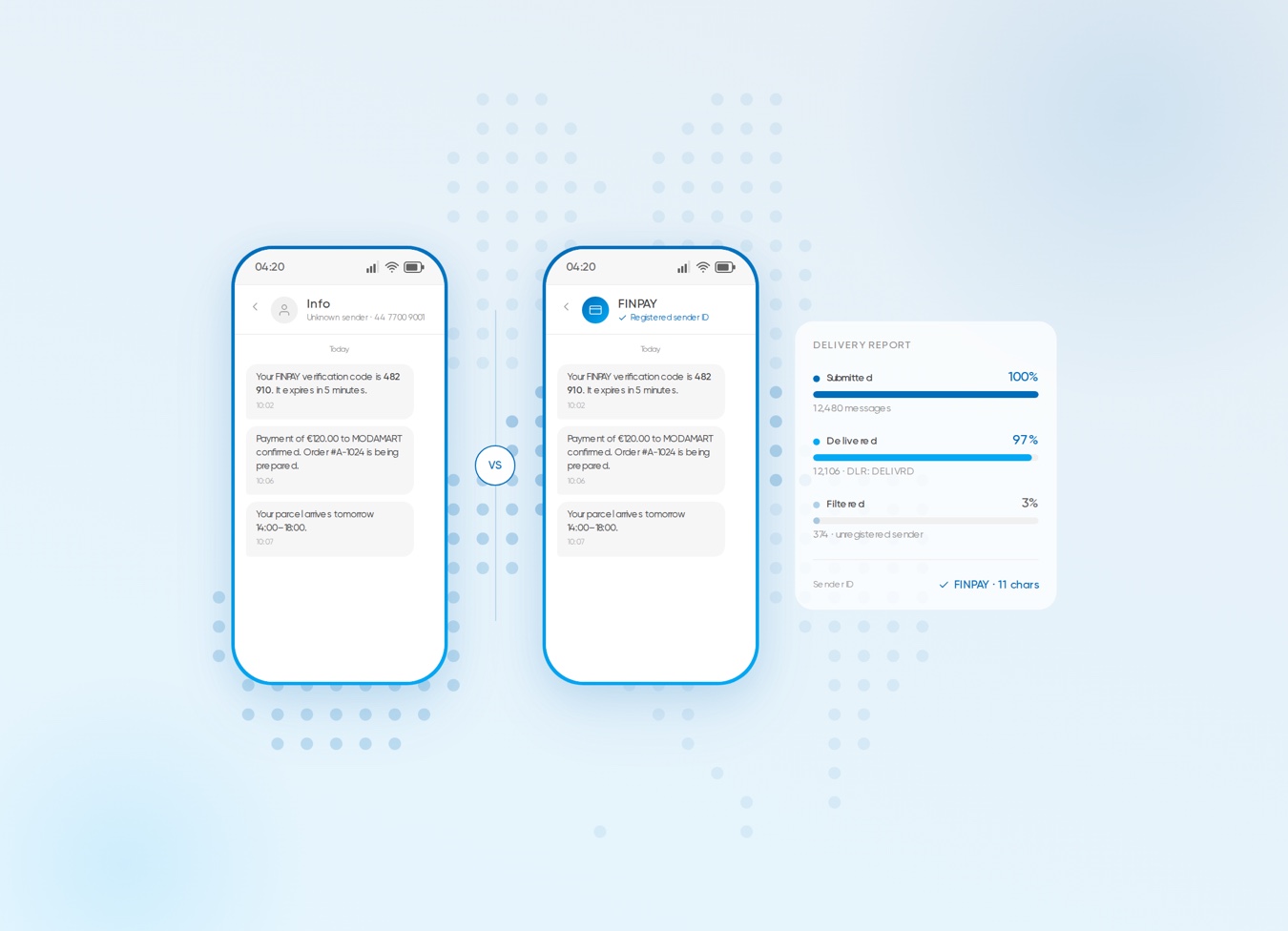
Why unregistered senders get filtered in the EU and UK, and what each country requires for sender ID registration.
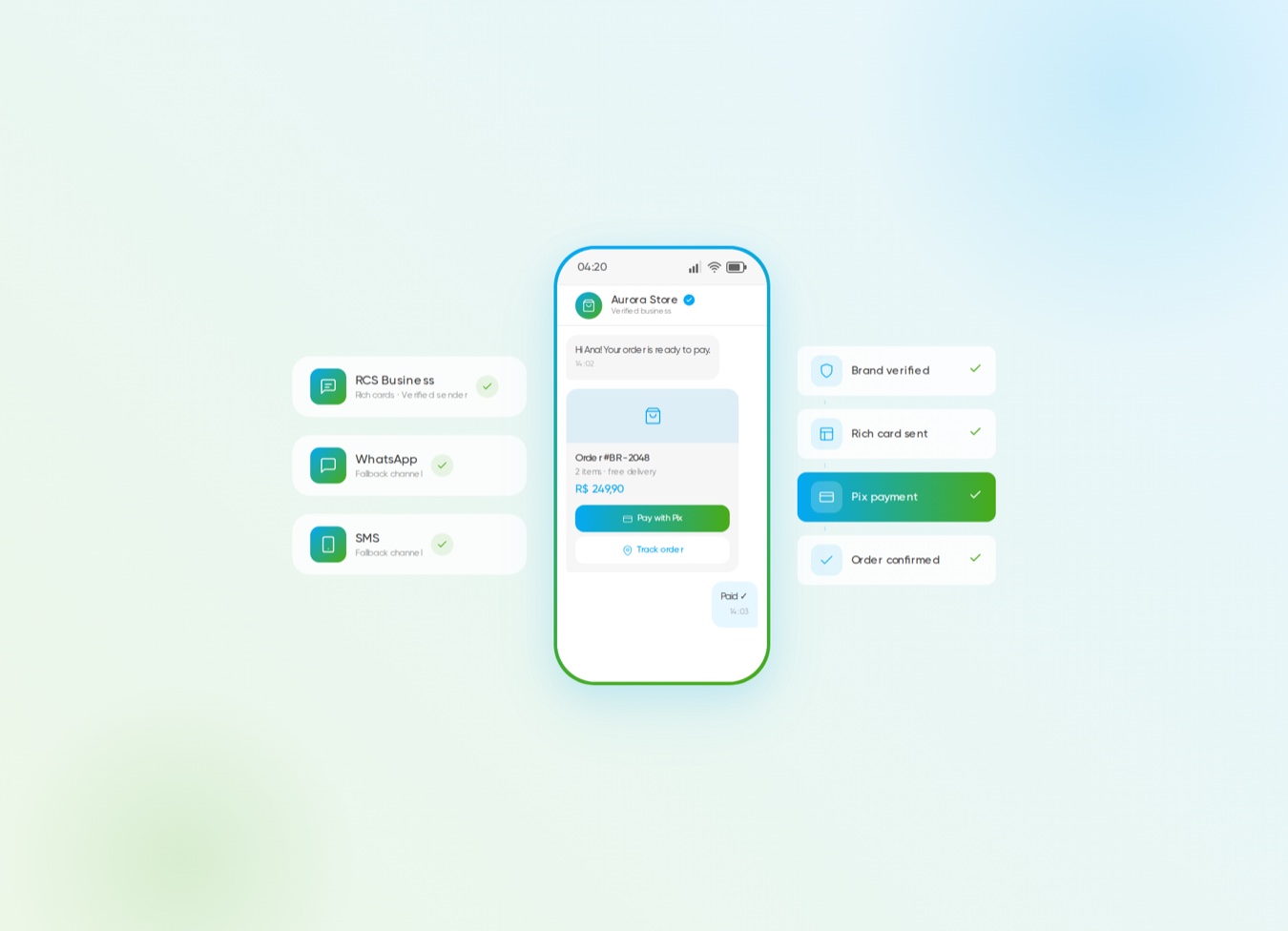
Vivo, Claro and TIM coverage, iPhone status, where RCS beats SMS in Brazil and how to launch with SMS fallback.