





As more companies handle the sensitive digital data of their customers, the issue of potential data breaches becomes really pressing. These breaches cost American companies an average of $9.44 million annually .
Weak or stolen passwords are regarded as the main gateway for cybercriminals to attack IT systems or hack accounts. One of the secure ways to minimize the rate of successful cyber attacks is by using two-factor authentication (2FA) and multi-factor authentication (MFA), which according to Microsoft , prevents 99.9% of cyber attacks on accounts.
Multi-Factor Authentication , including two-factor authentication, requires additional security mechanisms (factors) beyond passwords. They have existed since the 90s but gained prominence in the mid-2000s. Around this time, financial institutions started rolling out 2FA as a One-Time password for customers to verify their identities. Over the years, 2FA has changed and incorporates passwordless authentication, such as biometrics, as authentication factors.
This blog post looks at emerging trends in 2FA and technologies to consider. It also examines the benefits and challenges of implementing 2FA.
Traditional 2FA Methods
2-factor authentication is a security measure that requires users to provide two different methods of identification before accessing a system. The methods come in three forms: something you know, something you have, and something you are.
Something you know:password-based authentication
Also known as knowledge-based 2FA, the user supplies information in his possession or can recall authenticating an action. A good example is static passwords used for emails. They could also be answers to security questions.
Something you have: hardware tokens and smart cards
This factor involves a hardware device in the authentication process. They include tokens to generate OTP codes. However, the hardware device is prone to loss due to its small size, and it is also expensive to implement for small businesses.
Something you are
This factor is modeled after a body part for verification. It is the most secure method, as the user is the authentication factor. An example is facial recognition which scans the user’s face before verification.
Emerging Trends in 2FA
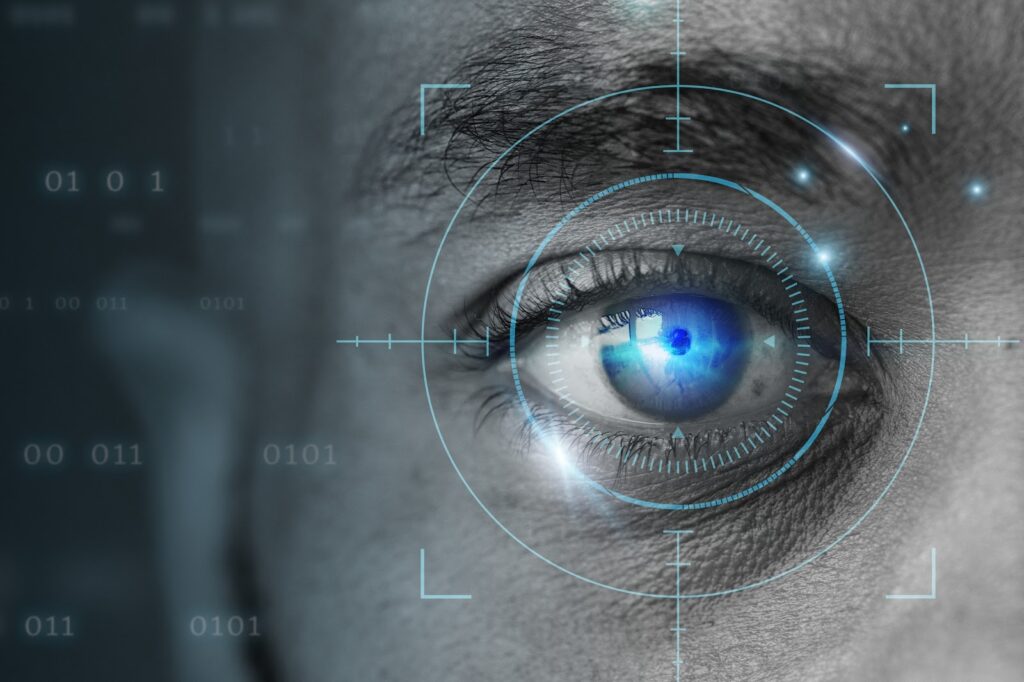
The need for added security is driving the need for better 2FA solutions. This is reflected in the emerging trends in the 2FA sector. Let’s examine them.
Biometric Authentication
Biometrics uses the physical features of a person as a unique verification method. Unlike static passwords, which are easily bypassed, biometric authentication requires a user to input some physical information on his body to process a transaction. This verification form has emerged as one of the safest 2FA methods around. Examples include facial, voice, and iris recognition.
- Facial recognition
This feature matches a user’s face with images on a database to verify the user. It is a security technique that recognizes the unique facial features of a user to determine if the user is the same person. An example is FaceID, used to unlock iPhones.
- Voice recognition
With this technology, a program can identify people by matching their voices with a stored voice print. The user needs to say a specific preset word or phrase in a certain way to be granted access. Citibank, the American financial giant, allows customers to use voice authentication to complete transactions.
- Iris recognition
The iris is the ring around a person’s pupil with patterns unique to each individual. Iris recognition is a biometric security method that matches the iris pattern of a user’s eye with mathematical accuracy to verify and authenticate. The iris recognition system scans the iris using clear and near-infrared light, forming a template of the iris. Anytime the user wants to access the system, he places his eye on a camera that scans and matches it with the template.
- Behavioral biometrics
This comprehensive authentication method studies how persons operate to distinguish them from impersonators. It studies everything from the speed of inputting passwords to how a user scrolls through a page. The assumption is that an impersonator will likely act differently, and the system can easily detect it.
- Biometric sensors
These sensors are hardware devices that capture and translate a human’s biometric information as a template for verification. Biometric sensors measure morphological features, such as physical features and traits, and biometric features, like iris, fingerprints, and face. The sensors also measure biological features like DNA, blood groups, etc. All these are aimed at providing accuracy in user identification.
Advantages of biometric authentication
See how biometric authentication can help your business.
- Difficult to replicate as biometric details are unique to a person
- Biometric authentication cannot be intercepted as it is not shared on a network like OTP via SMS.
- Biometric authentication helps skip security questions and static passwords, making it faster.
- It is also more secure as it is inherent in the user and cannot be hijacked.
Challenges of biometric authentication
- Too expensive as it is still new and requires sophisticated devices.
- Unrecoverable if compromised
- Occasional failure due to low light conditions for facial recognition or wet fingers in case of a fingerprint.
Passwordless Authentication
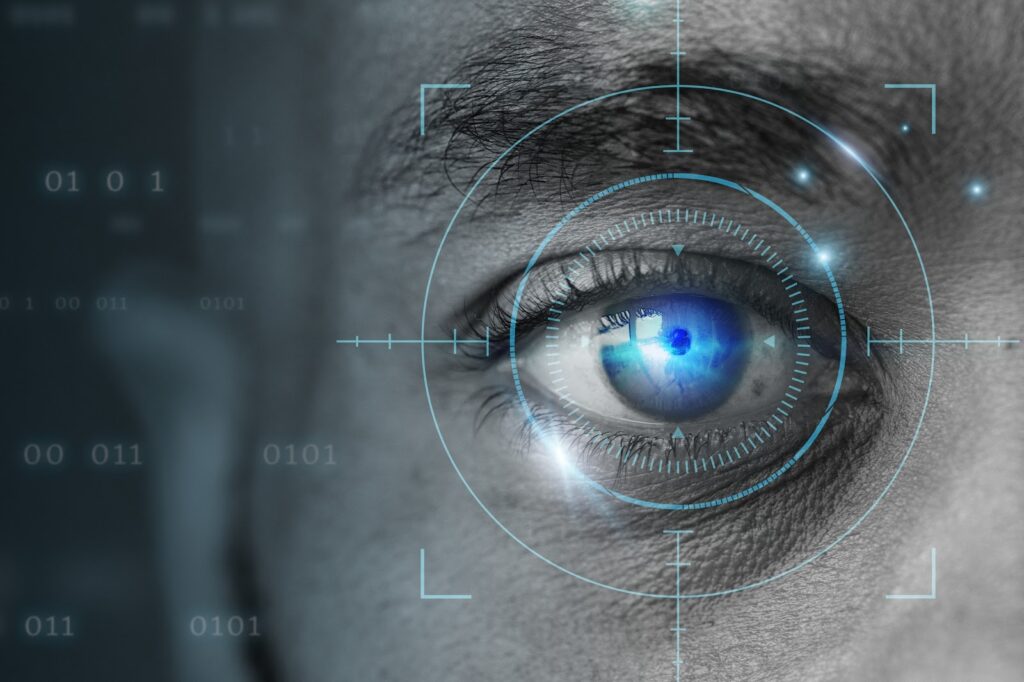
Allows users to access their accounts without entering any password. In place of a password, biometric signatures like a retina or fingerprint are employed. The idea behind passwordless authentication stems from the high incidence of password theft and as a more secure authentication for weak passwords. Studies show that easily predictable words like “qwerty,” “password,” and “123456” are among the most common passwords. Little wonder that over 80% of data breaches happen due to weak or stolen passwords. Examples of Passwordless authentication are FIDO2, Token-based authentication, and wearables.
- FIDO2
Fast Identity Online is a type of password-free authentication developed by FIDO Alliance. FIDO2 uses cryptographic keys on private and public networks to create unique keys for each website that uses it. This means that a hacker cannot track a user across multiple sites.
- Token-based authentication
This security protocol allows a user to verify identity and then issue the user a token for access. Token-based authentication relieves users of re-entering their login credentials on a website or server. The token, once generated, gives access to the server until it expires. It is a second layer of security similar to a digital ticket that gives the user permission on a network.
- Wearable devices
These are portable devices fitted with sensors to capture and verify a user’s identity. These devices are worn on the body like a smartwatch and send vital signs like heart rate through wireless signals like Bluetooth for authentication.
Advantages of passwordless authentication
- Harder to break
- Reduced friction for users
- Safer than passwords
- Scalable to match the growth of the customer base
- More accurate security features
Challenges of passwordless authentication
- Expensive to implement
- Hardware devices may be stolen
Multi-Factor Authentication (MFA)
Combines two or more factors, verification, and authentication. For instance, MFA may combine a password with a fingerprint scan or a password and an OTP. In practice, MFA can work in any of the following ways.
- SMS authentication
Involves sending a One-Time Password via SMS to a user as a second security layer to a static password. SMS OTP, a code of 6 – 10 random characters, is the most common form of MFA due to convenience, cheapness, and scalability. It doesn’t require sophisticated devices to work and is available to everyone.
- Adaptive authentication
Using details such as location, device status, or role, adaptive authentication asks for different credentials whenever the user wants to log in. Unlike the other methods, which ask for the same credentials, this method changes depending on the situation, thereby preventing cyber-attacks.
- Strong authentication
It is an MFA method that does not solely rely on passwords or recovery questions to grant access to a network. It works because a phishing attempt is imminent and painstakingly verifies the user’s identity.
- Behavioral analytics
This AI-based MFA method authenticates based on a user’s known behavior. The AI passively observes the user, and any deviation from the usual pattern of behavior triggers a security threat. For instance, if you usually log in from France and the system detects a login attempt from Mexico, it will raise an alarm. Apart from location, it uses specific movements and your usual sites to identify you.
Advantages of MFA
- Stronger authentication method
- More difficult to crack by cyber criminals
- Reduced data breaches for companies
- Easy to use, especially SMS authentication
- Scalable for global growth
Challenges of MFA
- Maybe be intercepted by criminals, especially SMS authentication
- Requires sophisticated equipment to implement
- It may not be very clear to use for employees and customers.
Technologies to Watch Out For
Let’s examine how security technologies are shaping up and what to expect.
Network Security and Access Control
Network security is a type of security component that restricts who can access a private network. It is usually employed by organizations looking to manage access to the network to prevent cyber-attacks and phishing. To gain access to the network, a person must scale through authorization, authentication, and audit protocols.
- End-to-end encryption
Prevents a third party from accessing communication between two users. If you are chatting, end-to-end encryption converts the messages and other shared data into scrambled text unreadable to a third party. The unreadable text is only accessible through a cryptic key created by your device and the person you are chatting with. An example of end-to-end encryption is WhatsApp messages.
- Authentication protocols
A server uses these security measures to verify the identity of a user looking to log in to an account. Authentication protocols prevent unauthorized access and tampering. Examples of authentication protocols include Kerberos, Lightweight Directory Access Protocol, OAuth2, RADIUS, and SAML.
- Identity and access management (IAM)
Refers to a security framework organizations use to control who is signed into their secure network and ensure that the right staff has access to the right resources. It means that within an organization, employees are granted restricted access to the part of the security software that concerns them. IAM works by first authenticating the identity and level of the employee against a database, and then it grants access to certain parts of the software.
- Advantages of network security and access control
- Visibility of connected devices to the network to quickly detect unauthorized devices.
- Prevents fraudulent access
- Third parties cannot view communication.
- Once logged in, users have access to areas particular to them.
- Challenges of network security and access control
- Requires constant monitoring with dedicated staff
- If hacked exposes the entire network to cyber-attacks.
- High cost of implementing the system
Cloud Security
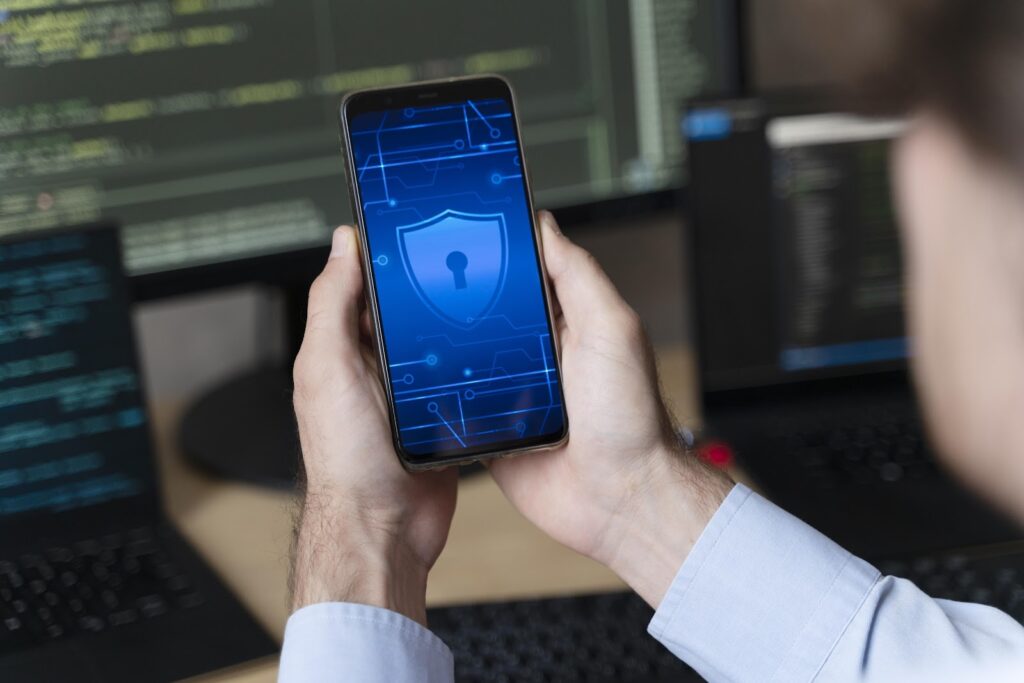
Cloud storage is now the go-to platform for websites to store their data, meaning securing the cloud is paramount to combat fraudulent activities. Cloud security refers to controls and measures to detect and prevent cyber-attacks on cloud storage facilities. Authentication in the cloud and Internet of Things are two prominent ways cloud-based security is needed.
- Authentication in the Cloud
For companies that store resources in the cloud, cloud authentication allows them to manage access to these resources through strong authentication for users and employees.
- Internet of Things (IoT)
IoT refers to the interconnectivity of smart devices over secured networks. IoT is fast-growing and there will be about 29 billion connected devices by 2030 . Data drive IoT, and with this comes the challenge of data security. Cloud security can secure the IoT ecosystem with secure authentication.
Advantages
- Cloud security is scalable as it is built to store unlimited volumes of data.
- Cloud-based security is accessible from anywhere; no specific hardware or location is needed.
- It provides businesses with secure storage backup.
- With layers of encryption, it guarantees higher security for sensitive data.
Challenges
- The likelihood of service downtime can affect business operations
- Businesses are not totally in control of their data on the cloud as third-party vendors own the infrastructure.
- There is still the risk of a data breach
Future of 2FA
The inadequacy of passwords in protecting user data has occasioned a shift to passwordless authentication. According to Bill Gates :
“ there is no doubt that people will come to rely less and less on passwords…. as they don’t meet the challenge of security .”
Consequently, passwordless and biometric authentication offers the best option for 2FA as they are much harder to replicate. Biometrics offers less friction and a more personal authentication method. Companies such as Microsoft have already begun to pivot into biometric authentication, with global spending expected to reach $8.8 billion by 2026 . Following the shift from password-based authentication, new technologies will come fitted with biometric and passwordless authentication features.
Challenges to overcome
The future of 2FA is fraught with problems that affect its implementation. We shall see some of these challenges.
- High Costs of Implementation
Passwordless and biometrics are costly security methods. While they are great for large organizations, smaller businesses may need help implementing them. In addition, not all customers can use them as high-end devices are required.
- Dependency issues
Most 2FA systems depend on another infrastructure to function. For instance, you need a service provider to authenticate via SMS, which leaves you at the provider’s mercy.
- Time-consuming process
While some 2FA methods are fast, some are slower with more verification processes. Before settling for a 2FA method, research all the methods to see which one meets your needs adequately.
- Prone to security threats
Unfortunately, no 2FA method is exactly 100% secure. A clever cybercriminal can capitalize on the human element of these factors to infiltrate the system.
- Performance issues
Most passwordless authentication methods are still undergoing development, and this has an impact on their performance. More complex options like behavioral biometrics or iris recognition may sometimes malfunction, frustrating your customers.
Benefits of 2FA
Despite the challenges, the benefits of 2FA make it a worthwhile investment for any serious business.
- Fraud prevention
The combination of different factors to authenticate reduces the incidence of fraud. Even if a password is stolen, the other layers act as failsafe for users.
- Security of transactions
Integrating 2FA into your business structure guarantees better security, especially if you run a business that requires online payments.
- Better user experience
When your customers are assured of the safety of their data, it leads to a happier experience for them. This enhances your reputation, and you can gain more customers through word-of-mouth advertising.
- Variety of security options
2FA is varied, allowing you to choose a convenient one based on your budget and security needs.
- Affordability
Of course, some 2FA are expensive, but there are cheaper options. If you are a small business, you can use SMS authentication; it will cost you less. In addition, 2FA reduces the need to hire customer support staff, lowering hiring costs.
- Scalability
2FA is highly scalable. 2FA helps you expand your security needs to your customers and employees no matter where they are.
Key Takeaways
To recap, passwords as a security measure are outdated, and the future is passwordless and biometrics. Integrating 2FA into your business will save you from losses due to data breaches. You can choose any authentication method depending on your needs. If you are ready to integrate 2FA, BSG — a global communication platform , has the solutions to scale your 2FA needs. Get in touch with us today.


Interested in a special offer?
Ready to reach further?
Let’s talk


Related articles

One of the greatest challenges for every business is developing a killer marketing strategy. But,
Two-factor authentication (2FA) is a robust security measure designed to enhance digital account protection by
SMS marketing has become a dominant marketing channel marketers use worldwide. The reasons for this