





AI has already completely absorbed this world in every possible way. And now you probably ask yourself, ‘What? Again a new AI tool?’ Well, yes! And very useful ones. It is an avalanche-like tendency for it, just look at some basic statistics gathered by LifePerson :
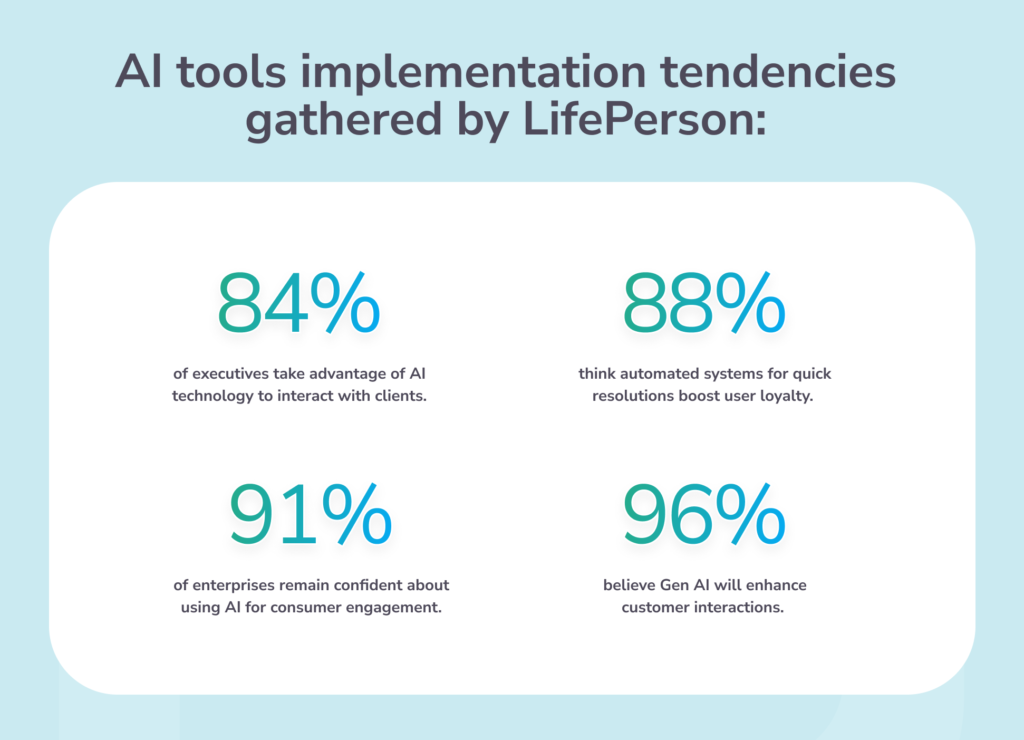
Read our article to find out more about AI shopping assistants, how they boost the quality of customer service, and choose the one that works best for your company.
What is an AI Shopping Assistant?
As we all already know, AI is an integral part of modern marketing and customer support strategies. In fact, 63% of retailers use AI to transform customer interactions, with 40% allocating human and financial resources to technological advancement.
An AI shopping assistant is a digital tool that uses artificial intelligence to enhance the online shopping experience . Simply put, it’s like having a knowledgeable friend helping you shop online. It uses artificial intelligence to understand what you’re looking for and suggests products that match your preferences. It can help you find the right size, style, or price range you’re interested in. It might also offer recommendations based on your past purchases or trends. The more personalized your solution, the better it is for your business. Businesses use this solution to solve the following challenges:
- 67% for quicker data or replies.
- 62% to lower wait times.
- 53% for additional exact data.
- 42% to make reliable experiences.
- 41% for customized reactions.
- 28% to bring down functional expenses.
It’s a smart tool designed to make your online shopping experience easier and more personalized.
How Does a Personal Shopping Assistant Work?
Shopping AI makes your life easier because it provides 24/7 support behind the scenes to make your shopping experience simpler, more convenient, and tailored to your individual needs. Whether you’re shopping online or in-store, it’s like having a helpful friend who’s always ready to lend a hand. Here’s how it works.
Product Recommendations
It suggests products based on your browsing history, past purchases, and preferences. For example, if you often buy sportswear, it might show you the latest running shoes or workout clothes.
Product Promotions
AI shopping assistant keep people informed about the latest seasonal discounts, sales, and new product offerings. It can notify customers of upcoming promotions and special deals, the same way when businesses send promo SMS campaigns . By analyzing shopping habits and preferences, it can also suggest relevant promotions tailored specifically to customers’ interests.
Personalized Experience
Personal shopping assistant learns from your shopping habits and personal preferences to tailor the shopping experience specifically for you. This can include remembering your size, favorite brands, and preferred colors.
Search Assistance
It helps you find products more efficiently by understanding natural language queries. You can ask it things like “I need a dress for a wedding” or “Show me affordable smartphones,” and it will provide relevant options.
Price Comparisons
AI personal shopper can compare prices across different retailers, helping you find the best deals available. By scanning multiple websites and platforms, it ensures you get the most value for your finances and make informed purchasing decisions effortlessly.
Customer Support
The assistant can answer questions about products, provide details on shipping, return policies, and even help track your orders, schedule deals, and much more.
Personal AI Assistant: Which One Is Right for Business?
Voice Bot Assistant
In online shopping, voice bots are becoming more vital for businesses: The Voice Bots Market size is estimated to reach $98.2 billion by 2027 , growing at a CAGR of 18.6% during the forecast period 2022-2027. They help users check product info, compare prices, add items to their cart, and buy things — all by just talking. This makes shopping easier for customers and gives businesses new ways to connect with them.
There are many examples of businesses implementing voice assistance , from small enterprises to business giants:
Walmart , known as Walmart Voice (AI chatbot), has integrated with Google Assistant and Siri. This voice-activated shopping assistant makes purchasing preferred products and brands effortlessly through simple voice commands.
Tommy Hilfiger , the renowned apparel brand, has introduced a chatbot on Facebook Messenger. This bot assists users with style advice, allows browsing collections, and provides a behind-the-scenes look at the latest fashion shows.
Macy’s offers the “Macy’s on Call” AI voice bot, which helps customers navigate stores efficiently. This smartphone-based assistant provides information on product locations and available services.
The Voice Bot operates based on a predefined algorithm tailored to the client’s business task. In most cases, it makes outbound calls to potential clients, initiates conversations, and responds to users’ inquiries and offers.
AI Voice Bot vs Scripted Voice Bot
When it comes to voice bots, they differ in their capabilities, mainly based on the technologies they’re built with. There are two common types: scripted bots and fully AI bots, here’s the breakdown:
Scripted Voice Bots follow a set script. When asked a question, they refer to a predefined set of answers to respond. It’s like having a robot stick to a pre-written script in a play.
AI Conversational Assistants , on the other hand, take things to a whole new level. Powered by Generative AI , these bots can understand questions and generate responses on the spot. They don’t rely on pre-written scripts but can adapt to the conversation in real time. This means they can handle a wider range of inquiries, adapt to the flow of conversation, and provide more personalized and intuitive responses.
With AI Conversational Assistants, interactions feel natural, engaging, and fulfilling, mimicking a genuine conversation with a human. At the same time, Scripted Voice Bots are more accurate since you’ve provided them with precise text. So think carefully before deciding what customer service AI solution will be the best for your business based on your product and needs.
Chatbot
In today’s world of e-commerce marketing, chatbots have become crucial tools for businesses looking to improve customer engagement and simplify operations. Chat Messengers are changing the way companies communicate with their customers and manage their daily tasks. AI customer service is revolutionizing the way companies interact with their customers, offering instant assistance and personalized support around the clock. Whether it’s answering inquiries, providing product recommendations, or resolving issues, chatbots are equipped to handle a wide range of tasks efficiently and effectively.
Here are some examples of chatbots across different industries:
Customer Service AI Chatbots . Many businesses use chatbots to provide instant support to their customers. For example, companies like Amazon and Apple use chatbots to help customers track orders, troubleshoot technical issues, and answer frequently asked questions.
E-commerce Chatbots . Retailers such as H&M and Sephora utilize chatbots to assist customers with product recommendations, size inquiries, and order tracking. These chatbots simulate personalized shopping experiences and enhance customer satisfaction.
Financial Chatbots . Banks and financial institutions like Bank of America and Capital One employ chatbots to help customers with account inquiries, transaction history, and budget management. These chatbots provide convenient and secure access to financial services.
Educational Chatbots . Educational platforms like Duolingo and Quizlet utilize chatbots to facilitate language learning, provide study assistance, and deliver personalized learning experiences. These chatbots offer interactive and engaging educational support to students.
Voice Bot’s Benefits as an Ambassador AI of Your Business
Voice bots, powered by AI, are revolutionizing how businesses communicate with customers. These advanced tools offer numerous benefits, making them an essential component of modern customer service strategies. AI shopping assistants are transforming the retail experience by providing personalized and efficient shopping support. Here are the key advice to make AI shopping assistant your brand ambassador:
For Voice Bot Customization
Keep it Clear and Concise
When designing your voice bot’s conversations, aim for simplicity. Make sure the responses are easy to understand and don’t overload users with unnecessary information.
Be Friendly and Understanding
Create a voice bot that feels like a helpful friend. Use warm and empathetic language to make users feel heard and cared for, just like they would when talking to a real person.
Make it Feel Natural
Avoid making your voice bot sound robotic. Add some variety to its responses and even a touch of humor to keep the conversation flowing naturally and make it more enjoyable for users.
Let Users Take the Lead
Give users the freedom to control the conversation. Allow them to pause or ask for clarification if they need to, without feeling like they’re being rushed or ignored.
Listen and Improve
After each interaction, ask users for feedback. Find out what they liked or didn’t like about the conversation and use that information to make your voice bot even better in the future.
Chat Bot Customization
Customize the Appearance
Personalize the chatbot’s appearance by choosing a color scheme that aligns with your brand identity. Whether it’s vibrant and playful or sleek and professional, the color of the chatbot can leave a lasting impression on users.
Add a Personal Touch
Incorporate a photo of a manager or team member to humanize the interaction. Seeing a friendly face can help users feel more connected and build trust with your brand.
Leave a Good Impression
Implement a memorable slogan at the end of the chat to reinforce your brand message. Whether it’s a catchy tagline or a call to action, make sure it leaves a positive impression on users long after the conversation ends.
Final Point
AI shopping assistant redefine the retail experience by providing personalized guidance, efficient support, and seamless transactions . By integrating these intelligent tools into your business strategy, you enhance customer satisfaction, drive sales, and gain valuable insights into consumer preferences. Embracing AI shopping assistants such as voice bots or chatbots is not just about keeping up with technology — it’s about delivering exceptional service, building brand loyalty, and staying ahead in the competitive world of enterprise.


Interested in a special offer?
Ready to reach further?
Let’s talk


Related articles
SMS has emerged as the most effective marketing channel to reach the most people. According
WhatsApp Business Web fixes friction for one operator, then quietly costs a growing team orders.
Quality customer service lies at the core of any prosperous business, and voice bots are