




What Is Number Verifier — And Why It’s More Than Just an “HLR Lookup”

Imagine launching a large-scale SMS campaign and finding out that 30% of your messages never reached the intended recipients — not because your content failed, but because the numbers you sent to were invalid, inactive, or no longer associated with the same mobile operator. This isn’t fiction — it’s a common problem for businesses operating in global telecom.
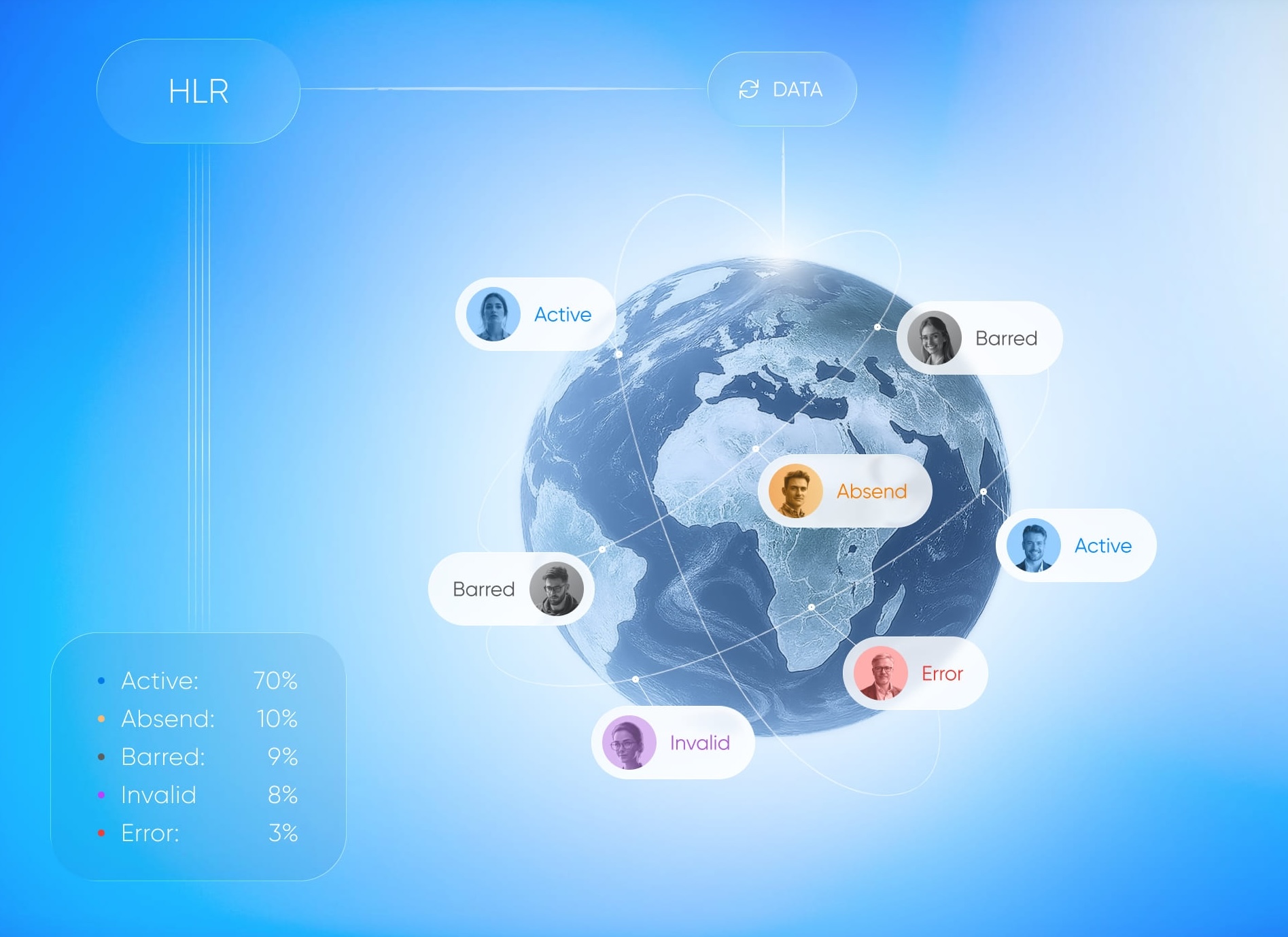
Enter Number Verifier
It’s a real-time service that solves this issue by verifying the current live status of any mobile number before you even hit "send". But while it’s often called an “HLR lookup” by habit or industry inertia, that term doesn’t quite fit anymore — and in this article, we’ll explore why.
What Is Number Verifier?
Number Verifier is a real-time lookup tool designed to answer simple but critical questions: is this mobile number active, reachable, and served by the operator I expect?
It works by sending a standardized query to the target number’s mobile network infrastructure and returns structured data indicating:
-
Whether the number is currently registered and reachable;
-
Which mobile operator is serving it;
-
Whether the number has been ported from its original operator;
-
The live status of the line (active, unreachable, barred, invalid, etc.).
These insights are essential for anyone sending time-sensitive or large-scale communications via SMS, voice, or any other telecom channel.
What Information Does It Return?
First of all, each Number Verifier query provides the following information about the subscriber’s live status:
| Live Status | Meaning |
|---|---|
| Active | The number is currently live on the network and can receive messages |
| Absent | The number is temporarily unavailable (e.g., phone off, out of coverage) |
| Barred | The number is blocked due to technical, legal, or billing-related restrictions |
| Invalid | The number is unassigned or does not exist |
| Unknown/Error | The network couldn’t confirm the number's live status or failed to respond |
In addition to live status, you receive MCC-MNC codes — the combination that identifies the current operator serving the number. This is especially valuable in countries with mobile number portability (MNP), where number prefixes no longer guarantee operator identity.
Why “HLR Lookup” Is a Misleading Term
The service that Number Verifier provides is often described — even by some vendors — as an "HLR Lookup". But that’s a legacy term that doesn’t fully represent how modern mobile number verification works.
Let’s unpack this - What Is the “HLR”?
The Home Location Register (HLR) is a core database within a mobile network. It stores information about every subscriber — including:
-
IMSI (subscriber ID);
-
MSISDN (the phone number);
-
Live status (active, barred, etc.);
-
Current location (via the VLR);
-
Service permissions (roaming, call forwarding, etc.).
Every time a mobile subscriber receives a call or SMS, the HLR plays a role in the background.
Why It's Not a “Service”
The HLR is a technical component, not a product. You don’t "query the HLR" as an external service user — rather, a telecom-grade infrastructure connects to it via SS7 signaling to retrieve selective, non-sensitive data like routing info or live status. So, calling the lookup process an “HLR query” is like referring to reading a book summary as “visiting the library”.
Why Number Verifier Is More Accurate
The term “Number Verifier” better reflects the actual functionality: verifying a number’s live status in real time using a network-integrated query. It avoids misrepresentation and aligns with GDPR-conscious service design — which is crucial, since mobile subscriber data can fall under data protection legislation.
Use Cases and Practical Benefits
Let’s explore how Number Verifier is applied in real-world telecom and enterprise workflows:
SMS Campaign Optimization
Before sending thousands (or millions) of messages, you can pre-check your number list and remove:
-
Inactive or deactivated lines;
-
Numbers unreachable at the moment (e.g., switched off);
-
Ported numbers now served by other operators.
This improves delivery rates, saves money, and protects sender reputation.
OTP and Transactional Messaging
For banks, apps, and platforms sending one-time codes (2FA), Number Verifier ensures that messages go only to reachable devices — helping reduce authentication failures.
Data Cleanup and CRM Hygiene
Marketing and customer data platforms often collect stale or invalid numbers. Verifying live status in real time allows companies to clean their lists regularly, improving targeting and regulatory compliance.
Routing Diagnostics
Telecom providers and aggregators use Number Verifier to understand why traffic fails, track MNP behavior, or build smart routing strategies based on real-time operator data.
How to Use Number Verifier
BSG’s Number Verifier is accessible in multiple ways:
-
HTTP API - Best suited for platforms and CRMs that want to integrate verification directly into their workflow — real-time or batch lookups available.
-
ENUM API - Ideal for telecom-level users who need performance-grade, low-latency lookup resolution via network switches;
-
Web Portal - Allows manual number lookups or bulk file uploads with downloadable reports — no coding required;
-
Number Intelligence Bot - A powerful, zero-integration tool: simply send a number or a list via Telegram and receive real-time results. Perfect for fast checks, sales ops, or field teams.
Architecture and Reliability
Behind the scenes, Number Verifier uses a combination of BSG’s own telco infrastructure and carefully selected global partner reach to deliver consistent, transparent responses. Results are not cached or emulated — every query triggers a real-time interaction with network infrastructure.
In case a number cannot be resolved via a direct route, fallback mechanisms ensure that queries are cascaded through secondary resolution paths — increasing coverage without sacrificing speed or clarity.
Compliance and Privacy
BSG’s Number Verifier is built with GDPR and data protection in mind. It does not store or return any personal subscriber information — only live status indicator and operator info. This keeps clients within safe regulatory territory and avoids conflict with mobile operators’ data policies.
Final Thoughts
The ability to verify mobile numbers before sending communication is no longer a “nice-to-have” — it’s an operational necessity.
While the term “HLR lookup” still floats around, it fails to capture the precision, professionalism, and modern compliance needs of today’s telecom environment.
Number Verifier is what the industry truly needs: a real-time, network-aware, compliance-ready service that gives you confidence in every number you send to.
Ready to Try It?
Use it via API, ENUM, Web, or instantly through our Telegram-based Number Intelligence Bot.
No integration? No problem.
Contact your BSG account manager and start verifying smarter — today.


Interested in a special offer?
Ready to reach further?
Let’s talk


Related articles

Not every purchase intent pulls through. Customers often back out of the buying process and

As the holiday season approaches, bringing cozy evenings with loved ones and the joy of

Nurturing your brand on the web and on mobile heavily relies on your ability to