




Dynamic Sender ID
What is a Dynamic Sender ID?
A dynamic sender ID is a sender name that an operator accepts as submitted, per message, without prior registration — as opposed to a fixed or pre-registered sender.
A dynamic sender ID means the mobile operator delivers whatever sender name the sending platform sets on each message, without requiring that name to be registered in advance. In markets with a "full dynamic" policy, alphanumeric names, numeric senders and short codes all pass through as submitted; in "alpha dynamic" markets only alphanumeric names are dynamic, while numeric senders and short codes are rewritten. Most Western and Northern European networks work this way for international A2P traffic.
Dynamic does not mean unfiltered. The operator's firewall still evaluates route reputation and content, and several networks block generic names such as "Info" or "Verify" even where senders are dynamic. The opposite models are a fixed sender ID, where the operator replaces every sender with its own value, and a registered sender ID, where only pre-approved names are delivered.
Example: a logistics company sends delivery updates with the sender "MyParcel" into Germany and the Netherlands without any registration — both markets are dynamic — but the same sender is replaced by a numeric one in Hungary, where sender IDs are fixed.
Related terms
Related BSG products
Further reading


Interested in a special offer?
Ready to reach further?
Let’s talk


Useful Materials
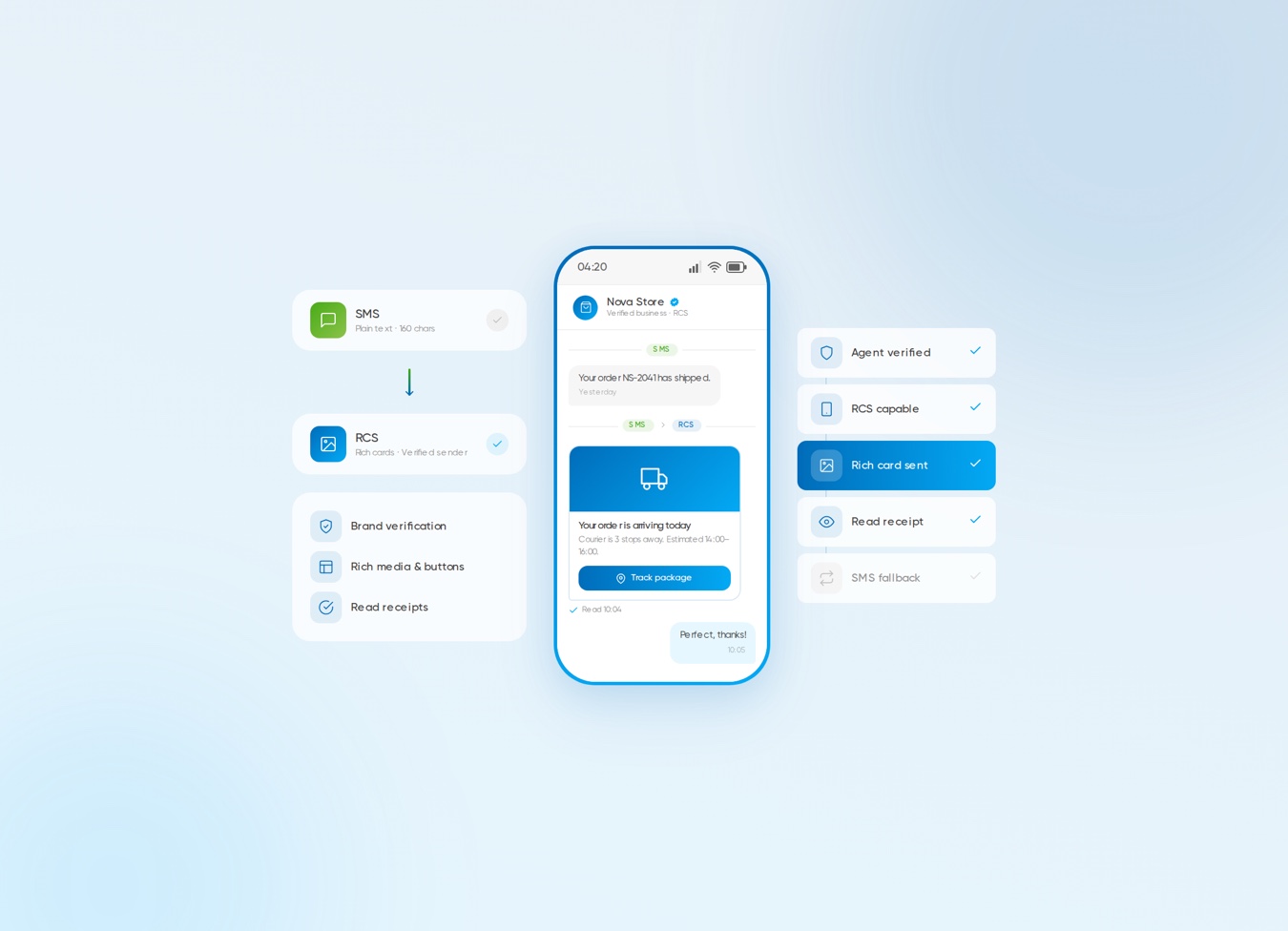
Apple RCS is live on iPhone. Which EU and UK carriers support it and how to plan campaigns with SMS fallback.
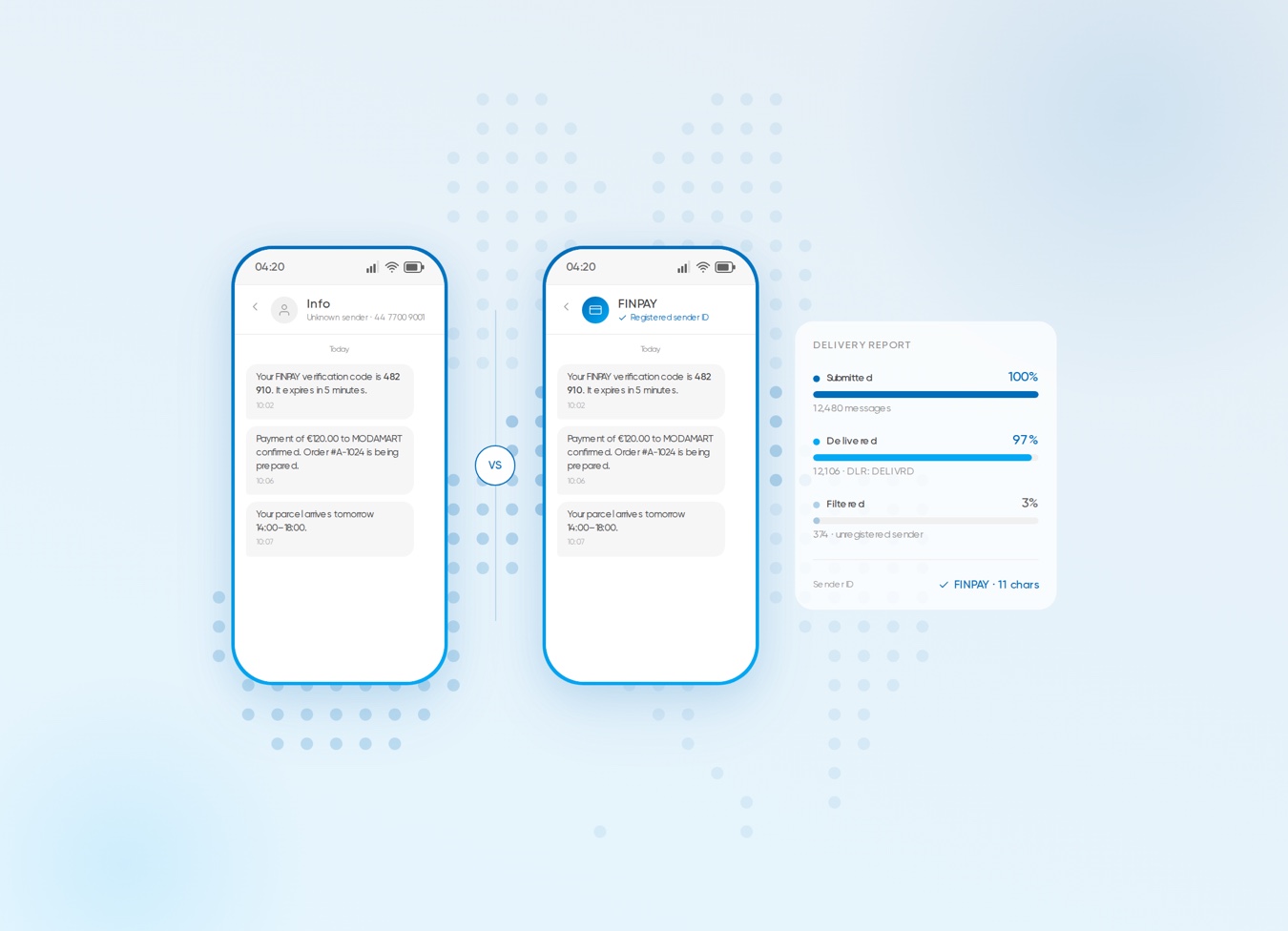
Why unregistered senders get filtered in the EU and UK, and what each country requires for sender ID registration.
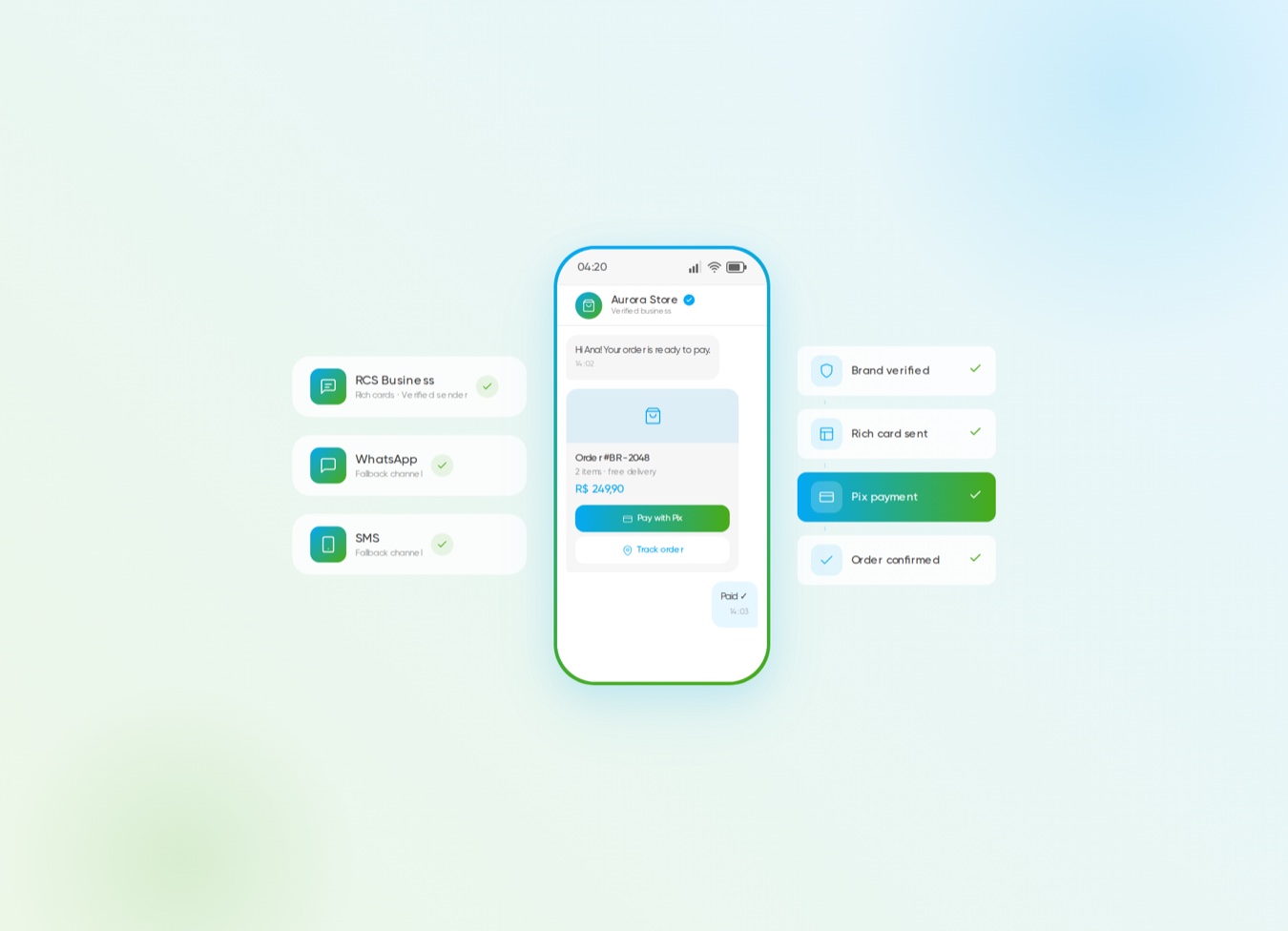
Vivo, Claro and TIM coverage, iPhone status, where RCS beats SMS in Brazil and how to launch with SMS fallback.