




Short Code
What is a Short Code?
Short codes are special, shortened telephone numbers that are used to send and receive text messages. They are typically five or six digits long and are used by businesses and organizations as a way to communicate with customers.
expand further on this
Short codes are typically used by businesses, organizations, and government agencies to send and receive text messages from customers. These codes are shorter and easier to remember than regular phone numbers, making them easier for customers to remember. They can be used for a variety of purposes, such as receiving updates, alerts, promotional offers, and reminders. Businesses may also use shortcodes to conduct surveys, polls, and contests. Short codes are regulated by mobile carriers and must be approved before use.
Because short codes cost more to lease than a regular SMS sender ID, they're typically reserved for very high-volume senders. Read more in BSG's 6 Key Insights and Trends Shaping SMS Marketing.
How does it work?
When a customer sends a text message to a short code, the message is routed to the business’s text messaging provider. The provider then processes the message and sends it to the company’s internal system, which can then be used to respond to the customer or send out further messages. Short codes are typically used for automated and high-volume text messaging, and customers generally cannot initiate a conversation with a business using a short code.
What are the benefits?
Shortcodes offer businesses a number of advantages, including
- Increased visibility: Short codes are easy to remember and can be used in marketing campaigns and advertisements, allowing businesses to reach more customers.
- Improved customer engagement: Shortcodes make it easier for customers to communicate with businesses, allowing for more efficient customer service.
- Increased efficiency: Shortcodes enable businesses to send out automated and high-volume text messages quickly and efficiently.
- Cost savings: Short codes are typically cheaper than traditional phone numbers, allowing businesses to save money on text messaging costs.


Interested in a special offer?
Ready to reach further?
Let’s talk


Related Terms
Explore BSG Solutions
Useful Materials
![WhatsApp Business API: Complete Guide — Setup, Pricing, Use Cases [2026]](/assets/img/blog/whatsapp-business-api-setup-pricing-use-cases-guide_avatar.jpg)
WhatsApp Business API for 2026 — setup steps, the new per-message pricing model, and proven use cases by industry.
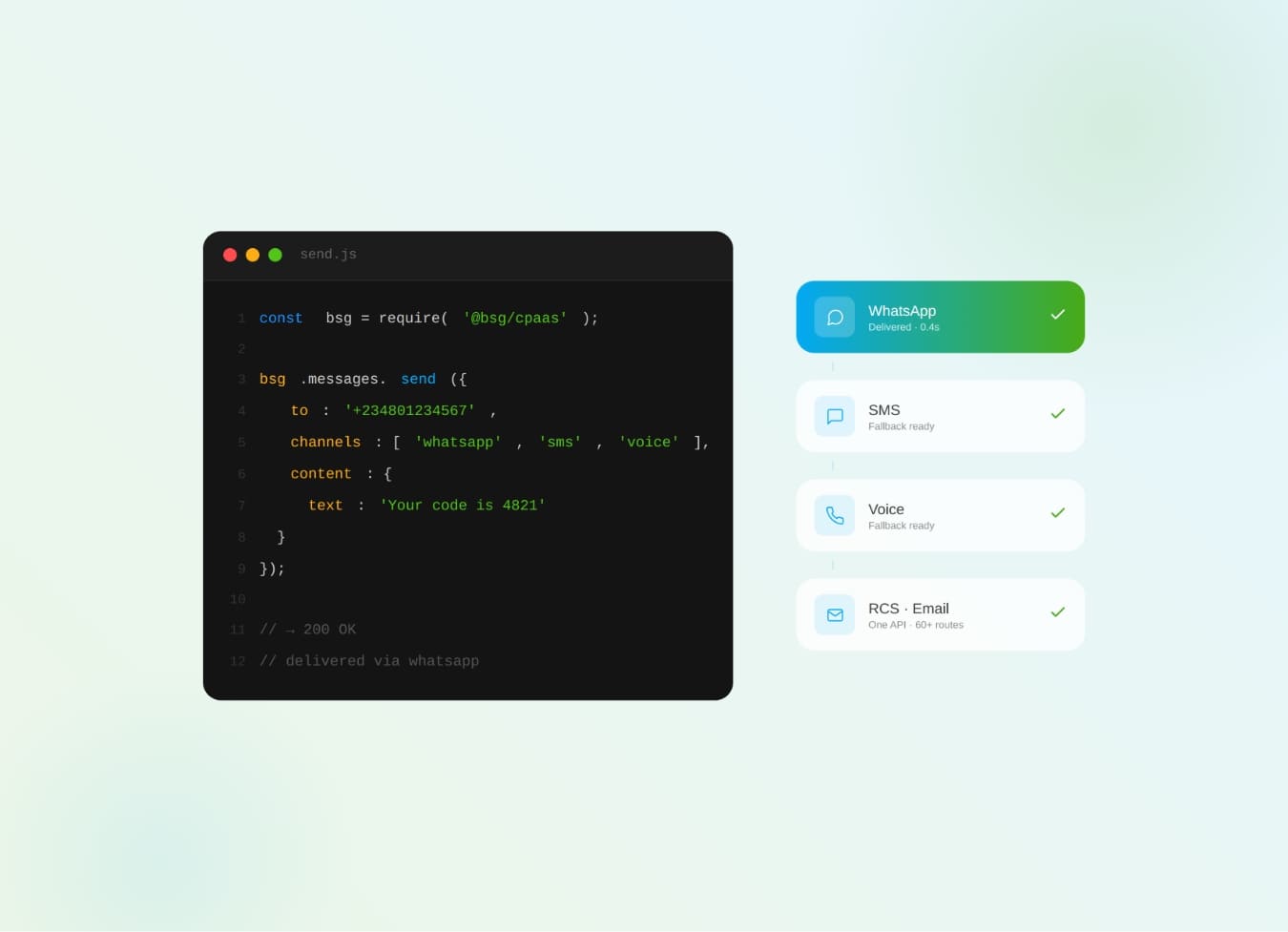
What is CPaaS? The cloud API layer that adds SMS, WhatsApp, voice & OTP to your apps — how it works and why it beats a multi-vendor stack.
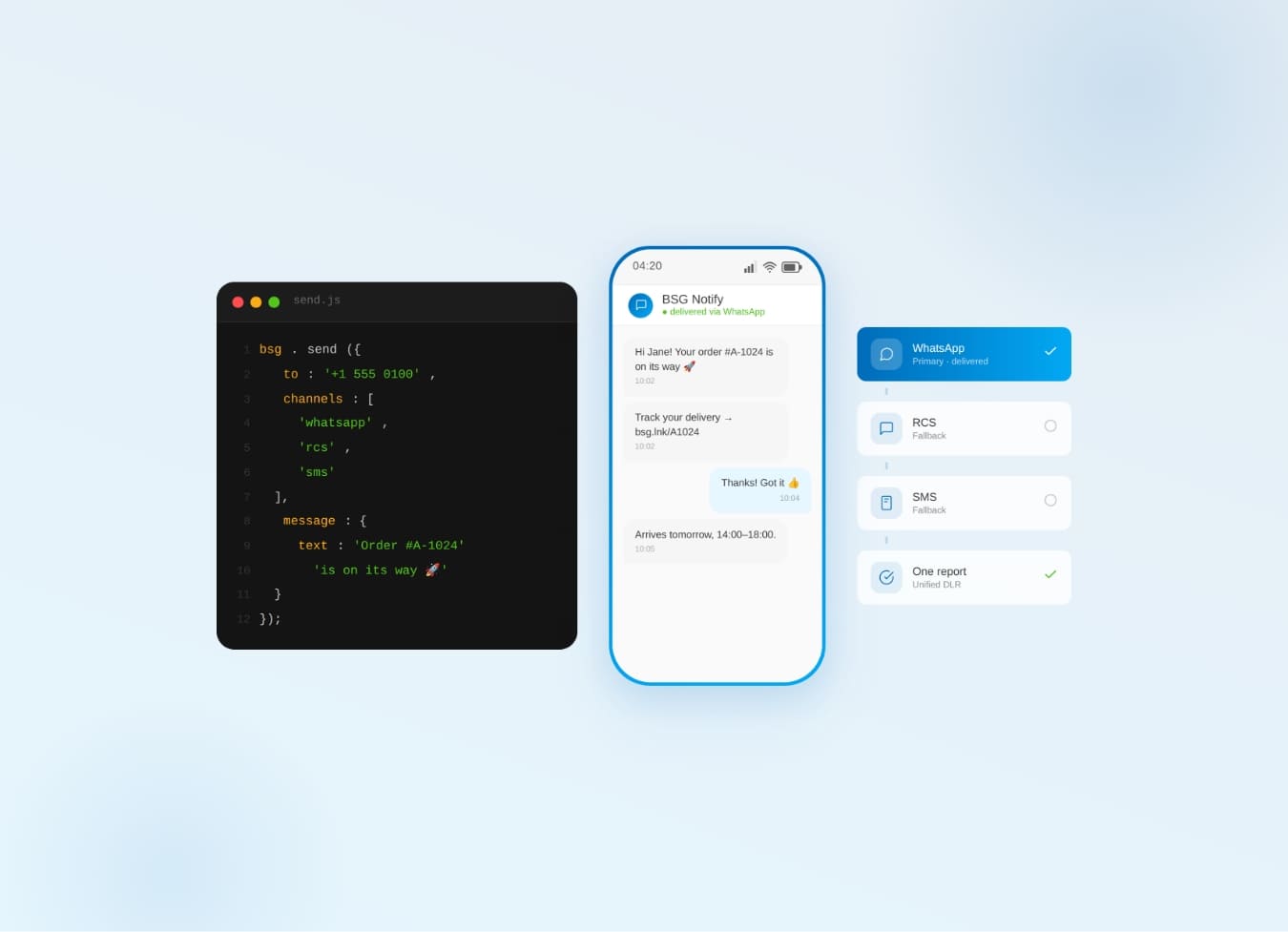
Why one communication API for SMS, WhatsApp, Viber & RCS beats five separate integrations — cascade fallback, unified reports.