




SMPP
What is SMPP?
Short Message Peer-to-Peer (SMPP) is a protocol used to exchange short messages between two entities over a packet-switched network. It is used primarily for mobile messaging applications, such as text messaging, but can also be used for other applications, such as WAP push.
SMPP is an open-standard protocol, which makes it ideal for use in different types of environments.
SMPP is what most bulk SMS platforms use behind the scenes to submit thousands of messages per second to an operator. This is explored further in BSG's What is SMS API and how to use it to scale your bulk SMS campaigns?.
How does it work?
SMPP works by allowing two entities, such as a mobile operator and an application provider, to connect to each other via a packet-switched network. The protocol enables them to exchange short messages in both directions, using the same session.
The protocol provides a set of commands for each entity to send to the other, which are then processed and responded to accordingly. SMPP also provides for reliable message delivery, using various techniques such as acknowledgments and retries.
SMPP is often used to allow third parties to submit bulk messages but may be also used for SMS peering. Because of its versatility and support for non-GSM SMS protocols, this is the most commonly used protocol for short message exchange outside SS7 networks.


Interested in a special offer?
Ready to reach further?
Let’s talk


Related Terms
Explore BSG Solutions
Useful Materials
![WhatsApp Business API: Complete Guide — Setup, Pricing, Use Cases [2026]](/assets/img/blog/whatsapp-business-api-setup-pricing-use-cases-guide_avatar.jpg)
WhatsApp Business API for 2026 — setup steps, the new per-message pricing model, and proven use cases by industry.
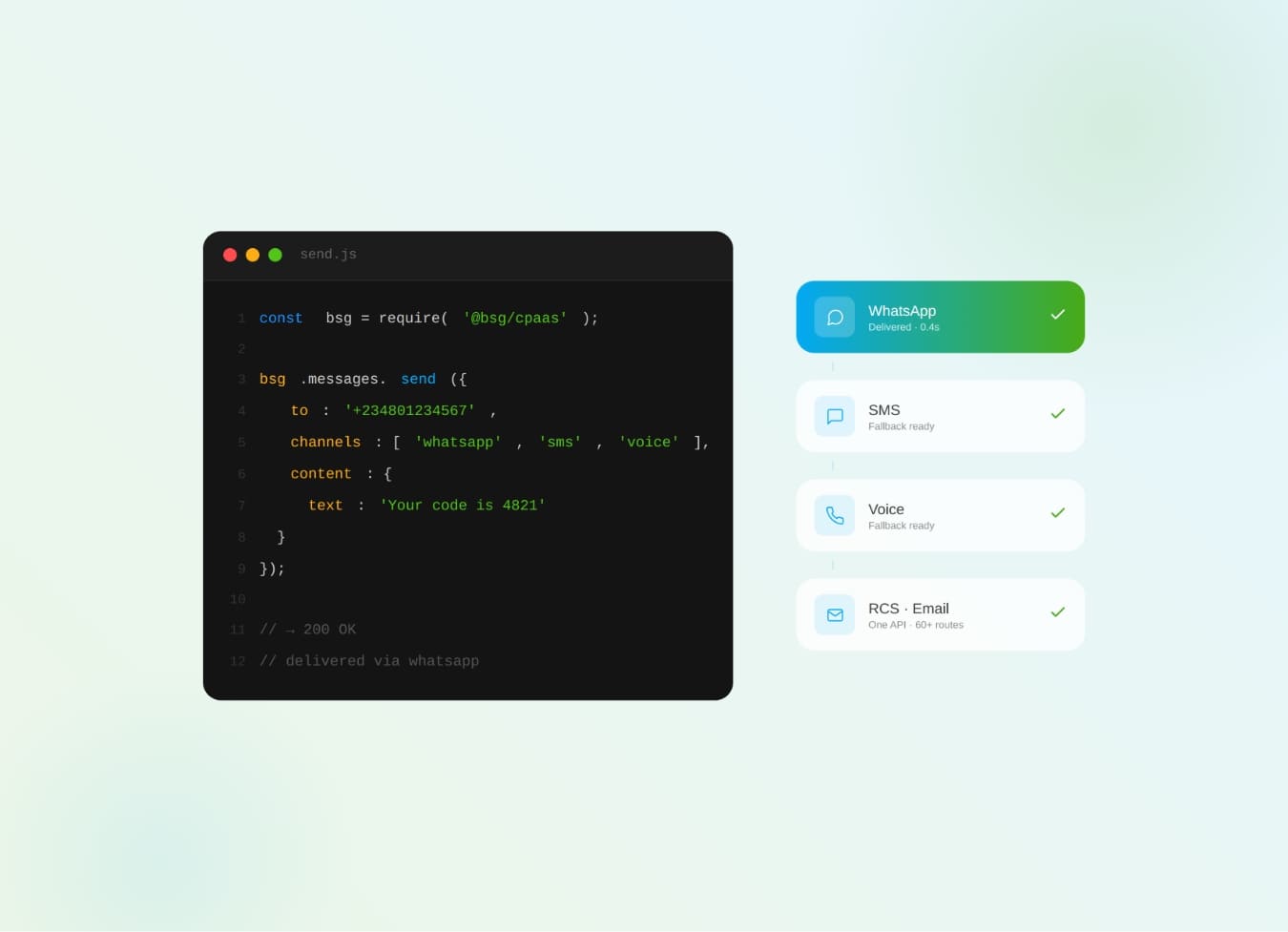
What is CPaaS? The cloud API layer that adds SMS, WhatsApp, voice & OTP to your apps — how it works and why it beats a multi-vendor stack.
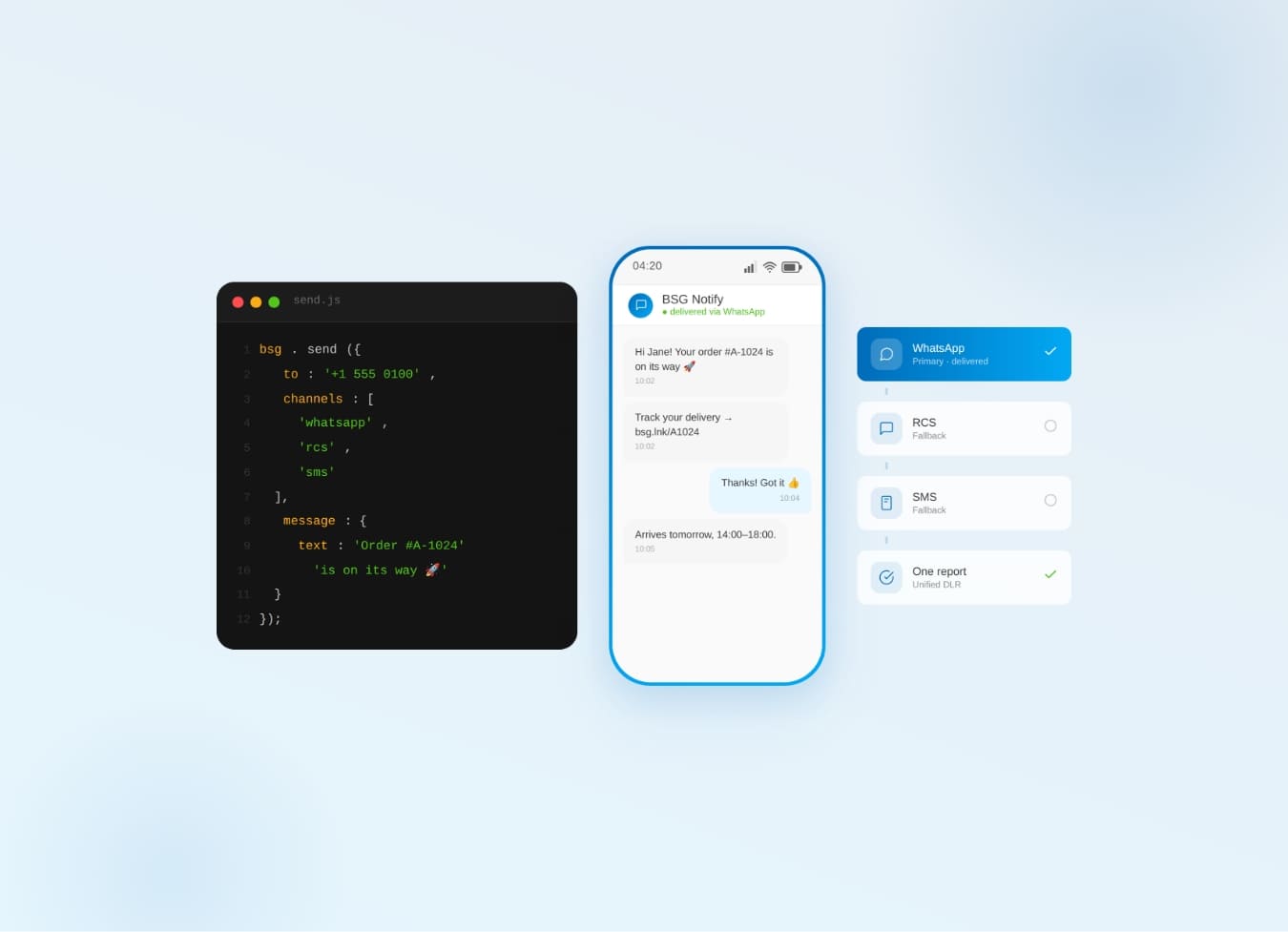
Why one communication API for SMS, WhatsApp, Viber & RCS beats five separate integrations — cascade fallback, unified reports.