





Voice bots are a relatively new solution in customer support services. They offer a hands-free, customized approach that enables customers to save time and quickly find the most relevant information, thus streamlining processes effectively. Voice bots can help with a variety of tasks in these areas, including giving information, answering typical inquiries, assisting with transactions and bookings, resolving issues, and providing general support.
Voice bot is a sophisticated mechanism based on Natural Language Processing (NLP), Natural Language Understanding, and Interactive Voice Response. Therefore, building voice bots with machine learning, requires extensive knowledge. In this article, we provide information on voice bots and a step-by-step guide on how to build a voice bot and make it valuable for your business.
Types of Voice Bots
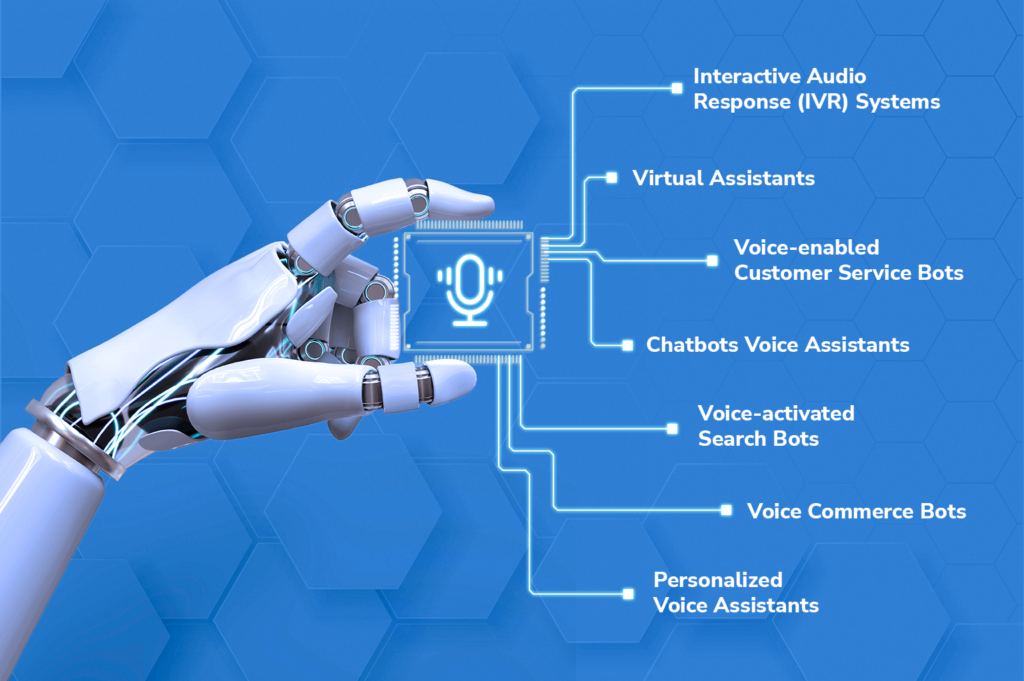
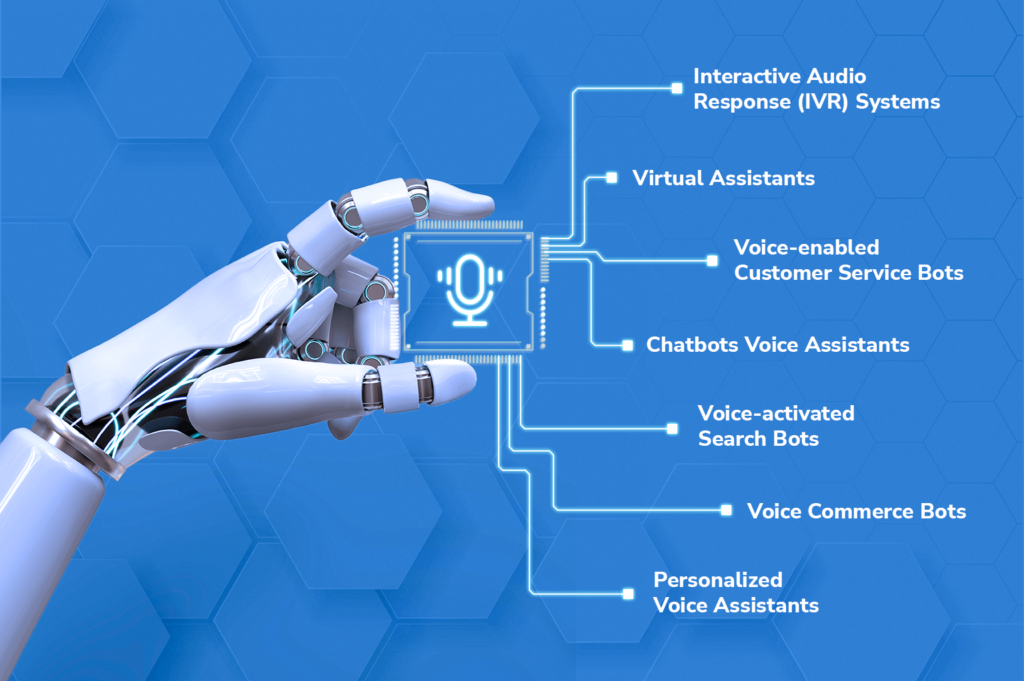
Voice bots can be ably used by businesses in a variety of ways depending on the unique set of powers and activities they are required to handle. Thus, here are seven of the most common types of voice bots:
- Interactive Audio Response (IVR) systems
IVR systems are automated phone systems that allow customers to engage with pre-recorded audio prompts and make choices using voice or touch-tone input. In some cases, inquiries can be processed by IVR systems and redirected to a responsible manager.
- Virtual assistants
One of the most complex and popular types of voice chatbots that answer questions, consult on problems, play music, and connect to smart home gadgets to operate them remotely.
- Chat bots voice assistants .
The bots build on the NLP technics, which allow them to give assistance through the user’s voice commands and inquiries while saving time in typing messages.
- Voice-enabled customer service bots
Such service bots are basically well-trained AI-powered customer service managers, capable of handling routine customer inquiries, providing information, guiding customers through processes, and escalating difficult situations to human agents when necessary.
- Voice commerce bots
Such bots allow consumers to utilize voice instructions to make purchases or execute transactions. They can handle orders, propose products, and help with payment processes.
- Voice-activated search bots
These bots provide search results based on voice searches. Such search bots are capable of retrieving information from databases or the internet, answering inquiries, and assisting in the discovery of relevant content.
- Personalized Voice Assistants .
Some voice bots are designed to learn and adapt to individual users’ preferences and behaviors. Based on user interactions, they may deliver individualized suggestions, customized solutions, and a more personalized experience.
These are just a few examples of the various sorts of voice bots available.
The communication industry is growing rapidly. In that regard, you may be also interested to read about the future of voice bots and how AI revolutionizes customer service .
The Essential Components of Voice Bot Development
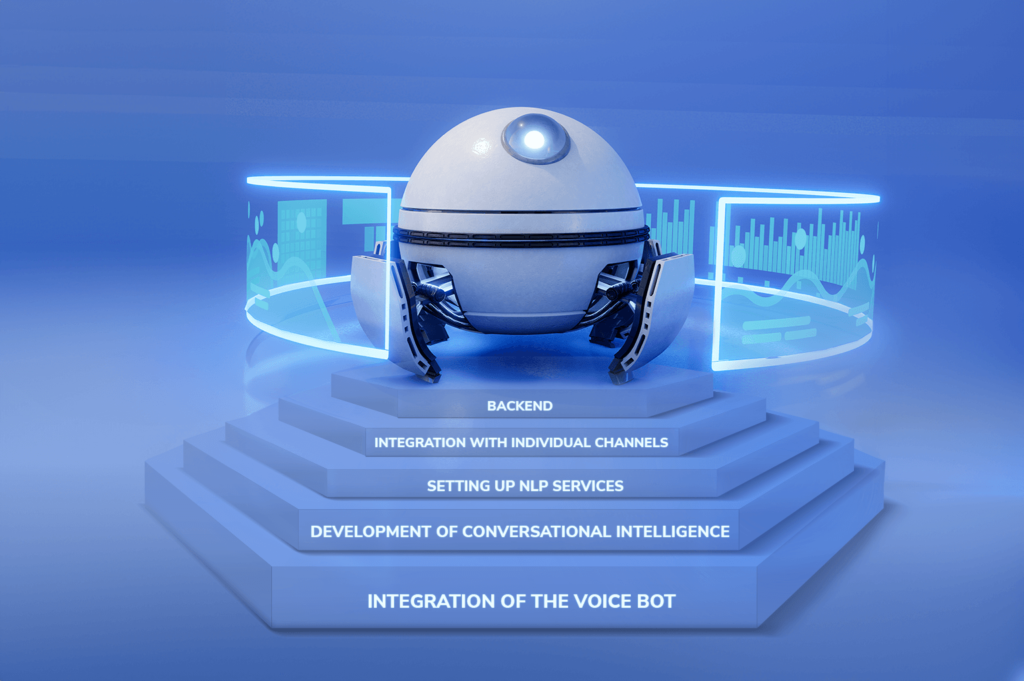
Voice bot development encompasses several crucial components that work together to create a seamless and intelligent conversational experience. From the backend to integration, each element plays a vital role in shaping the functionality of the voice bot.
Backend Components
The backend serves as the central hub for managing messages from multiple channels. It processes incoming messages using Natural Language Processing (NLP) offerings like CZ Bot’s, integrating business logic with the existing system. This integration forms the foundation of conversational intelligence, dictating how conversations unfold with end users.
Integration with Individual Channels
While each channel integration may differ, they generally involve setting up endpoints in the backend for sending and receiving messages with access token authorization. Additionally, channel-specific user interface elements, such as visual cards and quick replies, effectively guide users during conversations.
NLP Services
Setting up NLP services and message processing is straightforward with SDK support. However, training NLP entities and aligning them with external system objects, such as Contacts or Products databases, can be complex. This stage requires understanding entity-object mapping and implementing business logic validation on extracted data.
Development of conversational intelligence
This process involves designing intelligent conversation flows based on NLP intents and entities. Algorithms are written for navigation and conversation, ensuring seamless user interactions. Slot-based algorithms, decision trees, state workflows, and deep learning processes maintain control over the conversation flow.
Integration of the Voice Bot
This step involves connecting the bot with existing systems to facilitate processes like appointment booking and order placement. It includes validations and business logic rules for smooth interactions.
Each component contributes to building a voice bot that delivers intelligent and efficient conversational experiences. Through effective voice bot development and integration, businesses can enhance customer interactions, streamline processes, and drive overall efficiency.
Should you require assistance with building a voice bot, creating customized scrips for it, and managing your voice bot calls effectively, don’t hesitate to reach out to BSG — a communication provider.
Things You Must Know When You Build a Voicebot
As you decide to build a voice bot it is critical to go through a short checklist of basic things to build a fundamental understanding of how the new feature will improve your customer support. Having this vision it will be possible to build voice chat bots to satisfy customer needs.
- Take all utterances into account. Train voice bots to understand variations in speech patterns. Also, stock a wide range of utterances for each intent to accurately comprehend user input.
- Dig more details and personalize responses . Gather relevant user information to deliver personalized solutions. Go beyond the primary objective and offer additional assistance or reminders.
- Add a touch of personality . Give the voice bot a friendly and consistent personality. Create an engaging and brand-aligned conversational experience.
- Handle errors with multiple iterations . Equip voice bots to handle errors gracefully. Provide different prompts for clarification when user input is unclear.
- Build a voice bot to evolve and learn . Enable voice AI to continuously learn from interactions. Adapt to changing customer preferences. Regularly test and improve the voice bots’ performance.
- Make voice bot journeys easily navigable . Design voice bots to be user-friendly. Provide clear instructions on how to effectively use the voice box.
By implementing these best practices to create voice bot, businesses can enhance functionality, personalization, and overall user satisfaction.
How to Create your first voice chatbot: a Step-by-Step Guide
There are various phases involved in creating voice chatbots. If you get to the development yourself, you will need to: 1) Convert speech to text or write textual scripts, 2) train the voice bot, and 3) run text-to-speech (TTS) synthesis. It may be quite challenging if you don’t have past experience with such solutions.
However, the BSG has got you covered. Here is the simple step-by-step tutorial for building your own voice bot using the BSG’s voice bot platform .
- Step 1: You fill out a brief.
This will include detailed information about your bot’s intended functions, target audience, and business objectives.
- Step 2: We develop dialog scripts
Our skilled team will take into consideration your business language and the purpose of the bot to craft effective and engaging conversations.
- Step 3: We set up the bot, train it, and voice it.
We’ll use NLP, TTS, and other technologies to set up the bot and ensure that it is interactive and easy to use.
- Step 4: We make test calls, analyze and adjust.
We run test calls to pinpoint any potential issues and make necessary changes for optimal performance.
- Step 5: Launch the bot on the main contact database
Then we help to run the new bot so it can assist customers, handle inquiries, and improve your overall service.
- Step 6: We send a full report
We will send you recordings for each calls, and both general and advanced report for your voice bot campaigns. It will also include insights into how the bot performed, feedback received, and recommendations for future improvements.
By following these steps, you will be able to have your own voice bot professionally created and set up by an experienced voice bot solution provider — BSG.
The Final Take
Voice bot services are seamlessly integrating into various industries, ranging from banking to healthcare, due to their remarkable effectiveness in enhancing the user experience. Therefore, it is crucial to understand which type of voice bot is most suitable for your business and begin developing innovative solutions using our guide or by seeking assistance from a professional voice bot development service provider. The future of voice chatbots is evident; their popularity will continue to soar as the demand for improved experiences grows. If you’re considering implementing a voice bot solution for your business, look no further than BSG — a voice bot service and communication solution provider . As a trusted partner with extensive experience in the market, we have the expertise to elevate your marketing and customer support efficiency.


Interested in a special offer?
Ready to reach further?
Let’s talk


Related articles
The emergence of voicebot technology has sparked a transformative shift in how we interact with

Today, online security is paramount for businesses, especially those operating in the e-commerce sector. Shopify,
Selling information products holds significant advantages, particularly when offering trials for potential customers. This strategy