





How many of your OTPs
were bot-requested?
AIT (Artificially Inflated Traffic) is a fraud scheme where bots mass-request OTP codes on "premium" number ranges, and fraudsters split the take with dishonest links in the delivery chain. You pay for every one of those SMS — and in the reports it all looks like ordinary traffic. Alongside the bot requests comes bot registration — fraudulent accounts inside your onboarding.
Pattern analysis in 48 hours · no access to personal data · NDA on request
12 AIT red flags in your traffic
Check the flags you've spotted in your traffic — your risk level appears on the right instantly. The analysis is free.
Codes go out but nobody enters them — the classic bot signature.
Abnormal peaks at 3–5 a.m. local geo time, in markets where you run no marketing.
Sudden traffic to countries where you haven't launched and don't advertise.
Requests to +XXXXXX0001, 0002, 0003… — a sequential sweep through the range.
The device fingerprint never changes; the phone numbers are new every time.
A user "didn't get" the code 5 times in a row — and never once tried to enter it.
SMS costs grow faster than active users and transactions.
HLR shows it: a sizable share of numbers is inactive or nonexistent.
Accounts get created but never finish onboarding or make a single transaction.
A disproportionate volume of traffic to one small carrier in a single geo.
The attack runs 2–3 days, disappears, then returns a week later from a different range.
Your current provider earns on every SMS sent — it has no incentive to stop AIT.
Check the items on the list — we'll assess the AIT risk in your traffic.
Book a MeetingAIT isn't "noise in the stats." It's a direct hit to the P&L
-
You pay for every fraudulent SMS
At the price of a normal OTP — only with zero chance of converting.
-
Fraudulent accounts clear onboarding
Bot registrations clog the KYC queue and degrade database quality — that's now a compliance problem, not just a budget one.
-
The metrics lie
Delivery rate looks fine, funnel conversion doesn't. Teams hunt for the problem in the product, but it's in the traffic.
-
Blind rate limiting hits live users
Hard limits without number verification cut bots and real customers alike — and conversion with them.
How much AIT is eating in your case
We filter out bots before you've paid for the SMS
Number Verifier
HLR / MNP Lookup
SMS API + analytics
Flexible rules
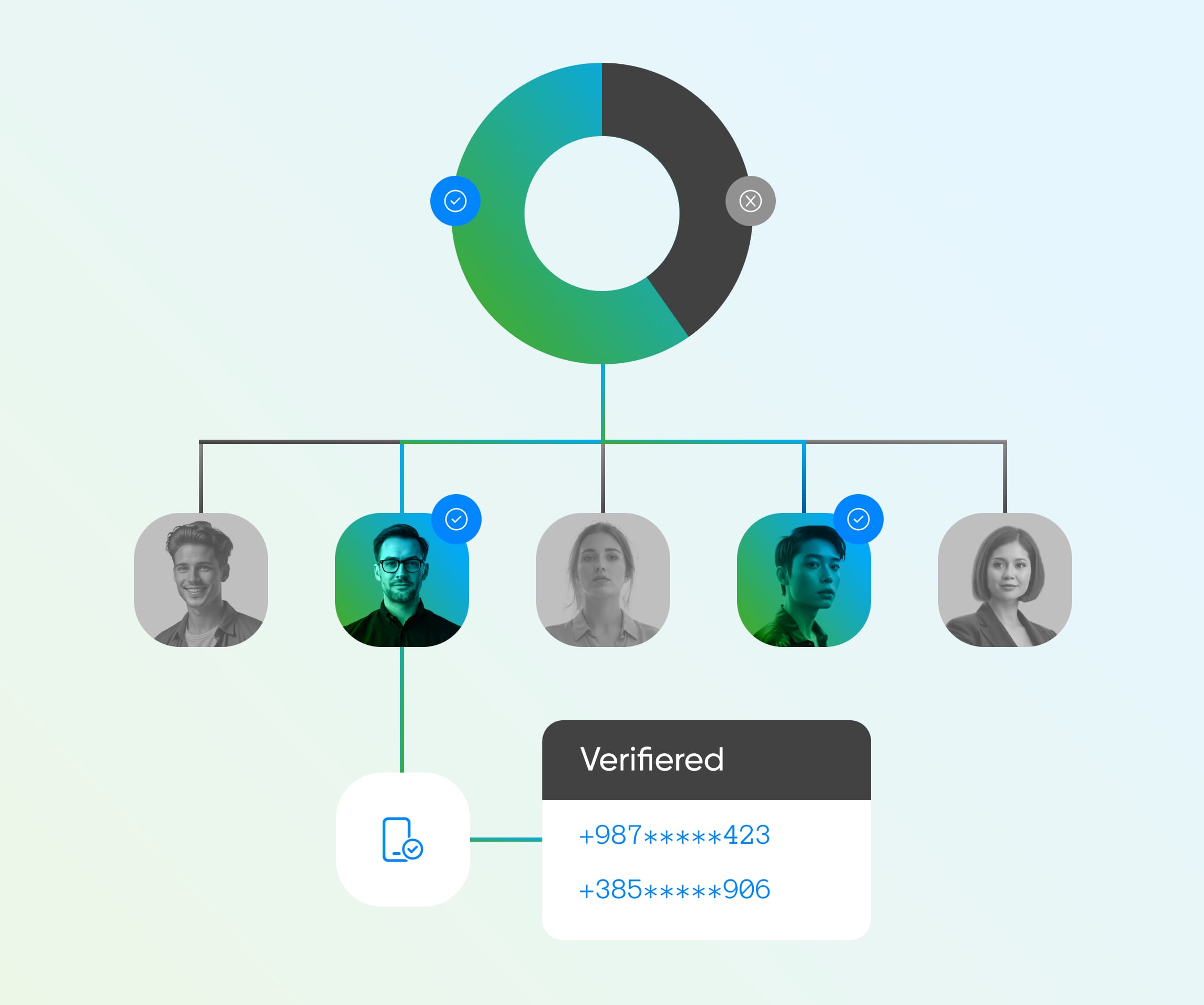
Number verification without sending an SMS
Cryptographic proof of number ownership with no OTP code. No SMS means nothing to "pump" — AIT loses its source of income.
Better Price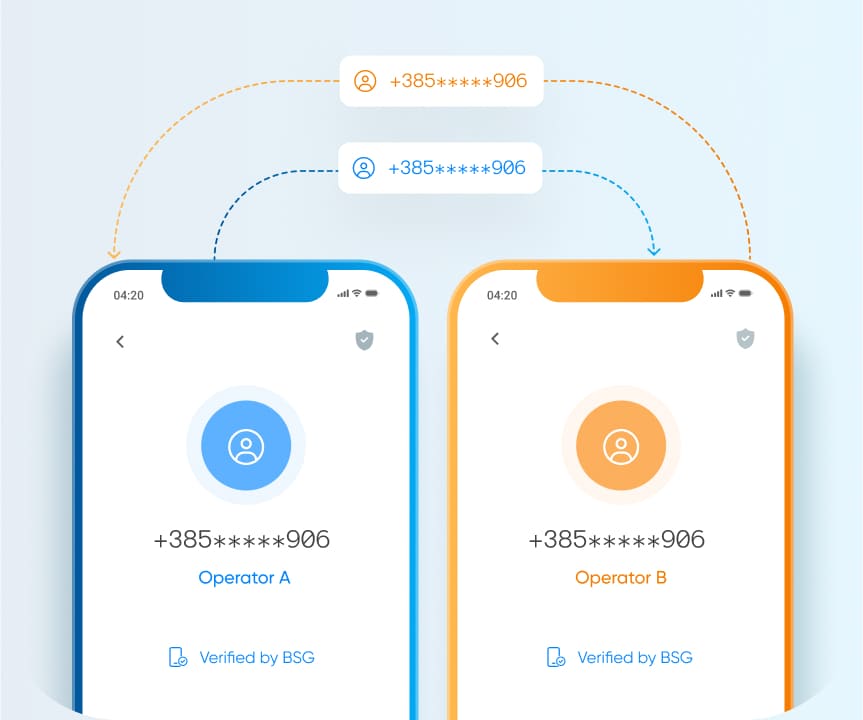
Number check before sending
Real or nonexistent number, active or on-network, which carrier — an answer in milliseconds, before you've paid for delivery.
Better Price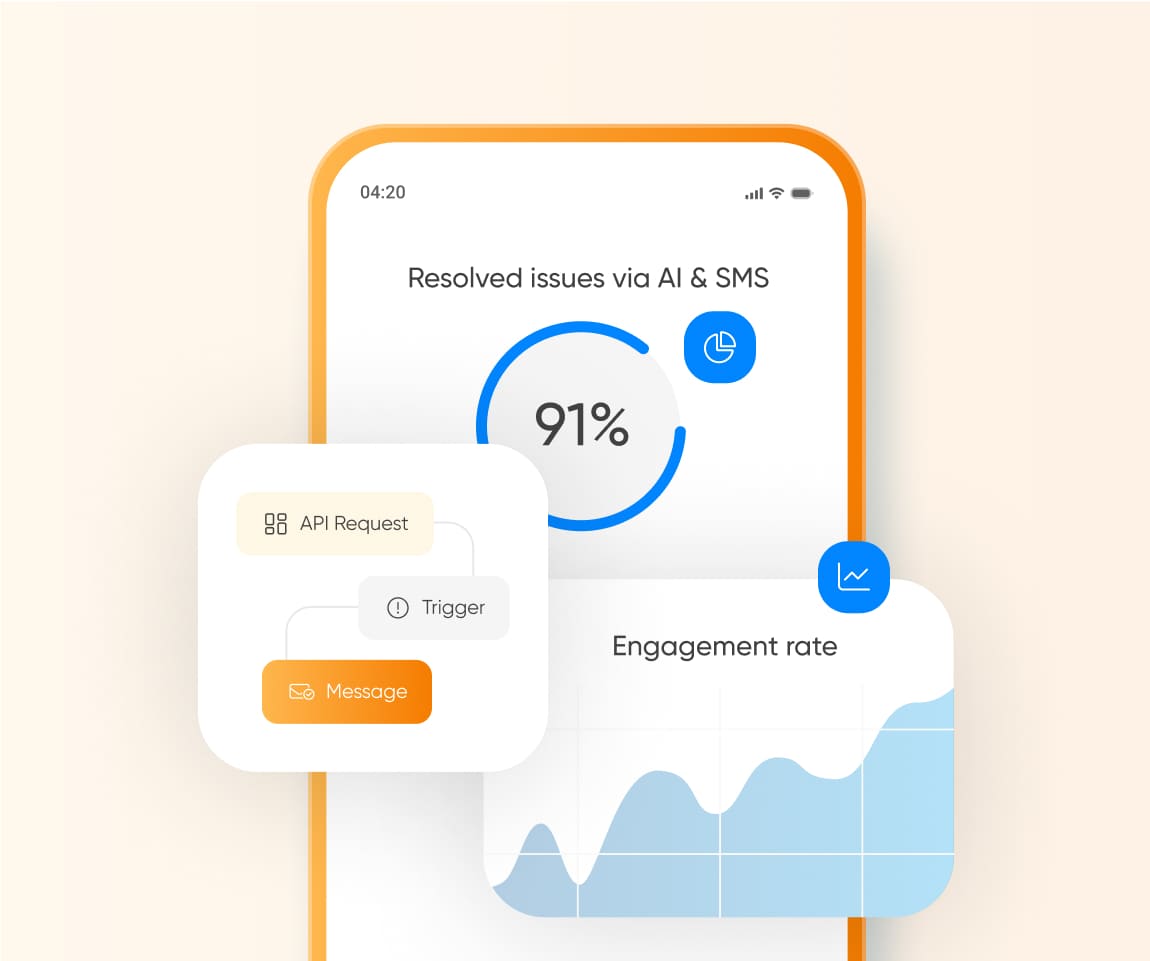
Per-carrier conversion visibility
OTP → verification conversion for every carrier and geo, in real time. An anomaly on one range shows up instantly — not in the invoice at month's end.
Better Price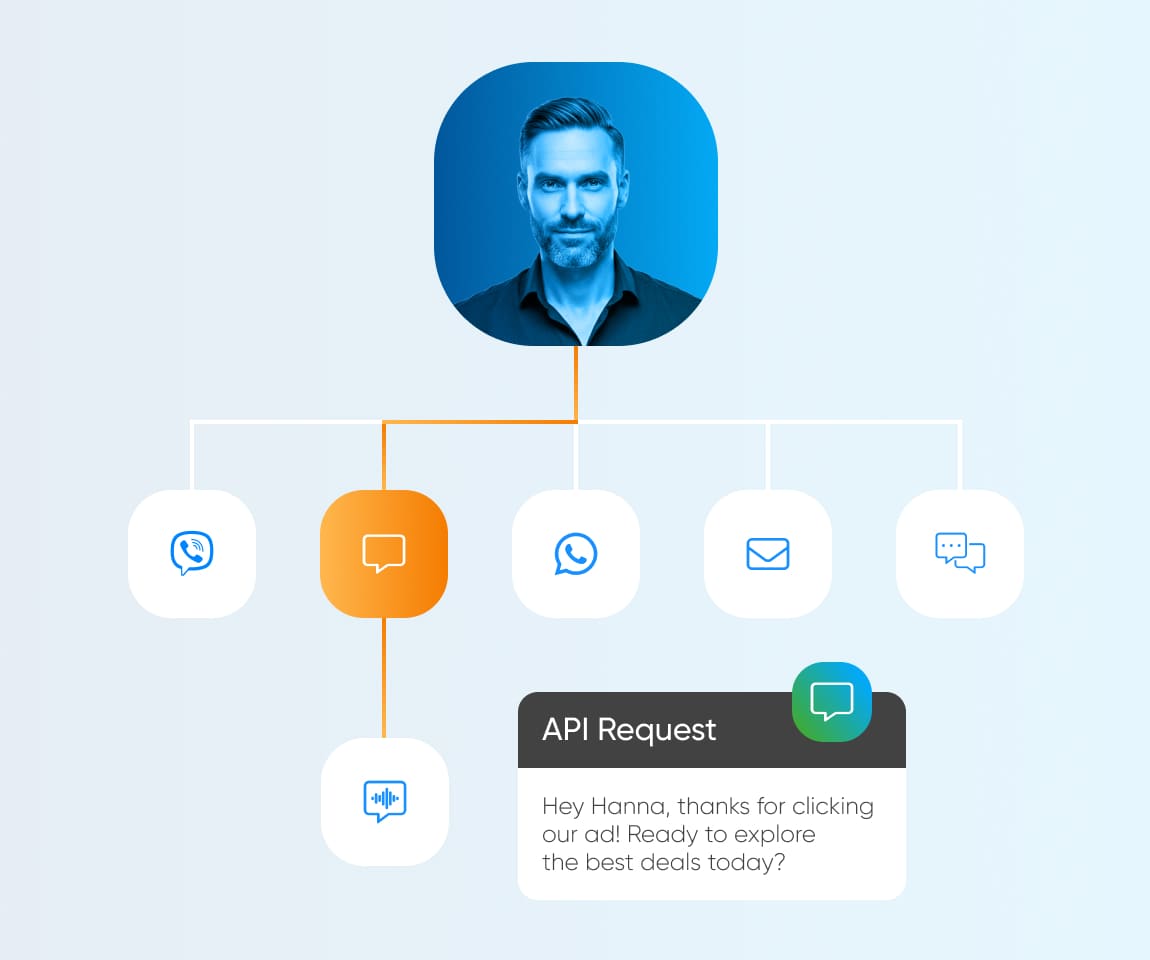
Geo-filters and limits without hurting conversion
Precise rules by country, range, and pattern — instead of "switch off every geo." Legitimate users get their codes; bots don't.
Better PriceAnalysis of your OTP traffic
for AIT patterns
Send 30–90 days of aggregated stats (volumes by geo, code conversion, top ranges — no personal data). A BSG fraud analyst returns your report within 48 hours.
Get your analysis in 48 hours-
An estimate of suspicious-traffic share for each geo
-
The specific ranges and carriers under suspicion
-
The math: how much budget AIT is eating right now
-
Protection plan: what to close with filters, what with Number Verifier
-
PDF "12 red flags" — for your fraud team
Honest answers before the sales call
How do I tell AIT apart from an organic traffic spike?
The key marker is OTP → successful verification conversion. An organic spike (a promo, a new market) converts in the normal range; AIT delivers near-zero conversion on specific ranges and carriers. The second marker is serial numbering and repeating device fingerprints. Those are exactly the cuts we examine in the analysis.
Do I need to switch my current SMS provider to protect myself?
No. HLR Lookup and Number Verifier work as standalone APIs on top of any messaging stack — you can filter traffic before it's sent through your current vendor. Many clients start exactly this way, then compare delivery later.
Do you get access to our user data?
The analysis needs only aggregated stats: volumes by country/carrier, code conversion, distribution across ranges. No names, no message content, no personal data. We sign an NDA before anything changes hands.
Why doesn't my current vendor flag AIT?
Conflict of interest: the provider earns on every SMS sent, fraudulent ones included. It isn't always malice — more often it's simply no incentive to invest in filters that would shrink its own revenue. The question worth raising at your next QBR: "what's my OTP-to-verification conversion by carrier?"
How much does protection cost?
HLR Lookup and Number Verifier are billed per request — typically many times cheaper than the SMS they save. Exact figures depend on volume and geo; after a traffic analysis you'll get an ROI calculation on your own numbers: what the checks cost vs. how much budget they rescue.


Find out how many of your OTPs are bots
Share of suspicious traffic, the specific ranges, a protection plan.
No end-user personal data — statistics only.
20-minute slot — we'll talk through your patterns, no slides.

By clicking the button, you agree to data processing so we can respond to your request.
Useful Materials
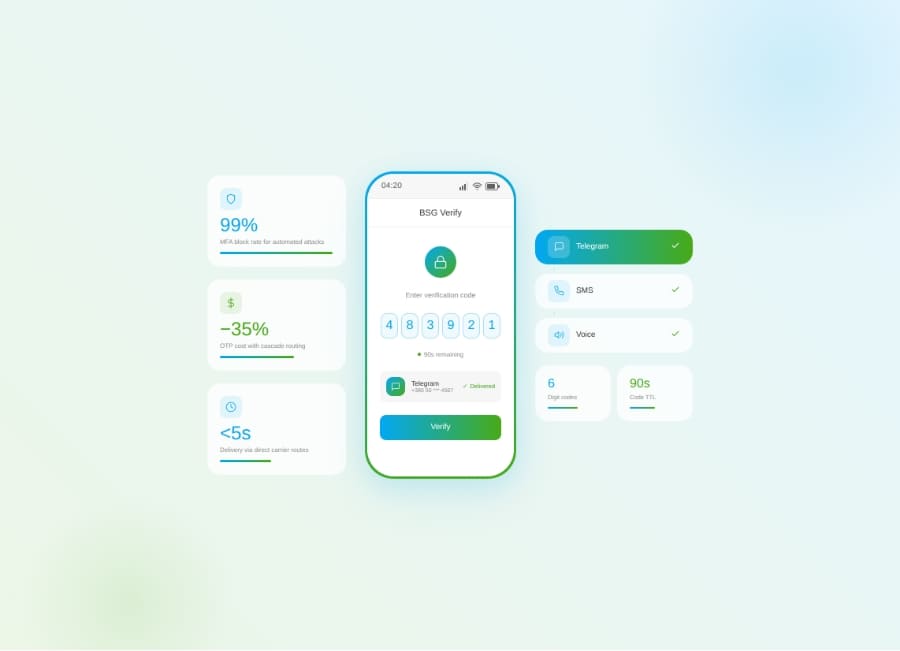
OTP means one-time password — see how it works, compare delivery channels, and cut verification costs with cascade routing.

Are you a fan of online gaming and betting or do you have an iGaming
Fraud and data theft continue troubling online services, costing them huge losses. The estimated cybercrimes