




Communications Platform as a Service (CPaaS)
What is CPaaS?
CPaaS (Communications Platform as a Service) is a cloud model that delivers messaging, voice, and verification as programmable APIs developers embed in their own applications. It lets a business add messaging, voice, video, and verification to its own applications through APIs, without owning telecom infrastructure or signing carrier contracts. For a deeper dive, see BSG's Complete Business Guide to CPaaS.
How does CPaaS work?
Developers call one set of APIs to reach customers across SMS, WhatsApp, RCS, Viber, voice, and email, while the provider handles carrier routing, number management, delivery logic, and failover. CPaaS follows a pay-per-use model — billing per message, per minute, or per verification — and is typically adopted by engineering and product teams rather than IT operations.
How does CPaaS differ from UCaaS and CCaaS?
CPaaS differs from UCaaS, which serves internal employee collaboration, and from CCaaS, which is a ready-made contact center for support agents. CPaaS provides the building blocks a business embeds inside its own product, rather than a finished application.
Why do businesses use CPaaS?
The practical value is speed. Once the API integration exists, adding a new channel becomes a configuration change rather than a new vendor project. For example, BSG delivers CPaaS through its One API with built-in cascade routing, so a message that fails on one channel automatically retries on a fallback such as SMS.


Interested in a special offer?
Ready to reach further?
Let’s talk


Related Terms
Explore BSG Solutions
Useful Materials
![WhatsApp Business API: Complete Guide — Setup, Pricing, Use Cases [2026]](/assets/img/blog/whatsapp-business-api-setup-pricing-use-cases-guide_avatar.jpg)
WhatsApp Business API for 2026 — setup steps, the new per-message pricing model, and proven use cases by industry.
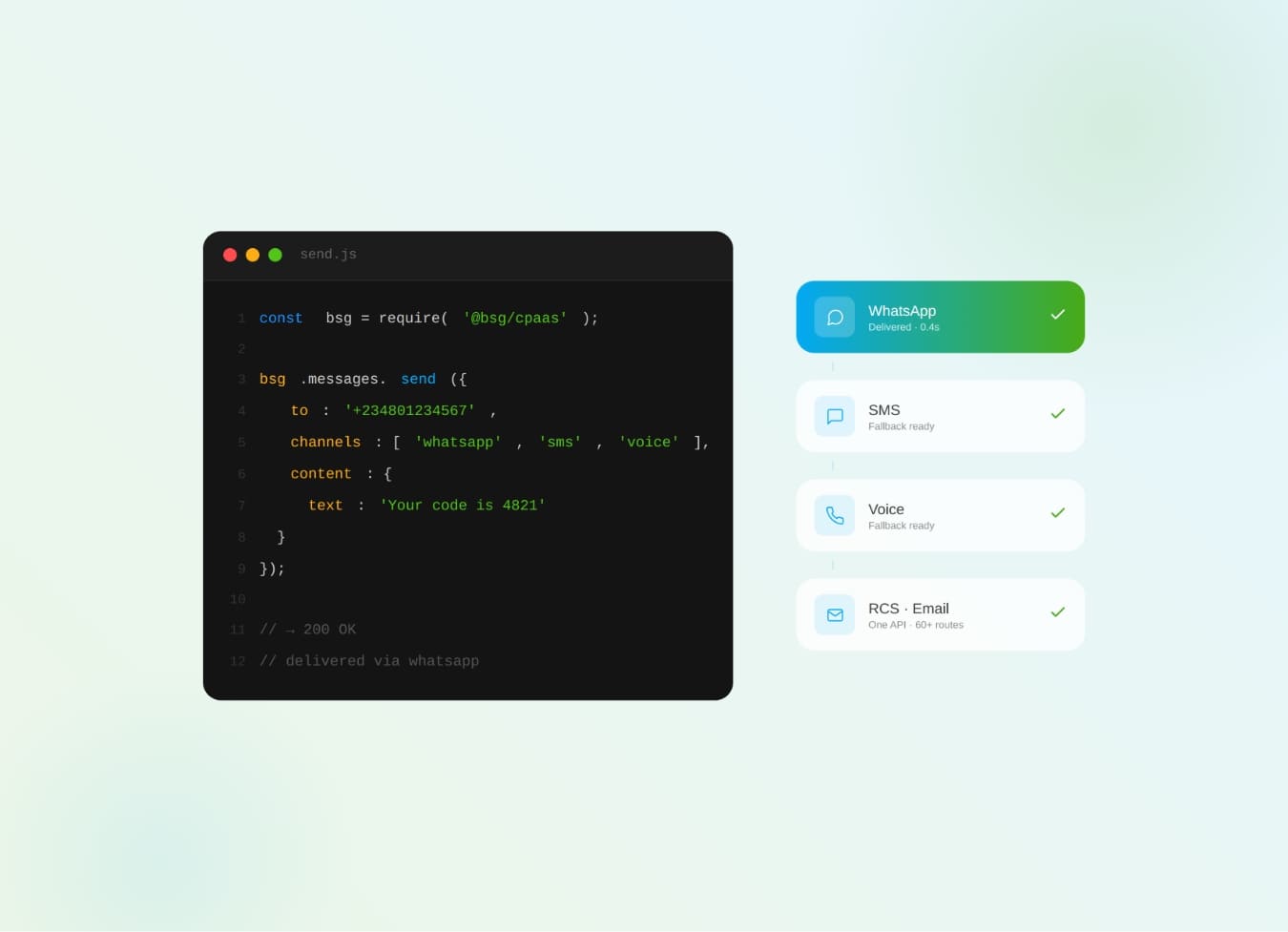
What is CPaaS? The cloud API layer that adds SMS, WhatsApp, voice & OTP to your apps — how it works and why it beats a multi-vendor stack.
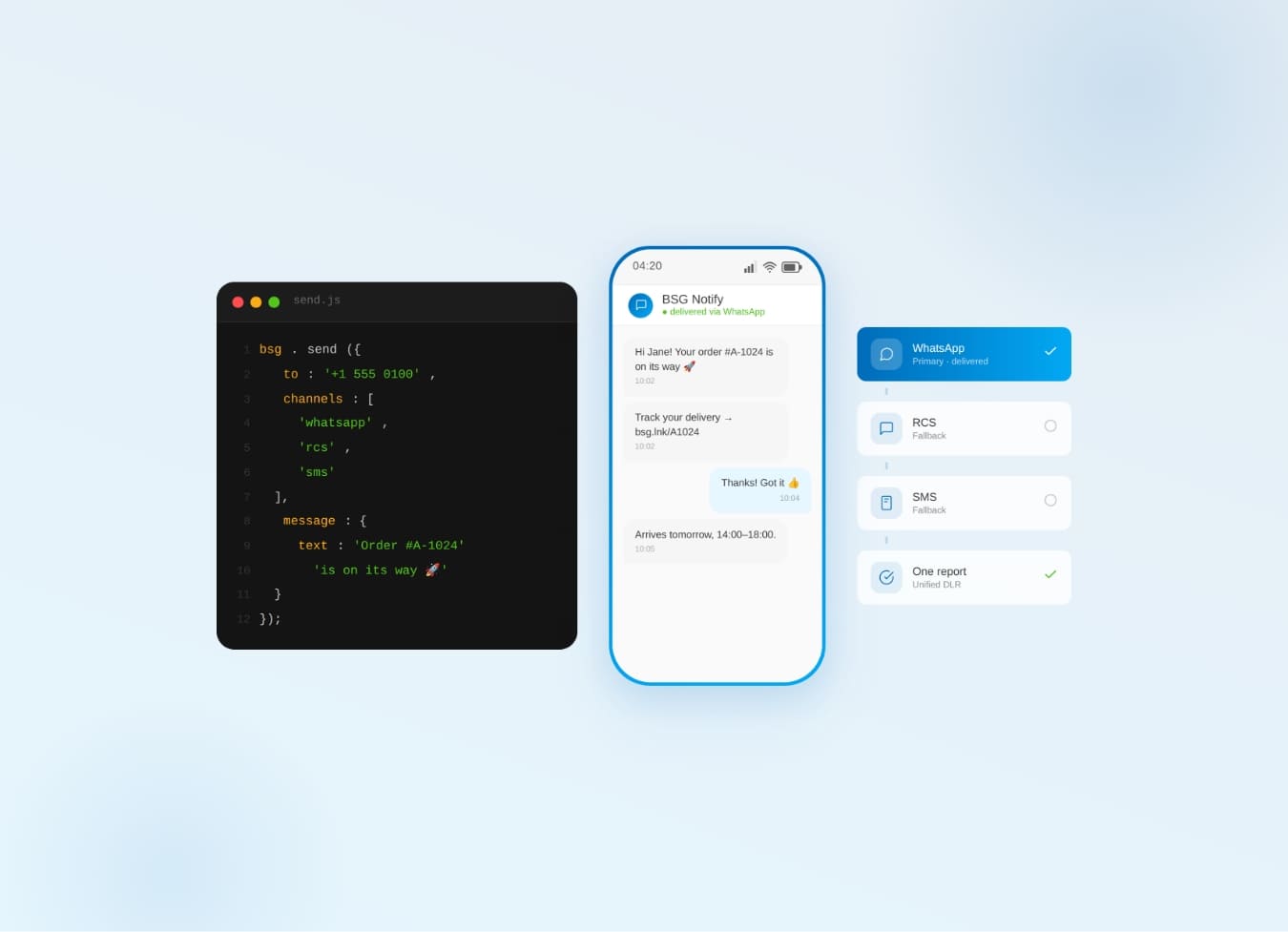
Why one communication API for SMS, WhatsApp, Viber & RCS beats five separate integrations — cascade fallback, unified reports.