




CSAT (Customer Satisfaction Score)
What is CSAT?
CSAT (Customer Satisfaction Score) is a metric that measures customer satisfaction with a specific interaction, product, or service, typically collected through post-interaction surveys. It captures how a customer feels about a specific touchpoint — a support call, a purchase, or an onboarding session. Automating routine support with tools like BSG's AI Support Assistant is one common lever for improving CSAT.
In a contact center, CSAT is usually tracked alongside containment and resolution metrics as part of a broader CCaaS setup. See BSG's How to Measure the Success of Your Voice Bot Implementation – BSG Guide 2024 for a closer look at how this plays out in practice.
How is CSAT calculated?
The standard format asks customers to rate their experience on a scale (usually 1–5), and the score is calculated as the percentage of positive responses (4 and 5) out of total responses. A CSAT score above 80% is generally considered strong, while scores below 60% signal a competitive disadvantage.
How does CSAT differ from NPS?
What makes CSAT valuable for retention is its immediacy. Unlike NPS, which measures long-term loyalty intent, CSAT reflects the quality of the last interaction — the one most likely to trigger or prevent churn.
Why does CSAT matter for retention?
When collected through AI voice surveys instead of email, response rates increase significantly because customers speak naturally rather than typing minimal answers. The data feeds directly into churn prediction models: a drop in CSAT after a support interaction is one of the strongest early churn signals available.


Interested in a special offer?
Ready to reach further?
Let’s talk


Related Terms
Explore BSG Solutions
Useful Materials
![WhatsApp Business API: Complete Guide — Setup, Pricing, Use Cases [2026]](/assets/img/blog/whatsapp-business-api-setup-pricing-use-cases-guide_avatar.jpg)
WhatsApp Business API for 2026 — setup steps, the new per-message pricing model, and proven use cases by industry.
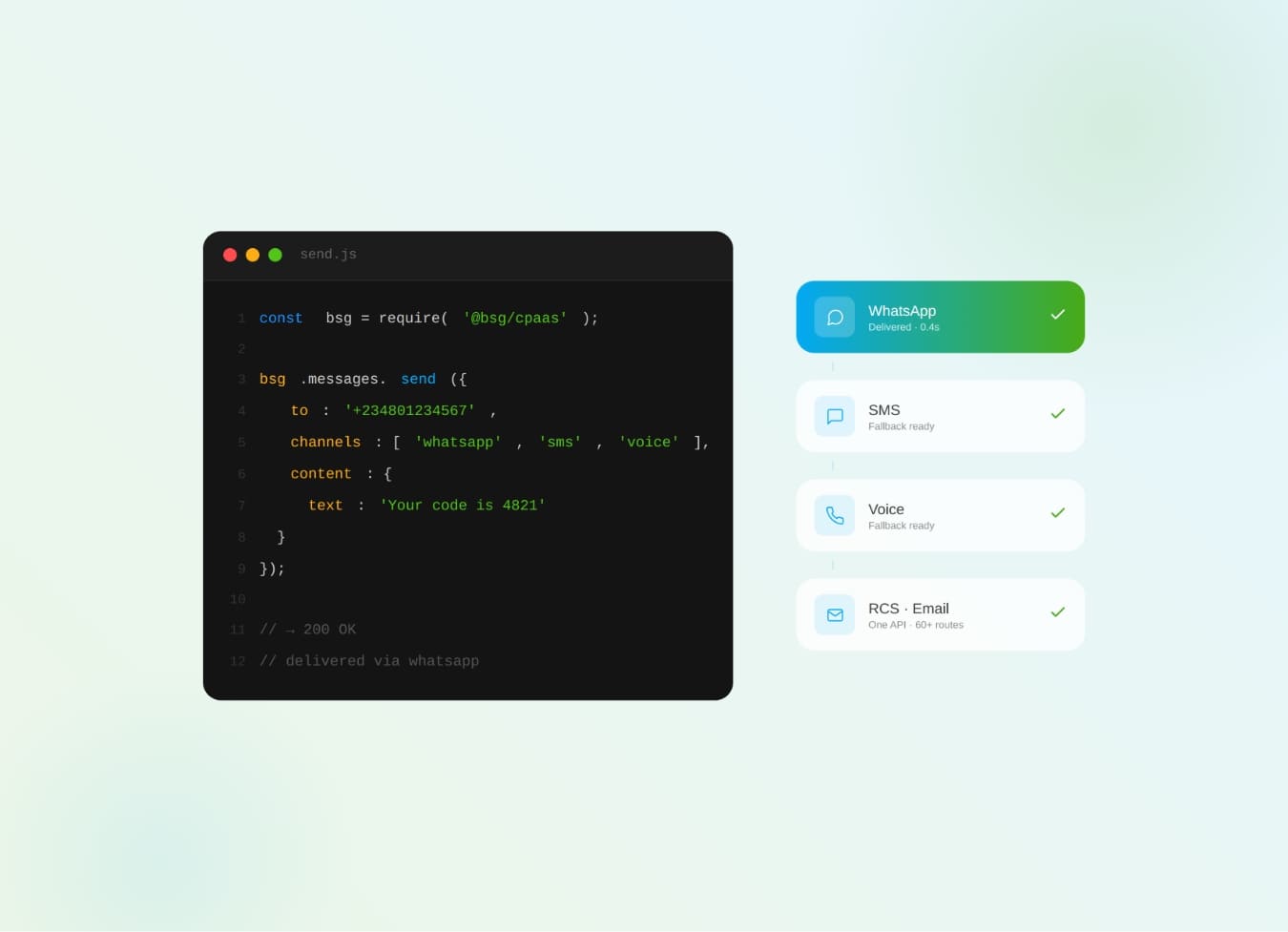
What is CPaaS? The cloud API layer that adds SMS, WhatsApp, voice & OTP to your apps — how it works and why it beats a multi-vendor stack.
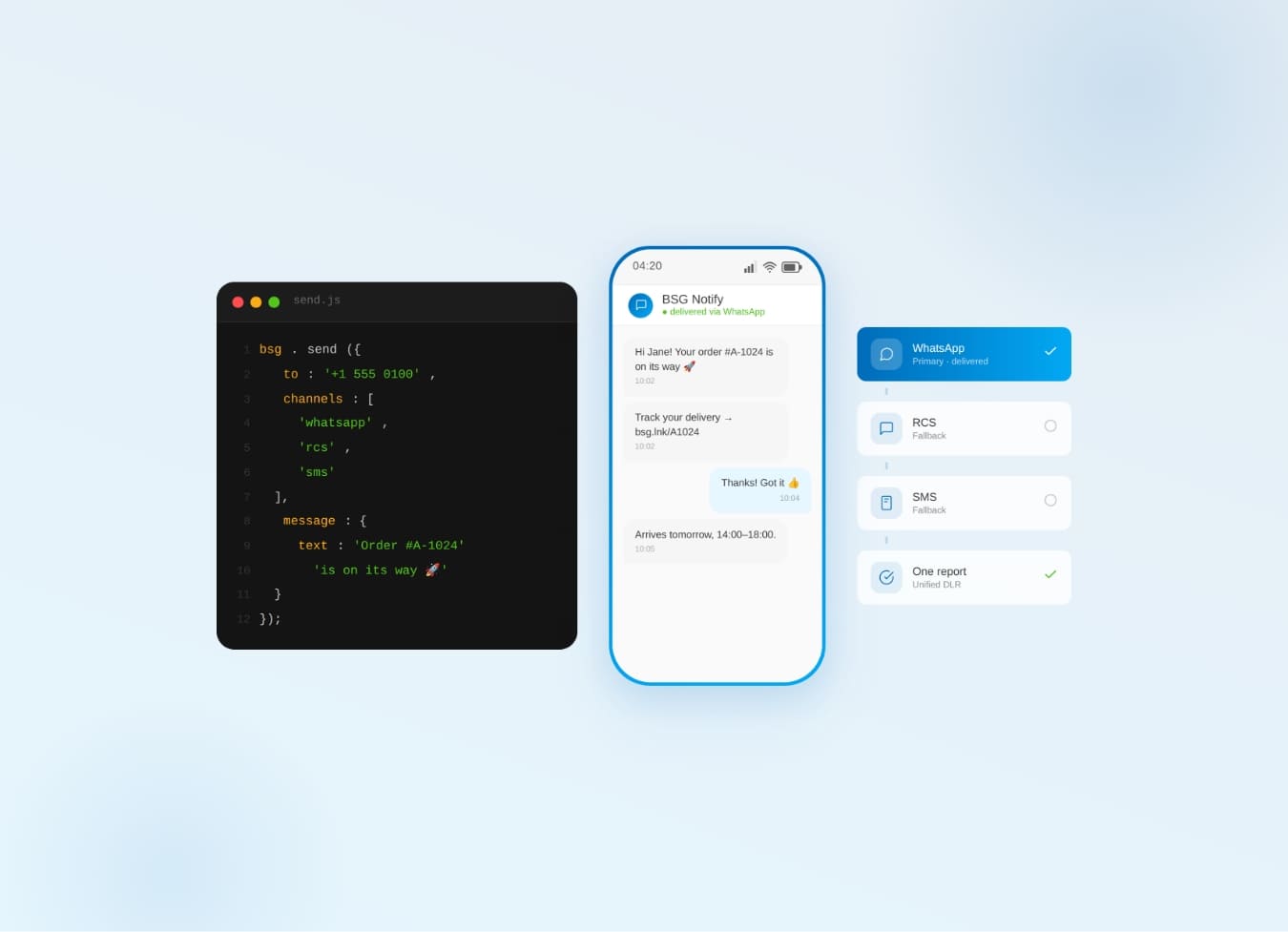
Why one communication API for SMS, WhatsApp, Viber & RCS beats five separate integrations — cascade fallback, unified reports.