




DTPOA
What is DTPOA?
DTPOA or also known as Dynamic Transmission Path Originating Address is a Dynamic Sender ID that carries an alphanumeric Sender ID. It is a feature to mask the originating number with an alphanumeric string (up to 11 characters). This feature enables users to define what text is displayed on the screen (the sender ID of the message) when a person receives an SMS message.
The address is usually dynamically assigned or changed based on the transmission path of the message. It is used to provide additional security when sending data across networks.
DTPAO is a powerful tool for network security because it allows for a message’s origin to be verified. By assigning a unique DTPAO address to a transmission, the source can be tracked and verified. This helps to prevent malicious or unauthorized access to a network, as the DTPAO address provides an extra layer of authentication.
DTPA also helps to prevent malicious actors from spoofing the source of a transmission, as the DTPOA address is uniquely assigned to the transmission path and cannot be changed.
The DTPOA address is usually dynamically assigned or changed depending on the network route of the message, providing an extra layer of security to ensure that the transmission is coming from an authorized source.
For more on this, see BSG's 6 Key Insights and Trends Shaping SMS Marketing.
How does it work?
DTPOA works by assigning a unique address to each transmission that is sent over a network. This address is created using a combination of the source IP address, the destination IP address, and the transmission path. When the transmission is sent over the network, the DTPOA address is included in the data packet and is used to identify the source of the transmission. This address is then used to verify the origin of the transmission, preventing malicious actors from spoofing the source of the transmission.
Additionally, the DTPA address is usually dynamically assigned or changed depending on the network route of the message, providing an extra layer of security to ensure that the transmission is coming from an authorized source.


Interested in a special offer?
Ready to reach further?
Let’s talk


Related Terms
Explore BSG Solutions
Useful Materials
![WhatsApp Business API: Complete Guide — Setup, Pricing, Use Cases [2026]](/assets/img/blog/whatsapp-business-api-setup-pricing-use-cases-guide_avatar.jpg)
WhatsApp Business API for 2026 — setup steps, the new per-message pricing model, and proven use cases by industry.
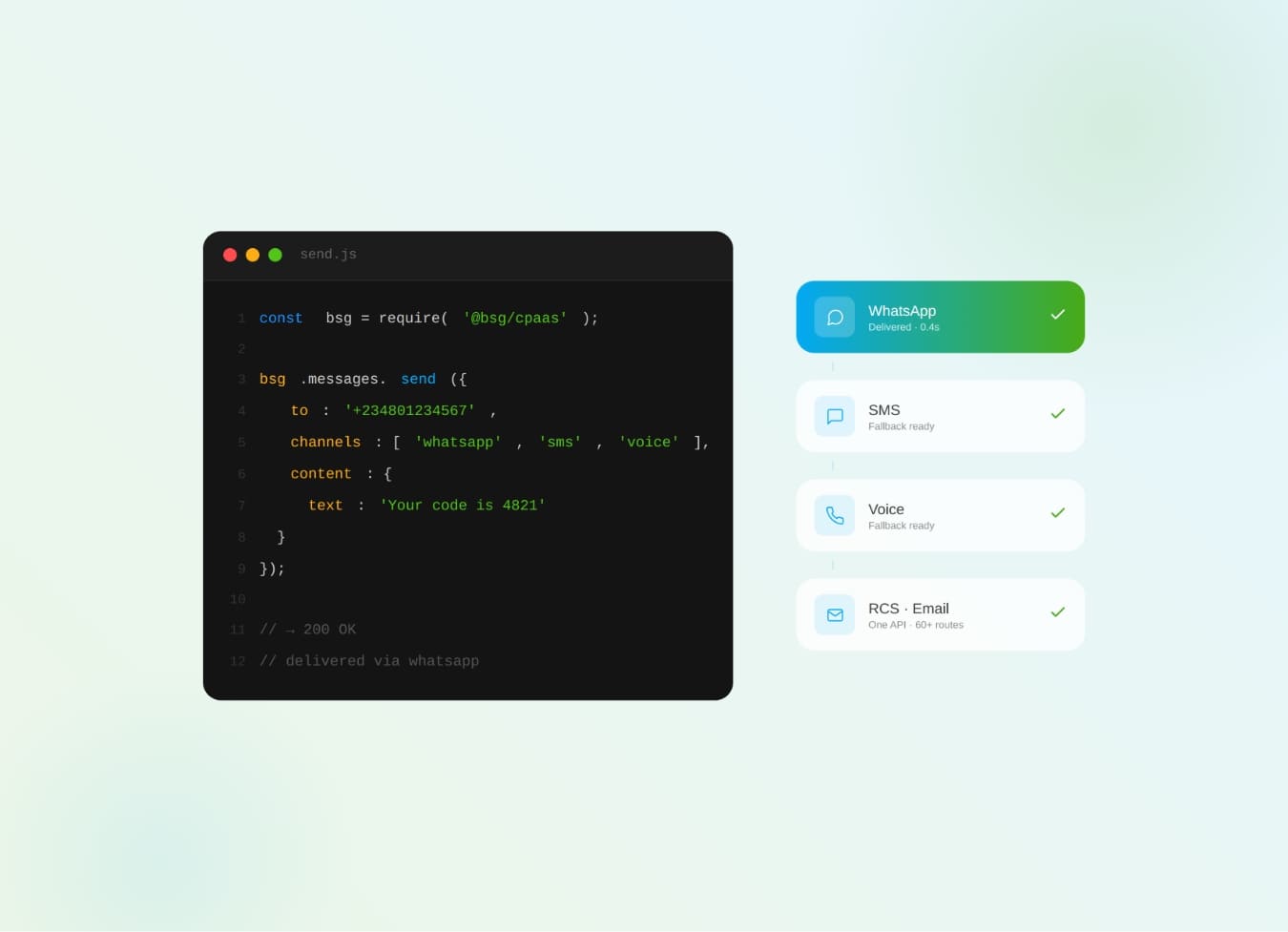
What is CPaaS? The cloud API layer that adds SMS, WhatsApp, voice & OTP to your apps — how it works and why it beats a multi-vendor stack.
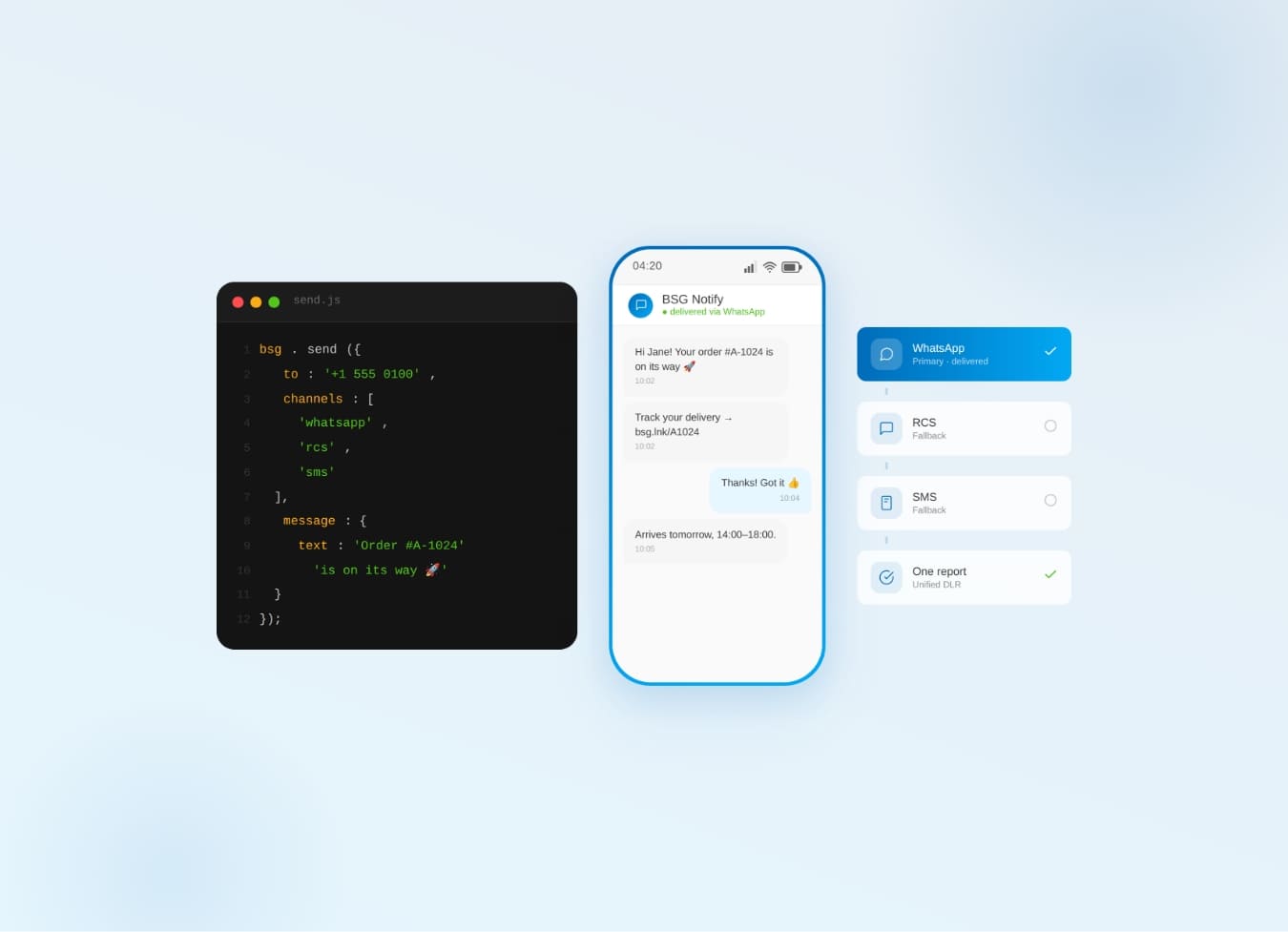
Why one communication API for SMS, WhatsApp, Viber & RCS beats five separate integrations — cascade fallback, unified reports.