




End-to-End Encryption
What is End-to-End Encryption?
End-to-end encryption (E2EE) is a security method where messages are encrypted on the sender's device and can only be decrypted on the recipient's device. No one in between — not the messaging platform, not the network operator, not the hosting provider — can read the content in transit.
How does end-to-end encryption work across channels?
How it works in WhatsApp
Every message sent through WhatsApp — including through the WhatsApp Business API — is encrypted end-to-end by default using the Signal protocol. This applies to text, images, voice notes, documents, and calls. The encryption keys are stored only on the devices involved in the conversation. WhatsApp Business Web and Desktop inherit this encryption from the primary phone, and Meta offers Code Verify — a browser extension for Chrome, Firefox, and Edge — that checks the web client code has not been tampered with.
How it works in RCS
RCS supports end-to-end encryption in one-to-one conversations through Google Messages, but the coverage is not universal. Encryption depends on both devices running a compatible version of Google Messages with E2EE enabled. Group chats and business messaging (A2P) through RCS do not currently carry end-to-end encryption in most deployments. The security model for RCS business messaging relies on transport-layer encryption (TLS) between the carrier and the device, not E2EE.
How it works in SMS
SMS does not support end-to-end encryption. Messages travel in plaintext across the carrier network. SS7 vulnerabilities have been documented for years. For sensitive content like OTP codes, this is a known risk — which is why WhatsApp and RCS OTP delivery is growing as an alternative to SMS OTP in markets where the app install base supports it.
Why it matters for business messaging
E2EE protects customer data — payment references, delivery addresses, ID details, transaction confirmations — from interception. For eCommerce teams operating under Nigeria's NDPR, South Africa's POPIA, or the Philippines' Data Privacy Act, encryption is one layer of a compliance posture, but it is not the whole picture. Encryption covers the chat. Compliance requires access logs, storage controls, and documented data flows — which the free WhatsApp Business app cannot produce, regardless of encryption. The WhatsApp Business API through a verified BSP adds those controls.
BSG provides encrypted messaging across WhatsApp, RCS, and SMS through One API — with channel-level visibility into which messages were delivered encrypted and which fell back to SMS. Talk to the BSG team for compliance guidance.
Is WhatsApp Business API end-to-end encrypted?
Yes. All messages through the WhatsApp Business API are end-to-end encrypted using the Signal protocol — the same encryption as personal WhatsApp. Neither Meta nor the BSP can read message content.
Is RCS encrypted?
RCS supports end-to-end encryption in personal one-to-one chats on Google Messages, but business (A2P) RCS messaging currently uses transport-layer encryption (TLS), not E2EE. The security is stronger than SMS but not equivalent to WhatsApp.


Interested in a special offer?
Ready to reach further?
Let’s talk


Useful Materials
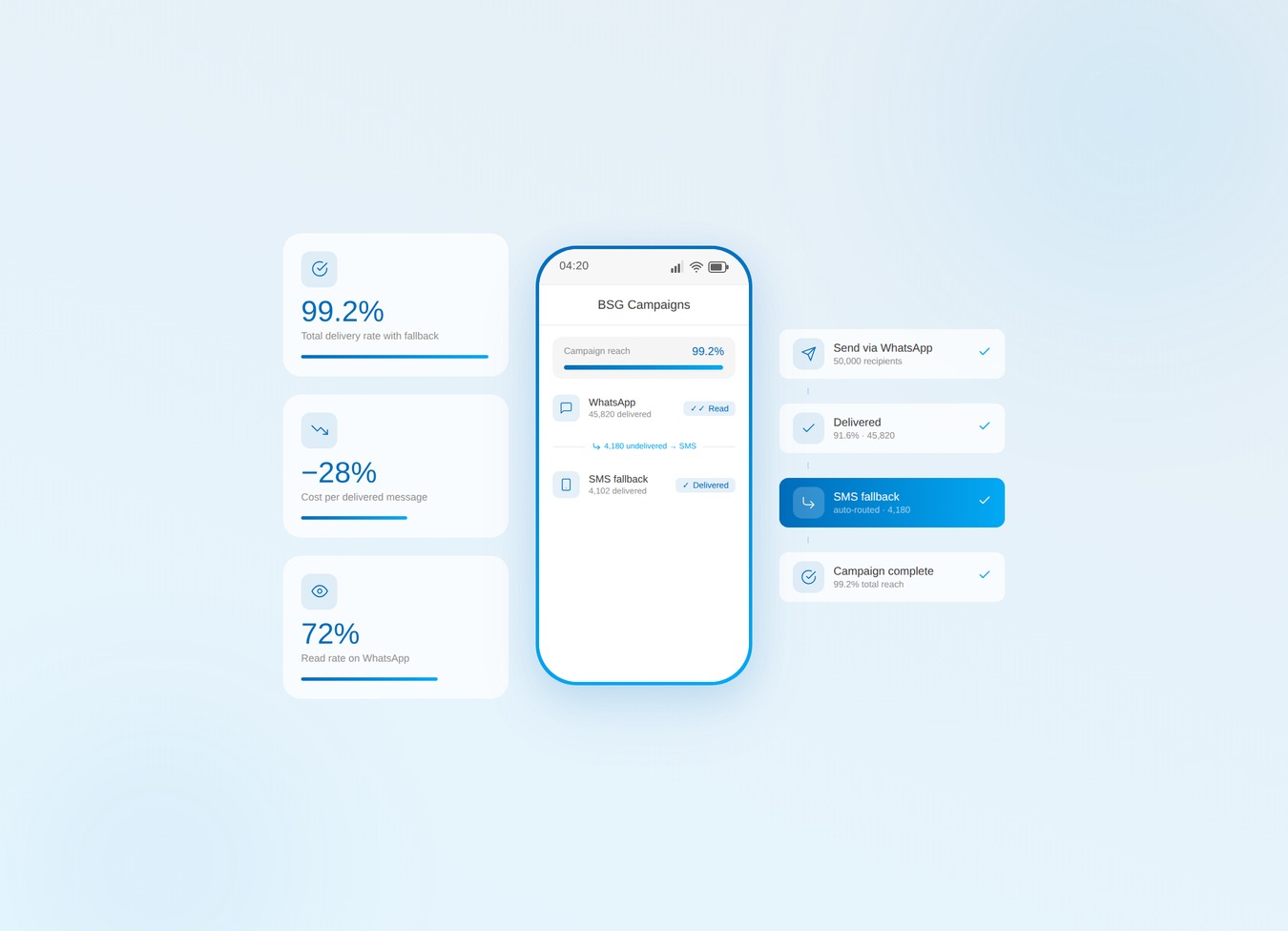
Bulk SMS alone leaks budget. Verify the list, then run WhatsApp-first with SMS fallback.
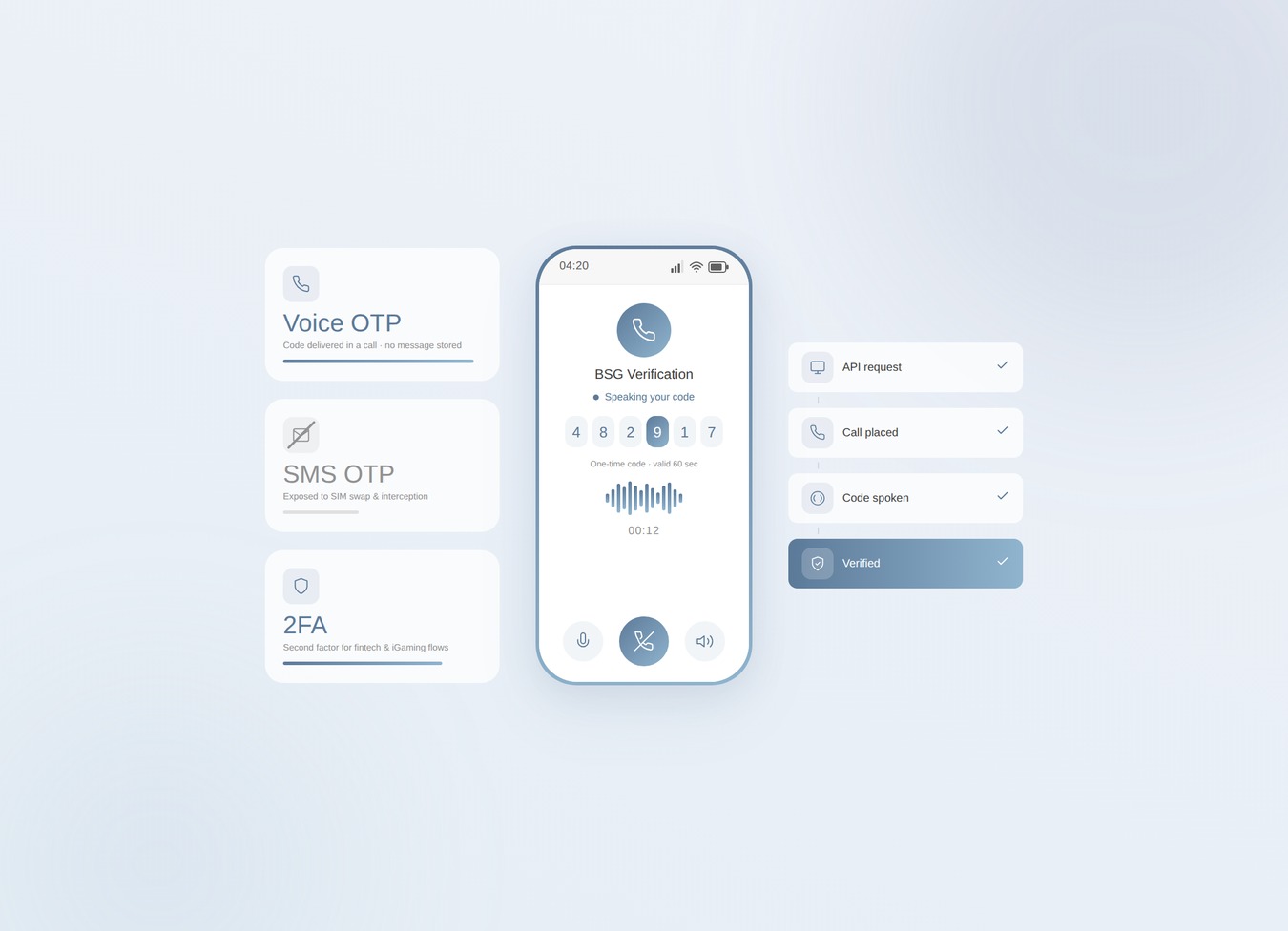
SIM swaps jumped 1,055% in a year. Voice OTP takes your riskiest codes off the SMS rail.
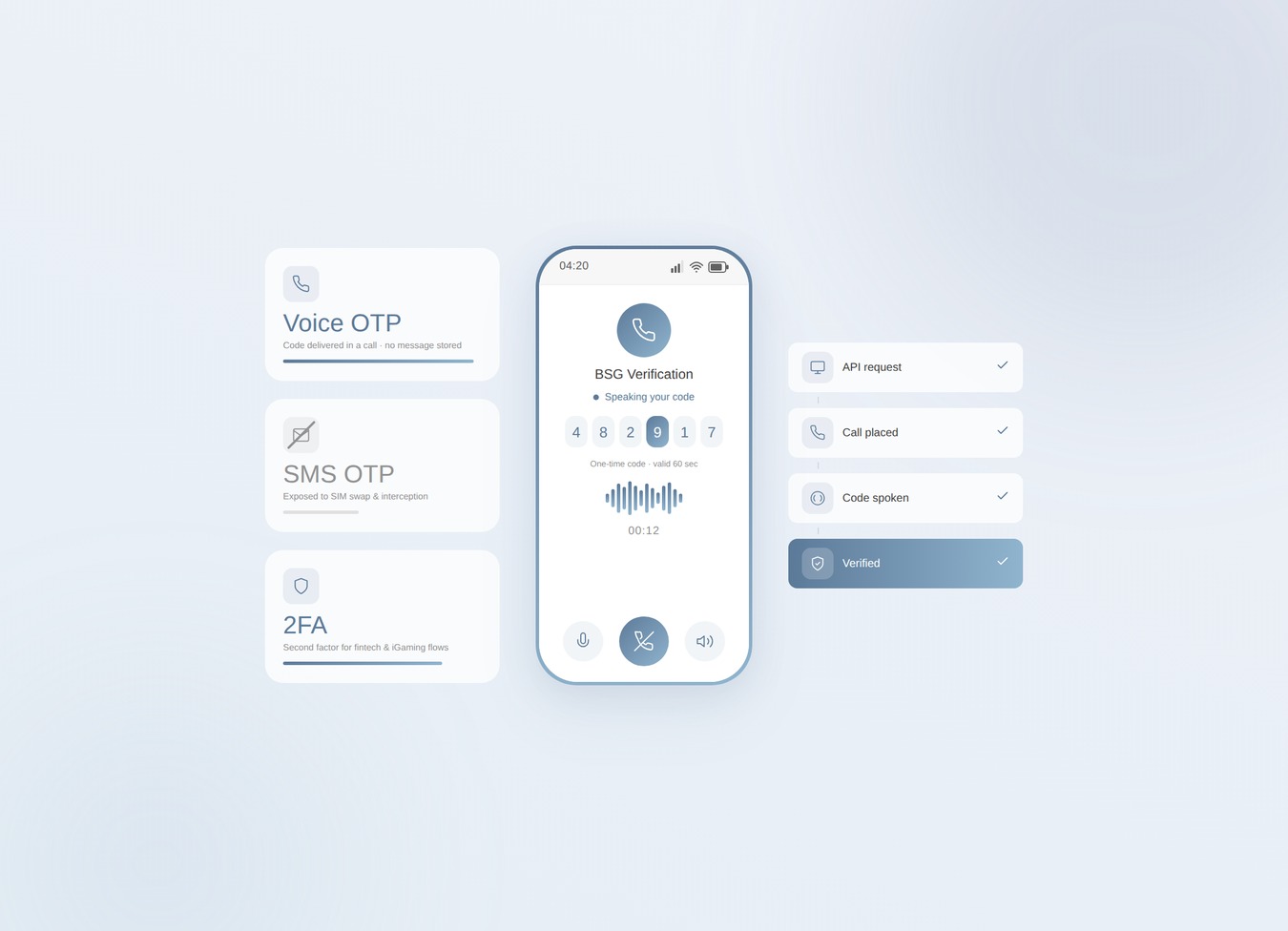
Telegram OTP is free — until it silently fails. Know the limits and when to add fallback.