




Failover Routing
What is failover routing?
Failover routing is a delivery reliability pattern borrowed from network engineering, where traffic automatically redirects to an alternative path when the primary route becomes unavailable or unresponsive.
This is the same idea behind a CPaaS platform routing a message across channels — reliability comes from having more than one path to the recipient.
How does failover routing work in business messaging?
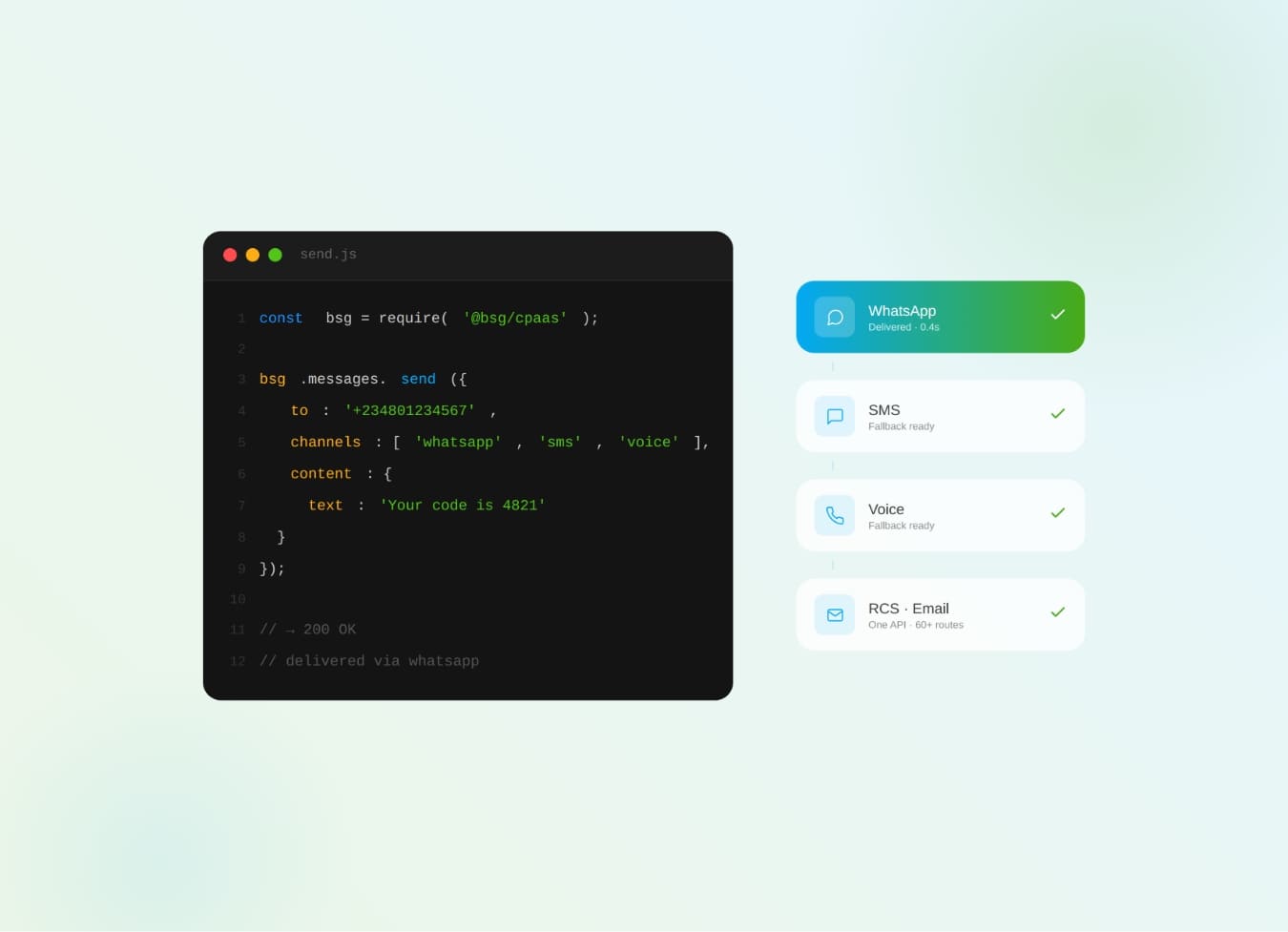
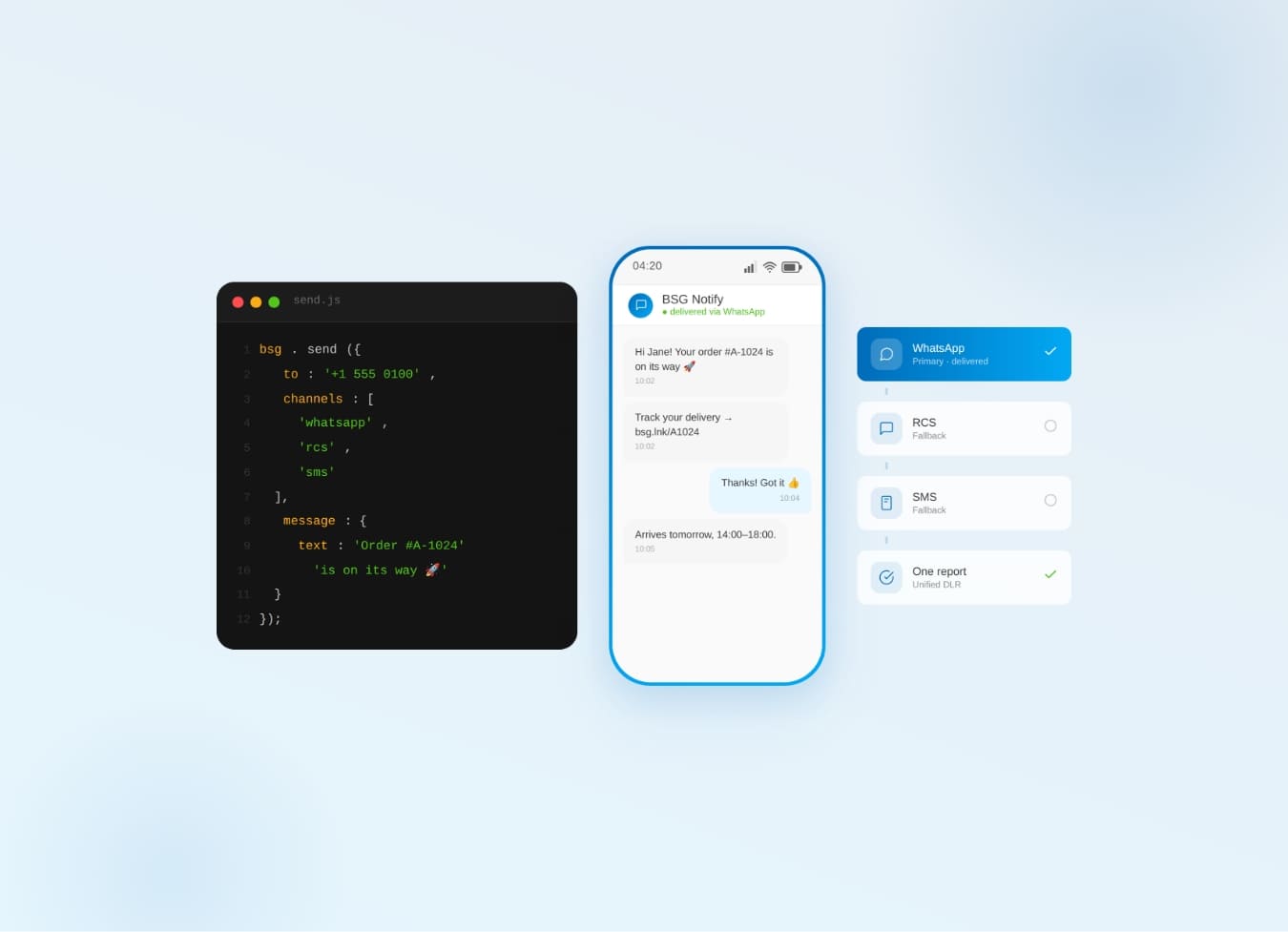
Failover routing originates in network infrastructure, where it describes the automatic switchover from a failed primary connection to a standby path. In A2P business messaging, the same principle applies at the channel level: when the primary messaging channel (for example, WhatsApp) fails to deliver a message within a defined time window, the system reroutes the message to the next channel in the priority chain (such as RCS or SMS) without requiring the sender to intervene.
The failover decision is typically triggered by one of three events: the channel explicitly rejects the message (number not registered, template not approved), the delivery report (DLR) returns a failure status, or the configured timeout expires without delivery confirmation. In each case, the routing engine advances to the next channel automatically.
Why is failover routing important?
For businesses sending time-sensitive messages — OTP codes, transaction confirmations, appointment reminders — failover routing is not optional. A single-channel approach creates a single point of failure. Adding failover channels ensures that delivery continues even when the primary channel is temporarily down, the recipient lacks the required app, or network conditions degrade. The cost of a missed OTP delivery (an abandoned transaction, a lost customer) almost always exceeds the cost of the fallback SMS.


Interested in a special offer?
Ready to reach further?
Let’s talk


Related Terms
Explore BSG Solutions
Useful Materials
![WhatsApp Business API: Complete Guide — Setup, Pricing, Use Cases [2026]](/assets/img/blog/whatsapp-business-api-setup-pricing-use-cases-guide_avatar.jpg)
WhatsApp Business API for 2026 — setup steps, the new per-message pricing model, and proven use cases by industry.
What is CPaaS? The cloud API layer that adds SMS, WhatsApp, voice & OTP to your apps — how it works and why it beats a multi-vendor stack.
Why one communication API for SMS, WhatsApp, Viber & RCS beats five separate integrations — cascade fallback, unified reports.