




GSM
What is GSM?
GSM stands for Global System for Mobile Communications. It is a digital cellular network that is used to transmit mobile voice and data services. It is the most widely used mobile network technology in the world, with over 4 billion people using it. GSM networks are used by mobile phone service providers to provide voice and data services to their customers. Lookup services such as BSG's Number Verifier query GSM network registers to confirm that a number is active.
It is a mobile telephony standard introduced in the early 1990s by European Telecommunications Standard Institute.
GSM networks use a combination of radio frequency technology and Time Division Multiple Access (TDMA) to provide voice and data services. This technology divides a single frequency channel into many different time slots to increase the capacity of the network. GSM networks are used for voice calls, text messages, and data services such as internet browsing and multimedia messaging. GSM networks also support a variety of features such as caller identification, call forwarding, call waiting, and conference calling. GSM networks are also used for mobile payments, location-based services, and authentication and security features.
A user’s location and status on the GSM network are tracked by the operator’s HLR, which is what lets calls and texts find the right device. BSG's What is SMS API and how to use it to scale your bulk SMS campaigns? walks through this in more detail.
How does it work?
GSM networks use a cellular network architecture that consists of several different components. At the base of the network are base transceiver stations (BTS), which are responsible for managing the radio frequency channel that connects a mobile device to the network. The BTS is connected to a base station controller (BSC), which is responsible for managing multiple BTSs and ensuring that communication between them is efficient. The BSC is then connected to a mobile switching center (MSC), which is responsible for managing the switching of calls between the BTSs and the mobile device. The MSC is then connected to a public switched telephone network (PSTN) or the internet, which allows the mobile device to connect to other networks. Finally, an authentication center (AuC) is responsible for authenticating the identity of the user and providing security for the network.


Interested in a special offer?
Ready to reach further?
Let’s talk


Related Terms
Explore BSG Solutions
Useful Materials
![WhatsApp Business API: Complete Guide — Setup, Pricing, Use Cases [2026]](/assets/img/blog/whatsapp-business-api-setup-pricing-use-cases-guide_avatar.jpg)
WhatsApp Business API for 2026 — setup steps, the new per-message pricing model, and proven use cases by industry.
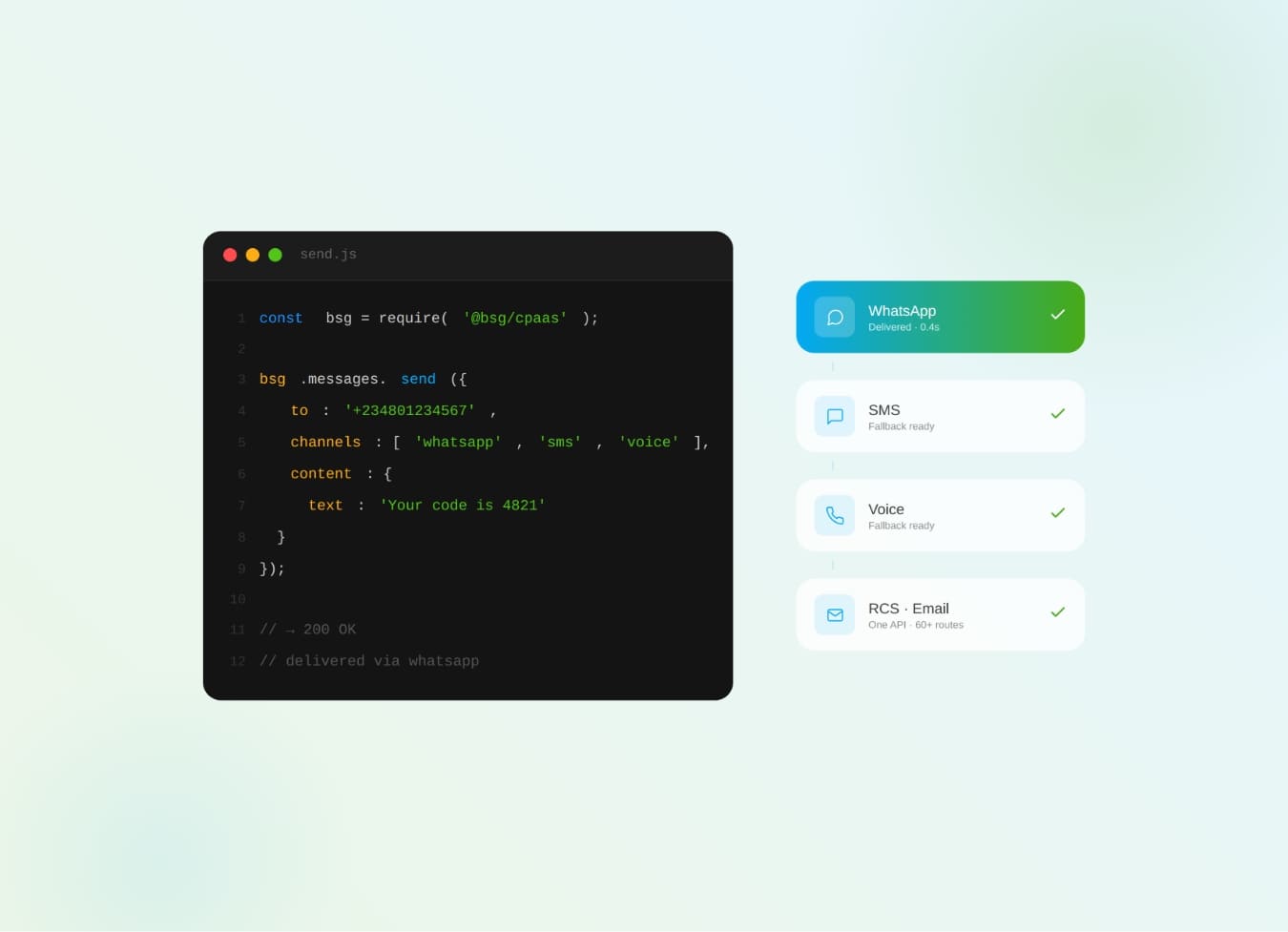
What is CPaaS? The cloud API layer that adds SMS, WhatsApp, voice & OTP to your apps — how it works and why it beats a multi-vendor stack.
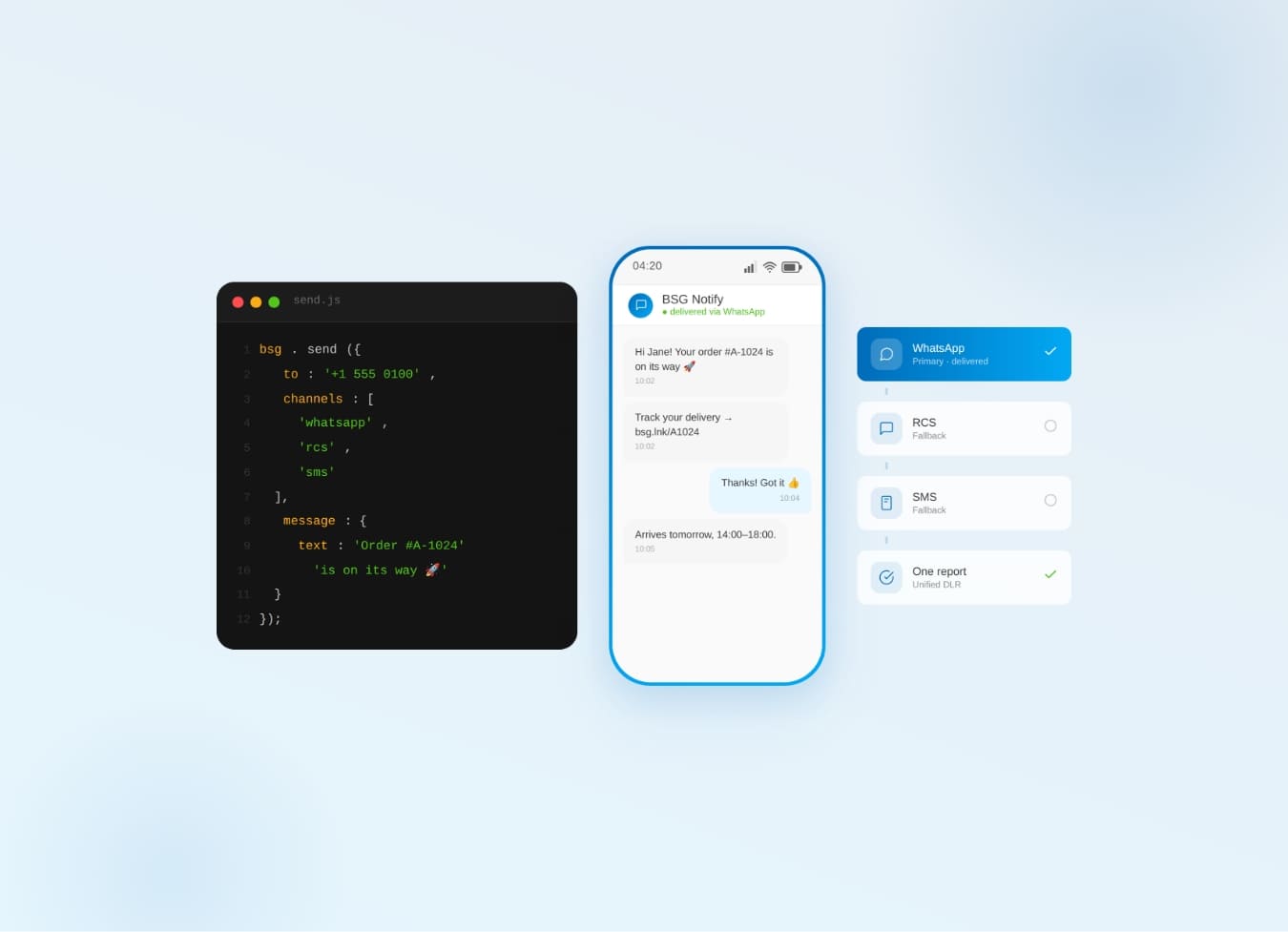
Why one communication API for SMS, WhatsApp, Viber & RCS beats five separate integrations — cascade fallback, unified reports.