




IMSI
What is IMSI?
IMSI is an important part of the Mobile Identification Number (MIN) and Mobile Station International Subscriber Directory Number (MSISDN) system used for identifying mobile users. It is used to verify the user’s identity on a cellular network, and to identify the user’s home network. It also helps the network to determine the best way to route calls to the user’s device. BSG's Number Verifier relies on this identification layer when validating numbers.
The IMSI is sent to the cellular network when the user registers with the network and is used for the duration of the user’s time on the network. The IMSI is also used for billing and other network-related operations. If a mobile user changes their SIM card, the IMSI will also change.
The IMSI is contained in the Subscriber Identity Module (SIM) inside the phone and is sent by phone to the needed mobile network.
All IMSI numbers consist of two parts: the initial part contains six digits in the North American standard and five digits in the European standard. It recognizes the user’s GSM network operator in a particular country. The second part is allocated by the network operator to uniquely distinguish the subscriber.
The IMSI is a significant part of the Home Location Register (HLR) lookup operation as it is needed to recognize to which network a mobile number belongs and that’s why the process is sometimes called IMSI Lookup in addition to HLR Lookup or Number Lookup.
See BSG's Maintain a Clean, Relevant Database with HRL Service for a closer look at how this plays out in practice.
How does it work?
When a mobile user connects to a cellular network, their IMSI is sent to the network. The network matches the IMSI with the user’s profile, which contains information such as their name, address, and phone number. The network will then authenticate the user and allow them to access the network.
Once the authentication process is complete, the network will assign the user a temporary identifier, referred to as a Temporary Mobile Subscriber Identity (TMSI). The TMSI is used to identify the user on the network until they disconnect. The TMSI is also used to encrypt the user’s data while they are connected to the network.


Interested in a special offer?
Ready to reach further?
Let’s talk


Related Terms
Explore BSG Solutions
Useful Materials
![WhatsApp Business API: Complete Guide — Setup, Pricing, Use Cases [2026]](/assets/img/blog/whatsapp-business-api-setup-pricing-use-cases-guide_avatar.jpg)
WhatsApp Business API for 2026 — setup steps, the new per-message pricing model, and proven use cases by industry.
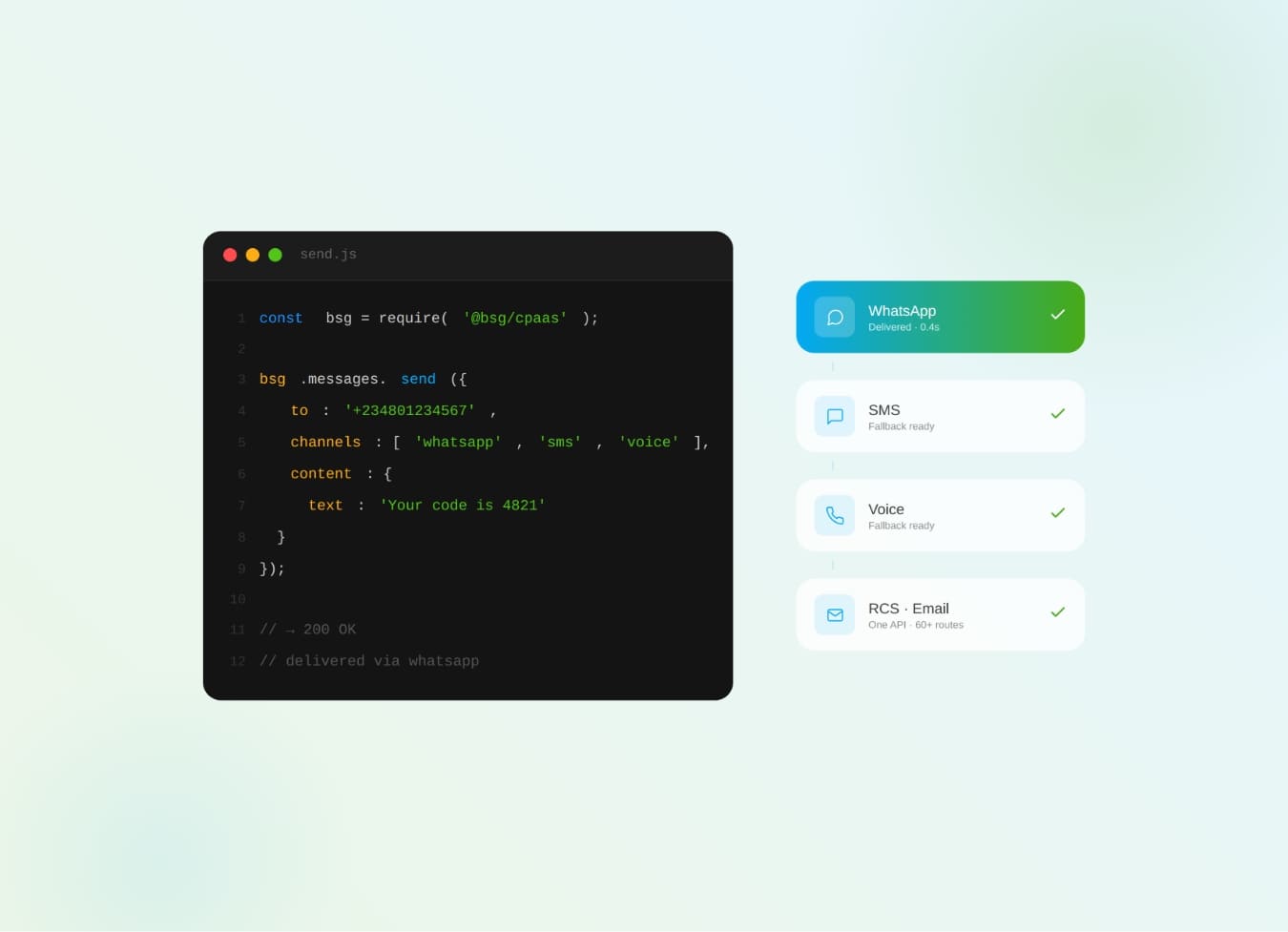
What is CPaaS? The cloud API layer that adds SMS, WhatsApp, voice & OTP to your apps — how it works and why it beats a multi-vendor stack.
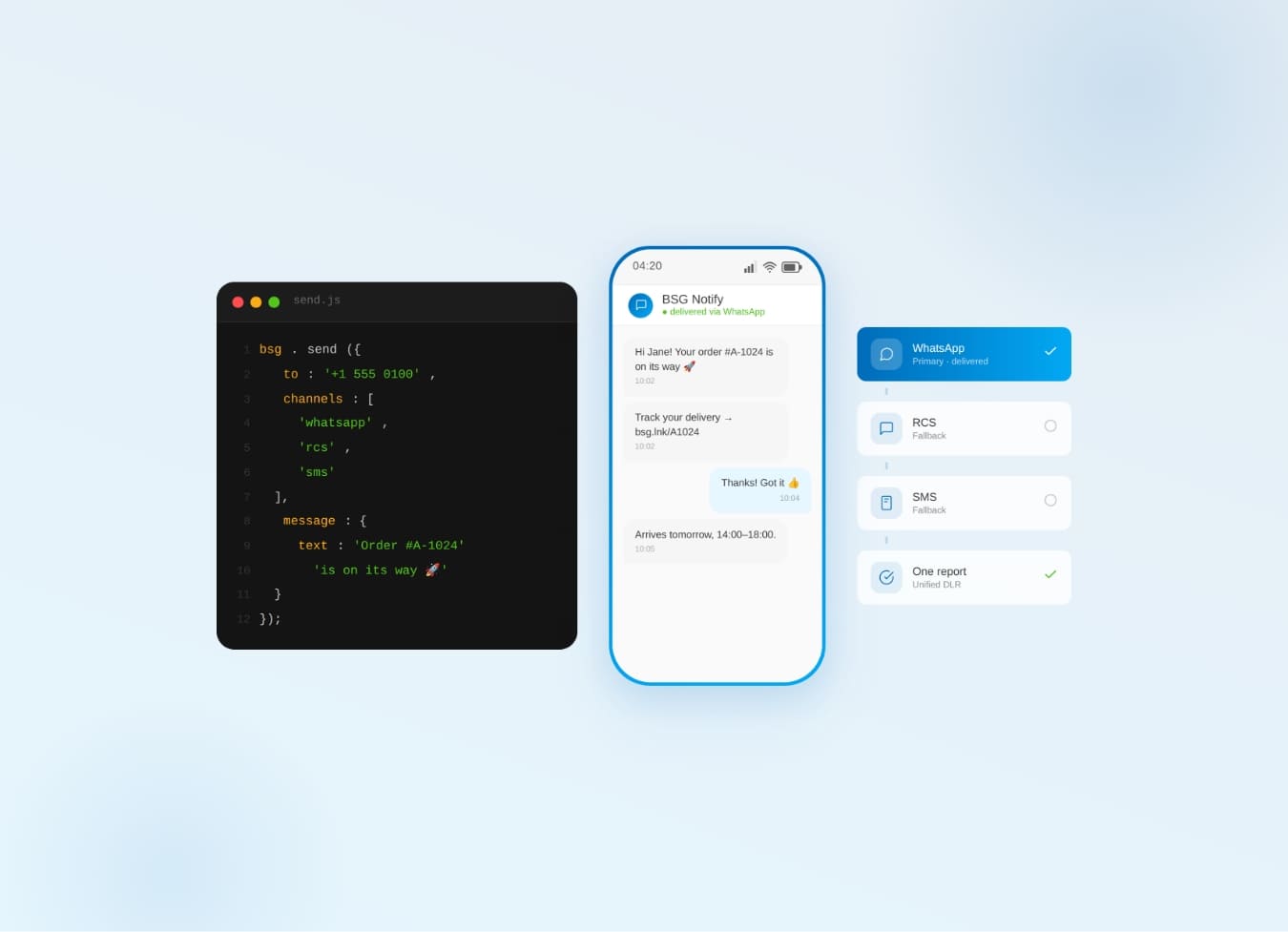
Why one communication API for SMS, WhatsApp, Viber & RCS beats five separate integrations — cascade fallback, unified reports.