




MSISDN
What is MSISDN?
MSISDN (Mobile Station International Subscriber Directory Number) is a number uniquely identifying a subscription in a Global System for Mobile Communications (GSM) or a Universal Mobile Telecommunications System (UMTS) mobile phone network. It is stored in the Subscriber Identity Module (SIM) of the phone. Validating an MSISDN before sending is exactly what BSG's Number Verifier does at scale.
It is used to identify the user and is used for services such as billing, roaming, short message service (SMS), and call forwarding. It also helps operators to identify customers and provide them with the services they need.
MSISDN is usually a 10 or 11-digit number and is usually printed on the back of the SIM card. MSISDN can also be used to identify the location of the user and the type of network the user is connected to. In some cases, it can even be used to identify the phone manufacturer and model.
This is explored further in BSG's Phone Number Verification: Stop Paying for Undelivered SMS.
How does it work?
MSISDN is used to identify the user’s SIM card and the services provided by the mobile network. When a user makes a call or sends a text, the MSISDN associated with their SIM card is used to identify them and the type of service they are using. The mobile network will then use the MSISDN to connect the user to the appropriate service and bill them accordingly.


Interested in a special offer?
Ready to reach further?
Let’s talk


Related Terms
Explore BSG Solutions
Useful Materials
![WhatsApp Business API: Complete Guide — Setup, Pricing, Use Cases [2026]](/assets/img/blog/whatsapp-business-api-setup-pricing-use-cases-guide_avatar.jpg)
WhatsApp Business API for 2026 — setup steps, the new per-message pricing model, and proven use cases by industry.
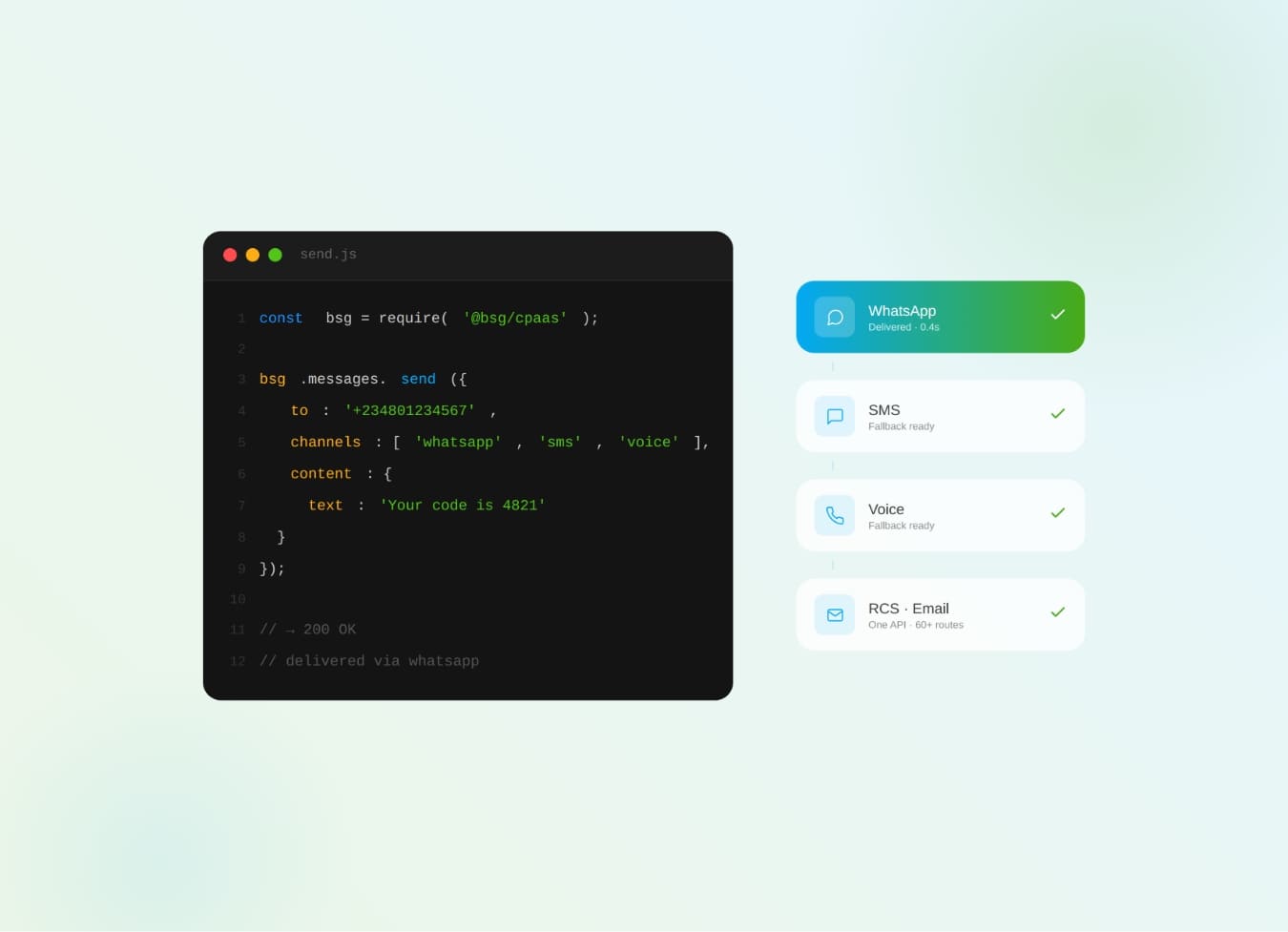
What is CPaaS? The cloud API layer that adds SMS, WhatsApp, voice & OTP to your apps — how it works and why it beats a multi-vendor stack.
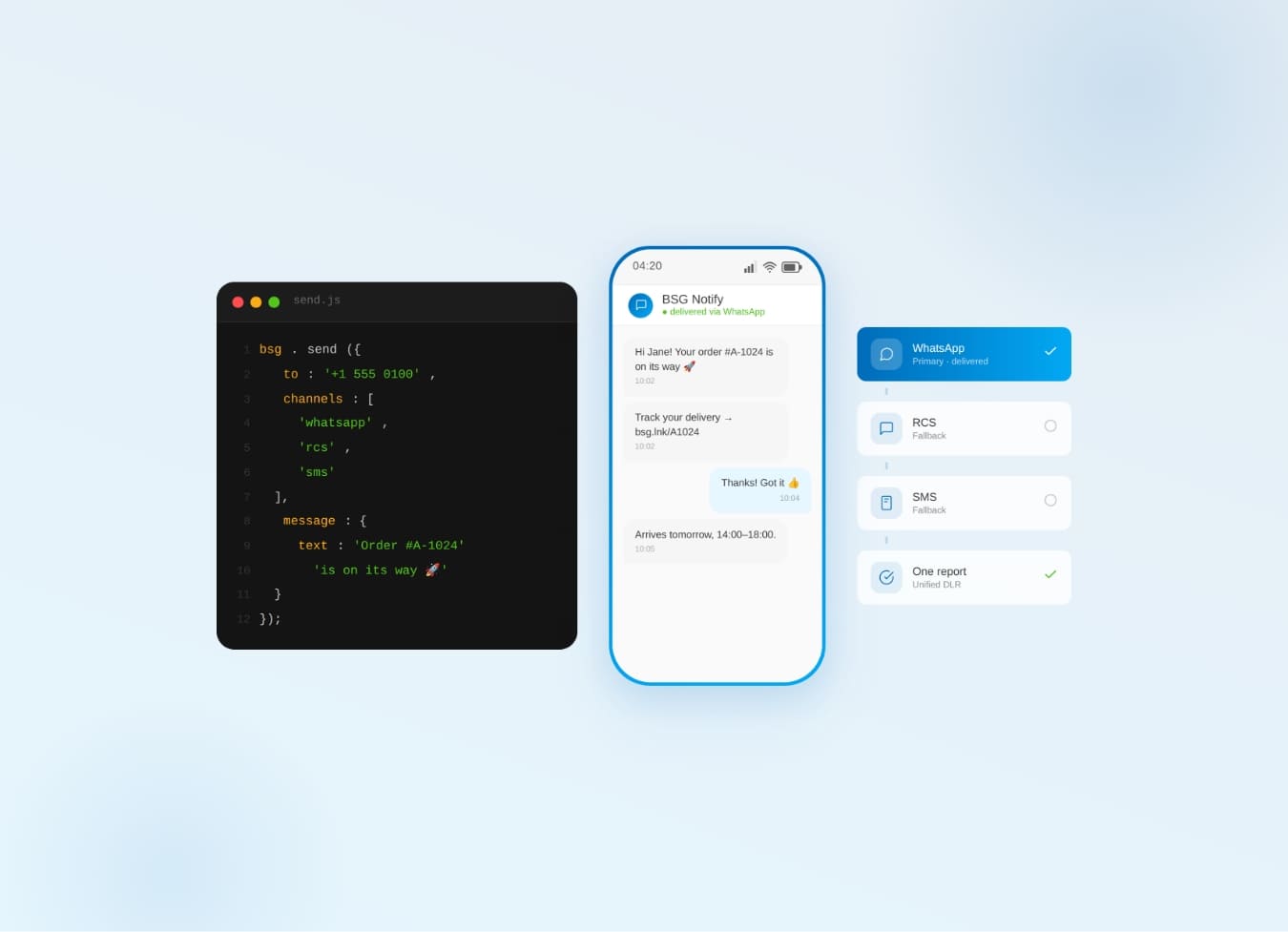
Why one communication API for SMS, WhatsApp, Viber & RCS beats five separate integrations — cascade fallback, unified reports.