




Omnichannel Messaging
What is omnichannel messaging?
Omnichannel messaging is the practice of coordinating multiple channels — SMS, WhatsApp, Viber, RCS, email — as one consistent customer conversation rather than separate, disconnected streams. SMS, WhatsApp, Viber, RCS and email work together as a single coordinated conversation, rather than as isolated channels managed by different teams or tools.
How does omnichannel differ from multichannel?
The distinction from multichannel matters: multichannel simply means a business uses several channels; omnichannel means those channels share context, priority and reporting so the customer experiences one continuous thread. In practice this requires a layer that can route a message to the channel a customer actually uses, fall back to another when the first fails, and report delivery consistently across all of them. That layer is usually a communication API with cascade logic.
Why does omnichannel messaging matter?
The business outcome is higher effective reach and lower wasted spend: a promotion can start on a rich channel like RCS and fall back to SMS for handsets that cannot receive it, without the customer noticing the switch. For mobile-first markets, where one channel rarely covers the whole audience, omnichannel messaging is less a strategy choice than an operational requirement.


Interested in a special offer?
Ready to reach further?
Let’s talk


Related Terms
Explore BSG Solutions
Useful Materials
![WhatsApp Business API: Complete Guide — Setup, Pricing, Use Cases [2026]](/assets/img/blog/whatsapp-business-api-setup-pricing-use-cases-guide_avatar.jpg)
WhatsApp Business API for 2026 — setup steps, the new per-message pricing model, and proven use cases by industry.
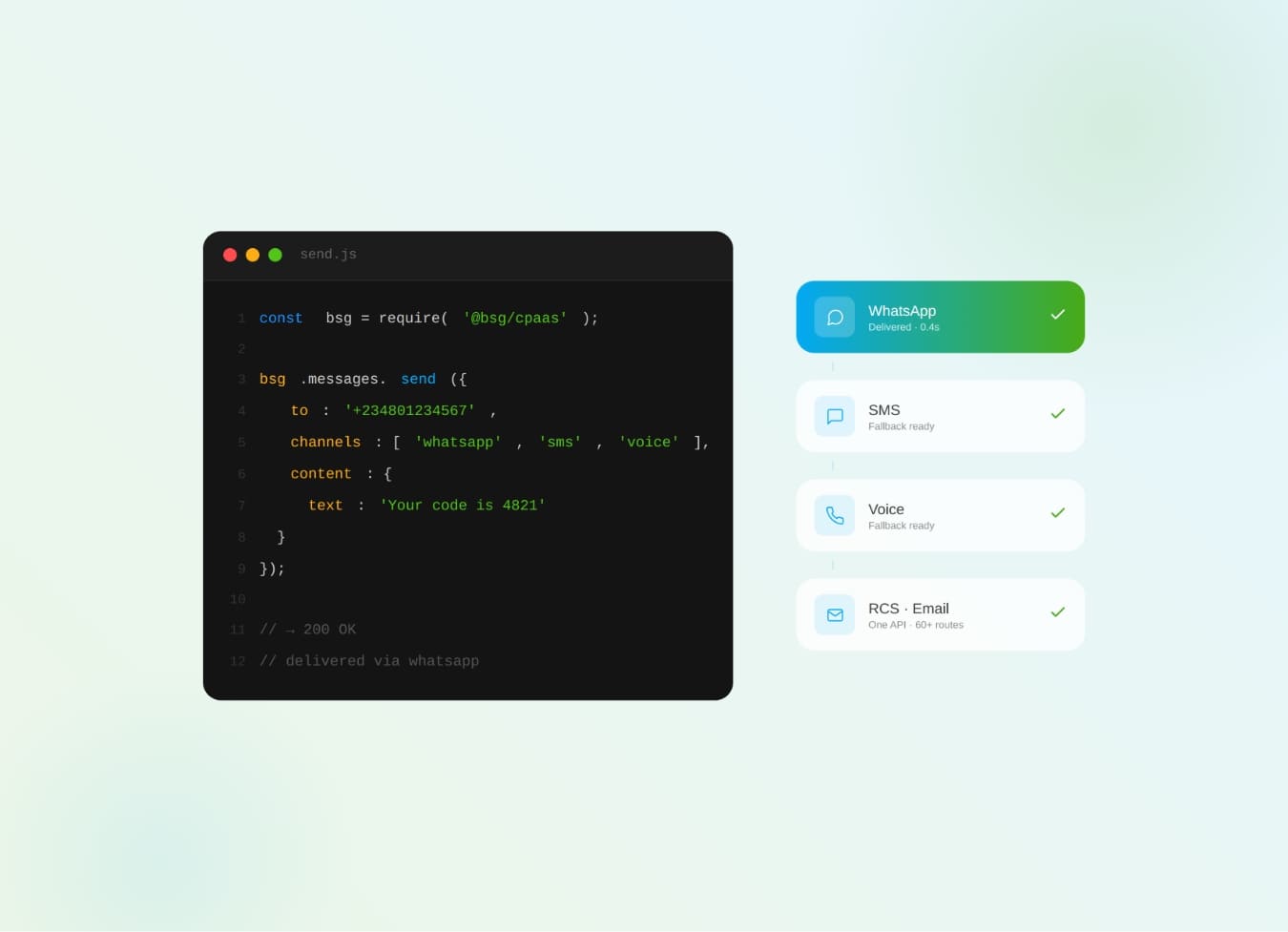
What is CPaaS? The cloud API layer that adds SMS, WhatsApp, voice & OTP to your apps — how it works and why it beats a multi-vendor stack.
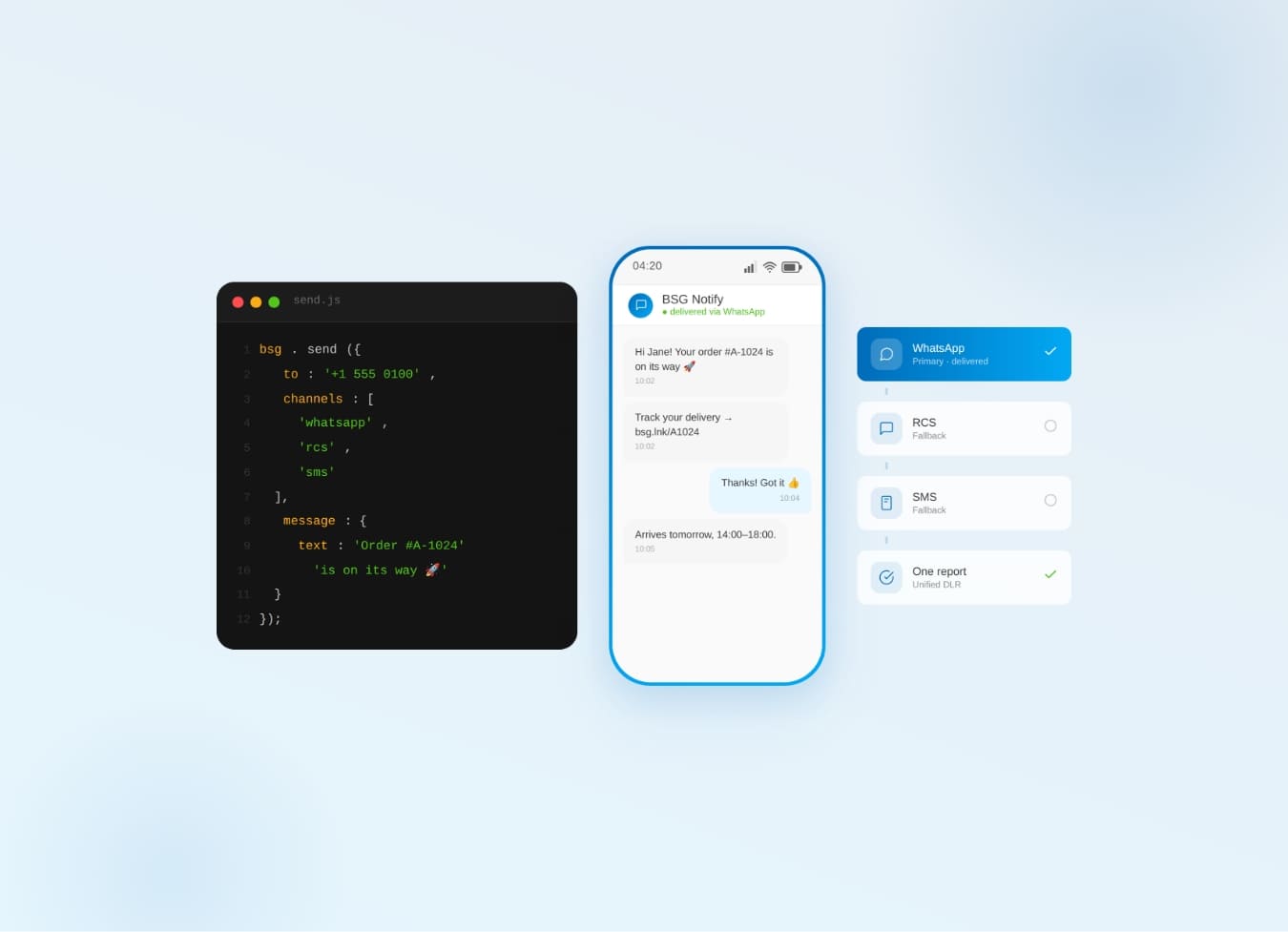
Why one communication API for SMS, WhatsApp, Viber & RCS beats five separate integrations — cascade fallback, unified reports.