




Outbound Message
What is an Outbound Message?
An outbound message is an email, text message, or other types of communication sent from an organization to an individual customer or user. Outbound messages are typically used for marketing purposes, such as promotions or newsletters, but can also be used for customer service communications, such as notifications about account changes or updates. At scale, such messages are sent through platforms like BSG's Bulk SMS.
An outbound message is also considered a Mobile Terminated message or MT, marking that the endpoint of the message is a mobile phone.
Outbound messages can be sent via email, SMS, push notifications, and other digital channels. When used for marketing purposes, outbound messages are used to inform customers about new product launches, upcoming sales, special offers, and other promotional content. When used for customer service purposes, outbound messages can be used to provide updates on account changes, order status, shipping information, and more.
Outbound messages can also be used to proactively reach out to customers with surveys or customer support information.
For real-world context, see BSG's 6 Key Insights and Trends Shaping SMS Marketing.
How does it work?
Outbound messages are typically triggered by customer activities or events, such as signing up for an account, making a purchase, or reaching a certain level in a loyalty program. The outbound message is then sent to the customer via email, SMS, push notifications, or other digital channels.
Depending on the platform used, outbound messages can be personalized with customer-specific information, such as their name, order information, or loyalty program status. Outbound messages can also be used to trigger automated responses, such as follow-up emails or discounts for repeat customers.


Interested in a special offer?
Ready to reach further?
Let’s talk


Related Terms
Explore BSG Solutions
Useful Materials
![WhatsApp Business API: Complete Guide — Setup, Pricing, Use Cases [2026]](/assets/img/blog/whatsapp-business-api-setup-pricing-use-cases-guide_avatar.jpg)
WhatsApp Business API for 2026 — setup steps, the new per-message pricing model, and proven use cases by industry.
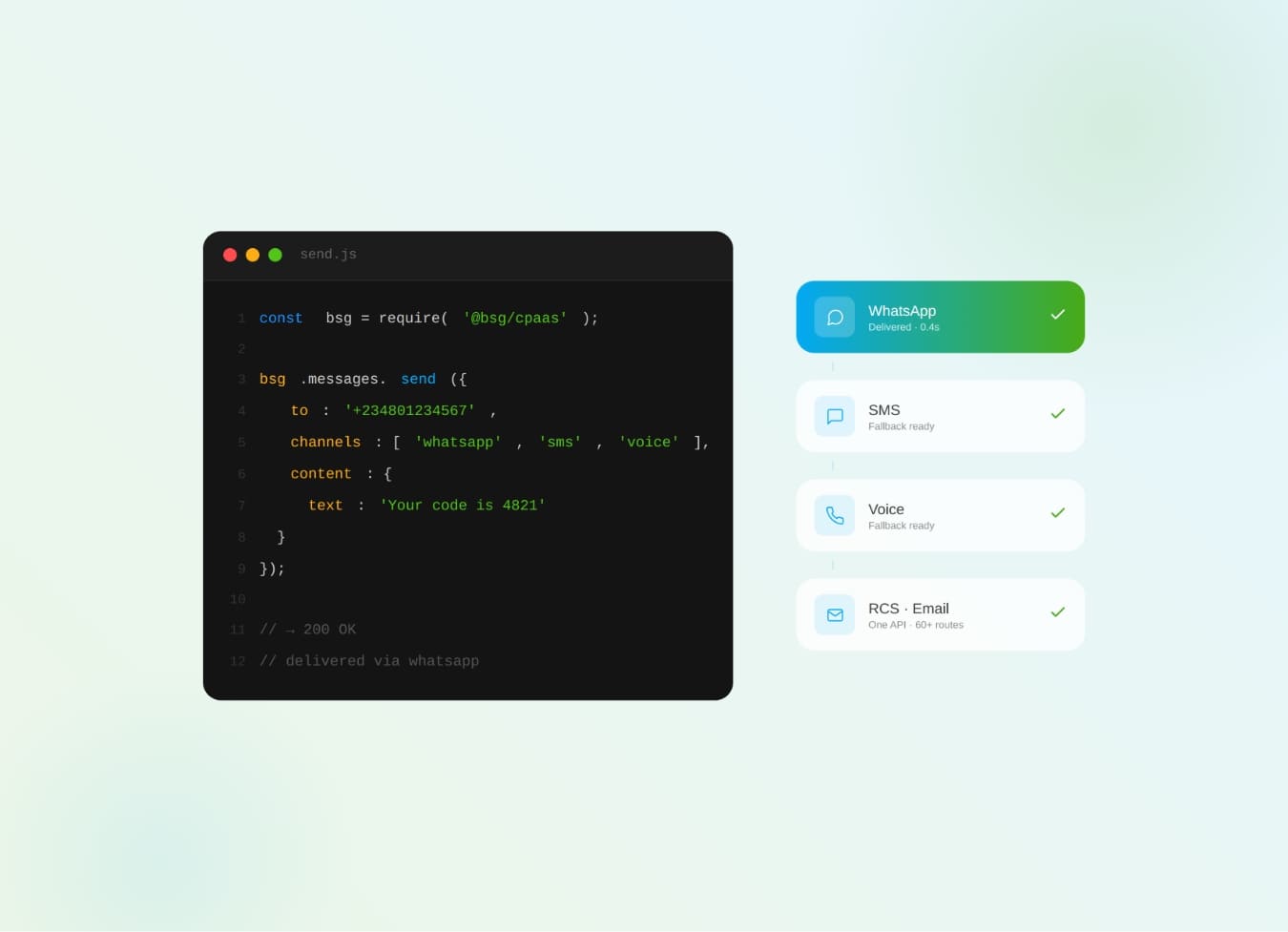
What is CPaaS? The cloud API layer that adds SMS, WhatsApp, voice & OTP to your apps — how it works and why it beats a multi-vendor stack.
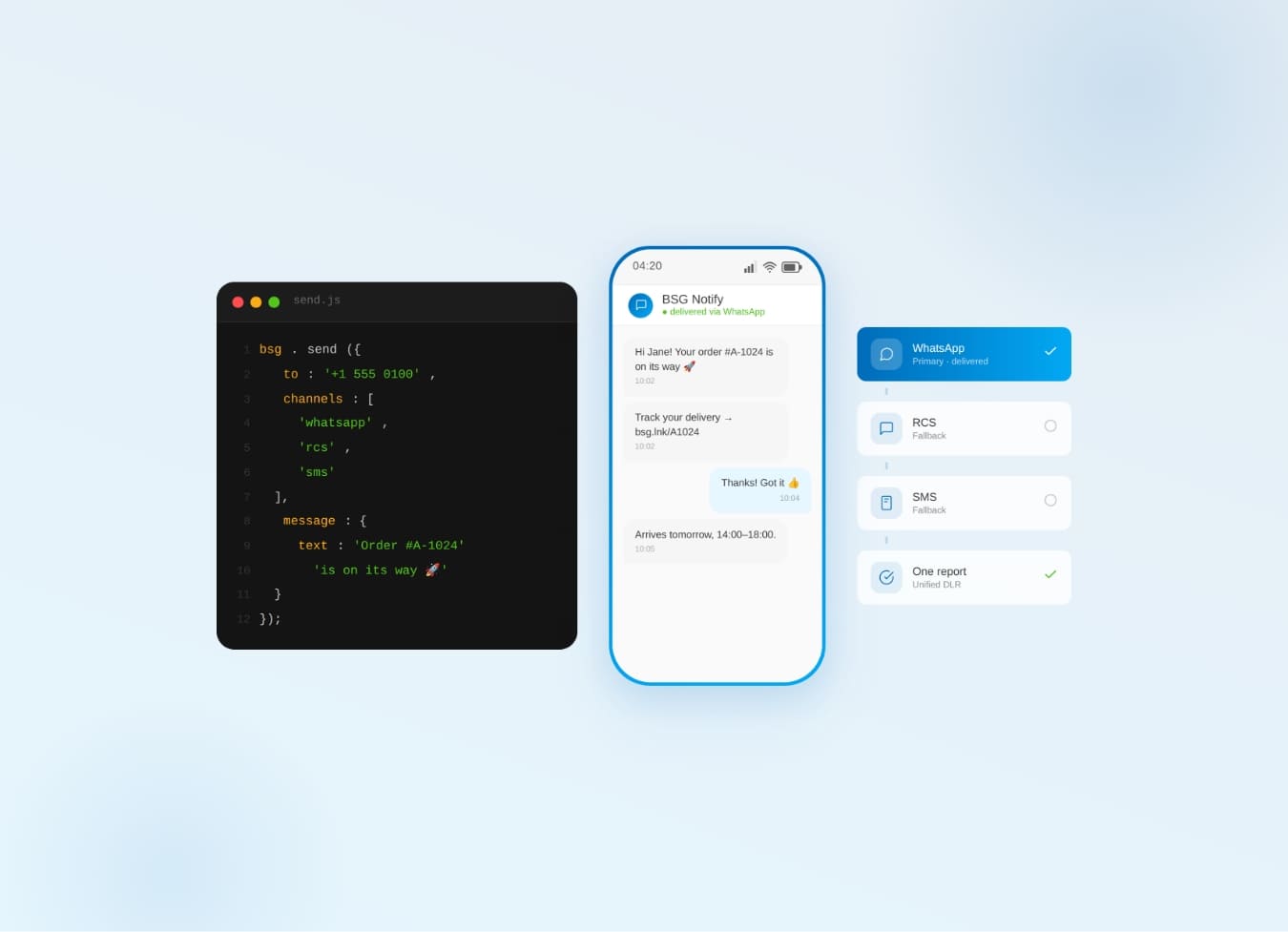
Why one communication API for SMS, WhatsApp, Viber & RCS beats five separate integrations — cascade fallback, unified reports.