




Simple Mail Transfer Protocol (SMTP)
What is Simple Mail Transfer Protocol (SMTP)?
Simple Mail Transfer Protocol (SMTP) is a protocol used for sending and receiving emails. It is the standard protocol used for email transmission over the internet and is responsible for routing emails and ensuring they reach their destination. SMTP is a text-based protocol and uses commands such as “HELO,” “MAIL,” and “RCPT” to communicate with mail servers.
SMTP is a client-server protocol, meaning that it requires two computers to communicate; a client, which initiates the communication, and a server, which responds to the client’s requests. When an email is sent, the client sends a command to the receiving mail server, which then checks its database to make sure the address is valid and then forwards the message to the recipient’s email address. If the recipient’s address is valid, the server responds with an “OK” message, and the email is delivered.
For additional security, SMTP uses various authentication methods, such as TLS and SSL, to ensure that only authorized users can send and receive emails. Additionally, SMTP also supports encryption, so that emails can be securely transmitted over the internet.
SMTP is an essential protocol for the functioning of the internet and is used by most email servers, webmail services, and email clients.
Unlike SMS, which delivers straight to a phone, SMTP depends on the recipient's mail server being online to accept the message. BSG covers this in more depth in What is SMS API and how to use it to scale your bulk SMS campaigns?.
How does it work?
When you send an email, the client (your computer) establishes a connection with the server (the recipient’s mail server) using the SMTP protocol. The client then sends a “HELO” command, which the server responds to with its own “HELO” message. The client then sends a “MAIL FROM” command, which specifies the sender’s email address, followed by an “RCPT TO” command that specifies the recipient’s email address.
Once the server has verified the addresses, it sends a response of “OK” and the email can be sent. The client then sends the message in plain-text format, and the server sends a response of “OK” to indicate that the message has been received. The server then attempts to deliver the message to the recipient’s mailbox. If the message is successfully delivered, the server sends a response code of “250” to indicate success.


Interested in a special offer?
Ready to reach further?
Let’s talk


Related Terms
Explore BSG Solutions
Useful Materials
![WhatsApp Business API: Complete Guide — Setup, Pricing, Use Cases [2026]](/assets/img/blog/whatsapp-business-api-setup-pricing-use-cases-guide_avatar.jpg)
WhatsApp Business API for 2026 — setup steps, the new per-message pricing model, and proven use cases by industry.
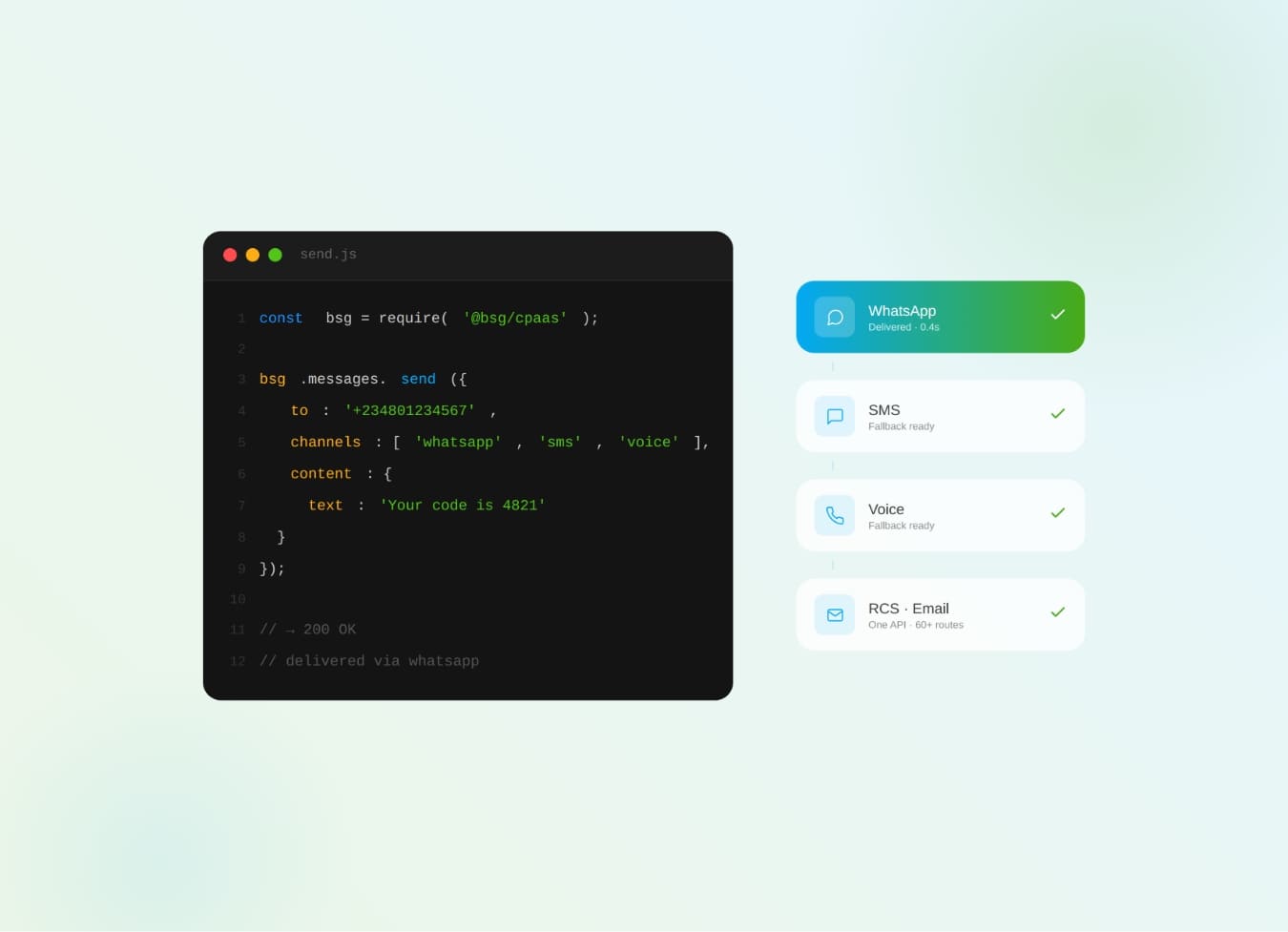
What is CPaaS? The cloud API layer that adds SMS, WhatsApp, voice & OTP to your apps — how it works and why it beats a multi-vendor stack.
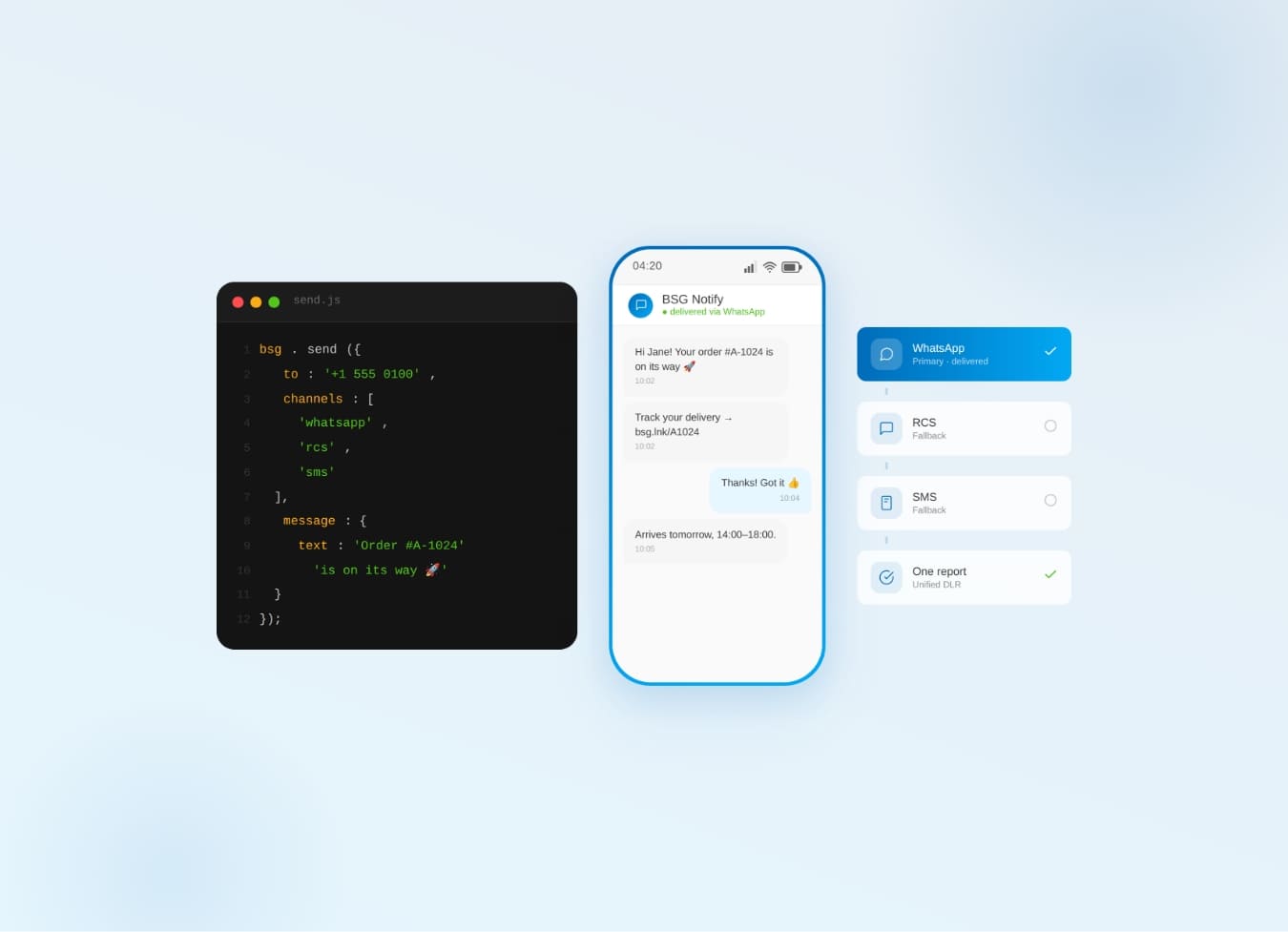
Why one communication API for SMS, WhatsApp, Viber & RCS beats five separate integrations — cascade fallback, unified reports.