




Verified Sender Profile
What is a verified sender profile?
A verified sender profile is a branded identity displayed in RCS messages that shows the business name, logo, and a verification badge — confirming to recipients that the message comes from a legitimate, authenticated source.
Read more in BSG's Crafting a Winning Business Case for RCS: A Practical Guide to Elevating Customer Communications.
Why do verified sender profiles matter?
In traditional SMS, the sender identity is limited to a short alphanumeric Sender ID — a text string that can be spoofed relatively easily. This creates a trust gap, especially as SMS spam and phishing become more common. RCS addresses this through verified sender profiles.
When a business sends an RCS message, the recipient sees the company name, logo, brand colors, and a verification badge directly in their messaging app — before they even read the content. This visual authentication signal significantly impacts open rates and engagement, because recipients can immediately confirm the message is legitimate.
How does a business get a verified sender profile?
Getting verified requires brand registration through the RCS Business Messaging program (managed by Google for most markets). The process includes submitting brand assets, verifying domain ownership, and passing compliance checks. Once approved, the verified profile applies to all RCS messages from that agent. For businesses transitioning from SMS to RCS, the verified sender profile is one of the most impactful features — it addresses the trust problem that has eroded SMS engagement over time, particularly in markets with high spam volumes. BSG handles the verification process as part of RCS onboarding for its clients.


Interested in a special offer?
Ready to reach further?
Let’s talk


Related Terms
Explore BSG Solutions
Useful Materials
![WhatsApp Business API: Complete Guide — Setup, Pricing, Use Cases [2026]](/assets/img/blog/whatsapp-business-api-setup-pricing-use-cases-guide_avatar.jpg)
WhatsApp Business API for 2026 — setup steps, the new per-message pricing model, and proven use cases by industry.
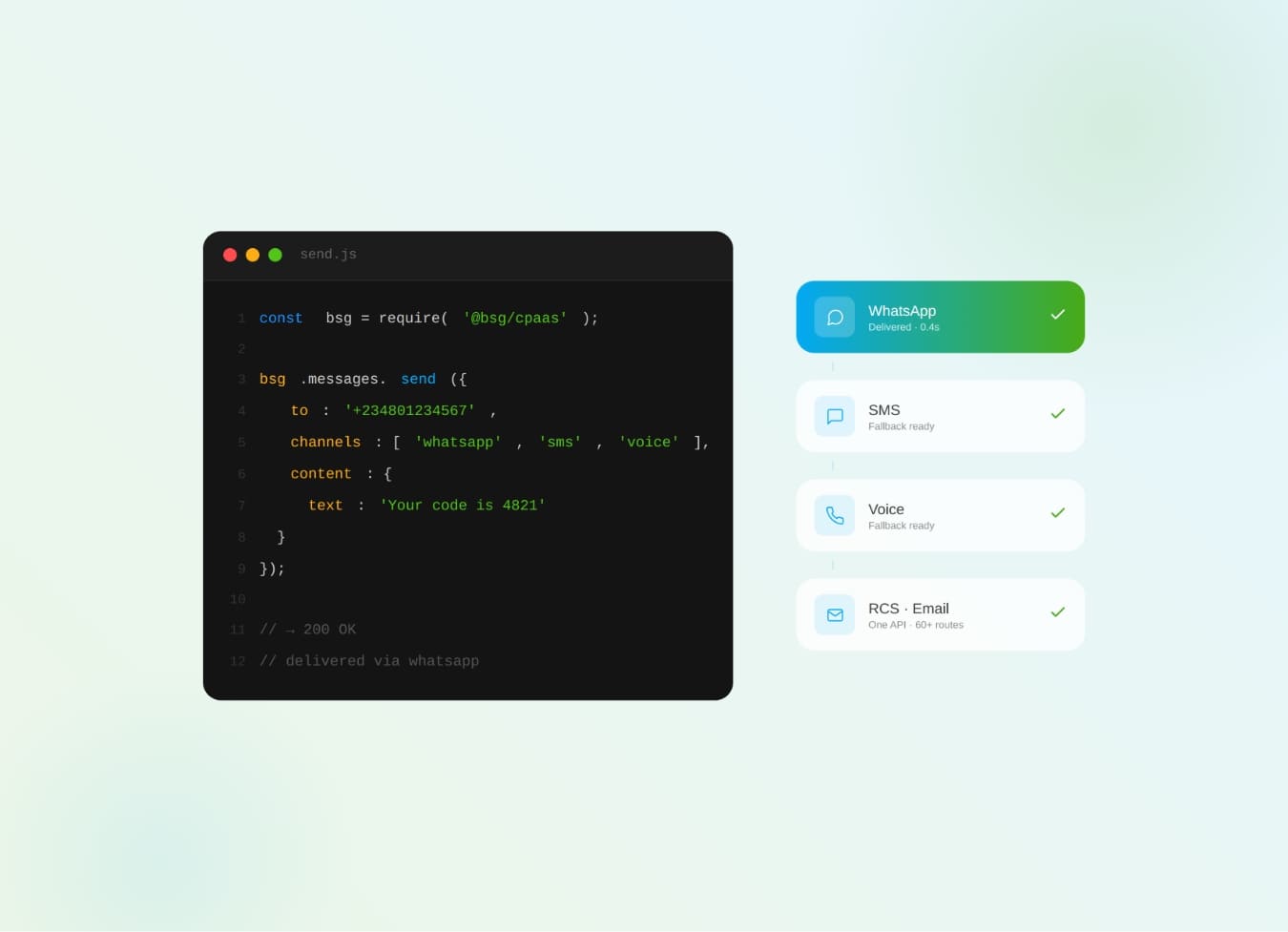
What is CPaaS? The cloud API layer that adds SMS, WhatsApp, voice & OTP to your apps — how it works and why it beats a multi-vendor stack.
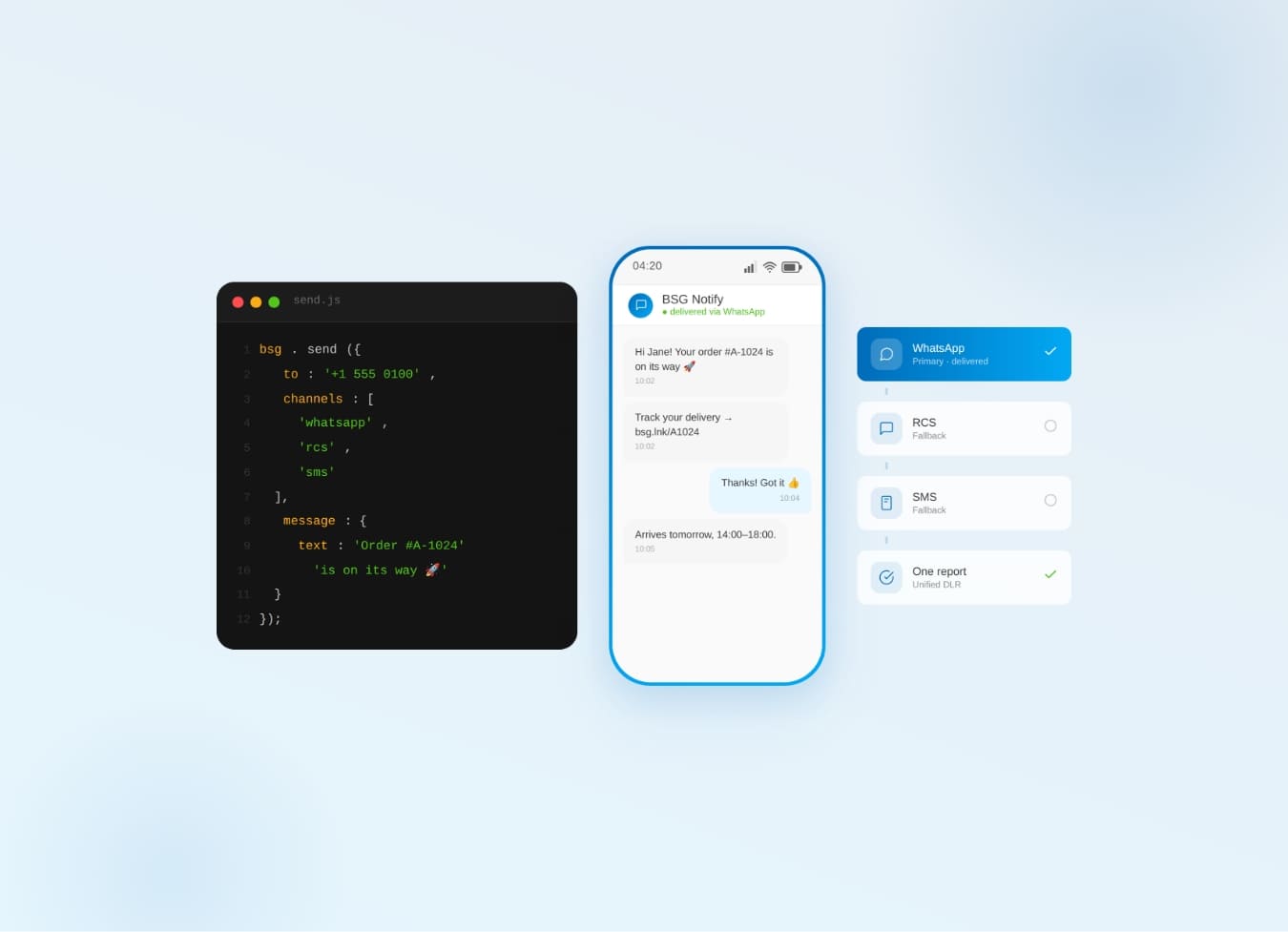
Why one communication API for SMS, WhatsApp, Viber & RCS beats five separate integrations — cascade fallback, unified reports.