




How Can 2FA Help Businesses Comply with Regulations like GDPR and HIPAA?

Have you ever wondered why service providers gather your personal information, such as your date of birth, place of residence, or marital status? Well, those are just some basic details; other topics can be even more sensitive, depending on the industry. In order to protect personal data from being misused and causing trouble, society created HIPAA and GDPR to ensure that personal information is protected under the appropriate jurisdiction. That’s where HIPAA two-factor authentication comes in handy. Find how a two-factor authentication service can ensure the security of users’ data and boost the security rates by up to 80%.
Overview of 2FA (Two-Factor Authentication)
Two-factor authentication is an additional identity and access management security method for personal data protection in which users must provide two different authentication factors to complete the verification. There are multiple types of factors that can be used – from your biometric data like fingerprints to more well-known ways like SMS, email messages, authentication apps, and even the user’s location. In any case, HIPAA multifactor authentication goes one step further in enhancing the resistance of the system from data thieves.
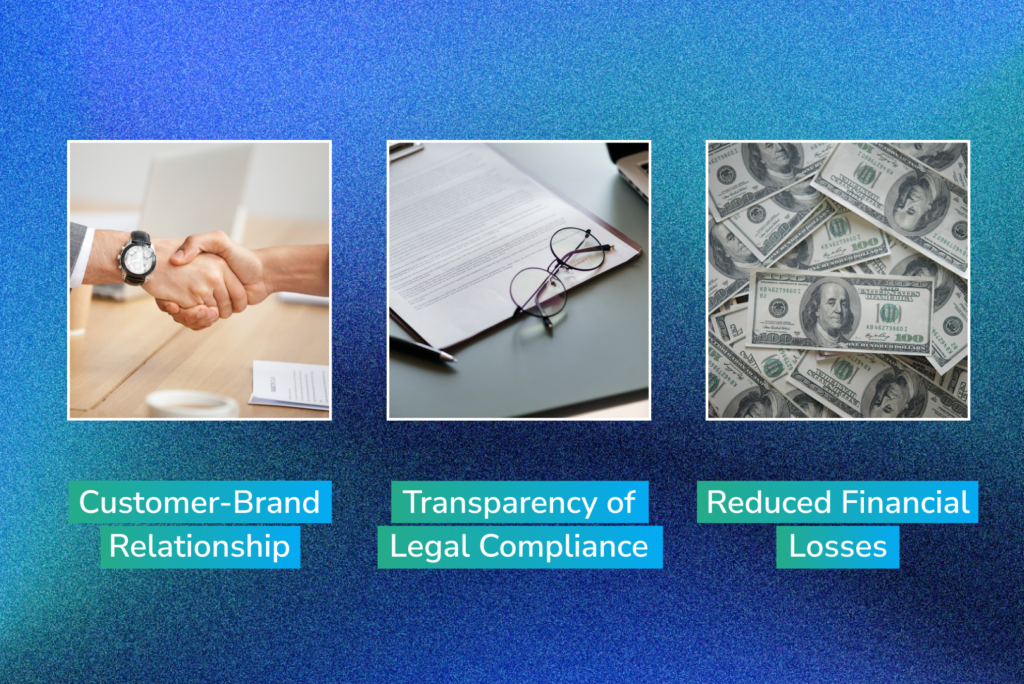
So, from the perspective of a service provider, what makes HIPAA multi-factor authentication so critical for business? Well, there are several factors to keep in mind:
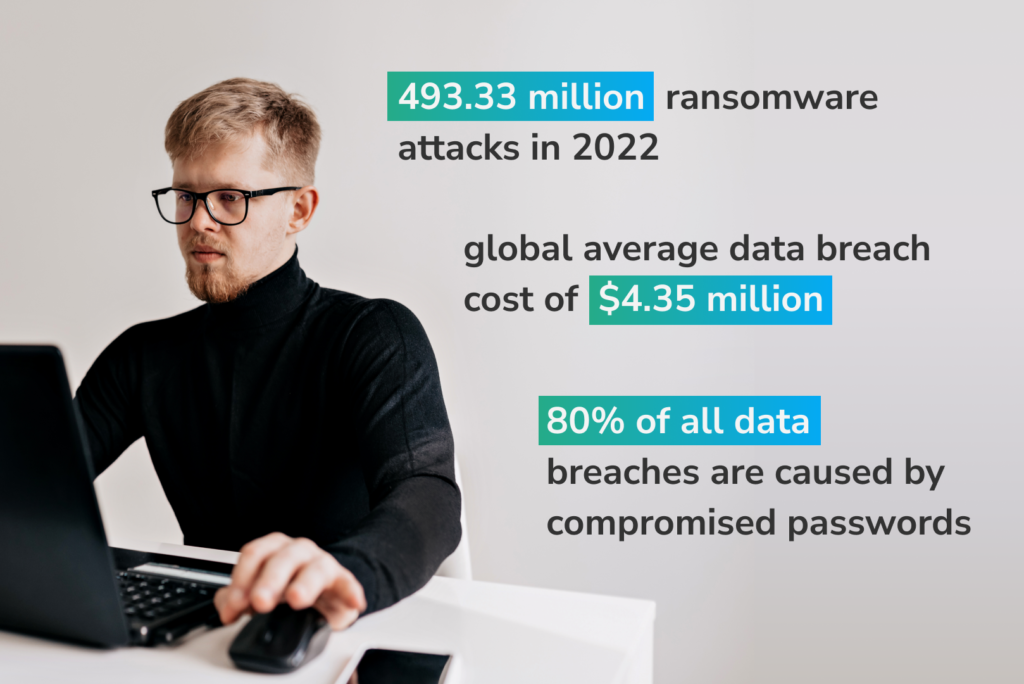
- Customer-brand relationship
The security of data is placed at the top of the modern user’s hierarchy of needs. When customers feel safe and confident in their interactions with the brand, it enhances their overall experience and increases customer retention rates.
Meanwhile, it also enhances your competitive advantage over other brands.
- Transparency of legal compliance
Businesses operating within the relevant jurisdictions (the European Union for GDPR and the United States for HIPAA) are required to comply with these laws.
A company’s financial viability and reputation could suffer as a result of non-compliance, which could also lead to hefty penalties and other legal repercussions.
- Reduced financial losses .
Data breaches and security incidents result in substantial financial losses for a company’s budget. Brands may face lawsuits, compensation claims, and costs associated with remediation efforts.
Investing in data security helps mitigate the risk of financial losses due to security breaches.
The implementation of HIPAA and GDPR two-factor authentication is an unspoken requirement for progressive service or product providers who want to build a trustworthy brand and make it stand out from other competitors in the market, while also avoiding any legal issues that may arise along the way.
Are you interested in integrating 2FA functionality into your platform with ease? Contact BSG — a communication and security service provider for more details.
Importance of regulatory compliance: GDPR and HIPAA
Regulatory compliance with standards is crucial in a global business environment, especially for organizations managing sensitive data. Two of these standards are:
- The General Data Protection Regulation (GDPR)
Enacted by the European Union, this regulation imposes strict requirements on organizations for the collection, processing, and storage of personal data. Compliance with GDPR is not only a legal requirement but also helps in building trust between businesses and their customers, thereby boosting reputation and consumer satisfaction.
- The Health Insurance Portability and Accountability Act (HIPAA)
In the United States, the HIPAA law governs how healthcare providers and associated businesses must manage and preserve health information. Like GDPR, complying with HIPAA builds trust with patients and improves satisfaction.
GDPR and HIPAA authentication requirements are both specific and strict:
- GDPR Authentication
Under GDPR, organizations are expected to use adequate technical or organizational means to ensure acceptable security. This includes protection against unauthorized or unlawful processing, as well as accidental loss, destruction, or damage.
- HIPAA Authentication
Similarly, HIPAA specifies the physical, network, and procedural security measures that must be in place to safeguard sensitive patient data.
The implementation of 2-Factor Authentication (2FA) assists organizations with maintaining compliance with these regulations:
- Role of 2FA in regulatory service compliance
Implementing 2FA significantly reduces the chances of data breaches, which can result in severe financial penalties under both GDPR and HIPAA. Furthermore, it aids in maintaining customer or patient trust.
Risks and Challenges of Data Security
In recent times, cyberattacks have witnessed an increase in sophistication and strength, enabling attackers to exploit vulnerable systems more efficiently, resulting in substantial harm. The primary objective of these attacks is to pilfer, extort, or obliterate private information.
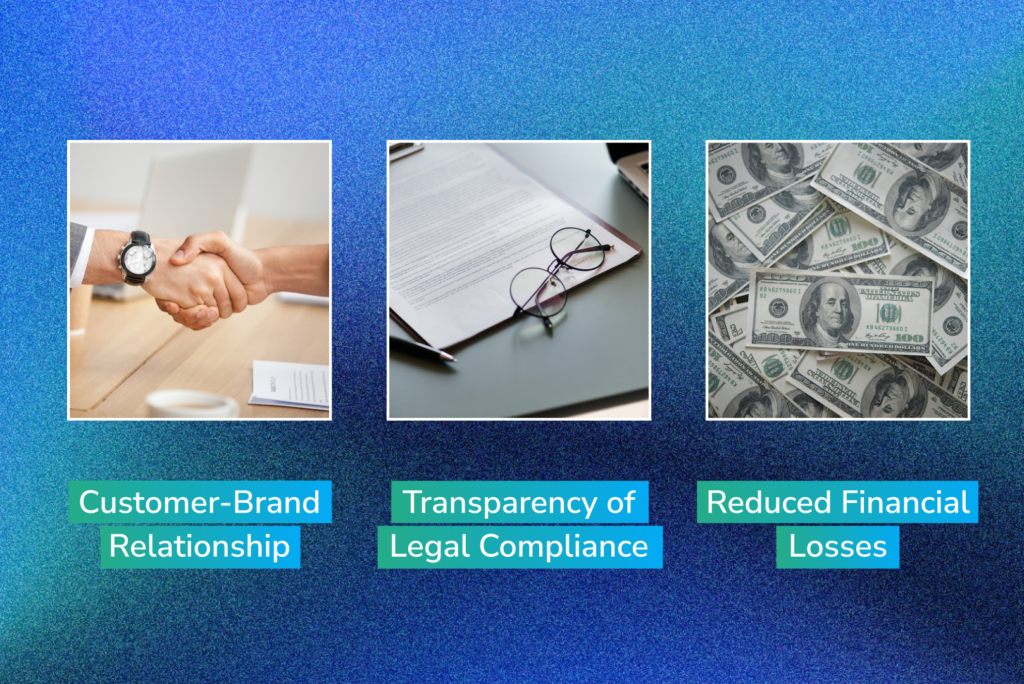
According to recent statistics, only in 2022, no less than 493.33 million ransomware attacks were detected by organizations worldwide, causing the global average data breach cost of $4.35 million in 2022.
Meanwhile, password cracking online data is still among the most popular types of attacks as 80% of all data breaches were attributed to compromised passwords. And still, the whole 49% of users will only change one letter or digit in one of their preferred passwords when required to make a new password, letting the professional hacker break their account within a few seconds.
GDPR two-factor authentication is one of the first and most powerful protective measures in case of password cracking. In fact, 2FA can block 100% of automated bots, 96% of phishing attacks, and 76% of targeted attacks. The reason for it is simple: even if wrongdoers manage to uncover a user’s password, they would still lack the second means of identification required to access the application.
Do you need assistance from an experienced vendor to address risks related to integrating 2FA functionality? Contact BSG — a communication and security service provider for more details.
Benefits of 2FA for GDPR Compliance
Highlight how implementing 2FA enhances user GDPR authentication, and access control, and protects personal data, helping businesses demonstrate compliance with GDPR’s security requirements.
How 2FA enhances user authentication and access control
A temporary code sent to a user’s mobile device or an authentication app is an independent of the primary credentials. This makes it much harder for cybercriminals to breach accounts, as they would need both the user’s password and physical access to their second authentication method.
Role of 2FA in protecting personal data and preventing unauthorized access
As it was mentioned before, 2FA plays a critical role in enhancing the security of personal data by adding an extra layer of protection The method reduces the risk of data breaches and identity theft as a successful attack would require not only compromising the user’s password but also obtaining the second factor which is often physically tied to the user or temporarily available.
Demonstrating compliance with GDPR’s security requirements using 2FA
Utilizing 2FA is an effective method to demonstrate compliance with the GDPR security requirements. 2FA not only protects users’ data but also shows proactive efforts to adhere to GDPR’s mandate for companies to implement appropriate technical and organizational measures to ensure a level of security appropriate to the risk.
Overall, implementing GDPR multi-factor authentication can better comply with GDPR’s security requirements and demonstrate their commitment to safeguarding personal data and privacy.
Do you want to ensure the complete protection of your client’s data? With years of experience, BSG World knows how to overcome common challenges by implementing 2FA into your business .
Benefits of 2FA for HIPAA Compliance
The Department of Health and Human Services Office for Civil Rights has long been advocating for the use of HIPAA 2-factor authentication. As early as 2006, the HHS recognized 2FA as a crucial best practice for maintaining compliance with HIPAA compliant password management, identifying it as a primary strategy to mitigate the threat of password theft that could potentially result in unauthorized access to electronic Protected Health Information (ePHI).
But why does HIPAA require two-factor authentication? Well, there are a few critical reasons for that:
2FA strengthens the protection of sensitive health information
Two-factor authentication HIPAA adds a higher level of security to access personal information and medical records. Before giving access to sensitive data, HIPAA MFA requirements have to complete numerous authentication procedures. Before gaining access to your medical information, your physician, for example, may be asked to supply a username and password, as well as a second factor.
2FA mitigates the risks associated with unauthorized access
According to HIPAA, healthcare data breaches in the U.S. have decreased by 48%, yet as of the previous year healthcare organization reported 337 breaches which affected 19,992,810 individuals . Thus, the HIPAA security rule of two-factor authentication is critical to prevent the ongoing tendency for unauthorized access.
2FA Demonstrates HIPAA’s compliance security standards
Recently, HIPAA Journal praised 2FA as a top-notch defense against phishing attacks on ePHI (electronically protected health information). The HIPAA Security Rule mandates adherence to Technical Safeguards but grants healthcare organizations the freedom to choose their preferred security measures.
To clarify, Technical Safeguards are not the actual measures implemented but rather the standards an organization must demonstrate compliance with and so far 2fa HIPAA is the easiest way to manage them.
Conclusion
In the face of evolving cyber threats, implementing two-factor authentication (2FA) remains crucial in maintaining HIPAA and GDPR compliance. Abiding by HIPAA compliant password requirements and enacting a robust HIPAA compliance password policy ensures enhanced security of sensitive data and limit potential unauthorized access.
Businesses, particularly those leveraging technologies like bulk SMS service for 2FA, showcase their commitment to security and regulatory adherence. BSG 2FA solution can rise up the protection rates of the user’s account by up to 70% and enhance the reliability of your brand. Contact BSG World today and take full advantage of 2FA measures for ensuring your online platform protection.


Interested in a special offer?
Ready to reach further?
Let’s talk


Related articles
Why Should Ecommerce Stores Use SMS Marketing? Did you know that up to 5 billion

According to statistics, the Black Friday and Cyber Monday (BFCM) season generated $222.1 billion in

The start of the school year: when parents trade in their summer margaritas for the