




How to Measure Your SMS Campaign Success? BSG Head of Digital Guide

I have been involved in B2B and B2C marketing for over 10 years, including consulting roles where I’ve worked with a lot of businesses facing similar challenges. Almost every time I step into a new C-level position, I often find the need for more knowledge in working with metrics, particularly in the realm of SMS Marketing optimization. In telecommunications and SMS marketing, this issue occurs quite often. However, this is the advice I give to businesses in any industry — e-commerce , iGaming , retail, and any small or large-scale enterprises:
Marketing objectives should be your guiding star .
Therefore, in this guide, I have decided to provide a foundation, core data, and a concise guide for businesses:
- How to set marketing objectives for SMS campaigns?
- What are the key metrics to measure SMS campaigns success?
- How can I improve my metrics with SMS Analytics?
No matter the size of your business, this guide is here to help leverage your bulk SMS campaigns .
The Core: Setting Business Goals
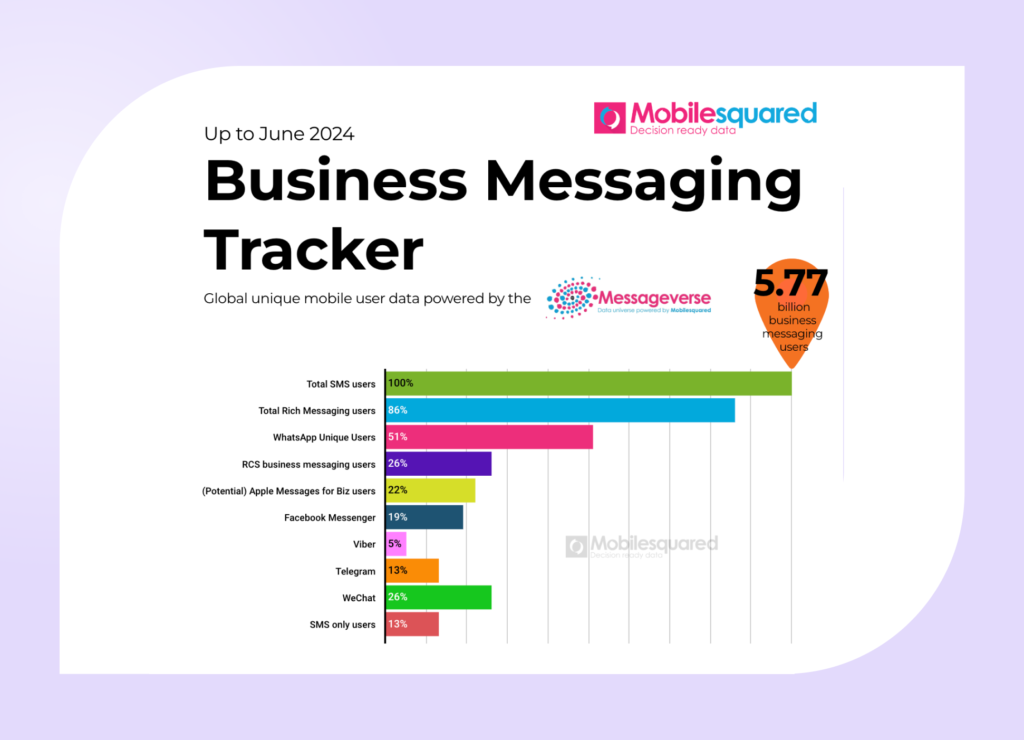
If you don’t know where you want to go, you will end up where you don’t want to be. Therefore, you need to clearly communicate your business goals to determine the metrics you want to track. In the infographics below, I have outlined the business needs and the key SMS campaign metrics you should focus on for effective SMS marketing campaigns.
When the business strategy team emphasizes the necessity for margin growth, the next step involves determining the strategy for reaching the objectives.
Do you aim to acquire more clients? Consider raising product costs. Or perhaps focus on retaining existing clients and boosting their purchasing frequency? Each scenario demands a distinct approach to SMS marketing strategy.
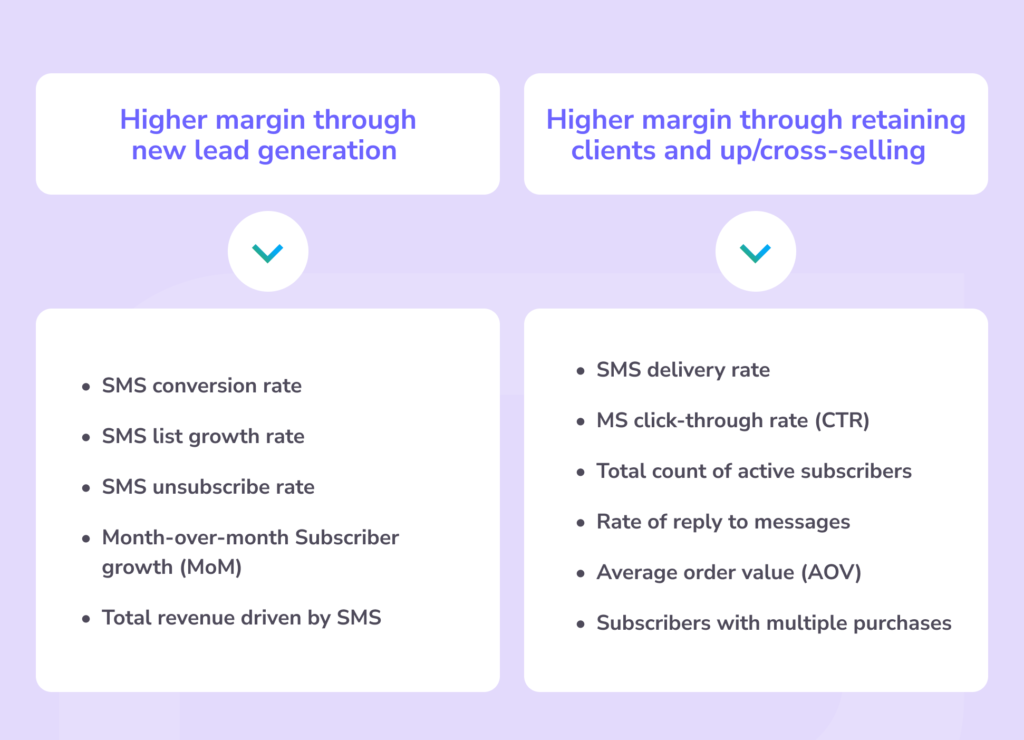
If you’re new to these SMS campaign metrics, the terminology might seem a bit scary. But fear not, as marketing is designed to serve your needs and yield results. Allow me to acquaint you with the meaning of each metric and provide you with a formula to calculate it.
Key Performance Indicators to Measure the Success of Your SMS Campaign
Return on Investment
Her Majesty, the Queen of marketing metrics: ROI. In the context of SMS marketing, ROI measures the effectiveness and profitability of the SMS campaign. Return on Investment emerges as the paramount metric in SMS marketing, showcasing the financial outcomes of campaigns and indicating whether the primary business objective – maximizing profits has been achieved.
ROIsms=(Revenue from SMS Campaign/Cost of SMS Campaign)×100%
SMS Conversion Rate
In SMS marketing, there are several types of conversions: newsletter subscriptions, sales, event participation, content downloads, website visits, information collection, and customer feedback. It is up to the marketer to determine which specific metric will be considered a conversion. The higher this metric, the better you understand your audience’s needs. Consider your conversion rate as an indicator of whether it’s worthwhile to continue your campaign outreach:
CVR = (Number of conversions / Number of texts delivered)×100%
SMS List Growth Rate
The list growth rate is the number of new subscribers who joined your text message list over a given period. To boost your list growth rate, consider offering rewards for subscribers who send your SMS messages to friends or family or promoting your text message list in other marketing channels like social media or email. What’s more, take advantage of the BSG Short URL to stand out with shorter, branded, and trackable links.
SMS List Growth Rate= Total Number of New Subscribers / Total Size of Your List)×100%
SMS Unsubscribe Rate
If your unsubscribe rate is high, this can indicate that you’re sending to those who have lost interest in your brand. It is a critical metric to indicate the problems via the SMS campaign delivery. There could be different reasons for unsubscriptions:
- Sending to unengaged subscribers
- Failure to personalize the customer journey
- Inappropriate sending schedule
- Poor sign-up form practices
- Lack of clear branding in messages
Unsubscribe Rate=(Number of People Who Unsubscribe after SMS/ Number of SMS Received)×100%
Month-over-month Subscriber growth (MoM)
Month-over-month (MoM) growth shows the change in the value of a specific metric as a percentage of the previous month’s value. Month-over-month growth is often used to measure the monthly revenue growth rate of mass SMS marketing, active users, number of subscriptions, or other key metrics.
MoM Subscriber Growth=((Subscribers at End of Current Month−Subscribers at End of Previous Month)/Number of Subscribers at the End of the Previous Month)×100%
Total Revenue Driven by SMS
This metric is crucial because it measures the direct financial effectiveness of SMS marketing campaigns in generating sales and contributing to a company’s income. Attentive customers drive an average of 20.5% of total online revenue from SMS, so it should be your goal.
Total Revenue Driven by SMS=Number of Conversions×Average Revenue per Conversion
SMS Delivery Rate
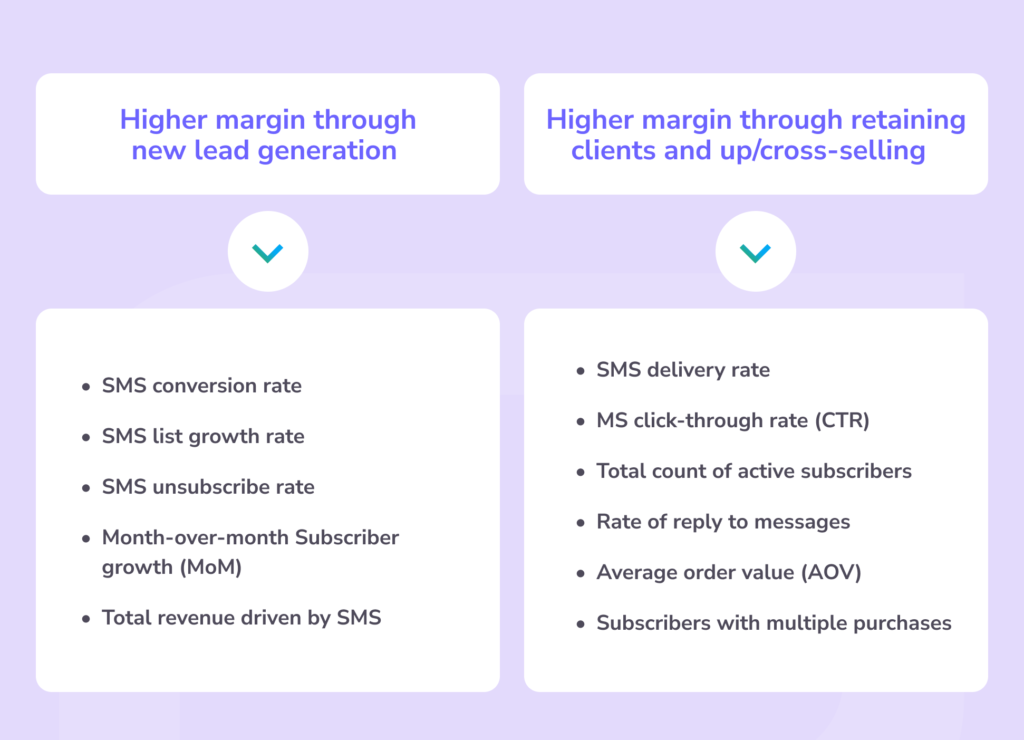
The SMS delivery rate is a key performance indicator (KPI) that measures the percentage of your text messages that are successfully delivered. According to Mobile Squared , all 5.7 billion business messaging users utilize SMS communication, with it remaining the primary source of communication for the majority. At BSG, our delivery rate stands at 99%.
SMS Delivery Rate=(Number of Successfully Delivered SMS/Total number of Sent SMS)×100%
SMS Click-through Rate (CTR)
A critical value among SMS marketing metrics assesses the effectiveness of links within various types of content, including SMS marketing messages. It represents the ratio of users who click on a specific link to the number of total users who view the message (clicks divided by impressions).
Imagine your company sends an SMS campaign to 50 customers featuring a special offer link. If 5 of those customers click on the link to learn more about the offer, the click-through rate for that SMS would be 10%.
CTR=(Number of Clicks on the Link/Number of SMS Opens)×100%
Total Count of Active Subscribers
I would say that this SMS marketing KPI is critical for marketing resource allocation, based on the scale of the SMS audience. To boost this metric, you can turn to BSG Number verifier , it will clean your client database from non-existing numbers and save your budget significantly.
Total Count of Active Subscribers=Number of Subscribers Opted In−(Number of Subscribers Opted Out+Number of Deactivated Subscribers)
Rate of Reply to Messages
Your SMS Response Rate is the percentage of first responses to new messages that a seller sends. This metric is crucial for assessing the quality of your SMS User Experience (UX) and is closely linked with the Response Time Metric. If your reply rate to messages is low, then it’s worth considering the following questions:
- Have I crafted my SMS content to be both engaging and clear?
- Have I included clear instructions or calls to action for the users?
- Have I used an appropriate tone of voice in my SMS messages that resonate with my audience?
Rate of Reply to Messages=(Number of Responses Received/Number of Messages Sent)×100%
Average Order Value (AOV)
Typically used in e-commerce, AOV is a metric that refers to the average amount that a customer spends with a company each time they place an order. What does it have to do with the SMS campaign? Well, it shows how effective is your close or us-selling strategy. Here are some tips to craft the campaign traitored to cross/up-selling:
- Stay Relevant . Present products and services that align with customers’ previous buys.
- Time Wisely . Choose the optimal moment for upselling or cross-selling to engage customers.
- Simplify Offers . Highlight one strong offer instead of bombarding it with multiple options.
- Highlight Benefits . Explain how the offer improves the customer’s situation or resolves issues.
- Create lead magnets . Attract purchases with special deals, trials, or rewards.
Average Order Value=Total Revenue/Number of Orders
Subscribers with Multiple Purchases
This SMS metric measures the number of individuals who have made multiple purchases due to SMS marketing campaigns, highlighting customer loyalty. Remember, these customers require a tailored SMS Marketing Strategy. Your advanced task is to discover specifics about their preferences and nurture these insights for future campaigns to maximize effectiveness. BSG offers detailed analytics, allowing you to categorize customers based on dozens of metrics, empowering you to encourage repeat purchases.
How Can BSG Help Interpret the Outcomes of Your SMS Campaigns?
Simply put, when you launch an effective SMS marketing campaign on BSG, your message is delivered via multiple suppliers’ routes to the actual phones of people all over the world, and you receive a comprehensive text message report on the results of your campaign.
The following tools are available from BSG to simplify your experience with SMS tracking:
- Sender ID Test: Check for sender name changes
- Timestamps and DLR: Receive valid and timely delivery reports from your supplier;
- SMSC check: Verify your provider’s SMS center.
- PDU data: Get delivered and undelivered message raw data.
- API integration: Integrate SMS verification API into your platform.
Ready to launch data-driven SMS campaigns? Get started with BSG .
Final Word
After you have established information systematization, what should be done next? Analyze, learn, and improve. Check for the period of the highest profit and conversions. Make the cause-effect links in your work, and push it further. It takes time to gather the data, but the returns are totally worth it. And if you’re looking for a reliable platform to send campaigns, BSG is here for you. Reliable, simple, and cost-effective platform services to send your SMS campaigns are just a hand away. I wish you strength in your marketing journey, and let your message surf the world!


Interested in a special offer?
Ready to reach further?
Let’s talk


Related articles
What is CPaaS? The cloud API layer that adds SMS, WhatsApp, voice & OTP to your apps — how it works and why it beats a multi-vendor stack.

SMS remains a powerful communication tool—old but gold, as many would say. However, in cases
AI has already completely absorbed this world in every possible way. And now you probably