
BSG utilizes HTTP cookies (and similar or complementary technologies) to 1) make this website safe, functional, and accessible (through the use of mandatory cookies) and 2) understand how you use our website (through the use of optional cookies) in order to improve your experience and to provide you with personalized content.

The information in the cookie text files may be related to your personal preferences or your device and is intended to make the site operate according to your expectations. The information contained in cookies does not usually identify your identity directly but is helpful in providing you with a more personalized user experience.

In accordance with the requirements of the General Data Protection Regulation (GDPR) privacy and security law that governs how the personal data of individuals in the EU may be processed and transferred, we provide you the possibility to prohibit the use of certain types of cookies when you use our website.

Read our Cookie Notice and the Privacy Policy for detailed information on how BGS collects and uses cookies. Please note that prohibiting the use of certain types of cookies may affect your interaction with the website and limit the accessibility of services we offer you. Choose the appropriate category below to learn more and to disable cookies.

Accept All cookies*
*Recommended for comfortable use of the site
Accept only necessary cookies
Accept only selected cookies
Necessary cookies
Social media
Analytics
Marketing

Delivery Rate

What is delivery rate?

Delivery rate is the share of sent messages that are confirmed as delivered to recipients' handsets, usually calculated from delivery receipts returned by mobile networks.

Why does delivery rate matter?

Delivery rate shows how much of your messaging actually reaches people. It is typically calculated as delivered messages divided by submitted messages, based on the delivery receipts that mobile networks return. A message your system marks as "sent" is not the same as one confirmed as delivered.

For businesses, delivery rate is the first metric to watch, because every other result depends on it: a one-time password that never arrives blocks a login, and a promotional SMS that is not delivered cannot convert. A single overall figure hides problems, so teams track delivery rate per country, operator, route and message type, and compare it with a baseline.

A sudden drop usually points to a degraded route, invalid or ported numbers, sender ID filtering or content blocked by an operator firewall. Providers with several routes per destination can move traffic when the rate falls.

Example

A retailer's overall delivery looks stable, but one operator in one country drops sharply after a sender ID change. Per-operator tracking surfaces the problem before customers start to complain.


Interested in a special offer?

Ready to reach further?
Let’s talk

I agree to BSG privacy policy
Submit

Explore BSG Solutions

Useful Materials
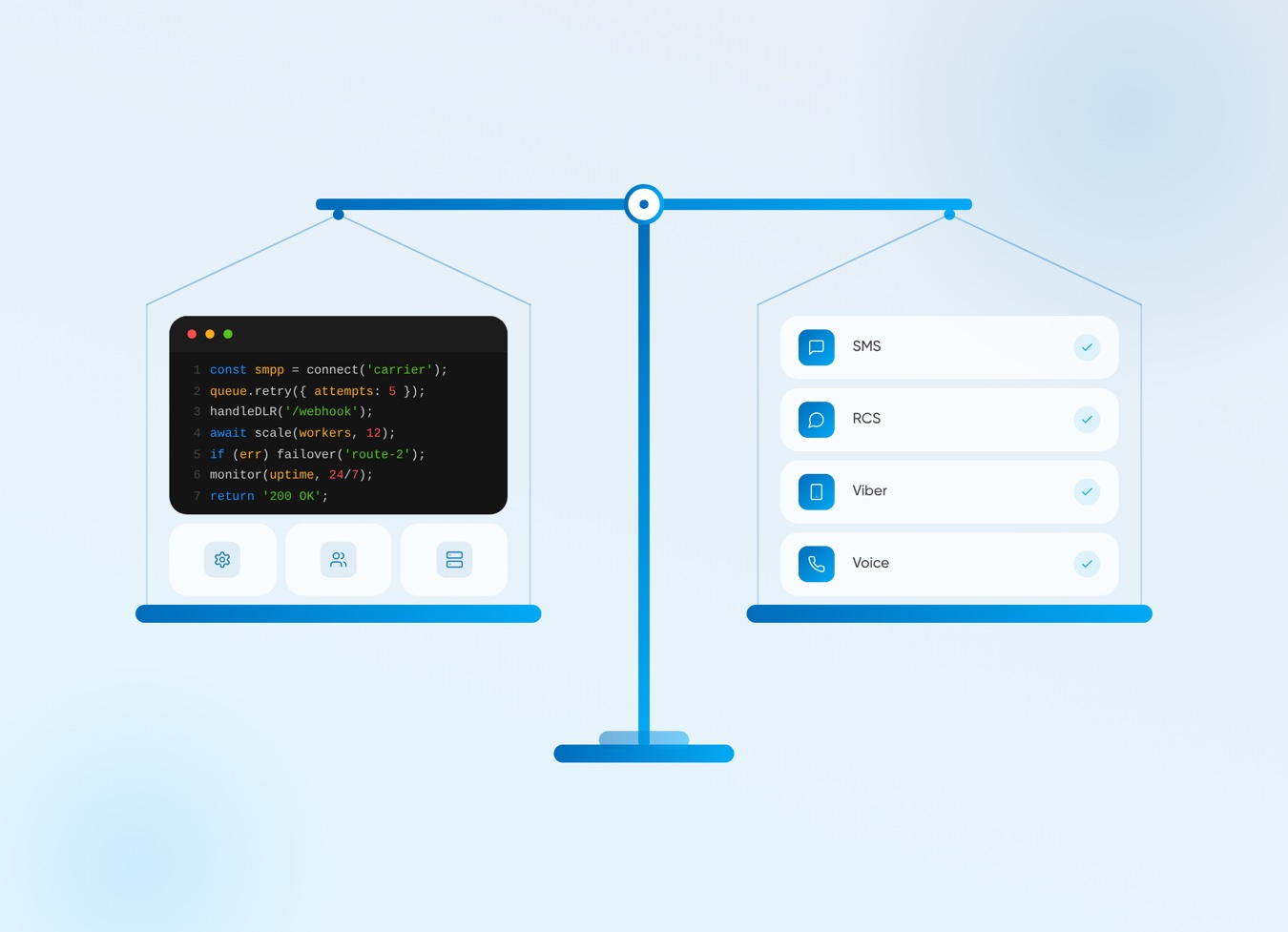
Balance scale comparing building messaging in-house with code and developers versus buying a CPaaS platform with messaging channels
Build vs Buy Messaging: When In-House Beats CPaaS

Build messaging in-house or buy a CPaaS? Time, cost, support, compliance and scale compared for EU and UK teams.
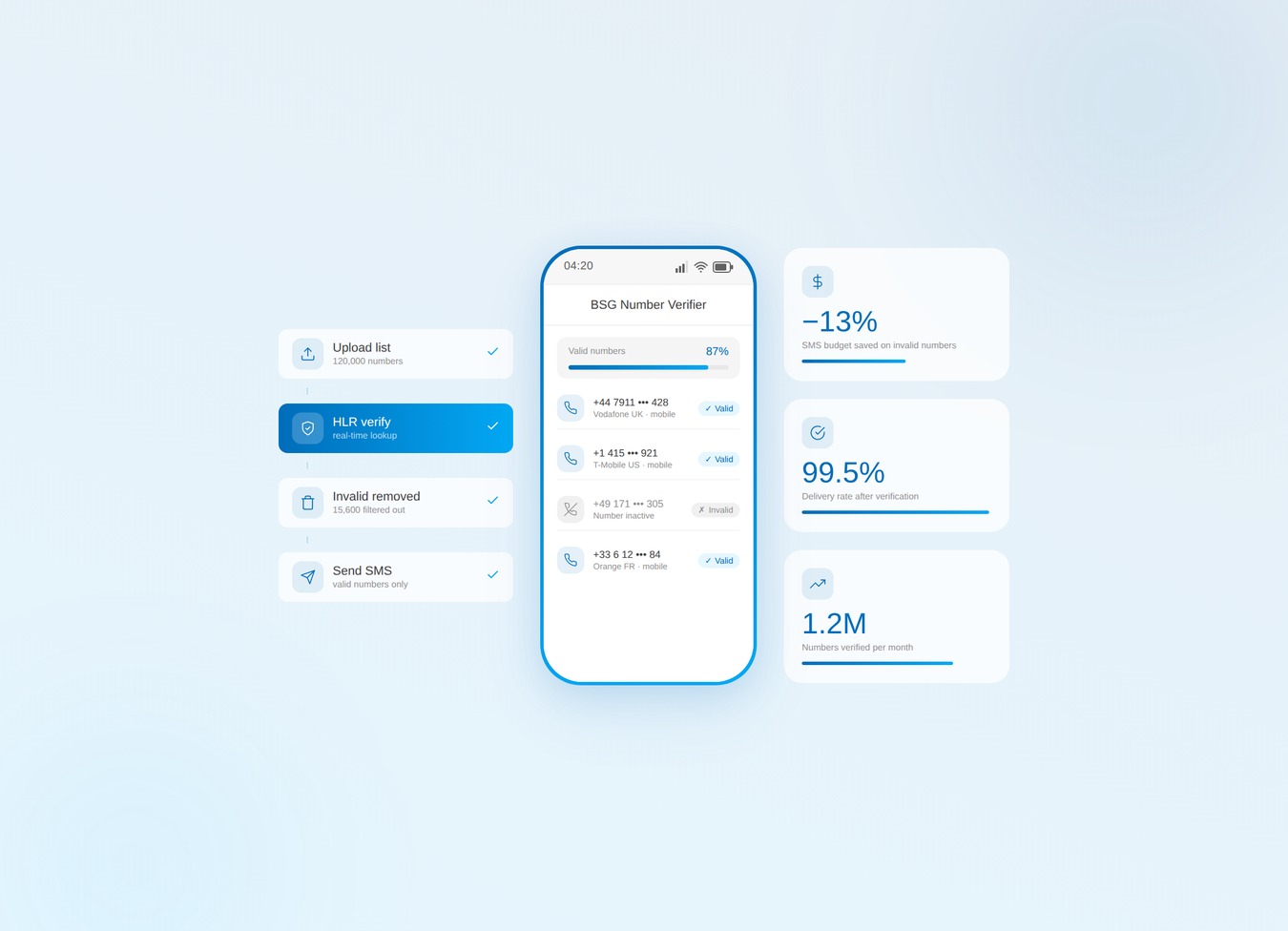
Phone Number Verification: How to Stop Paying for SMS That Never Arrives

Up to 10% of your SMS budget dies on dead numbers. Verify the list first, then send.
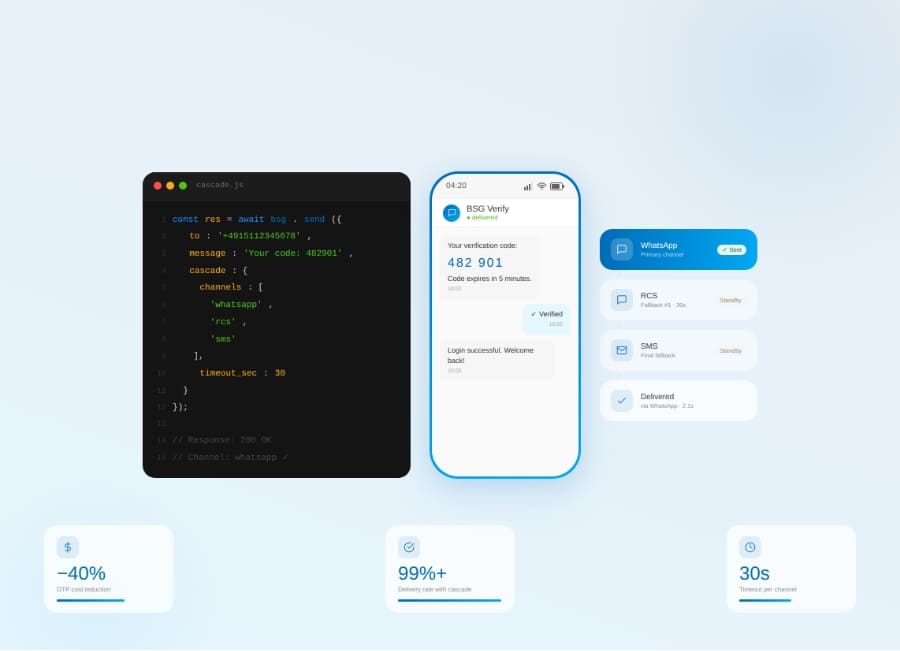
Message Cascade: How WA→RCS→SMS Fallback Cuts Costs and Boosts Delivery

Server-side cascade routing across WhatsApp, RCS, and SMS — how it cuts OTP costs 20–40% with one API call.