





First released in 2008 by GSMA , RCS messaging continues to hold a prominent place in the communication industry. In June 2023, RCS business messaging adoption surged by over 40% compared to the previous 12 months, outpacing the growth of other messaging channels. The industry is eagerly anticipating the fall of 2024, as Apple has announced plans to support RCS in the iOS 18 update, which signals the potential for even broader user reach and interoperability.
RCS message is not just an upgraded type of SMS messaging but a completely different communication source equipped with features for rich content. It is possible to add action buttons, video, audio, up to ten-picture carousels, geolocations, and QR codes. RCS is designed to diversify the message content clients receive, boost engagement, and create branded content for the user.
In light of Apple’s upcoming release, we decided to ask our Head of Product, Oleksandr Semenenko, some questions regarding the changes connected to RCS.
What challenges exist in RCS adoption over SMS?
Adopting RCS over SMS presents challenges for both end consumers and our clients. For end consumers, they need to enable RCS support on their phones and ensure it remains active. For our clients, integrating our API is necessary, along with creating compelling texts and media for their messages. These steps are essential to leverage the full potential of RCS.
How does consumer behavior influence RCS vs. SMS usage?
If users are already communicating with others via RCS, they just need internet coverage for seamless communication. However, it’s important to note that users can disable RCS message option. This isn’t critical for them as they can still use other messaging apps as before. The RCS protocol doesn’t offer significantly new functionalities to them in such cases.
How did Apple’s iOS 18 RCS announcement change the RCS landscape?
Apple’s iOS 18 announcement regarding RCS has significantly changed the landscape. A substantial portion of the market has now become accessible. This means our clients can now reach 100% of the available market, not just Android users. This inclusivity is a huge advantage for our clients.
Will RCS replace SMS and MMS eventually?
We don’t believe RCS will completely replace SMS and MMS. SMS remains reliable as it works without internet, which is crucial for delivering OTP codes and service messages. However, RCS is poised to take over a larger share of promotional traffic due to its enhanced capabilities.
How will RCS influence operators and communication platforms?
This question is better directed at the operators themselves. Not all operators currently support the RCS protocol, and they need to undertake technical work to do so. Their level of interest and investment in supporting RCS will ultimately determine its impact.
Will RCS pricing for businesses be cheaper than SMS?
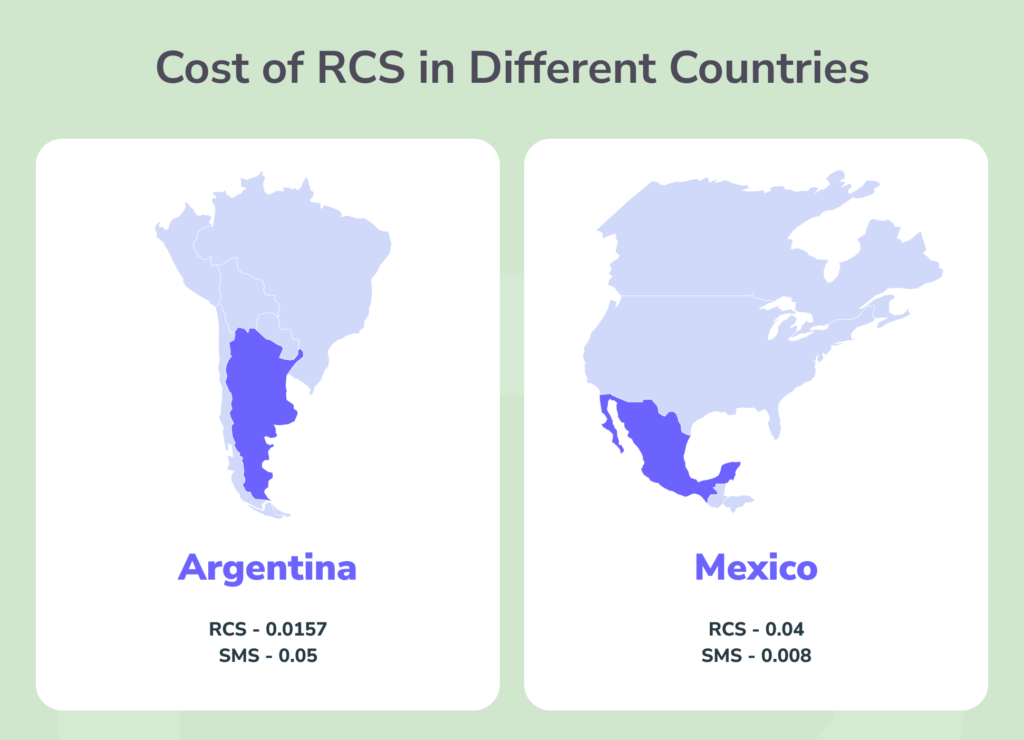
In some countries, RCS is cheaper than SMS, while in others, it is not. For example, an RCS message costs 0.75 hryvnias in Ukraine, compared to 1 hryvnia for an SMS. In Argentina, RCS costs $0.0157, while SMS costs $0.05. Conversely, RCS is $0.04 in Mexico, while SMS is only $0.008. The exact pricing can vary based on the provider and the specific service type.
How will RCS pricing be structured for businesses?
RCS pricing depends on the type of traffic (local or international) and the recipient’s operator. There are two types of messages:
- Basic message, which is similar to SMS with 160 characters and text only.
- Single message, which includes 1000 characters plus media and buttons.
Sometimes, both message types cost the same within a country. When it comes to BSG, we use pay-as-you go model, meaning you only pay for the volume of messages you send. There are no monthly fees or setup charges.
Final Note
Now industry has no doubts: RCS represents a significant step forward in mobile communication, offering richer interactions and greater engagement potential. While challenges in adoption and varying pricing structures exist, the enhanced capabilities of RCS make it a powerful tool for businesses. BSG RCS messaging is already offered to customers solid with expanded market reach and improved communication strategies for our clients.


Interested in a special offer?
Ready to reach further?
Let’s talk


Related articles
ICE London is coming up and it’s the perfect occasion for gaming professionals. From February
It’s that time of the year again when the world’s top mobile operators, technology companies,
2024 has been a year of significant developments and challenges. As the Product Manager at