






Imagine a future where you can start your day by accessing all the information you need with just a few taps on your computer, iPad, or tablet screen, without even having to talk to anyone. Well, that time is now, thanks to the introduction of chatbots that assist us in our daily activities.
These chatbots come in various forms, from highly complex to simpler and more user-friendly. These bots’ unique selling point (USP) is their ability to solve problems, provide information, and address queries without human interaction. What’s even better is that the processing time for bots is incredibly fast, so you don’t have to wait long for a resolution.
One industry that has greatly benefited from the emergence of chatbots is the banking sector. The convenience, quick resolutions, user-friendly interfaces, swift processing times, and minimal human interaction have all contributed to the growing adoption of
voice chatbots
in banking.
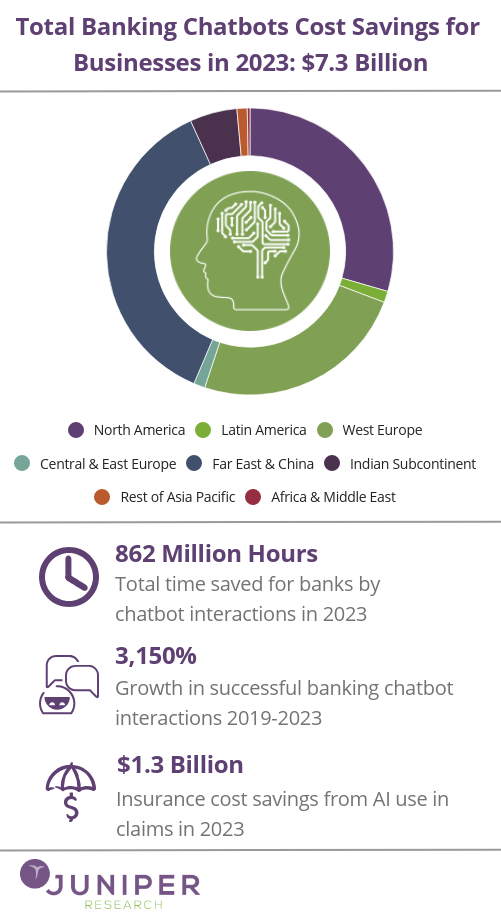
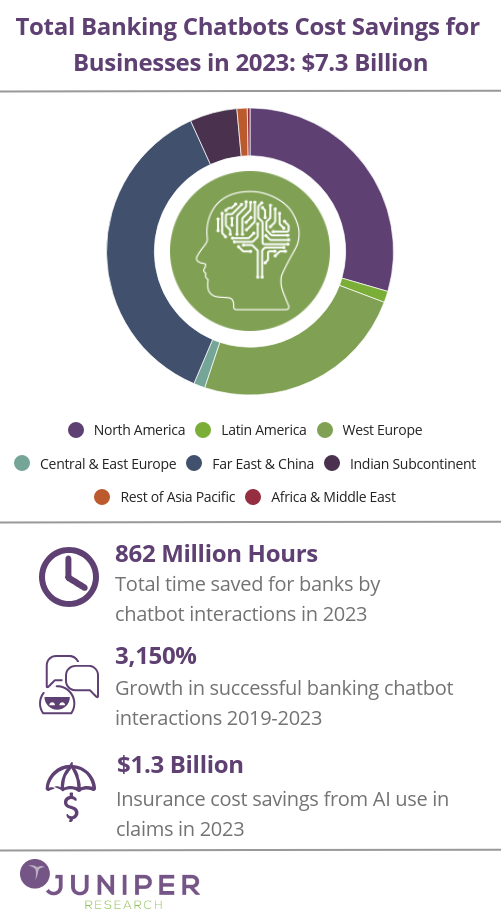
According to a report by Juniper Research in 2017, banks can save a lot of time and money by using chatbots. They found that for every question a voice chat bot handles, it saves agents about 4 minutes of work, which adds up to a cost savings of around $0.70 per question.
More recently, it has been predicted that using conversational AI in banking will lead to operational cost savings of $7.3 billion by 2023. This means that banks will save 862 million hours in 2023, which is like having half a million people working for years!
It is clear that the future of chatbots in banking looks very promising. Banks are realizing the benefits of investing in AI-powered banking chatbots as a smarter way to attract, engage, and assist customers.
Keep reading this article to understand just how helpful voice banking is, some opportunities and challenges, as well as some successful examples from around the world.
Understanding Voice Bots
A voice bot is a way to interact with a device or service using your voice. Thanks to artificial intelligence (AI) and natural language processing (NLP), a voice bot can understand what you’re asking or requesting and give a fitting audio response.
Voice bots work by turning your spoken words into text using a Speech to Text (STT) engine. Then, with the help of AI, it figures out the important parts of what you said, called intents, and gives a suitable reply. Finally, a Text to Speech (TTS) engine turns the response (text) into audio or voice so you can hear it.
These bots are trained to understand speech like humans and give natural responses. Some call them “voice assistants” or “virtual assistant answering service.” With the power of conversational AI, voice bots can even understand the context and have a real conversation with you instead of just sounding like robots.
Benefits of Voice Bots for Banking
Let’s look closer at the benefits of voice bots for banking.
Improved Customer Engagement and Experience
When customers have a good experience, it directly increases loyalty and retention. Poor customer service often leads people to switch service providers. Nowadays, customers access banking services anytime through the Internet and mobile banking. However, this may not always align with the working hours of financial institutions. This is where AI voice bots for banking come in, providing 24/7 accessibility across different locations.
Cost Reduction and Efficiency Improvement
AI-driven Voicebots can handle repetitive customer questions, reducing the workload on human employees. This allows bank officials to focus on managing critical services. Voice bots enable self-service options, helping customers find basic solutions to their queries. Operational costs decrease, and processes become more efficient.
Personalization
Introducing banking voice bots allows customers to engage in tailored conversations that meet their needs. This not only improves customer satisfaction but also enables bankers to gather valuable information such as customer profiles and service feedback. With this information, banks can create an “ideal customer profile” and offer hyper-personalized offerings in the future.
Security and Customer Privacy
The banking sector is always at risk of financial fraud. Voice bots for banking enhance security and customer privacy by bringing in business intelligence and fraud monitoring capabilities. These processes can identify system glitches and promptly alert the necessary teams to address them. Auto call bots enable a proactive approach to identifying and preventing the risks associated with human errors.
Value-added Service Offerings
It’s not always the customers who initiate conversations with banks. Financial institutions must also carry out outbound initiatives and provide specific service offerings to customers. For example, banks may offer a special facility to loyal customers. Voice bots can utilize features like triggered automated outbound calling to explain these offerings to customers and engage them meaningfully. AI voice bots for banking can also help set recurring payment reminders, remind customers of pending tasks, and more. These conversations feel instantaneous, making the interaction more human-like.
Opportunities for Voice Bots in Banking
Voice bots have opened up exciting opportunities for the banking industry. Below are some opportunities in the banking industry and how these bots are transforming various aspects of banking:
Customer Service
One of the key areas where voice bots can make a significant impact is customer service. Traditional customer service channels like phone calls and email support can be time-consuming and often result in long customer wait times. An AI call center can alleviate these issues by providing instant, personalized assistance. Customers can simply speak their queries or concerns, and the voice bot will understand and provide relevant information or solutions. This improves the overall customer experience and reduces the workload on human customer service agents, allowing them to focus on more complex issues.
Account Management
Account management is another area where voice bots can be incredibly useful. Customers often need assistance checking their account balance, transferring funds, making outbound automated calls, or updating personal information. Instead of navigating through complex menus or waiting for an available agent, customers can use voice commands to interact with a bot and perform these tasks seamlessly. Voice bots can securely access account information and complete transactions, providing customers with a convenient and efficient experience while ensuring their sensitive data’s security.
Fraud Detection and Prevention
Fraud detection and prevention is a critical concern for banks, and voice AI bots can significantly strengthen security measures. By analyzing speech patterns and voice characteristics, voice bots can help detect fraudulent activities. For instance, if a bot identifies suspicious behavior or a voice that doesn’t match the account holder’s profile, it can trigger additional verification steps or alert the bank’s fraud department. This proactive approach to fraud detection can save banks and customers from potential financial losses and enhance overall security.
Financial Decisions
By integrating with financial data and using AI algorithms, voice bots can provide personalized recommendations based on an individual’s financial goals, spending patterns, and investment preferences. For example, a customer seeking advice on investment options can have a conversation with a phone answering robot, which will analyze their financial situation and offer tailored suggestions. This empowers customers with valuable insights and guidance, ultimately helping them make better financial choices.
Customer Insights
Voice bots also offer opportunities for banks to gather valuable customer insights. Banks can obtain actionable data to improve their products and services by analyzing conversations and understanding customer needs and preferences. Voice bot interactions can provide information about common customer pain points, identify areas for process optimization, and highlight potential opportunities for innovation.
Use Cases for Voice Bots in Banking
Voice bots have proven to be useful in the banking sector. Below are three specific use cases highlighting how it has been successful.
Lead Generation:
Traditional methods like email campaigns, bulk SMS service , and cold calls are becoming less effective. But with a banking voice chat bot, generating leads becomes more engaging and less intrusive. These chatbots are placed on the bank’s website or app and start conversations with users to gauge their interest in purchasing products.

Back in 2015, Ally Bank came up with Ally Assist . With Ally Assist, customers can manage their bank stuff smoothly and get tailored help. Plus, it even helps Ally Bank find new customers. The captured leads can then be passed on to the sales team for further follow-up until a sale is made. Some brands have even seen a huge increase of up to 600% in the number of leads collected using a voice chatbot compared to traditional methods.
Customer Support:
Thanks to advancements in computing and natural language processing, banking voice chatbots are now smarter and can have more meaningful conversations. This means they can handle a wide range of repetitive customer support queries. These support bots can be integrated into customer touchpoints like social media profiles, websites, apps, an AI contact center, and more.

In 2020, Erica , the voice bot for Bank of America, was a big help to over 5 million new customers who got more than 75 million things done. Erica has been around for over two years nationwide and has assisted 15 million customers with over 175 million tasks . Customers talk to Erica about 400,000 times daily, almost twice as much as the previous year.
They ask users about their problems and provide solutions directly or guide them to the right person. Many banks have successfully used customer support bots to reduce the volume of queries, especially for simple routine and frequently asked ones that their customer service centers usually handle.
Feedback Collection:
For banks, gathering feedback is crucial for continuous improvement. Conversational AI has brought a much-needed technological shift to collecting feedback. Feedback bots have shown impressive results for banks in this regard.

HDFC Bank’s EVA (Electronic Virtual Assistant) uses NLP to interpret customer feedback and questions so that they can respond appropriately. The conversational survey format these voice bot AI use is much more engaging than long, static feedback forms. This boosts the collection of valuable customer feedback, helping banks enhance their services.
Challenges and Solutions
Implementing voice bots in banking comes with its own set of challenges. Let’s discuss some of these challenges and explore potential solutions.
Data Security

One major concern is ensuring the security and privacy of customer data. Banks deal with sensitive information, and protecting it from unauthorized access or breaches is crucial. To address this, banks can implement robust security measures such as encryption, multi-factor authentication, two-factor authentication REST API , and regular security audits. Partnering with reputable technology providers who prioritize data security and comply with industry regulations is essential.
Customer Acceptance
Introducing voice bots may initially face resistance from customers who are accustomed to traditional methods of banking. Some may prefer human interactions over automated systems. To encourage or win back customer acceptance, banks can focus on educating customers about the benefits of voice bots, such as faster response times, 24/7 availability, and personalized assistance. Offering seamless integration between voice bots and other customer communication channels can allow customers to choose their preferred method.
Need for Human Supervision
While voice bots can handle many routine tasks, there may be instances where human intervention is necessary, especially for complex or sensitive matters. Banks can address this by implementing a hybrid approach that combines the efficiency of voice bots with the expertise of human agents. For example, voice bots can triage customer inquiries and escalate them to human agents when required. This ensures a seamless customer experience while providing the necessary human touch when needed.
Natural Language Processing (NLP) Accuracy
Voice bots rely on NLP technology to understand and interpret customer queries accurately. However, NLP systems may encounter challenges recognizing diverse accents, colloquial language, or complex queries. Banks can address this by continuously training and improving the NLP models to enhance accuracy and adapt to different language variations. Regularly collecting and analyzing customer feedback can also help identify areas for NLP refinement.
Regulatory Compliance
The banking industry is subject to stringent regulations regarding customer data, privacy, and financial transactions. When implementing voice bots, email, or text message marketing , banks must ensure compliance with relevant regulations such as GDPR or local data protection laws. Partnering with technology providers experienced in banking compliance can help navigate these regulatory challenges and ensure adherence to the required standards.
The Final Take
The pandemic and technological changes have transformed the banking industry, affecting how both bank employees and customers behave. Now, there’s a greater demand for quick responses and fewer in-person visits.
With mobile and net banking rising, banks must keep up with new technologies. People expect quick, on-demand, interactive, and personalized experiences similar to what they get from Amazon, Google, or Netflix. Banks are working hard to become more customer-focused than ever before.
That’s where voice bots for banking come in—they effectively address these needs and provide better support for banks. Voice bots make banking smoother by reducing reliance on physical resources and automating repetitive tasks. This ultimately enhances customer satisfaction and boosts the overall brand value.
Are you interested in integrating voice bots into your banking system and taking your financial or banking system to the next level? Then reach out to BSG.World !
Imagine the convenience of automated customer interactions and the efficiency it brings to your services. We’ve got the expertise and tools to seamlessly integrate voice bots into your operations. With our help, you’ll enhance customer experience, boost productivity, and stay ahead of the competition.
Get in touch with us today!


Interested in a special offer?
Ready to reach further?
Let’s talk


Related articles

Usually as a sender you may choose to concentrate on the positive metrics of your
The iGaming industry is usually characterized by its dynamic and highly competitive nature and is

Voice bot services are AI-powered tools that enable businesses to create interactive voice-based applications, also