
BSG utilizes HTTP cookies (and similar or complementary technologies) to 1) make this website safe, functional, and accessible (through the use of mandatory cookies) and 2) understand how you use our website (through the use of optional cookies) in order to improve your experience and to provide you with personalized content.

The information in the cookie text files may be related to your personal preferences or your device and is intended to make the site operate according to your expectations. The information contained in cookies does not usually identify your identity directly but is helpful in providing you with a more personalized user experience.

In accordance with the requirements of the General Data Protection Regulation (GDPR) privacy and security law that governs how the personal data of individuals in the EU may be processed and transferred, we provide you the possibility to prohibit the use of certain types of cookies when you use our website.

Read our Cookie Notice and the Privacy Policy for detailed information on how BGS collects and uses cookies. Please note that prohibiting the use of certain types of cookies may affect your interaction with the website and limit the accessibility of services we offer you. Choose the appropriate category below to learn more and to disable cookies.

Accept All cookies*
*Recommended for comfortable use of the site
Accept only necessary cookies
Accept only selected cookies
Necessary cookies
Social media
Analytics
Marketing

Quiet Hours

What are quiet hours?

Quiet hours are periods — usually late evening, night and sometimes Sundays or public holidays — when businesses should not send promotional messages to consumers.

How do quiet hours work?

Quiet hours define when a brand should stay silent. They exist because a promotional SMS lands on a personal device that most people keep within reach day and night, so a late offer feels more intrusive than a late email.

The rules come from three sources. Some are written into law, some are agreed by mobile operators and enforced through contracts, and some are house policies a business adopts to protect response rates. In France, the AF2M Business Messaging Charter 2026 allows promotional SMS and RCS only between 08:00 and 21:30, with Sundays and public holidays tolerated but not recommended. Many other European markets regulate consent rather than clock time.

Quiet hours apply to promotional content. Order confirmations, delivery updates and one-time passwords are service messages and can be sent when the event happens.

Example

A retailer running a pan-European sale sets a send window per country and schedules in each recipient’s local time zone, so the French segment finishes before 21:30.


Interested in a special offer?

Ready to reach further?
Let’s talk

I agree to BSG privacy policy
Submit

Explore BSG Solutions

Useful Materials
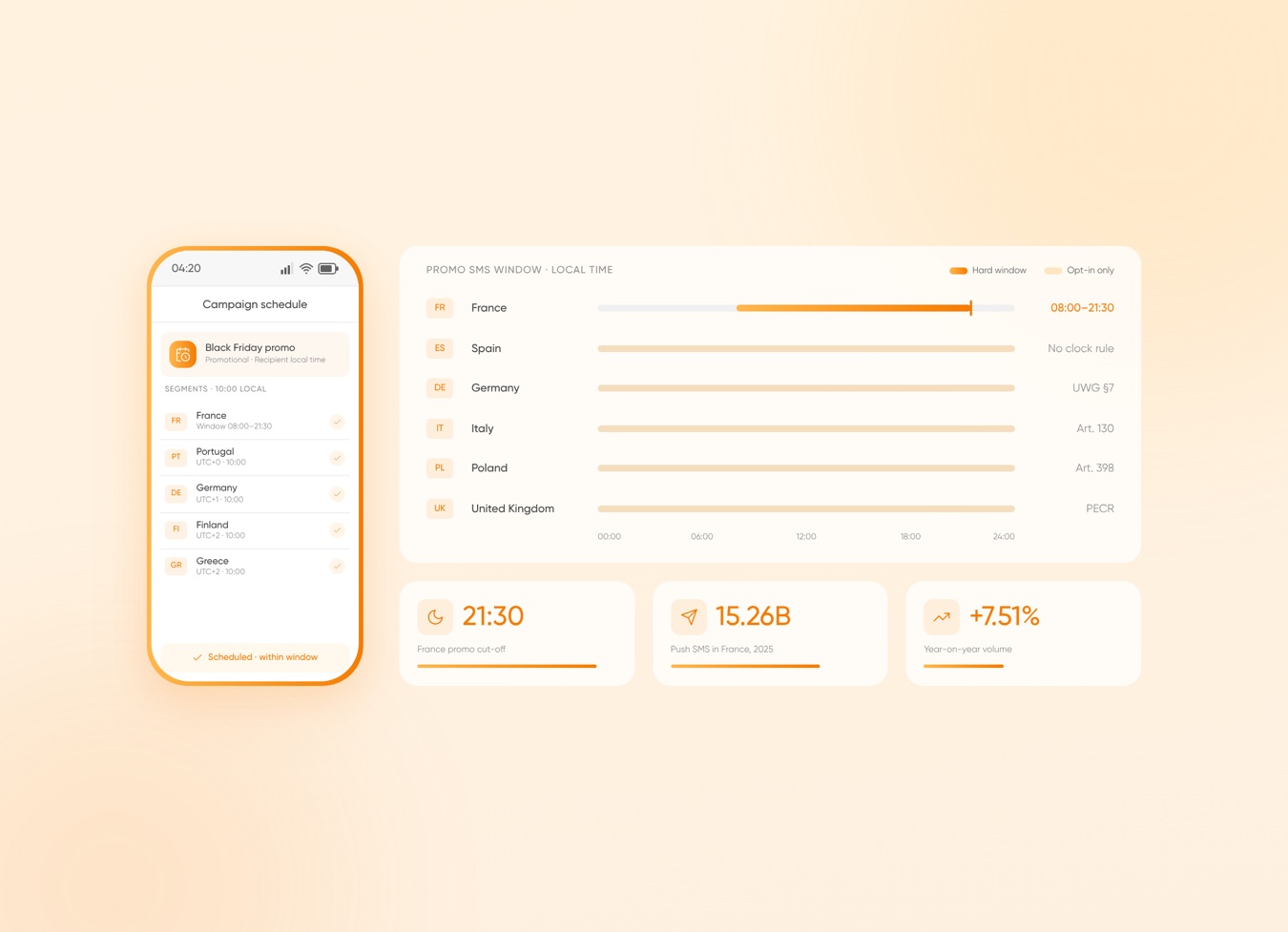
Campaign schedule on a phone next to a chart of promotional SMS send windows by country, with France limited to 08:00–21:30
SMS Quiet Hours in Europe: When You Can Send Promo SMS, by Country

France caps promo SMS at 08:00–21:30; most of Europe regulates consent, not clock time. Country table with sources.
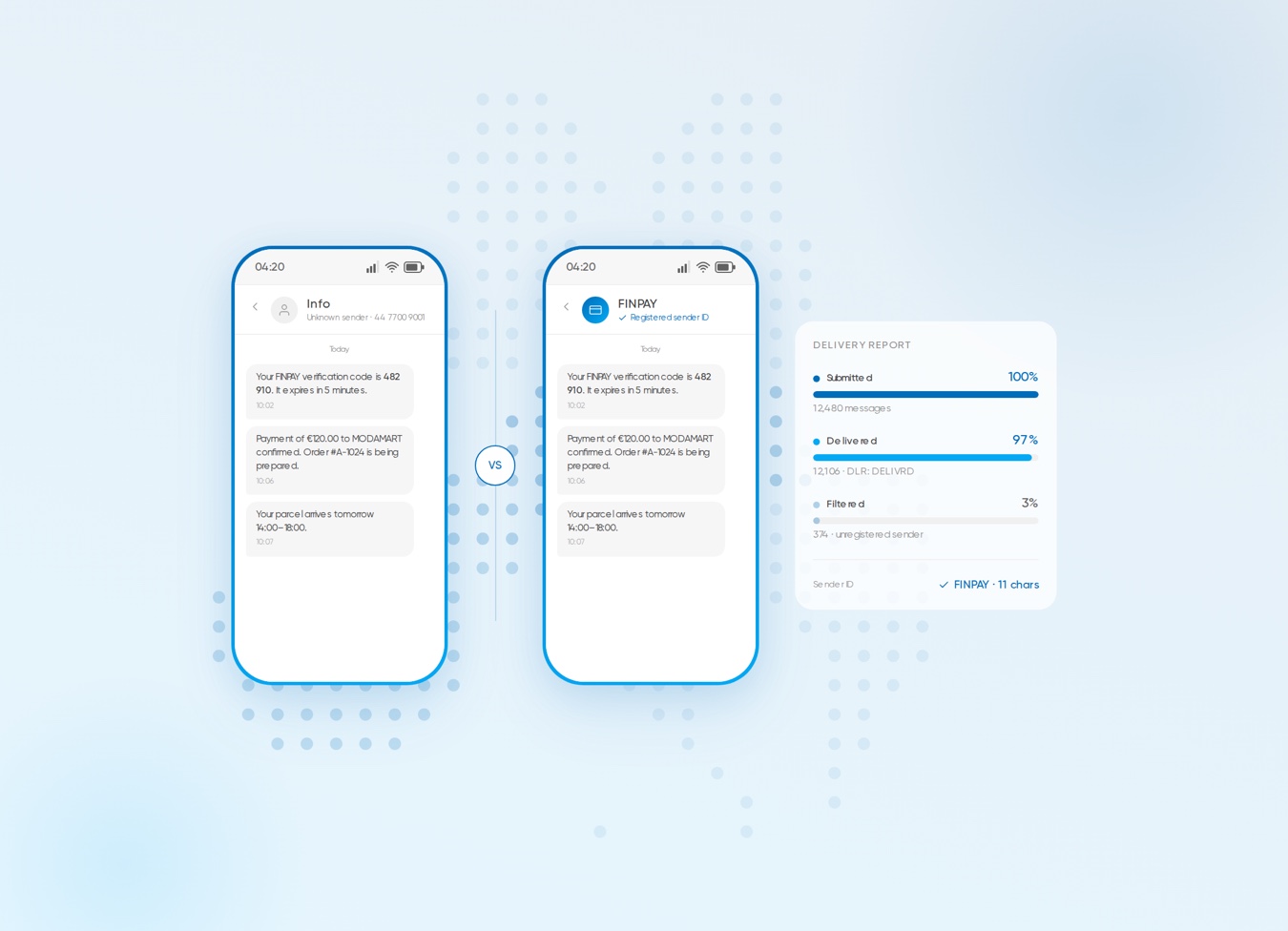
Sender ID Registration in the EU and UK: Why Your SMS Gets Filtered

Why unregistered senders get filtered in the EU and UK, and what each country requires for sender ID registration.
Text Message Marketing Compliance: Understanding SMS Regulations for the United States, the UK, and Europe
Text Message Marketing Compliance: Understanding SMS Regulations for the United States and Europe

Want to make sure your text message marketing campaigns are on the right side of law? It's all about understanding the rules! Stay informed about the SMS regulations in the US and Europe, and avoid any legal trouble.