




Campaign
What is a campaign?
In messaging, a campaign is a coordinated series of messages sent to a defined audience to achieve a specific business goal — promoting an offer, announcing a product, or re-engaging inactive customers. Unlike one-off transactional notifications, a campaign is planned in advance: it has a target segment, prepared message content, a send schedule, and measurable success criteria.
Most campaigns run over channels such as bulk SMS, WhatsApp, or Viber, and their results are judged by delivery, click-through, and conversion rates. For practical guidance on planning one, see BSG's 6 Key Insights and Trends Shaping SMS Marketing.
FAQ
What is an sms campaign?
An sms campaign is a type of marketing campaign that uses text messaging as the primary means of communication. Typically, the messages are sent to customers or prospects with the intention of driving customer engagement, driving sales, or promoting a product or service.
What are the benefits of using an sms campaign?
SMS campaigns offer businesses an effective way to reach customers quickly, cost-effectively, and with high engagement rates. Studies have shown that customer engagement is significantly higher when messages are sent via text than through other channels. Additionally, text messages have a higher open rate than emails and are more likely to be read immediately.
What types of messages can be sent in an sms campaign?
Messages sent in an sms campaign can range from promotional offers and discounts to product notifications, customer service updates, and reminders.
How do I create an effective sms campaign?
To create an effective sms campaign, you need to plan ahead and think strategically about the messages you want to send. Make sure to keep the messages concise and to the point, and use language that is familiar and easy to understand. You should also consider segmenting your audience and tailoring messages to specific groups.
How often should I send messages as part of an sms campaign?
It is important to find the right balance when it comes to frequency. Too few messages may not have an impact, while too many messages can be overwhelming and lead to opt-outs. It is recommended to send no more than 2-3 messages per week.
Are there any legal considerations when sending sms campaigns?
Yes, there are several laws in place that must be followed when sending sms campaigns. For example, you must obtain consent from customers before sending them messages and you must provide an easy way for customers to opt-out at any time. You should also be aware of anti-spam laws, such as the Telephone Consumer Protection Act (TCPA).
What is the best way to measure the success of an sms campaign?
The success of an sms campaign can be measured in several ways. The most common metric is the open rate, which measures the percentage of messages that were opened by the recipient. Other metrics to consider include open rate, bounce rate, delivery rate, click-through rate (CTR), conversion rate, and opt-out rate.
What are the best practices for writing sms messages?
When writing sms messages, it is important to keep them concise and to the point. Use simple language that is easy to understand, and make sure to include a call-to-action that encourages the reader to take action. Additionally, you should be aware of any character count limitations and make sure to proofread your messages before sending.
What are the best practices for segmenting an sms campaign?
Segmenting your sms campaign is an important step in making sure that your messages are relevant and engaging to the reader. Common segments include age, gender, location, purchase history, and preferences. You can also segment based on user behavior, such as how often they open or click on messages.
How can I optimize my sms campaigns?
To optimize your sms campaigns, you should focus on testing different messages and tactics to see what works best for your audience. You can also test different times and days to send messages, as well as different segments. Additionally, you should analyze the results of the campaigns.


Interested in a special offer?
Ready to reach further?
Let’s talk


Related Terms
Explore BSG Solutions
Useful Materials
![WhatsApp Business API: Complete Guide — Setup, Pricing, Use Cases [2026]](/assets/img/blog/whatsapp-business-api-setup-pricing-use-cases-guide_avatar.jpg)
WhatsApp Business API for 2026 — setup steps, the new per-message pricing model, and proven use cases by industry.
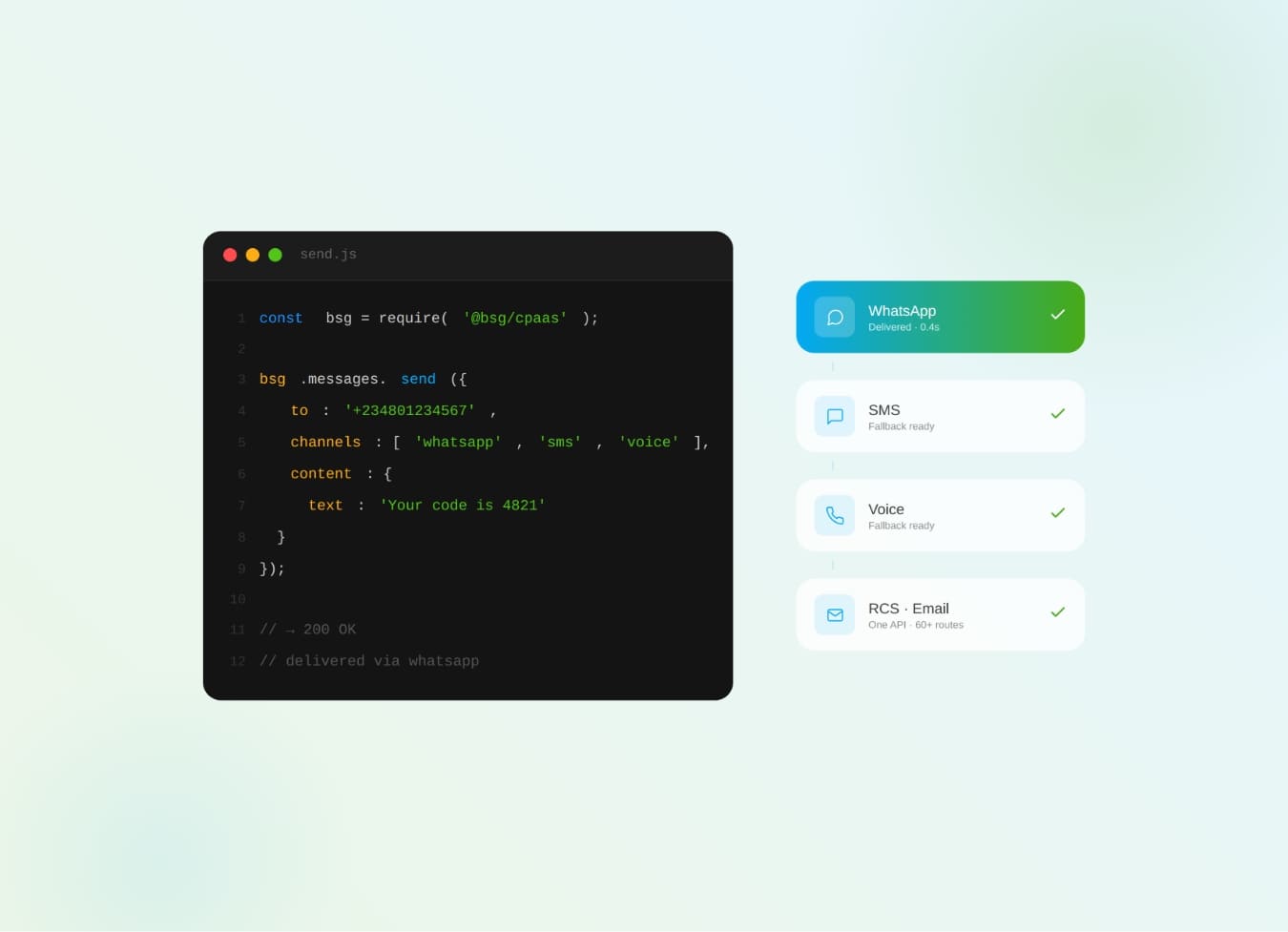
What is CPaaS? The cloud API layer that adds SMS, WhatsApp, voice & OTP to your apps — how it works and why it beats a multi-vendor stack.
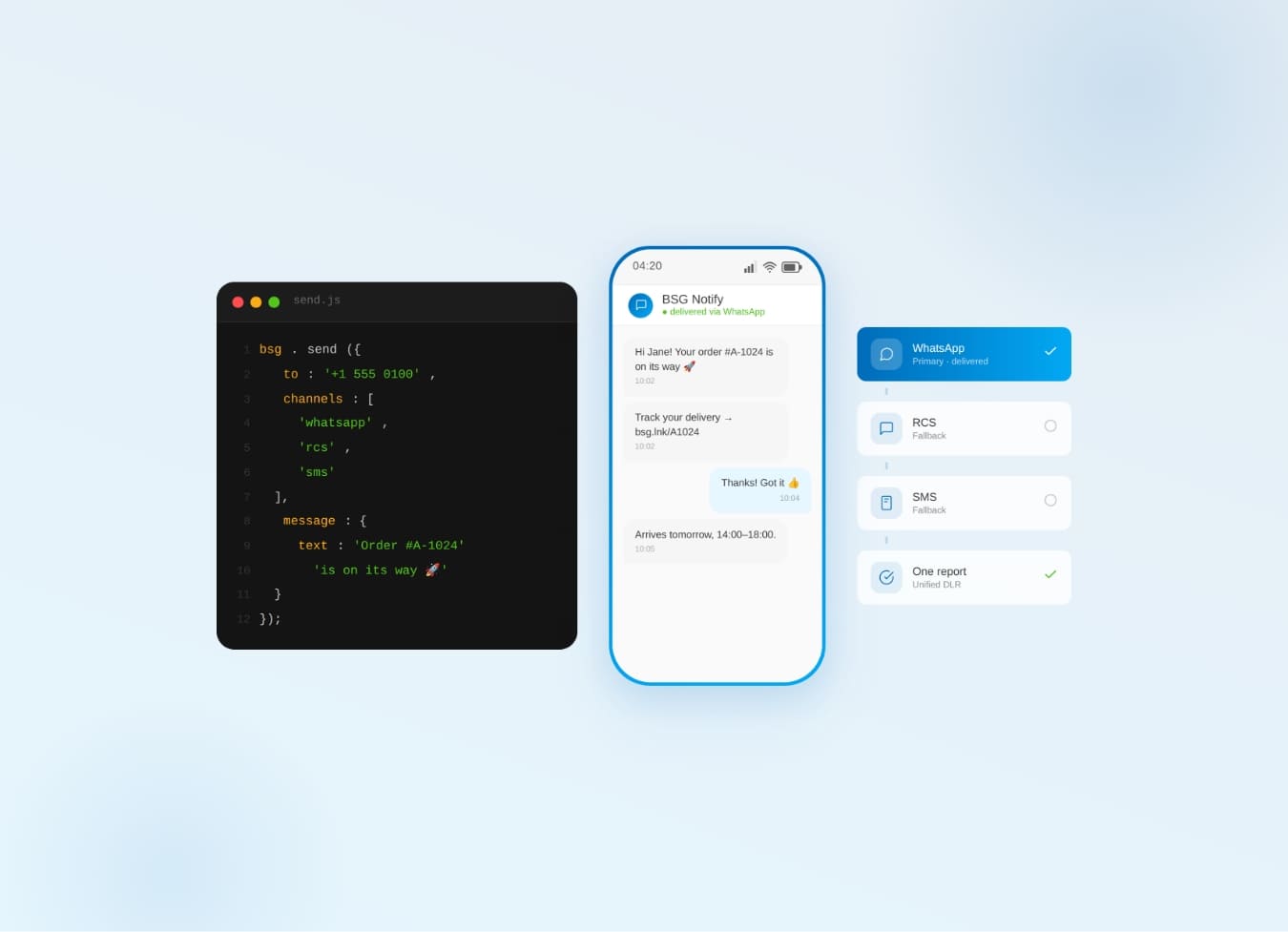
Why one communication API for SMS, WhatsApp, Viber & RCS beats five separate integrations — cascade fallback, unified reports.