BSG utilizes HTTP cookies (and similar or complementary technologies) to 1) make this website safe, functional, and accessible (through the use of mandatory cookies) and 2) understand how you use our website (through the use of optional cookies) in order to improve your experience and to provide you with personalized content.

The information in the cookie text files may be related to your personal preferences or your device and is intended to make the site operate according to your expectations. The information contained in cookies does not usually identify your identity directly but is helpful in providing you with a more personalized user experience.

In accordance with the requirements of the General Data Protection Regulation (GDPR) privacy and security law that governs how the personal data of individuals in the EU may be processed and transferred, we provide you the possibility to prohibit the use of certain types of cookies when you use our website.

Read our Cookie Notice and the Privacy Policy for detailed information on how BGS collects and uses cookies. Please note that prohibiting the use of certain types of cookies may affect your interaction with the website and limit the accessibility of services we offer you. Choose the appropriate category below to learn more and to disable cookies.

Accept All cookies*
*Recommended for comfortable use of the site
Accept only necessary cookies
Accept only selected cookies
Necessary cookies
Social media
Analytics
Marketing

Warm Transfer

What is a warm transfer?

A warm transfer is a call transfer in which the receiving agent gets the caller’s context before or at the moment the call connects, so the caller does not have to repeat themselves.

How does a warm transfer work?

A warm transfer is a way of passing a phone call from one handler to another with context attached. The opposite is a cold transfer, also called a blind transfer, where the call is simply redirected and the next agent knows nothing about who is calling or why.

In contact centres, a warm transfer traditionally meant one agent briefing another before connecting the caller. With AI voice assistants, the briefing becomes data: the AI collects the caller’s identity, the reason for the call and the steps already taken, and that context reaches the agent’s screen, usually through a CRM integration, when the call arrives.

For the business, the difference shows up in the first seconds of the conversation. The agent starts on the problem rather than repeating questions, and the customer does not have to explain everything twice.

Example

A learner calls about a refund. The AI records the course and payment details, then transfers the call warm, so the agent can open with the refund options straight away.


Interested in a special offer?

Ready to reach further?
Let’s talk

I agree to BSG privacy policy
Submit

Useful Materials

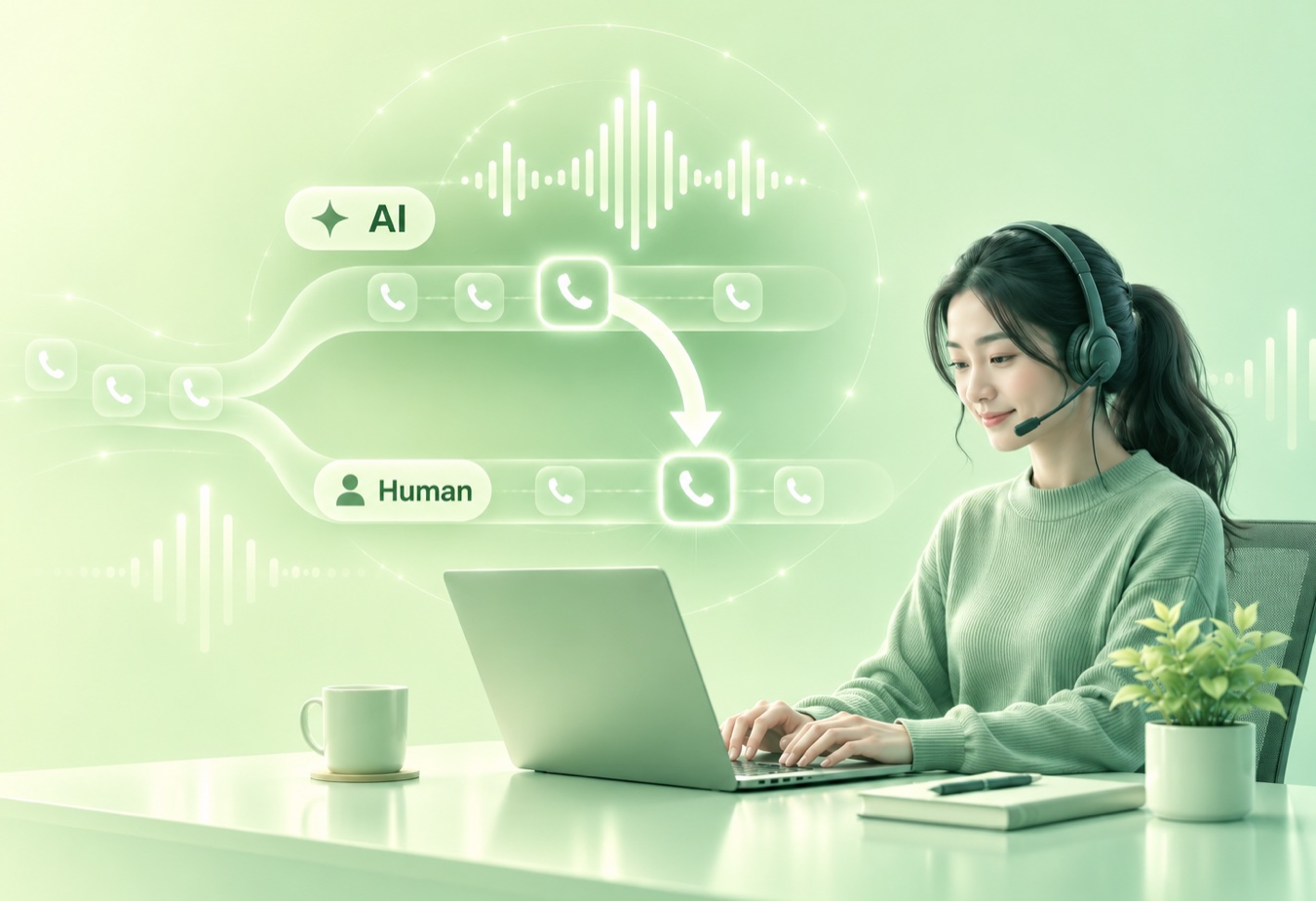
Support agent in a headset at a laptop while incoming calls split into AI and Human lanes with a handoff arrow
Which Calls to Give an AI Voice Assistant — and Which to Keep Human

Three lanes, a call matrix for four niches, 7 handoff triggers and what the agent receives on transfer.
AI Voice Assistant for Sales & Support: 2026 Guide
AI Voice Assistant for Sales & Support: The Complete Guide [2026]

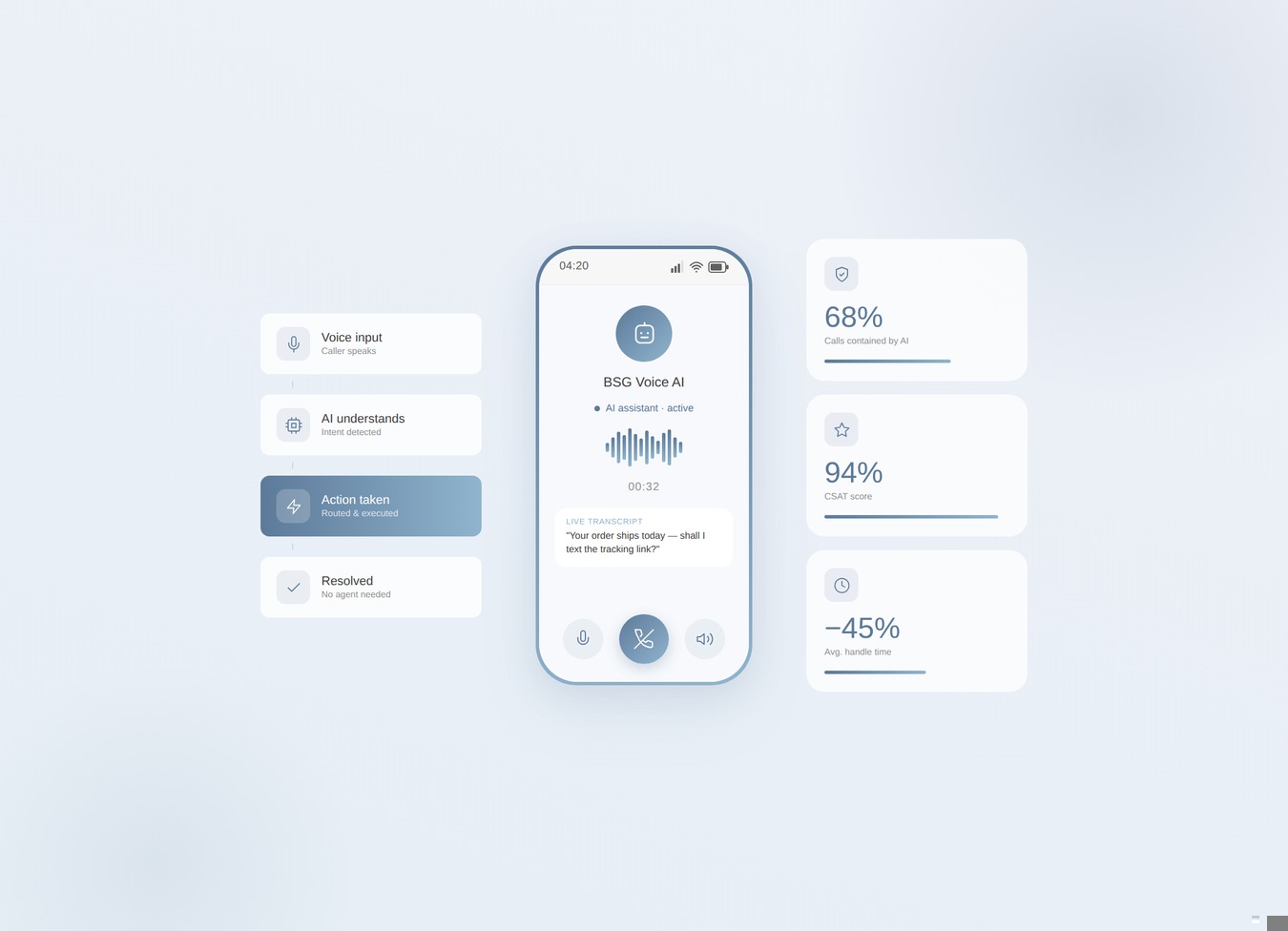
From STT to action: how an AI voice assistant handles sales and support calls end to end.
AI Voice Agent vs IVR: Why Conversational Voice Wins
AI Voice Agent vs IVR: Why Conversational Voice Wins in 2026

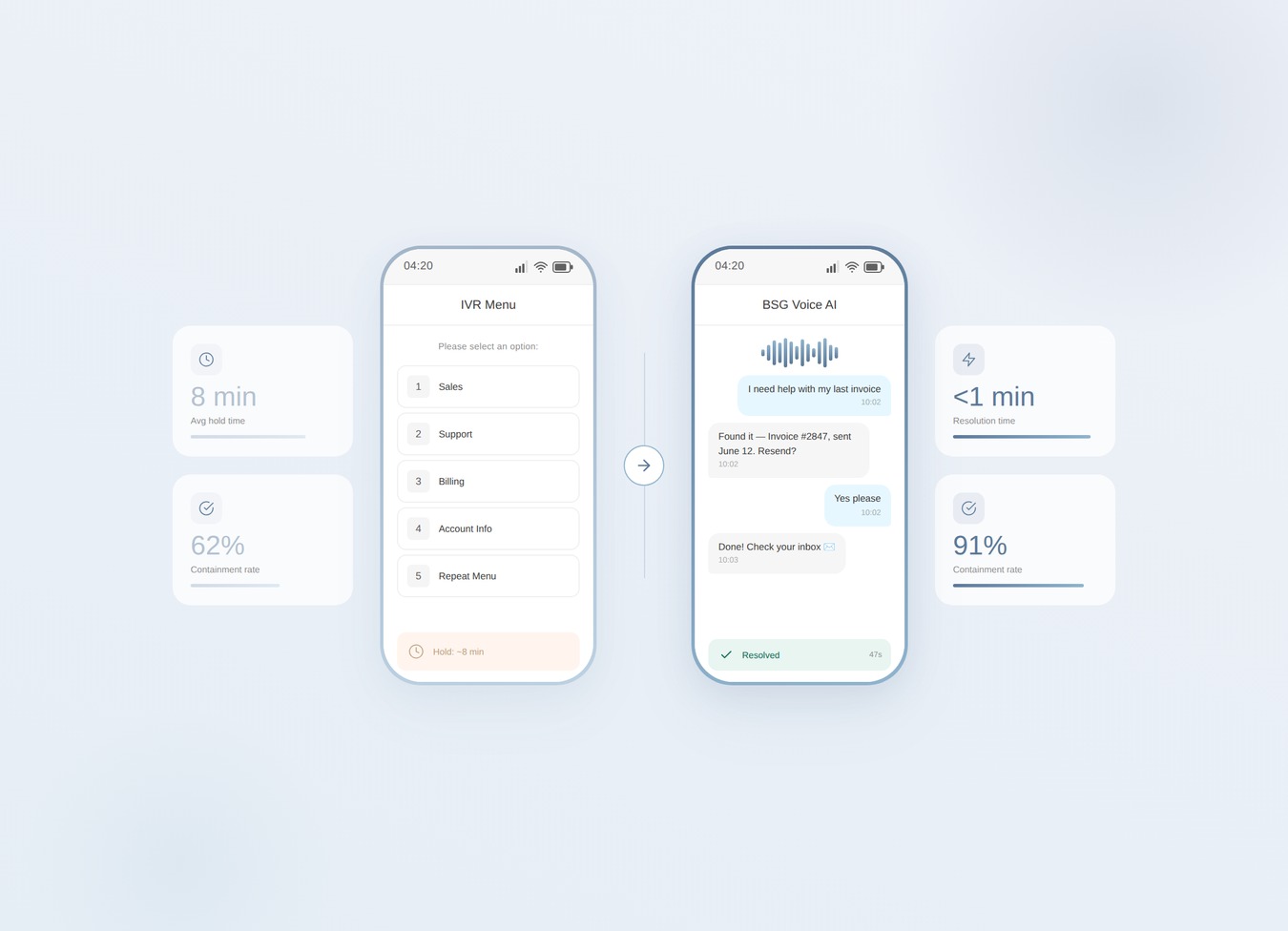
Seven in ten IVRs contain under 30% of calls. Conversational voice changes that math.