BSG utilizes HTTP cookies (and similar or complementary technologies) to 1) make this website safe, functional, and accessible (through the use of mandatory cookies) and 2) understand how you use our website (through the use of optional cookies) in order to improve your experience and to provide you with personalized content.

The information in the cookie text files may be related to your personal preferences or your device and is intended to make the site operate according to your expectations. The information contained in cookies does not usually identify your identity directly but is helpful in providing you with a more personalized user experience.

In accordance with the requirements of the General Data Protection Regulation (GDPR) privacy and security law that governs how the personal data of individuals in the EU may be processed and transferred, we provide you the possibility to prohibit the use of certain types of cookies when you use our website.

Read our Cookie Notice and the Privacy Policy for detailed information on how BGS collects and uses cookies. Please note that prohibiting the use of certain types of cookies may affect your interaction with the website and limit the accessibility of services we offer you. Choose the appropriate category below to learn more and to disable cookies.

Accept All cookies*
*Recommended for comfortable use of the site
Accept only necessary cookies
Accept only selected cookies
Necessary cookies
Social media
Analytics
Marketing

AI-to-Human Handoff

What is an AI-to-human handoff?

An AI-to-human handoff is the moment a live customer conversation moves from an AI assistant to a human agent, together with the context the AI has already collected.

How does an AI-to-human handoff work?

An AI-to-human handoff is the point where an AI voice or chat assistant stops handling a conversation and passes it to a person. It is not a failure of the AI. It is a designed step that decides whether the customer gets help faster or has to start again.

A good handoff has two parts. The first is the trigger: a clear rule for when the transfer must happen. Common triggers are a direct request for a person, a complaint, a dispute about money, rising emotion, signs that the customer is vulnerable, a request the AI cannot understand after two attempts, and any fraud, safety or legal risk. The second part is the context package: the caller’s identity, the reason for the call, the trigger that fired, the steps already completed, a tone flag and the transcript.

Example

A customer calls about a damaged delivery. The AI confirms the order and the return window, then hands the call to an agent, who opens with a decision instead of identification questions.


Interested in a special offer?

Ready to reach further?
Let’s talk

I agree to BSG privacy policy
Submit

Useful Materials

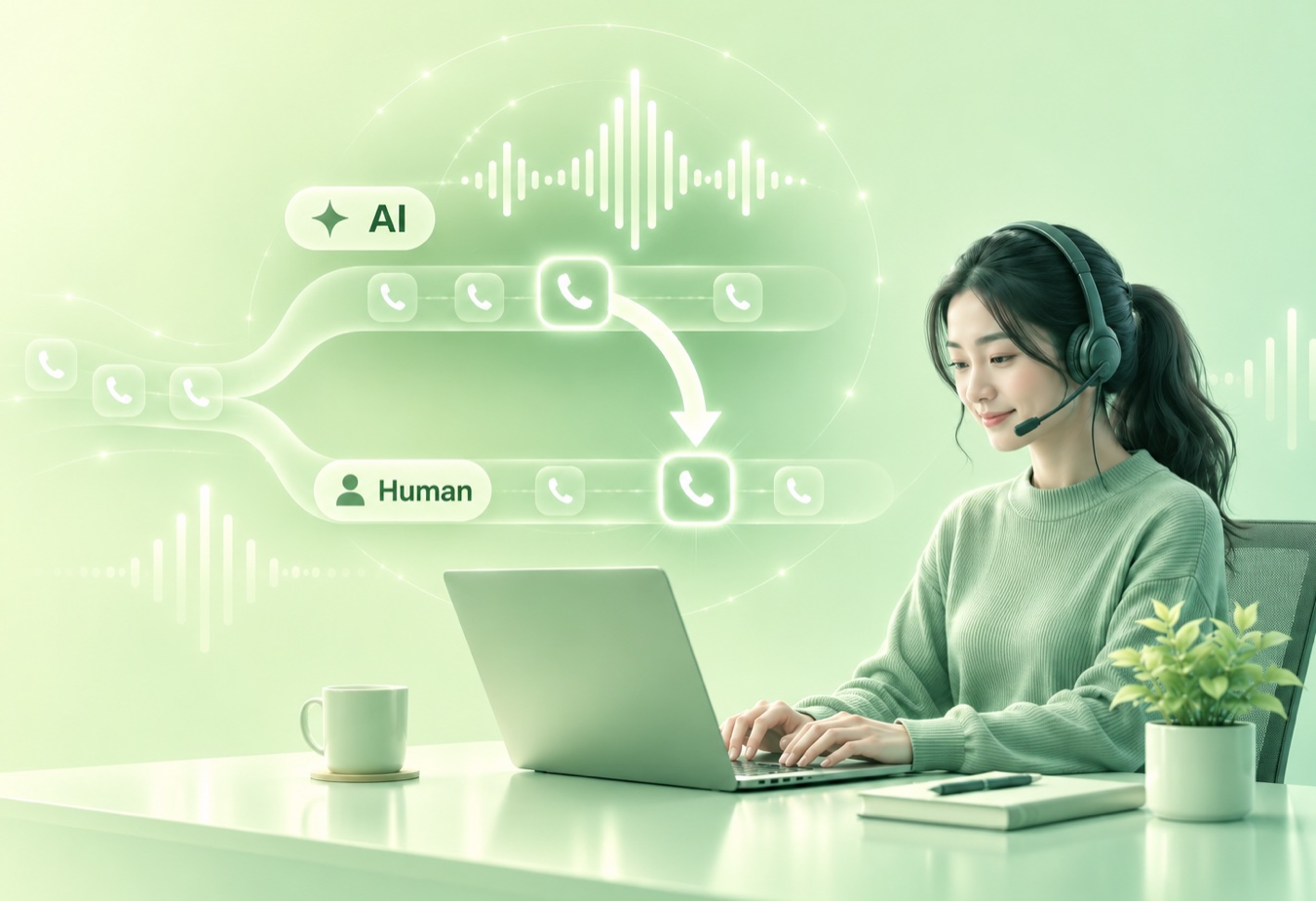
Support agent in a headset at a laptop while incoming calls split into AI and Human lanes with a handoff arrow
Which Calls to Give an AI Voice Assistant — and Which to Keep Human

Three lanes, a call matrix for four niches, 7 handoff triggers and what the agent receives on transfer.
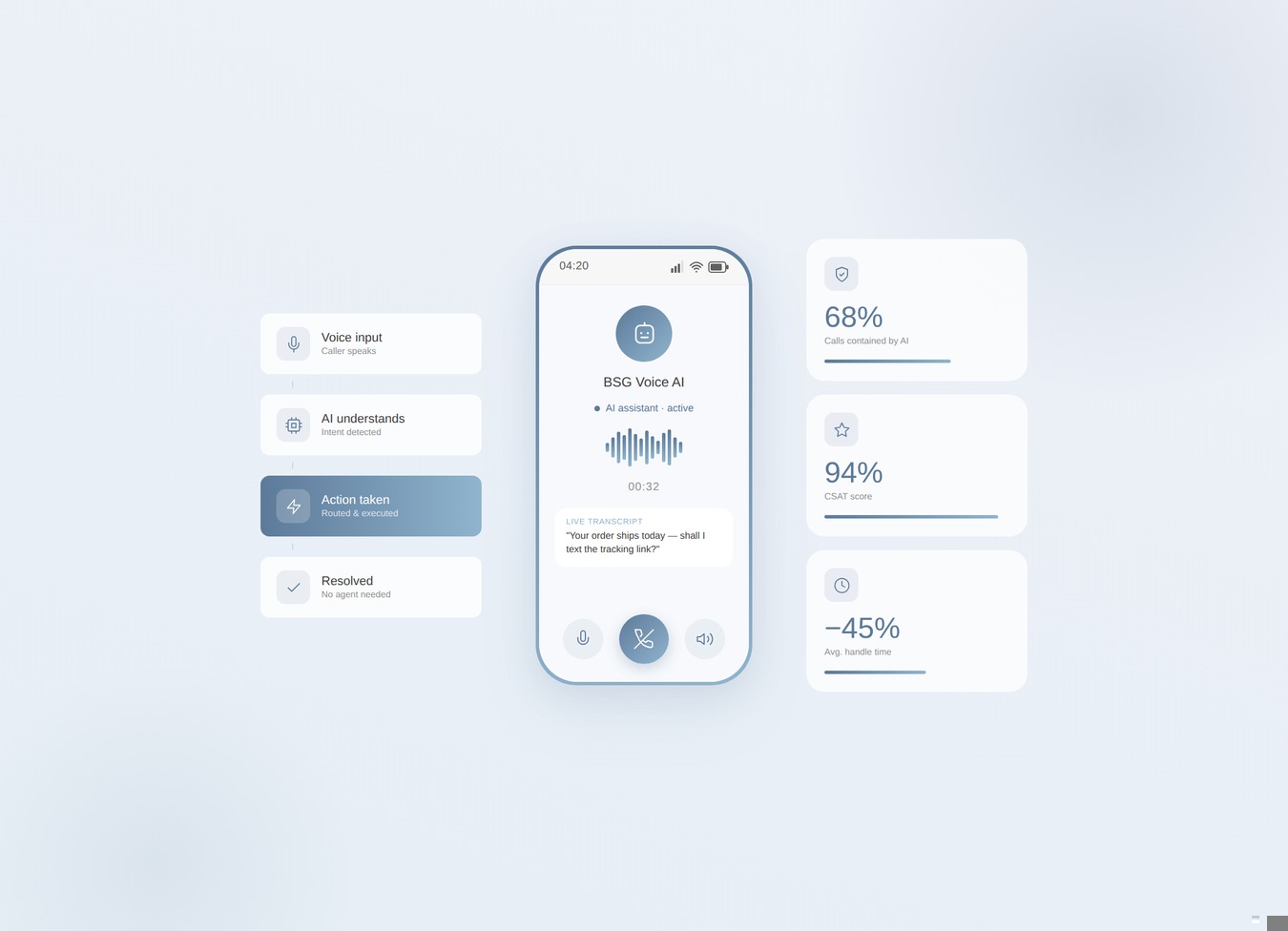
AI Voice Assistant for Sales & Support: 2026 Guide
AI Voice Assistant for Sales & Support: The Complete Guide [2026]

From STT to action: how an AI voice assistant handles sales and support calls end to end.
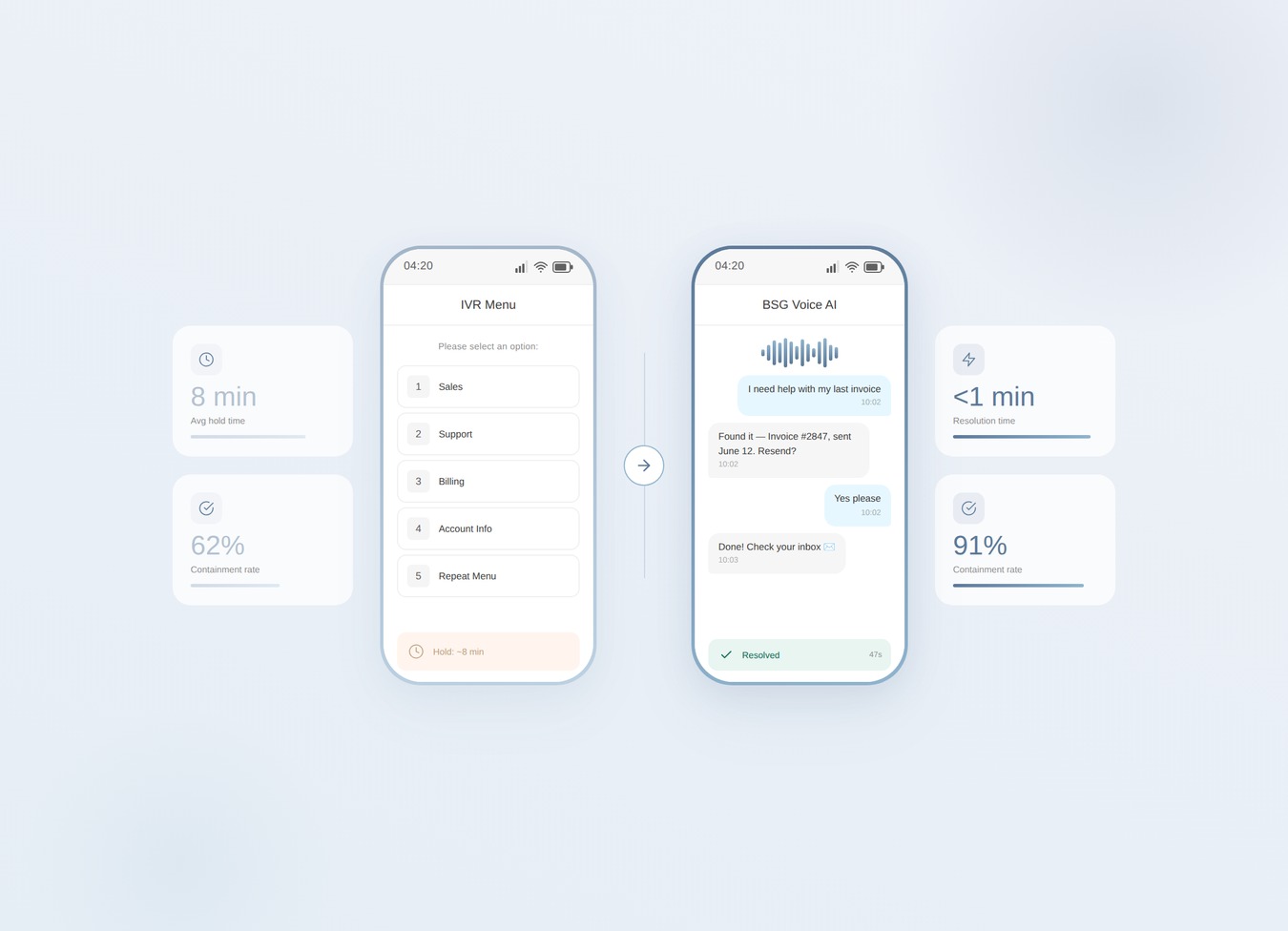
AI Voice Agent vs IVR: Why Conversational Voice Wins
AI Voice Agent vs IVR: Why Conversational Voice Wins in 2026

Seven in ten IVRs contain under 30% of calls. Conversational voice changes that math.