




Global Title
What is a Global Title?
A Global Title (GT) is an address of the SCCP protocol for routing signaling messages on numerous telecommunications networks.
Global title address refer to only one destination, but those destinations can differ over a given time frame. It is used to route calls between different networks and to enable services such as number portability.
The Global Title is a crucial component in the telecommunication industry, and here’s a breakdown of its primary functions of GT telecommmunication:
- Routing Calls . Comprised of a combination of digits and letters, the Global Title is instrumental in routing calls between different networks. This guarantees that calls, on any network, are correctly routed to the people for whom they are intended.
- Number Portability . The Global Title’s ability to facilitate number portability is one of its primary advantages. This service ensures continuity and lessens user hassle by enabling customers to keep their current phone numbers even after switching carriers.
- Better Services . Telecommunication providers use the Global Title to provide better services to their customers. Among these services are bulk SMS , which allows businesses and entities to send large volumes of SMS messages to multiple recipients simultaneously. Additionally, services like caller ID, which shows the caller’s number to the recipient, and call forwarding, where calls to one number can be automatically redirected to another, are also facilitated through the Global Title.
- International Roaming. For globetrotters and international travelers, the Global Title plays an indispensable role. Customers can use it for international roaming, which enables them to make and receive calls while traveling to other nations.
The mobile global title acts as the backbone for various telecommunication services, ensuring that users can communicate effectively and avail a range of enhanced features.
How does it work?
There are four main steps how does the Global Title operates:
- Unique Identifier . Similar to an IP address in internet protocols, the Global Title (GT) functions as a unique address within the SS7 global title network.
- Starting Transmission . The transmitting entity includes the destination’s GT in its inquiry when a call or message is scheduled to transmit.
- Global Title Translation . The SS7 network uses a process called “Global Title Translation.” The SS7 network’s signaling points convert the GT instead of pointing directly to a physical route. This involves consulting a specific translation table, determining the appropriate route based on the GT’s value.
- Message Progression . The message moves forward across the network, hop by hop, adhering to the routes decided upon by the GT translation, until it reaches at its intended destination.
Through this structured approach, one can see how the GT works within the global title SS7 network, not just in its purpose but also in its intricate operation.
What is Global Title Leasing?
Global Title Leasing refers to the practice where telecom operators lease out a portion of their Global Title (GT) addresses or GT routing numbers to other service providers or entities. Smaller operators or service providers can access the SS7 network without owning a GT by leasing these GT routing numbers. This arrangement makes it possible for these organizations to provide quality roaming, voice, and SMS services . All things considered, it’s a cost-effective method for businesses to create a network presence and offer their services without having to own an entire GT range.
With its wide range of features and routing capabilities, the Global Title has cemented its place as a cornerstone in modern communications frameworks. Its importance in enabling seamless cross-network communication, providing expanded SMS services for businesses , and fostering global connection underscores the telecoms industry’s ongoing innovation and adaptation.


Interested in a special offer?
Ready to reach further?
Let’s talk


Related Terms
Explore BSG Solutions
Useful Materials
![WhatsApp Business API: Complete Guide — Setup, Pricing, Use Cases [2026]](/assets/img/blog/whatsapp-business-api-setup-pricing-use-cases-guide_avatar.jpg)
WhatsApp Business API for 2026 — setup steps, the new per-message pricing model, and proven use cases by industry.
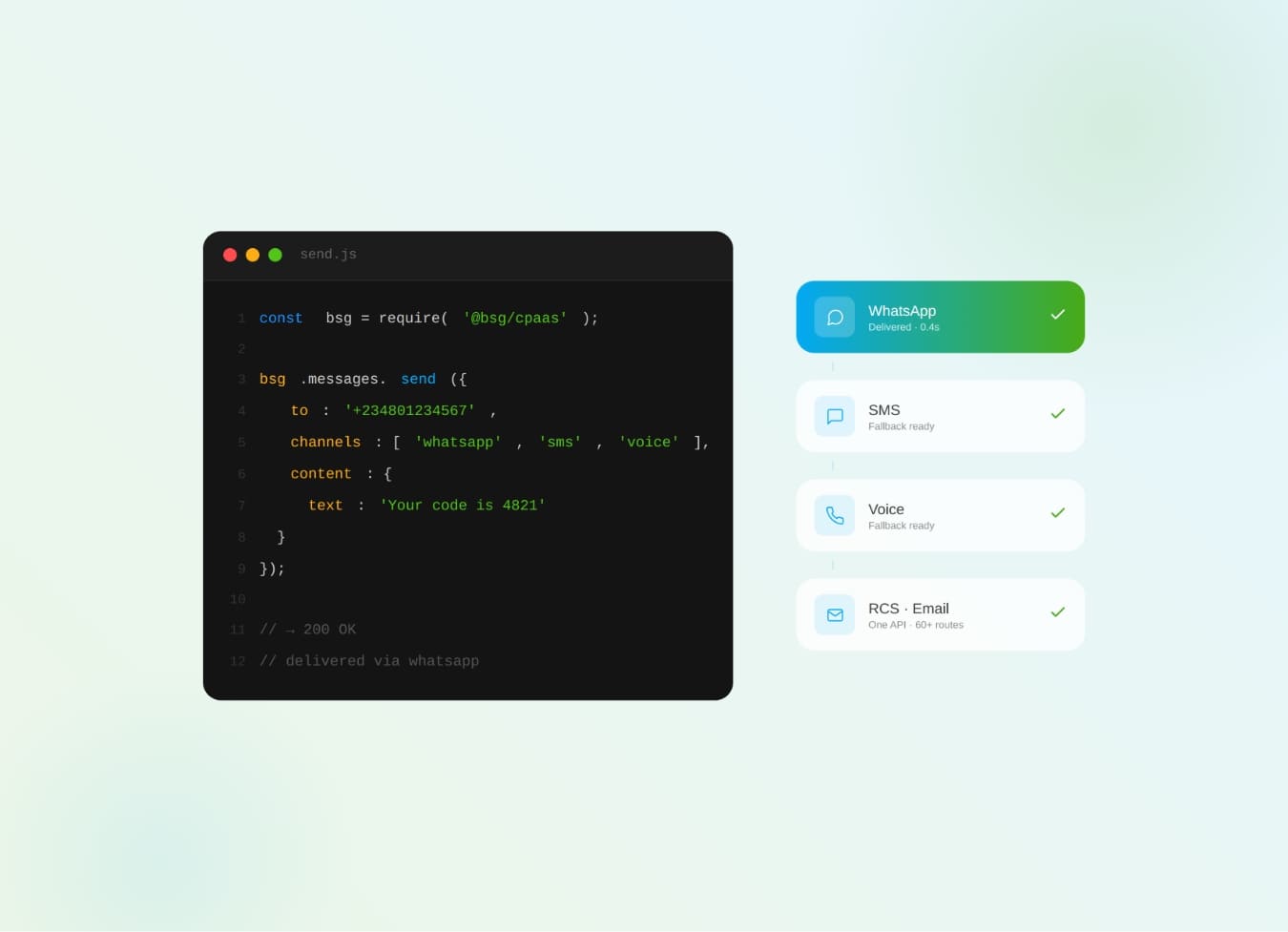
What is CPaaS? The cloud API layer that adds SMS, WhatsApp, voice & OTP to your apps — how it works and why it beats a multi-vendor stack.
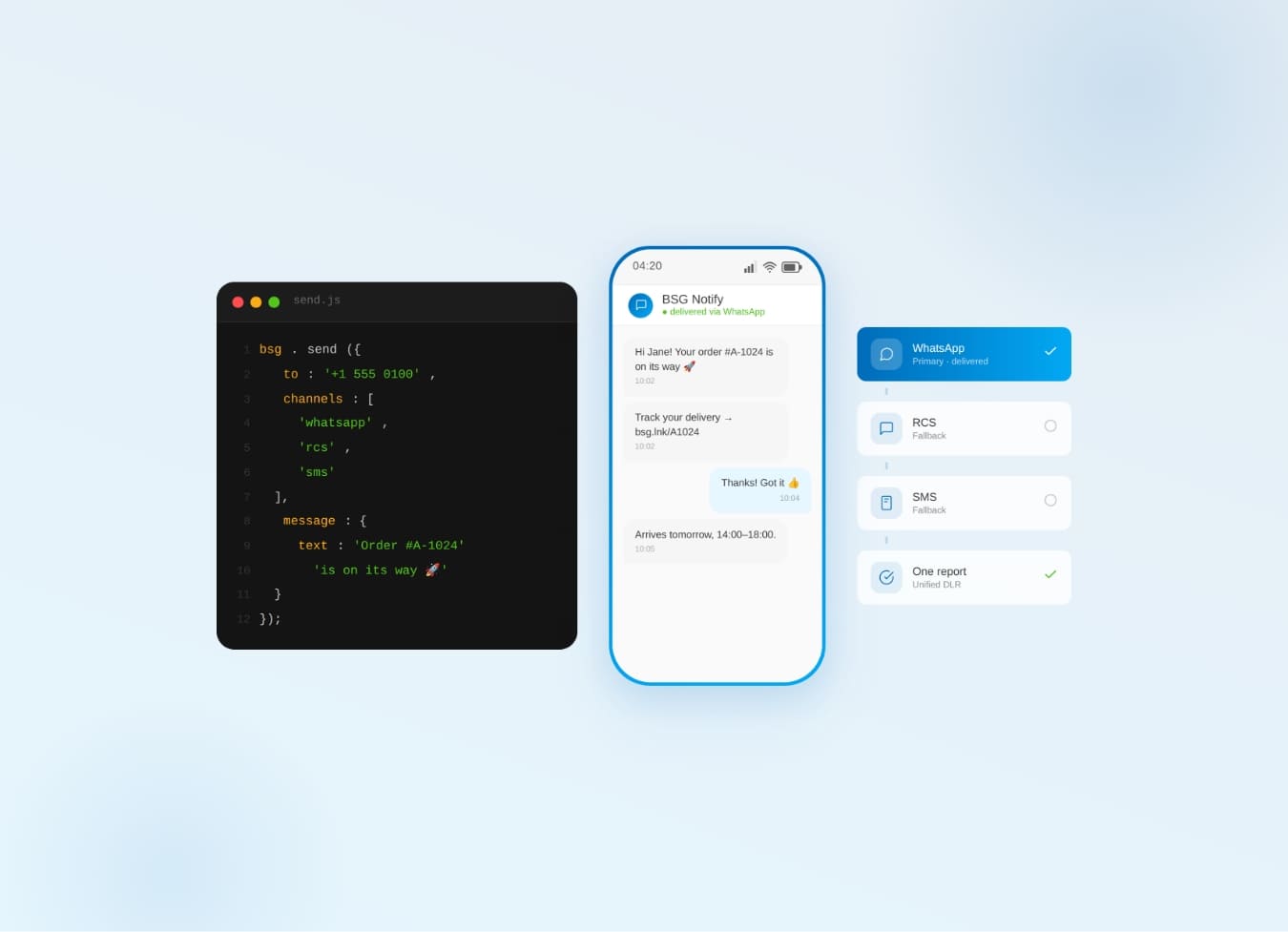
Why one communication API for SMS, WhatsApp, Viber & RCS beats five separate integrations — cascade fallback, unified reports.