




SS7 (Signaling System 7)
What is SS7 (Signaling System 7)?
SS7 (Signaling System 7) is the telephony signaling protocol used by carriers worldwide to route calls and SMS between networks; its known vulnerabilities allow attackers with SS7 access to intercept or reroute SMS traffic.
Designed in the 1970s for a closed circle of trusted operators, SS7 has no built-in authentication between networks. An attacker who buys or rents SS7 access can instruct a carrier to forward a subscriber’s incoming SMS to another number — silently. The best-documented abuse came in 2017, when criminals rerouted German bank customers’ SMS transaction codes via the network of O2 Telefónica and drained accounts. SMS rerouting over SS7 is cheap and invisible to the victim; redirecting a live voice call is far more complex and conspicuous, which is one reason voice OTP is more resistant to signaling-level interception. Businesses cannot patch SS7 themselves, but they can route high-risk codes around it. Example: a bank moves payment confirmations from SMS to voice OTP so a signaling-level SMS redirect yields nothing.
For real-world context, see BSG's Maintain a Clean, Relevant Database with HRL Service.
Related terms
Related BSG products


Interested in a special offer?
Ready to reach further?
Let’s talk


Related Terms
Explore BSG Solutions
Useful Materials
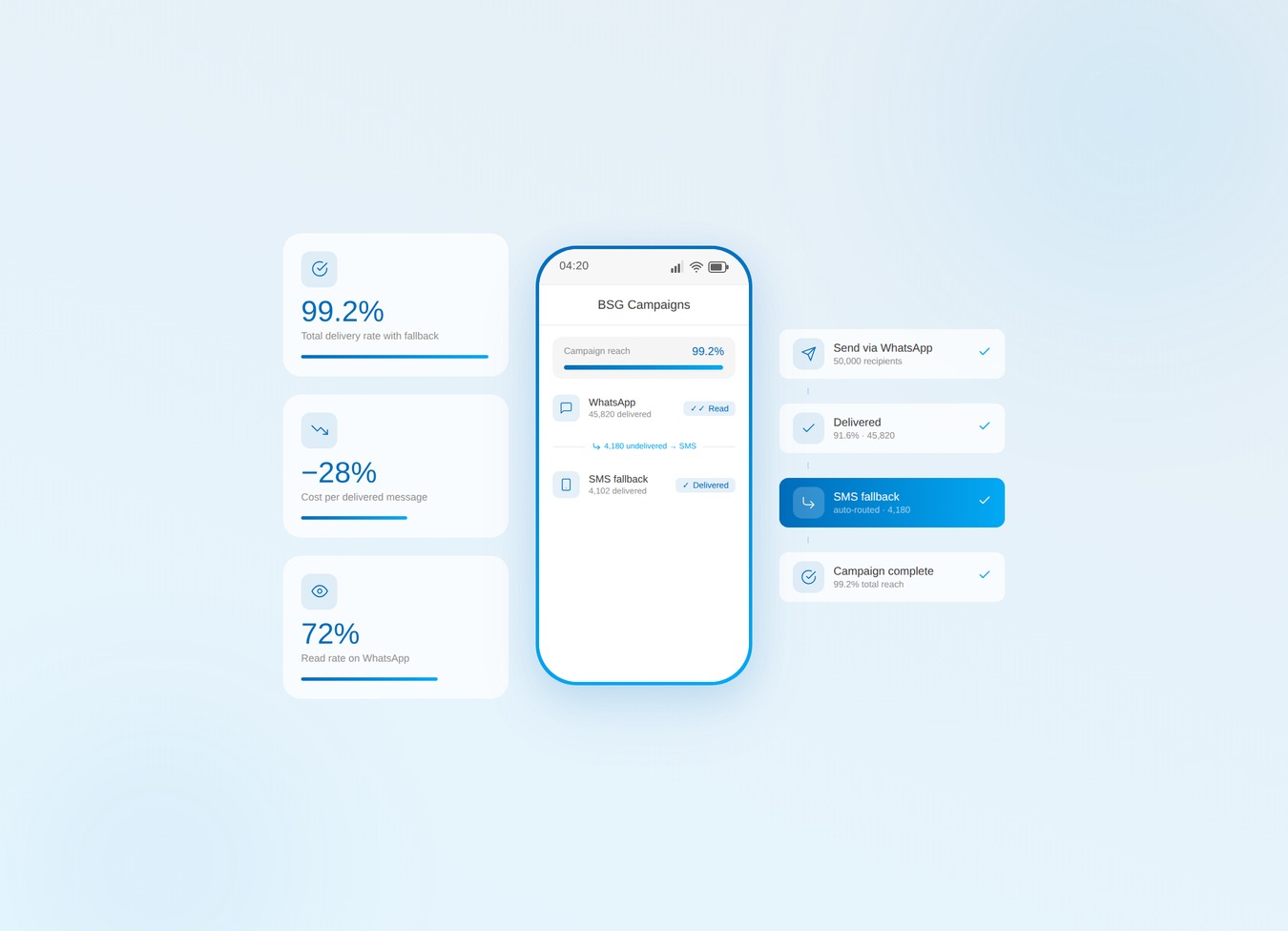
Bulk SMS alone leaks budget. Verify the list, then run WhatsApp-first with SMS fallback.
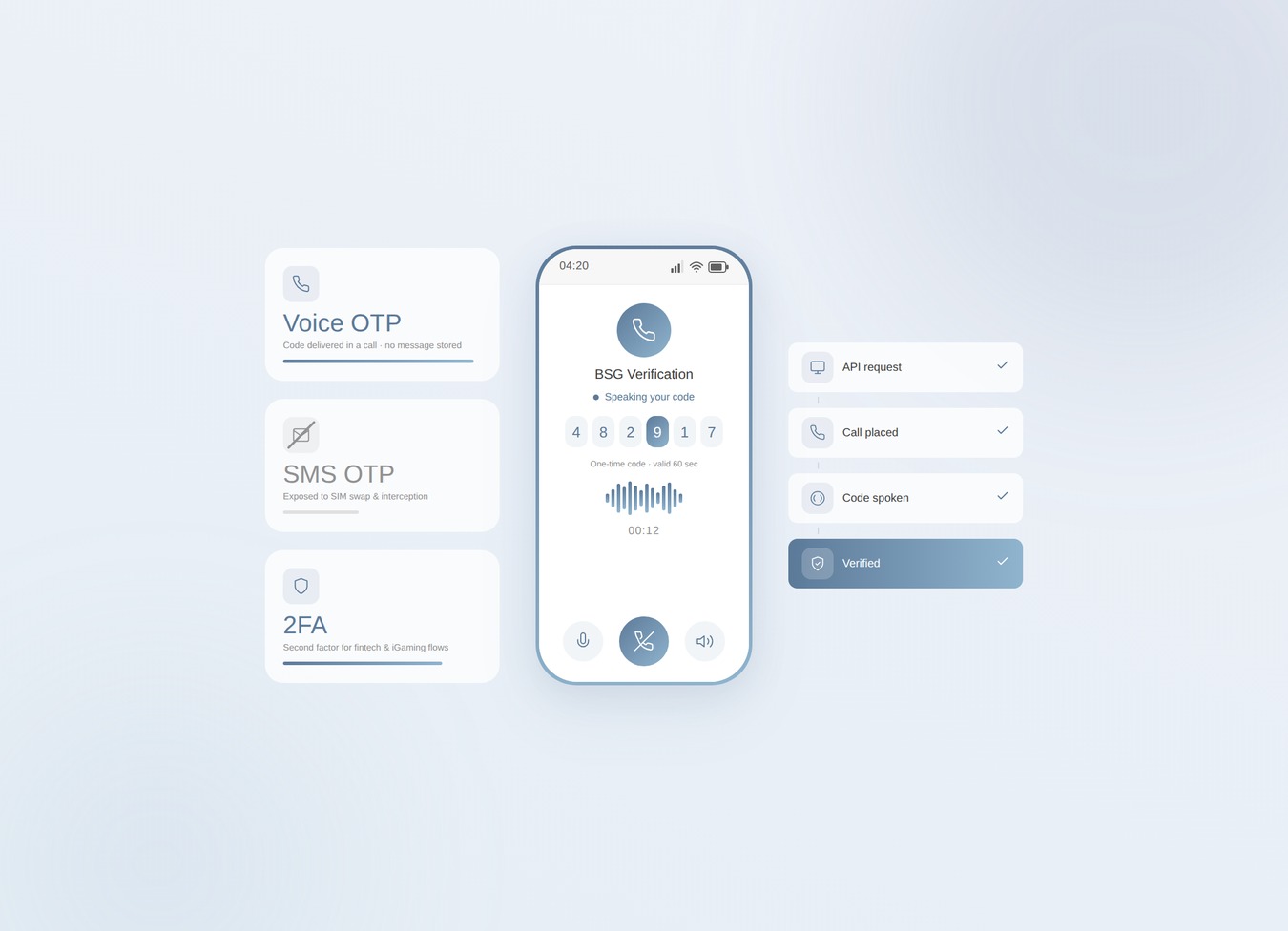
SIM swaps jumped 1,055% in a year. Voice OTP takes your riskiest codes off the SMS rail.
Telegram OTP is free — until it silently fails. Know the limits and when to add fallback.