




OTA
Over-the-Air (OTA) in the context of SMS refers to the process of transmitting various types of data wirelessly using SMS as the medium. This method is primarily used in the mobile telecommunications industry. Here’s a more detailed explanation:
How does OTA Work?
- Data Encoding: The information or command that needs to be transmitted is encoded into a format that can be sent via SMS. This often involves converting the data into a binary or hexadecimal format that is compact enough to fit into the character limit of an SMS message.
- Transmission: The encoded data is then sent as a standard SMS message from the sender to the recipient. This could be from a service provider to a mobile device, or between mobile devices.
- Reception and Decoding: The recipient’s device receives the SMS OTA and decodes the encoded data back into its original format or interprets the command contained within the message.
BSG's What is SMS API and how to use it to scale your bulk SMS campaigns? walks through this in more detail.
What is it used for?
- Configuration Updates: One common use of OTA via SMS messaging is to send configuration settings to a mobile device. For instance, you can send internet or MMS (Multimedia Messaging Service) settings to your subscribers’ devices.
- Software Updates: Although less common due to size constraints, small software updates or patches can send OTA SMS.
- Remote Control and Commands: Some systems send OTA SMS as remote commands to devices. This can include actions like triggering a device to perform a specific task or querying a device for certain data.
- Authentication and Security: OTPs (One-Time Passwords) or authentication tokens can be transmitted via SMS to verify a user’s identity.
- Information Services: Users can subscribe to various information services (like news updates, weather forecasts, etc.) that are delivered regularly via SMS.
Why OTA?
OTA technology is crucial in the telecommunications field due to its ability to update devices remotely and securely. This method ensures that mobile devices, irrespective of their location, receive the latest software updates, configuration settings, and important information services directly.
OTA is highly reliable, as it doesn’t require a physical connection or user intervention, making it ideal for mass updates or urgent patches. Additionally, it’s vital for sending One-Time Passwords (OTPs) and authentication tokens, enhancing security. Its significance is especially pronounced in areas with limited internet connectivity, where OTA provides a consistent means of communication and device management.
OTA Architecture
The Over-the-Air (OTA) architecture is a sophisticated framework that enables the remote management and updating of mobile devices via SMS. This architecture comprises several key components, each playing a crucial role in ensuring secure and efficient data transmission.
OTA Gateway
Function: The OTA Gateway acts as the central control unit. It is responsible for managing the communication process, including encoding and decoding messages, authenticating devices, and routing messages correctly.
Interaction: It interfaces with both the SMSC for message delivery and the mobile phone for data transmission.
SMSC (Short Message Service Center)
Role: The SMSC is the network element in the cellular network that handles the delivery of SMS messages.
Process: When an Over The Air message is sent, the SMSC receives it from the OTA Gateway and forwards it to the appropriate mobile phone. It also handles message queuing and delivery receipts.
SMS Channel
Description: The SMS Channel refers to the specific path or frequency used within the cellular network to transmit SMS messages.
Significance: This channel is vital for ensuring that SMS over the air are delivered efficiently and reliably, separate from voice and other data services.
Mobile Phone
Reception: The mobile phone is the end-user device that receives the OTA text message via the SMS channel.
Capabilities: Modern mobile phones are equipped with software that can interpret and act upon the instructions received in OTA message format, such as updating settings or software.
SIM Card
Importance: The SIM card in a mobile phone plays a critical role in OTA architecture. It securely stores subscriber information and can also store OTA commands and settings.
Functionality: For certain types of updates, especially those related to network access and security, the OTA SMS directly interact with the SIM card to update its contents or retrieve stored information.
Each component in the OTA architecture works in concert to provide a secure, reliable, and efficient method of transmitting data and commands to mobile devices remotely, leveraging the ubiquitous nature of SMS technology.


Interested in a special offer?
Ready to reach further?
Let’s talk


Related Terms
Explore BSG Solutions
Useful Materials
![WhatsApp Business API: Complete Guide — Setup, Pricing, Use Cases [2026]](/assets/img/blog/whatsapp-business-api-setup-pricing-use-cases-guide_avatar.jpg)
WhatsApp Business API for 2026 — setup steps, the new per-message pricing model, and proven use cases by industry.
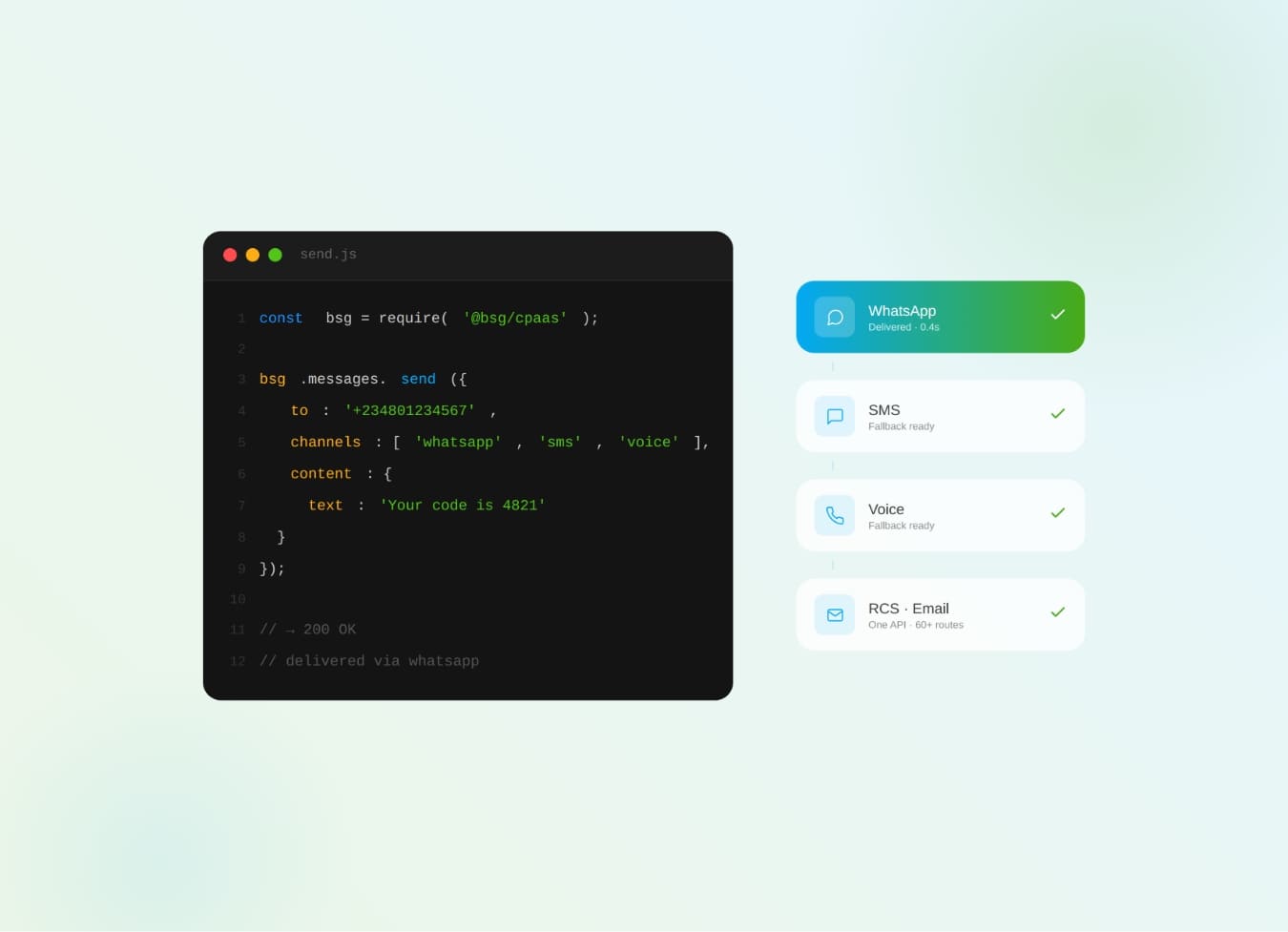
What is CPaaS? The cloud API layer that adds SMS, WhatsApp, voice & OTP to your apps — how it works and why it beats a multi-vendor stack.
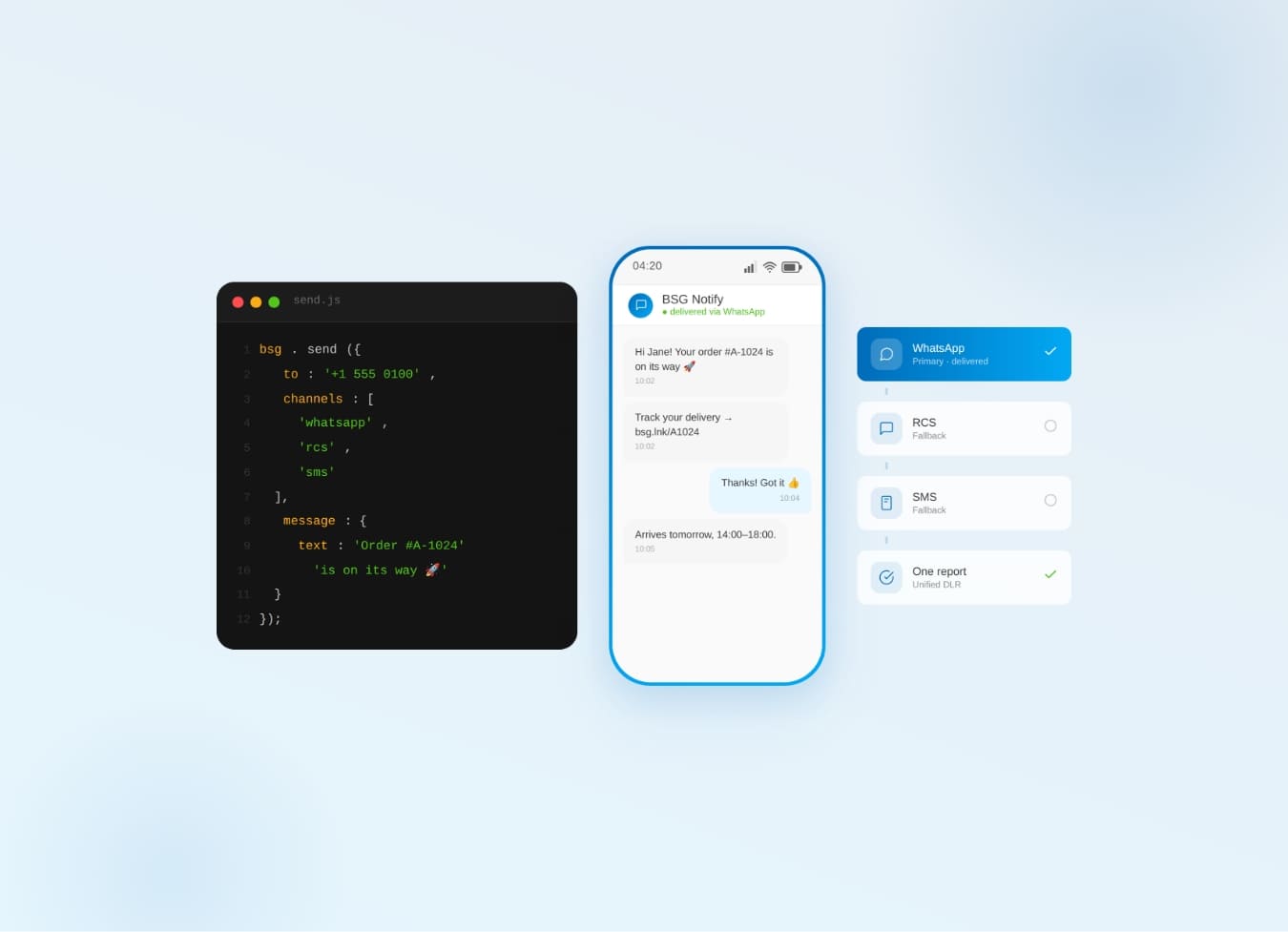
Why one communication API for SMS, WhatsApp, Viber & RCS beats five separate integrations — cascade fallback, unified reports.