




Mobile Data Penetration
What is Mobile Data Penetration?
Mobile Data Penetration is an indicator that shows the number of smartphones in a state. Mobile Data Penetration is usually demonstrated as a percentage of the population who use smartphones. When planning campaigns for such markets, BSG's Number Verifier helps confirm which numbers in a list are actually in service.
It is the percentage of a country’s population that has access to a mobile data connection. This is usually expressed as a percentage of the total population or as the number of users with access to mobile data services (such as 3G, 4G, and 5G) per 100 people.
BSG covers this in more depth in What Is Number Verifier — And Why It’s More Than J....
How does it work?
Mobile data penetration is calculated by dividing the number of users with access to mobile data services by the total population. This gives a percentage of the population that has access to mobile data services.
For example, if a country has a population of 10 million and 5 million of those people have access to a mobile data connection, this would indicate a mobile data penetration rate of 50%.


Interested in a special offer?
Ready to reach further?
Let’s talk


Related Terms
Explore BSG Solutions
Useful Materials
![WhatsApp Business API: Complete Guide — Setup, Pricing, Use Cases [2026]](/assets/img/blog/whatsapp-business-api-setup-pricing-use-cases-guide_avatar.jpg)
WhatsApp Business API for 2026 — setup steps, the new per-message pricing model, and proven use cases by industry.
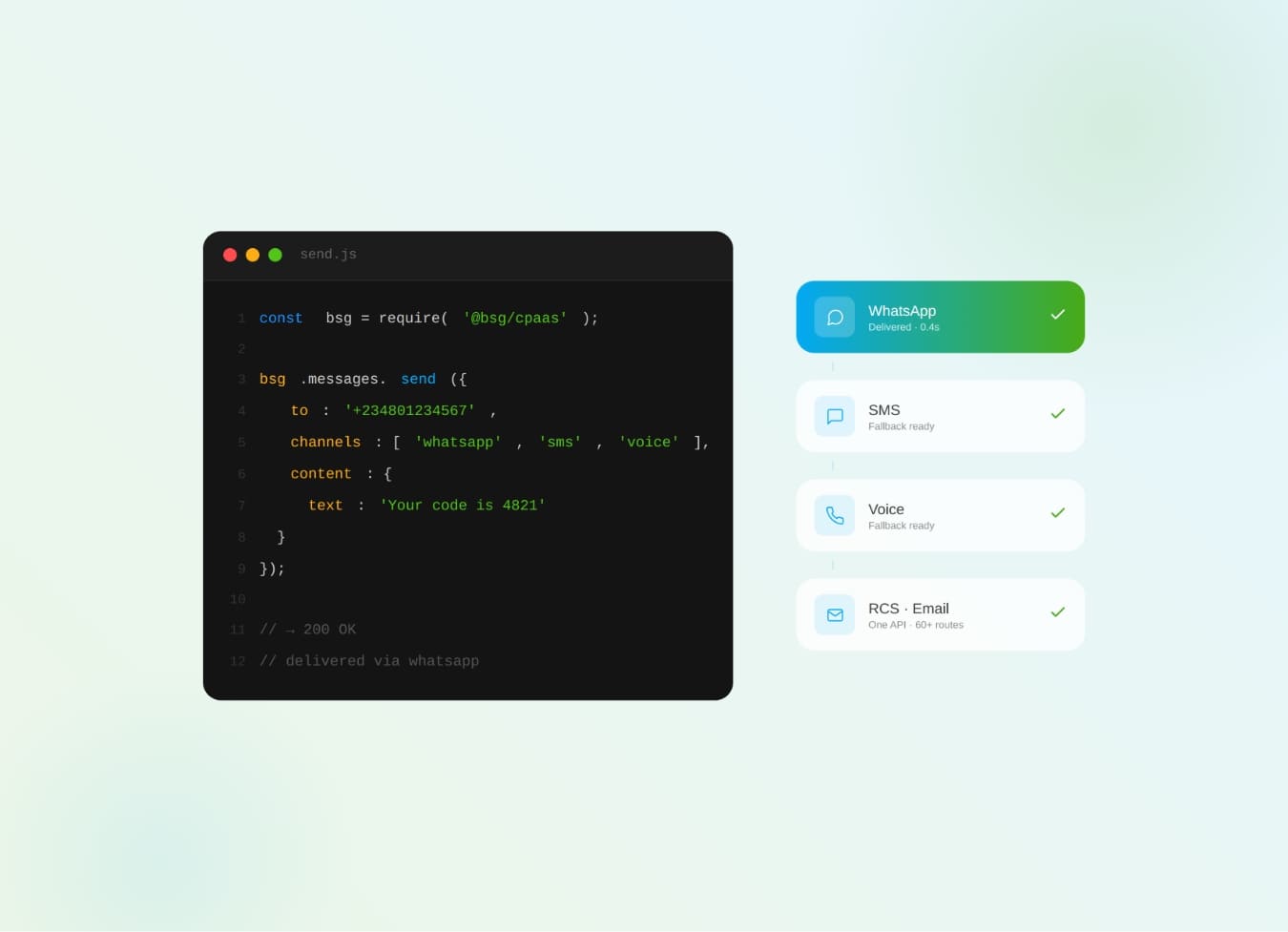
What is CPaaS? The cloud API layer that adds SMS, WhatsApp, voice & OTP to your apps — how it works and why it beats a multi-vendor stack.
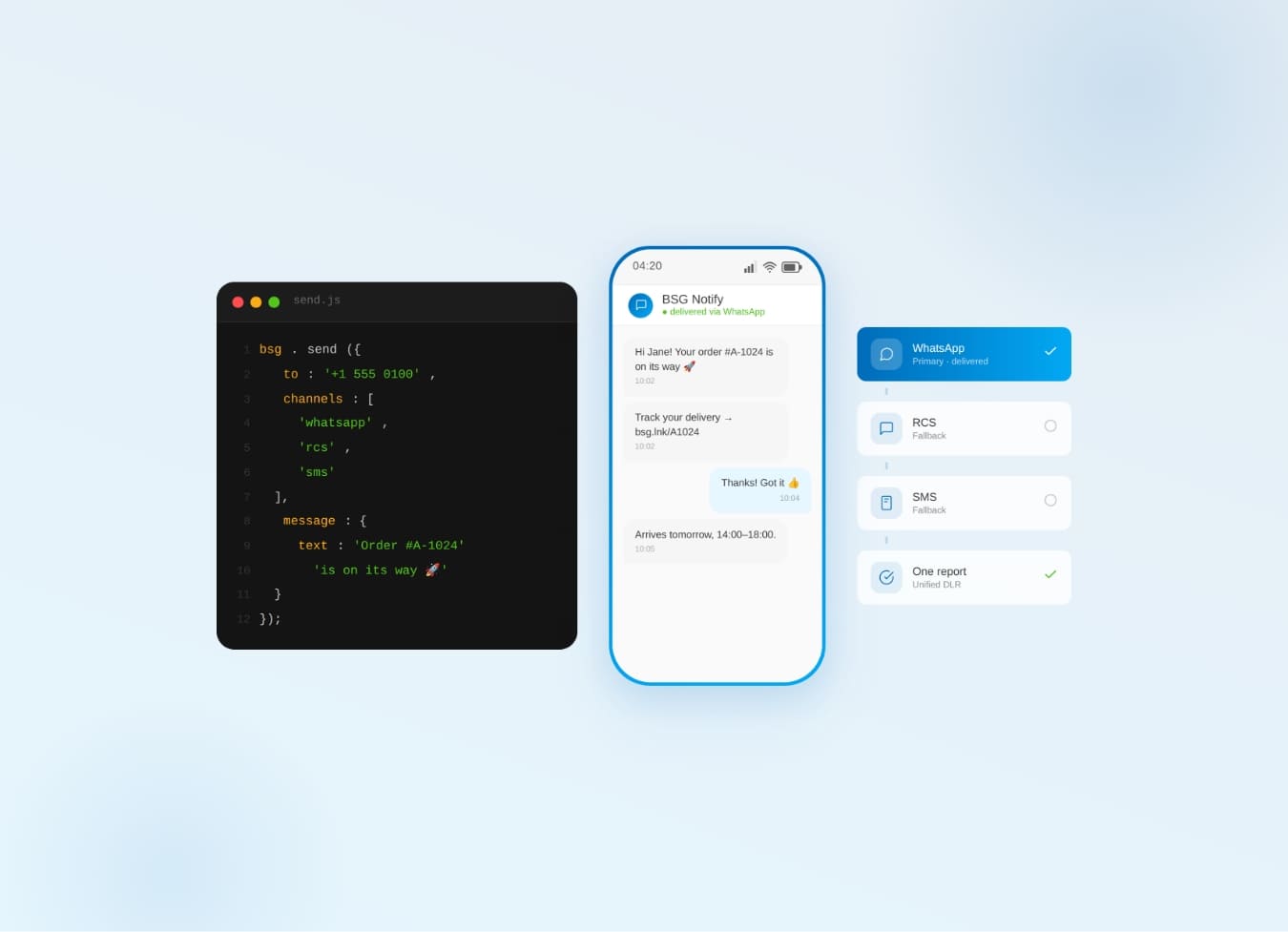
Why one communication API for SMS, WhatsApp, Viber & RCS beats five separate integrations — cascade fallback, unified reports.