




Automatic Speech Recognition (ASR)
Automatic Speech Recognition (ASR) is changing the way we live, learn, and work. This technology helps computers turn spoken words into text, making things like learning and working easier and more efficient. It’s especially helpful for people with disabilities, allowing them to navigate daily tasks and their studies more smoothly.
Even though many people use ASR in their daily lives, not everyone knows how it works or why it’s so useful. There are still some misunderstandings about what ASR can do. Let’s take a closer look at how this technology functions and its benefits.
Automatic Speech Recognition uses Machine Learning and Artificial Intelligence (AI) to convert spoken language into written text. In recent years, ASR has become very popular and is now used in many apps we use every day. For example, TikTok and Instagram use it for real-time captions, Spotify for podcast transcriptions, and Zoom for meeting transcriptions.
ASR technology is making communication easier and more inclusive. It’s helping students, professionals, and people with disabilities by saving time and improving accessibility. As this technology keeps improving, its impact will continue to grow, bringing even more benefits to our daily lives.
How Does ASR Work?
It works by capturing ASR speech through a microphone and converting it into text using advanced algorithms and models:
Sound Wave Capture
The process starts with capturing the sound waves of the speech.
Pre-processing
The sound waves are digitized and cleaned to remove background noise.
Feature Extraction
Key features of the speech are identified and extracted.
Model Comparison
The extracted features are compared against a trained ASR model to find matches.
Transcription
The matched features are converted into text, providing a written representation of the spoken words.
ASR is one building block of a larger conversational AI system — it turns speech into text, while separate models handle understanding and generating the reply.
ASR in Machine Learning and AI
ASR machine learning involves training models on large datasets of speech and corresponding text. These models learn to recognize patterns and improve accuracy over time. ASR AI uses deep learning techniques to enhance the ability to understand various accents, dialects, and speaking styles.
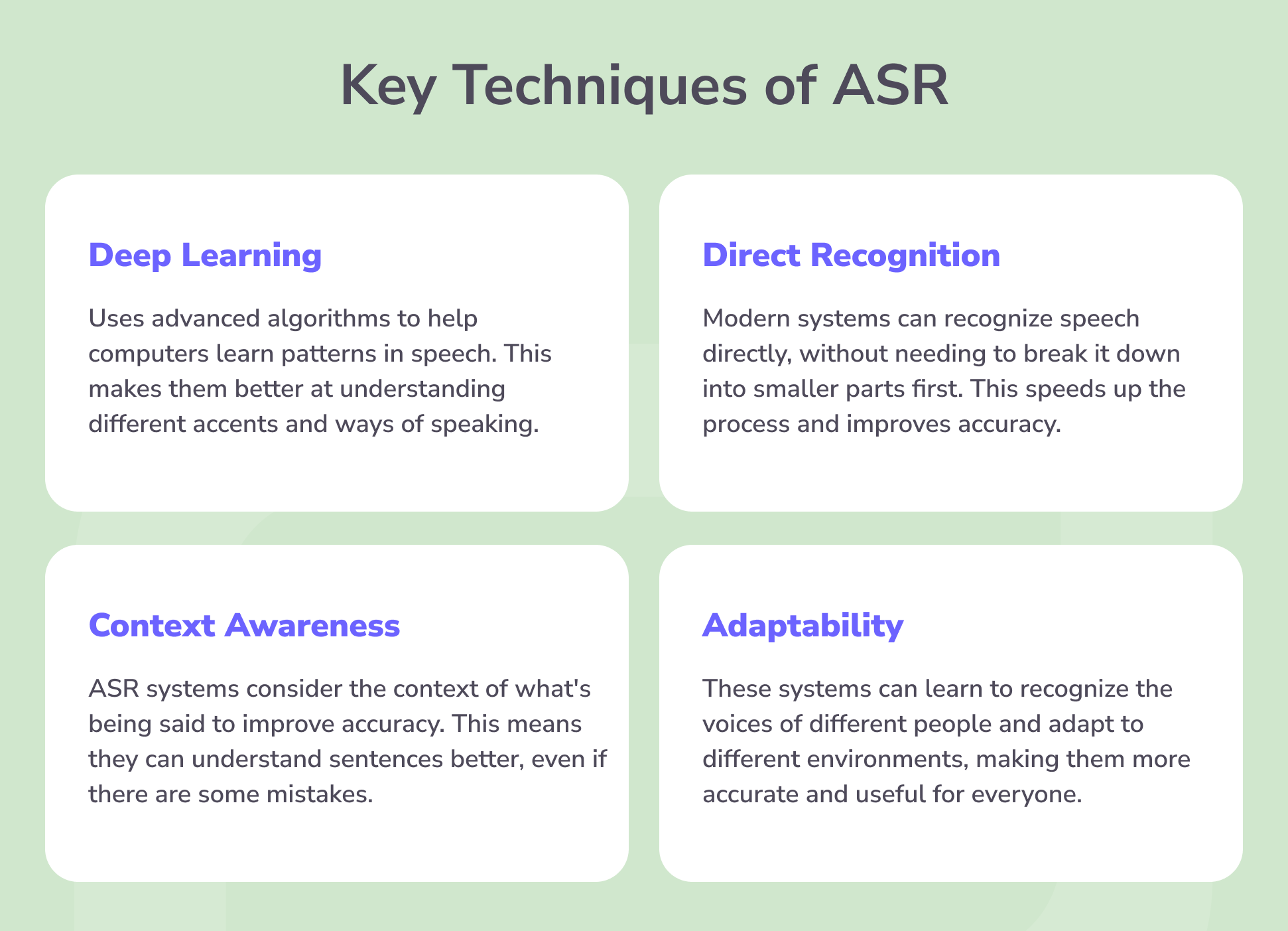
These techniques collectively contribute to making ASR technology more effective in applications such as virtual assistants, transcription services, and accessibility tools, enabling more natural and efficient interaction between humans and machines through speech.
Applications of ASR
ASR software has numerous applications across different industries:
- ASR Speech Recognition. Used in virtual assistants like Siri, Alexa, and Voice Bot to understand and respond to voice commands.
- ASR Transcription . Converts spoken content into written text for meeting notes, lectures, and captions.
- AI ASR . Enhances user experience in customer service by providing automated responses based on spoken inquiries.
- ASR Technology . Used in navigation systems, hands-free devices, and language translation services.
Benefits of ASR
Automatic Speech Recognition (ASR) offers substantial benefits, particularly when integrated into AI Voice Bot or Voice Bot :
- Enhanced Customer Experience
ASR allows AI Voice Bot to accurately understand and process spoken language in real-time. This capability enables smoother and more natural interactions with customers, improving overall satisfaction.
- Efficiency
By automating the process of transcribing spoken words into text, ASR reduces the need for manual intervention. This efficiency not only speeds up response times but also enables AI Voice Bots to handle a larger volume of interactions simultaneously.
- Personalization
ASR enables AI Voice Bots to personalize interactions based on the nuances of each customer’s speech patterns and preferences. This level of customization enhances engagement and strengthens relationships with customers.
- Accessibility
Voice Bots equipped with ASR can cater to a broader audience, including those with disabilities or language barriers. They can effectively communicate in multiple languages and dialects, ensuring inclusivity in customer service.
- Data Insights
ASR-powered Voice Bots can analyze speech patterns and trends, providing valuable insights into customer behavior , preferences, and frequently asked questions. This data helps businesses optimize their services and marketing strategies.
Conclusion
Automatic Speech Recognition (ASR) is a crucial component of modern technology, making interactions between humans and machines more natural and efficient. By understanding ASR technology, we can appreciate its impact on various applications and its role in advancing artificial intelligence.


Interested in a special offer?
Ready to reach further?
Let’s talk


Related Terms
Explore BSG Solutions
Useful Materials
![WhatsApp Business API: Complete Guide — Setup, Pricing, Use Cases [2026]](/assets/img/blog/whatsapp-business-api-setup-pricing-use-cases-guide_avatar.jpg)
WhatsApp Business API for 2026 — setup steps, the new per-message pricing model, and proven use cases by industry.
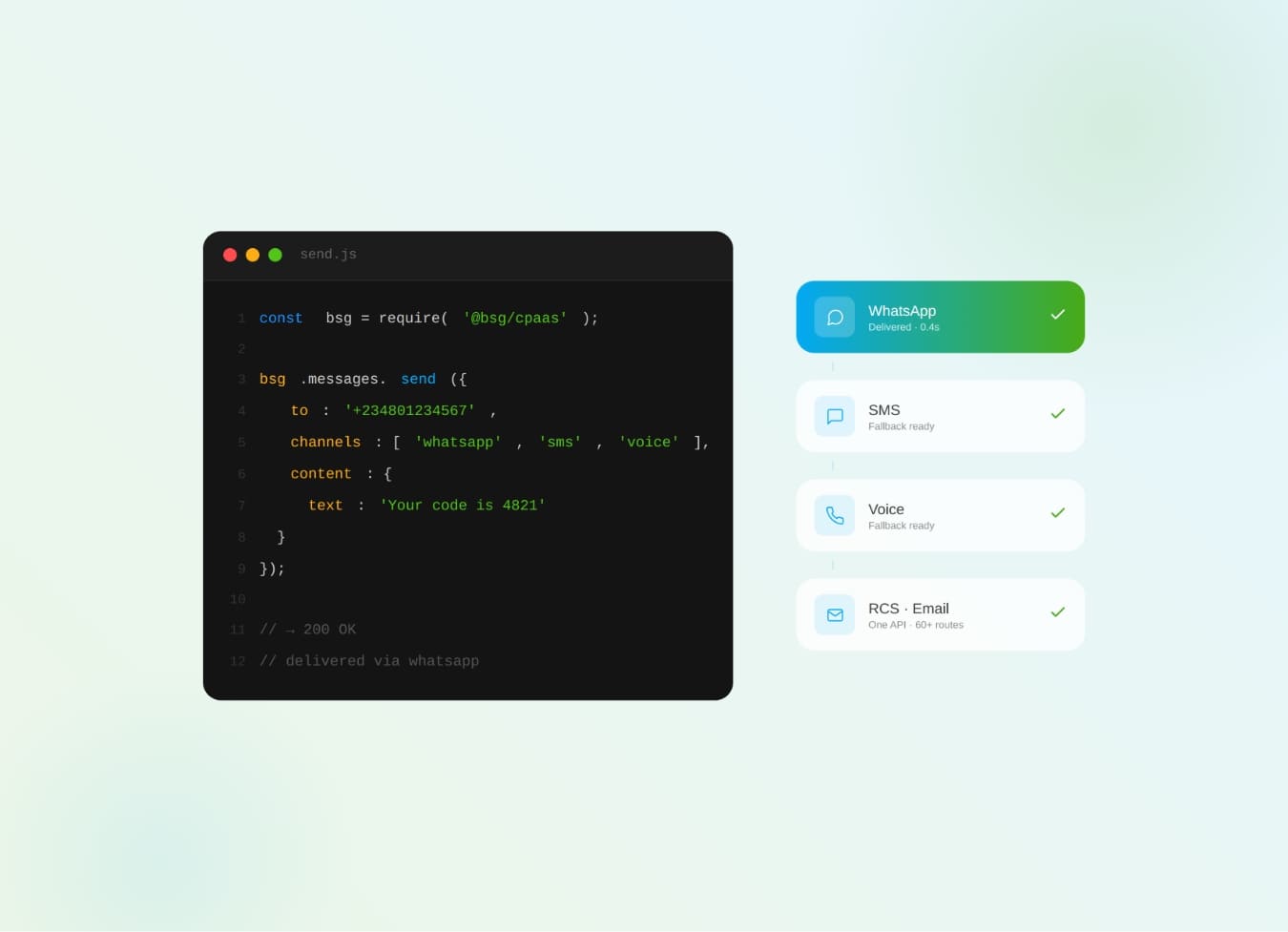
What is CPaaS? The cloud API layer that adds SMS, WhatsApp, voice & OTP to your apps — how it works and why it beats a multi-vendor stack.
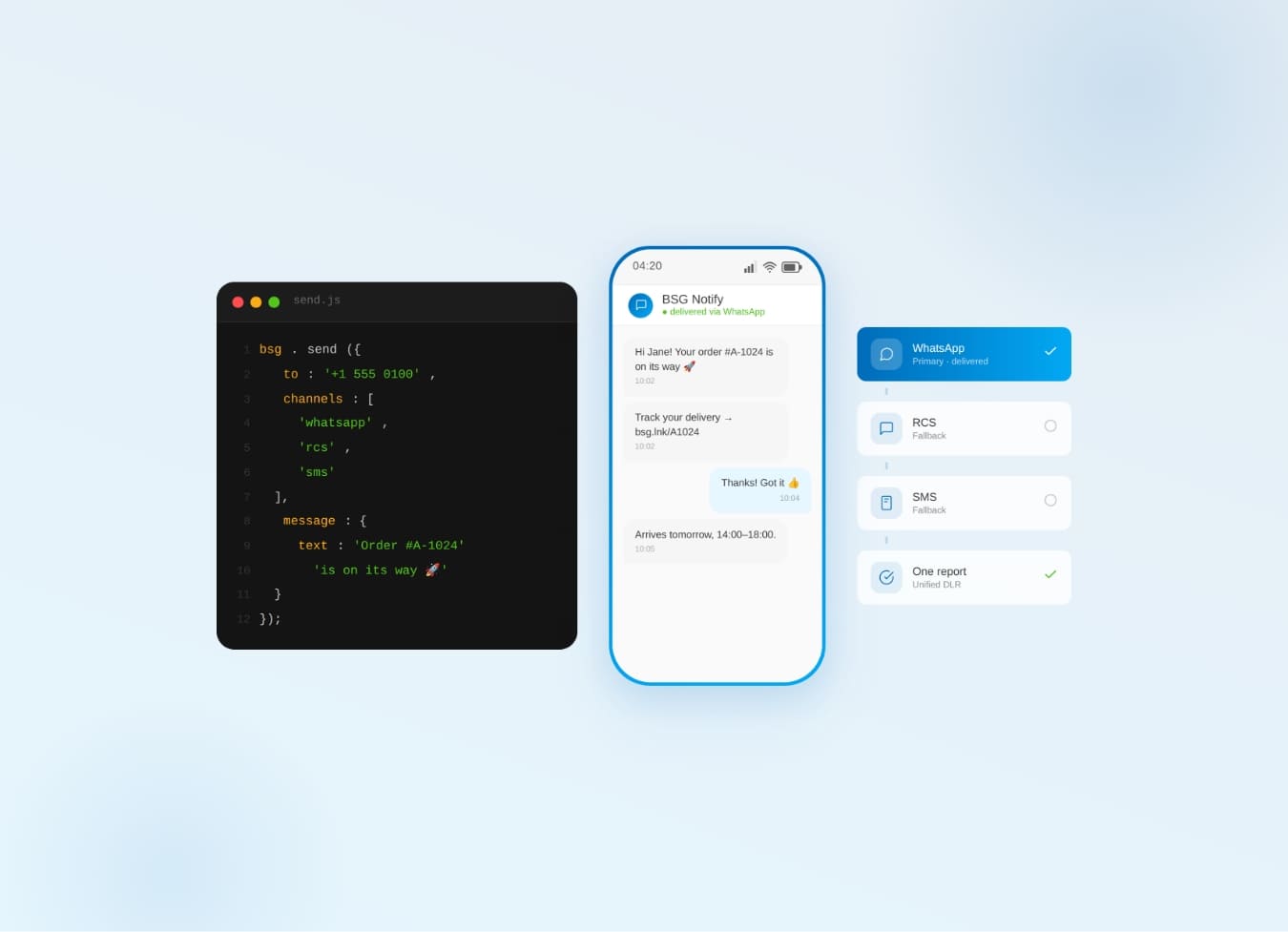
Why one communication API for SMS, WhatsApp, Viber & RCS beats five separate integrations — cascade fallback, unified reports.