




Telegram Bot API
What is Telegram Bot API?
The Telegram Bot API is a programmatic interface that allows developers to create bots on Telegram that can send and receive messages, including OTP codes, without human intervention.
The Telegram Bot API is an HTTP-based interface provided by Telegram that lets developers build automated accounts (bots) capable of sending and receiving messages. Developers register a bot through Telegram’s BotFather, receive an API token, and use the sendMessage endpoint to push text — including OTP codes — to users who have interacted with the bot at least once. The API is free to use, with no per-message charges, which makes it attractive for startups building verification flows on a limited budget. However, the Bot API has important limitations for business use: it provides no delivery receipt (only server-side acceptance confirmation), offers no SLA, and does not generate compliance logs. These gaps mean the Bot API works well for internal tools and early-stage products but typically requires augmentation with a dedicated OTP provider — using cascade routing through SMS or WhatsApp — once the business scales past a few hundred daily verifications.
For more on this, see BSG's One Communication API for SMS, WhatsApp, Viber & RCS — Why It Beats Five.
Related terms
Related BSG products


Interested in a special offer?
Ready to reach further?
Let’s talk


Related Terms
Explore BSG Solutions
Useful Materials
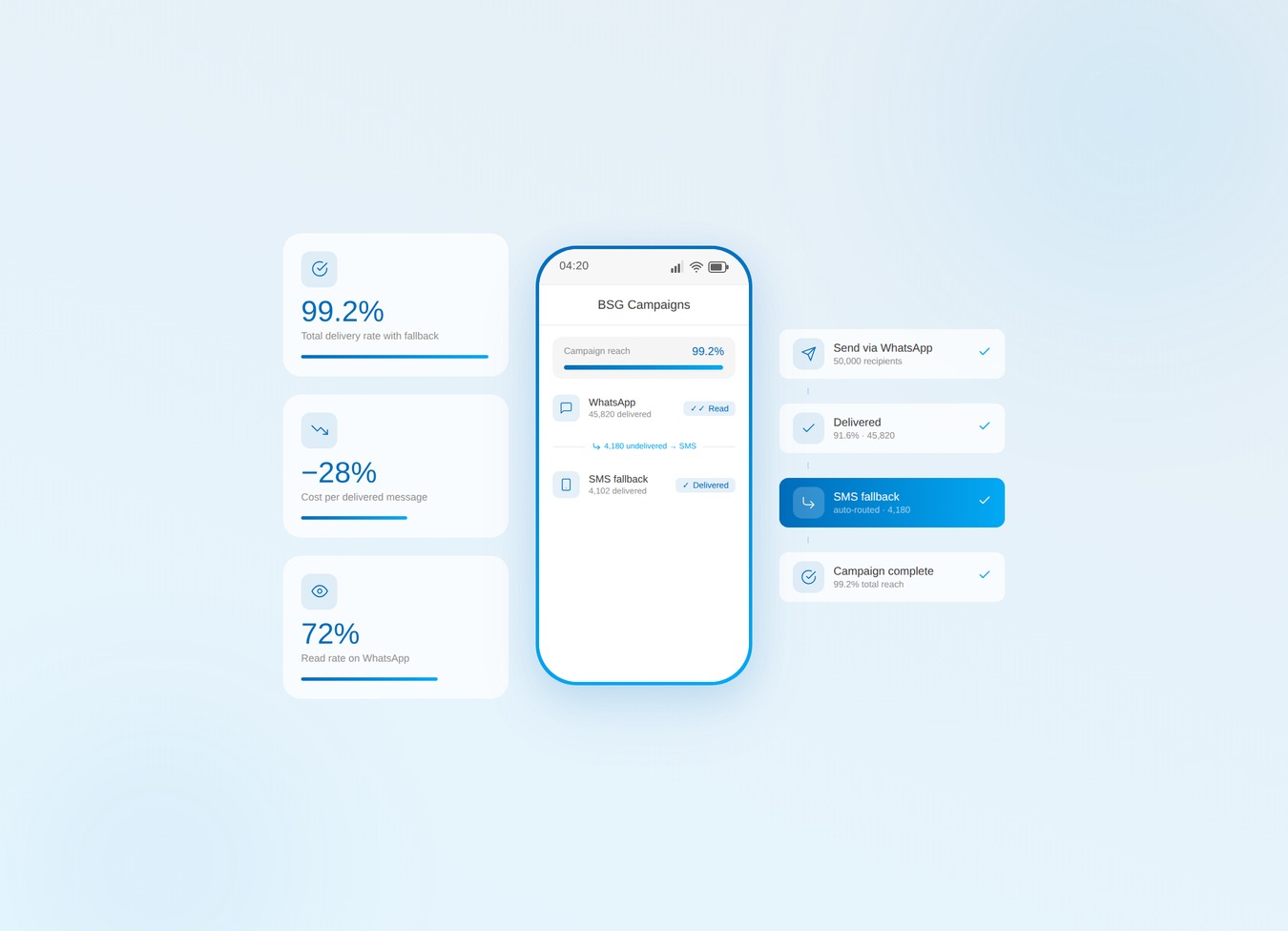
Bulk SMS alone leaks budget. Verify the list, then run WhatsApp-first with SMS fallback.
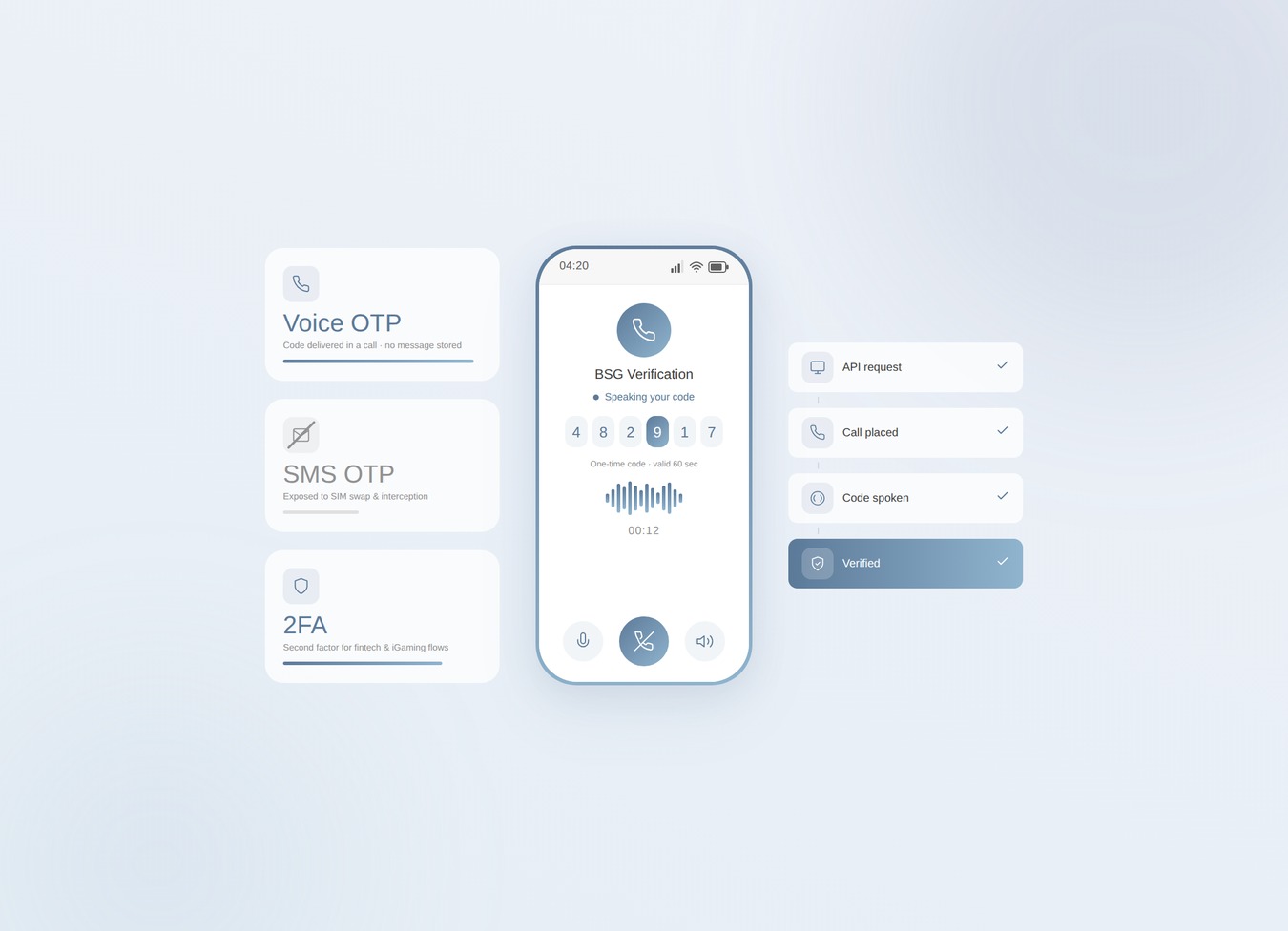
SIM swaps jumped 1,055% in a year. Voice OTP takes your riskiest codes off the SMS rail.
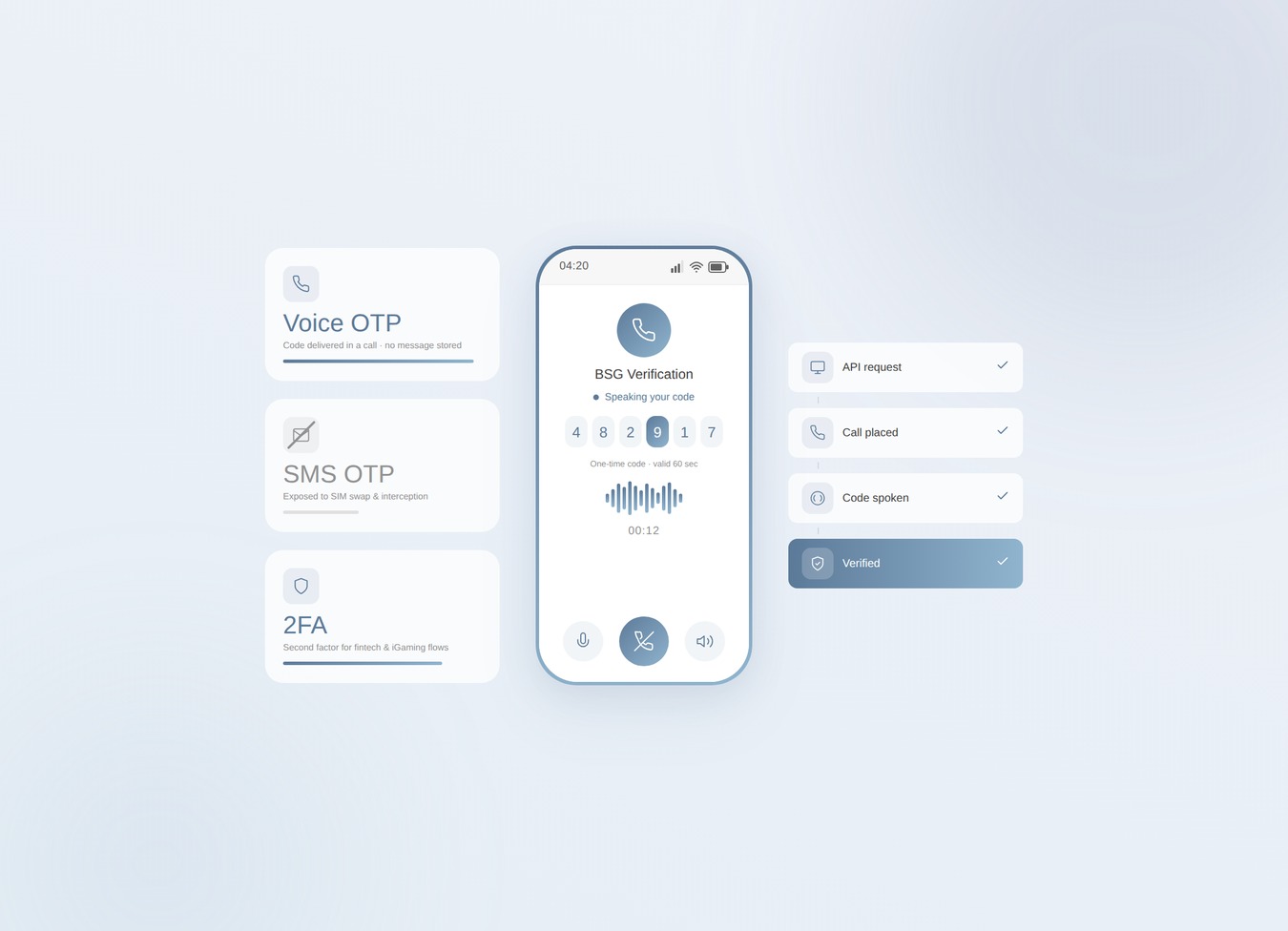
Telegram OTP is free — until it silently fails. Know the limits and when to add fallback.