




Conversion
What is a conversion?
A conversion is the moment a recipient completes the action a message was designed to drive — making a purchase, registering an account, confirming a code, or clicking through to an offer. The conversion rate is the share of delivered messages that led to that action, and it is the primary measure of whether a messaging effort actually worked.
In SMS marketing, conversions are usually tracked through unique links or promo codes tied to each campaign. BSG covers benchmarks and ways to improve them in 6 Key Insights and Trends Shaping SMS Marketing.
FAQ
What is an SMS Conversion Rate?
An SMS conversion rate is the number of conversions achieved through the use of SMS campaigns. Conversions can be defined as desired customer actions such as making a purchase, subscribing to a service, downloading an app, and more.
How is SMS Conversion Rate Calculated?
The SMS conversion rate is calculated by taking the number of people who took a desired action after receiving an SMS message and dividing it by the total number of people who received the message. The result is expressed as a percentage.
How Can I Use SMS to Increase My Conversion Rate?
SMS is a powerful tool that can be used to increase your conversion rate. Here are some tips for using SMS campaigns to get the best results:
- Craft clear, personalized messages that are tailored to each target audience;
- Utilize segmentation;
- Provide customers with incentives to increase conversions;
- Make sure to track and measure your campaigns.
What Is a Good SMS Conversion Rate?
The average SMS conversion rate is between 2-7%. However, this number can vary greatly depending on factors such as the type of product or service being offered, the size of the target audience, and the quality of the message.
How Can I Improve My SMS Conversion Rate?
Improving your SMS conversion rate requires understanding the factors that influence conversions. Here are some tips for improving your SMS conversion rate:
- Analyze the performance of past campaigns;
- Test different messages and offers;
- Utilize SMS automation.
What are Some Examples of SMS Conversion Goals?
Examples of SMS conversion goals include: generating leads, increasing web traffic, driving online sales, boosting app downloads, and increasing brand awareness.
What is the Difference Between SMS Conversion Rate and Click-Through Rate?
The main difference between SMS conversion rate and click-through rate is that the former measures the success of an SMS campaign in terms of conversions while the latter measures the success of an online advertisement in terms of clicks.
What is the Difference Between SMS Conversion Rate and Response Rate?
The main difference between SMS conversion rate and response rate is that the former measures the success of an SMS campaign in terms of conversions while the latter measures the success of an SMS campaign in terms of responses.
What Should I Do If My SMS Conversion Rate Is Low?
If your SMS conversion rate is low, you should analyze your message and target audience, test different offers and timing, and make sure your message is personalized, relevant and easy to understand.
How Can I Optimize My SMS Conversion Rate?
To optimize your SMS conversion rate, you should analyze the performance of past campaigns, test different messages and offers, personalize and segment your messages, and utilize SMS automation. Additionally, make sure to track and measure your campaigns to identify areas for improvement.
What Is the Best Way to Track SMS Conversion?
The best way to track SMS conversion is to use a dedicated tracking platform. This will allow you to monitor the performance of each SMS campaign, helping you to identify areas for improvement and optimize your campaigns for better results.
How Do I Find Out More About SMS Conversion Rate?
If you want to learn more about SMS conversion rate, you can check out our blog for helpful tips and advice.


Interested in a special offer?
Ready to reach further?
Let’s talk


Related Terms
Explore BSG Solutions
Useful Materials
![WhatsApp Business API: Complete Guide — Setup, Pricing, Use Cases [2026]](/assets/img/blog/whatsapp-business-api-setup-pricing-use-cases-guide_avatar.jpg)
WhatsApp Business API for 2026 — setup steps, the new per-message pricing model, and proven use cases by industry.
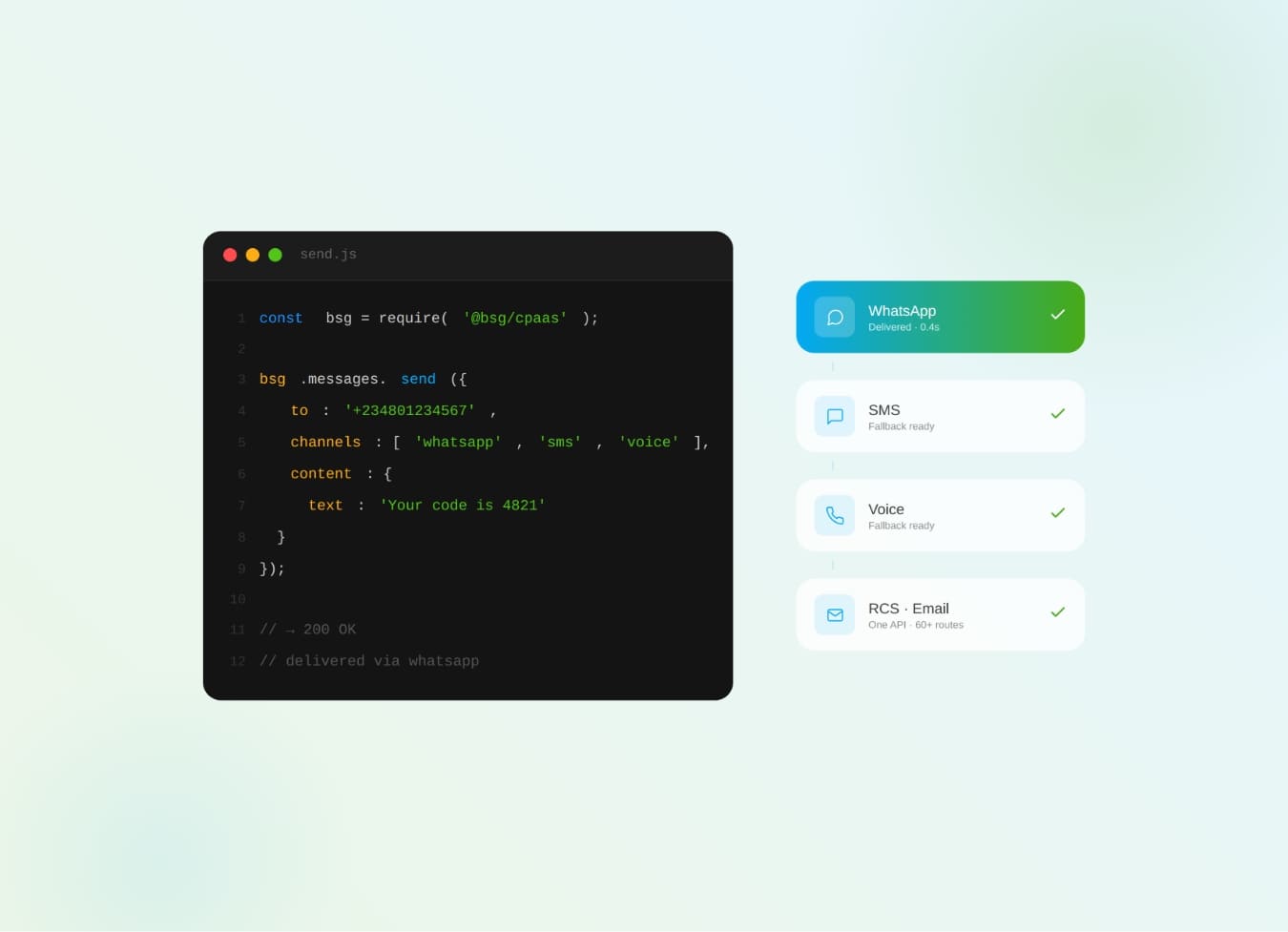
What is CPaaS? The cloud API layer that adds SMS, WhatsApp, voice & OTP to your apps — how it works and why it beats a multi-vendor stack.
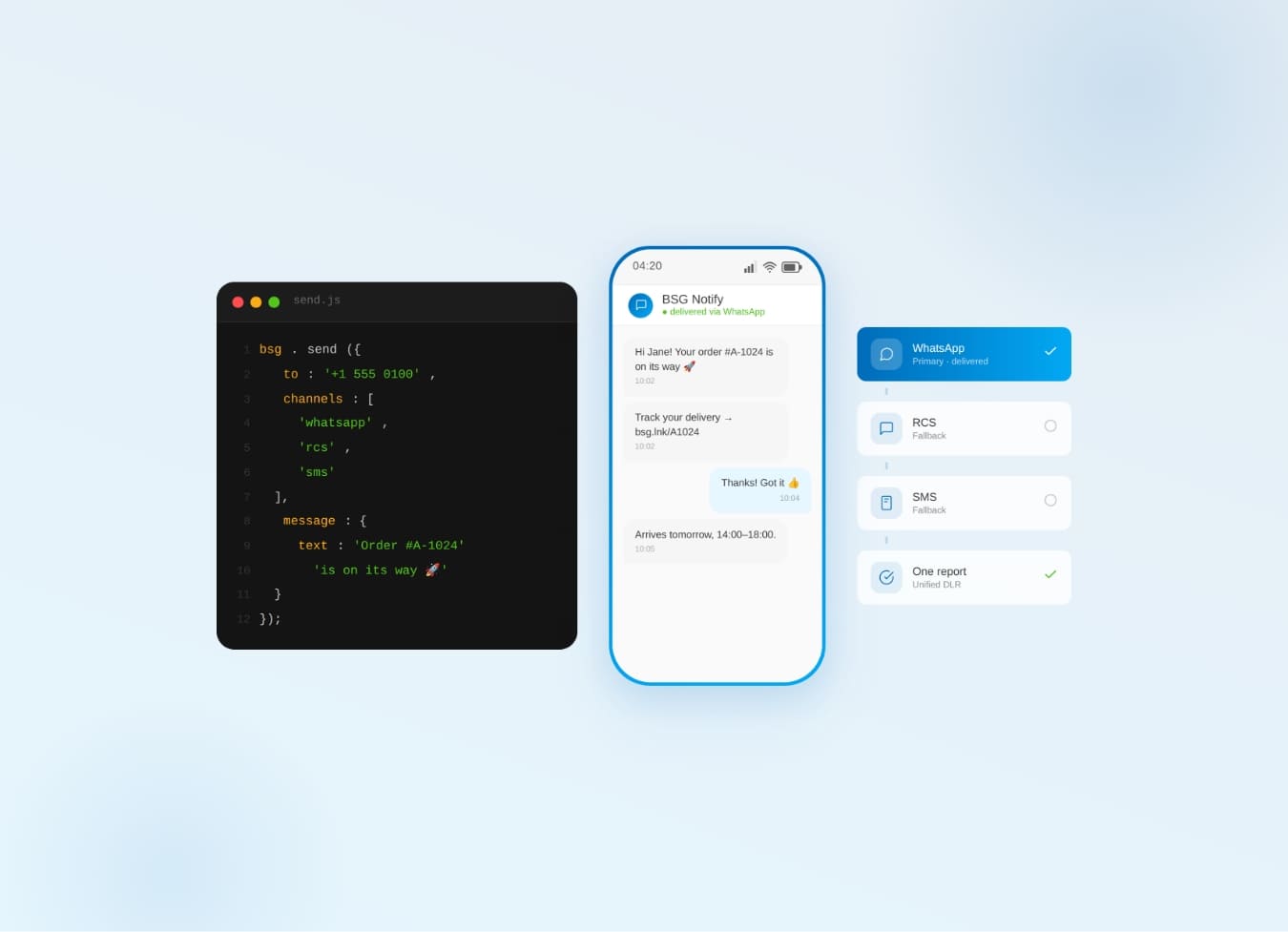
Why one communication API for SMS, WhatsApp, Viber & RCS beats five separate integrations — cascade fallback, unified reports.