




Parallel Run
What is a parallel run?
A parallel run is a migration phase in which a controlled share of live messaging traffic goes through a new provider while the existing route carries the rest, so results can be compared before full cutover.
How does a parallel run work?
A parallel run turns a provider switch from a single risky moment into a measured process. Instead of moving all traffic at once, a business routes a small share of real messages — per country, operator and message type — through the new provider, keeps the rest on the current route, and compares the two.
The comparison usually covers four things: delivery statuses by operator against a baseline from delivery reports; how the sender name actually displays on handsets in each market; whether number lookups return the same network and status from old and new APIs; and how your own code handles the new webhook formats and error codes.
Why it matters: problems that never show up in a test console appear on live traffic — a sender replaced by a short code, a missing Sender ID registration, a response field your fraud rules read under a different name. Found during a parallel run, each is a configuration fix. Found after cutover, each is a customer complaint.
Example
A payments company moves a slice of its German transactional SMS first, checks delivery reports for a set period, then widens the share market by market.


Interested in a special offer?
Ready to reach further?
Let’s talk


Related Terms
Explore BSG Solutions
Useful Materials
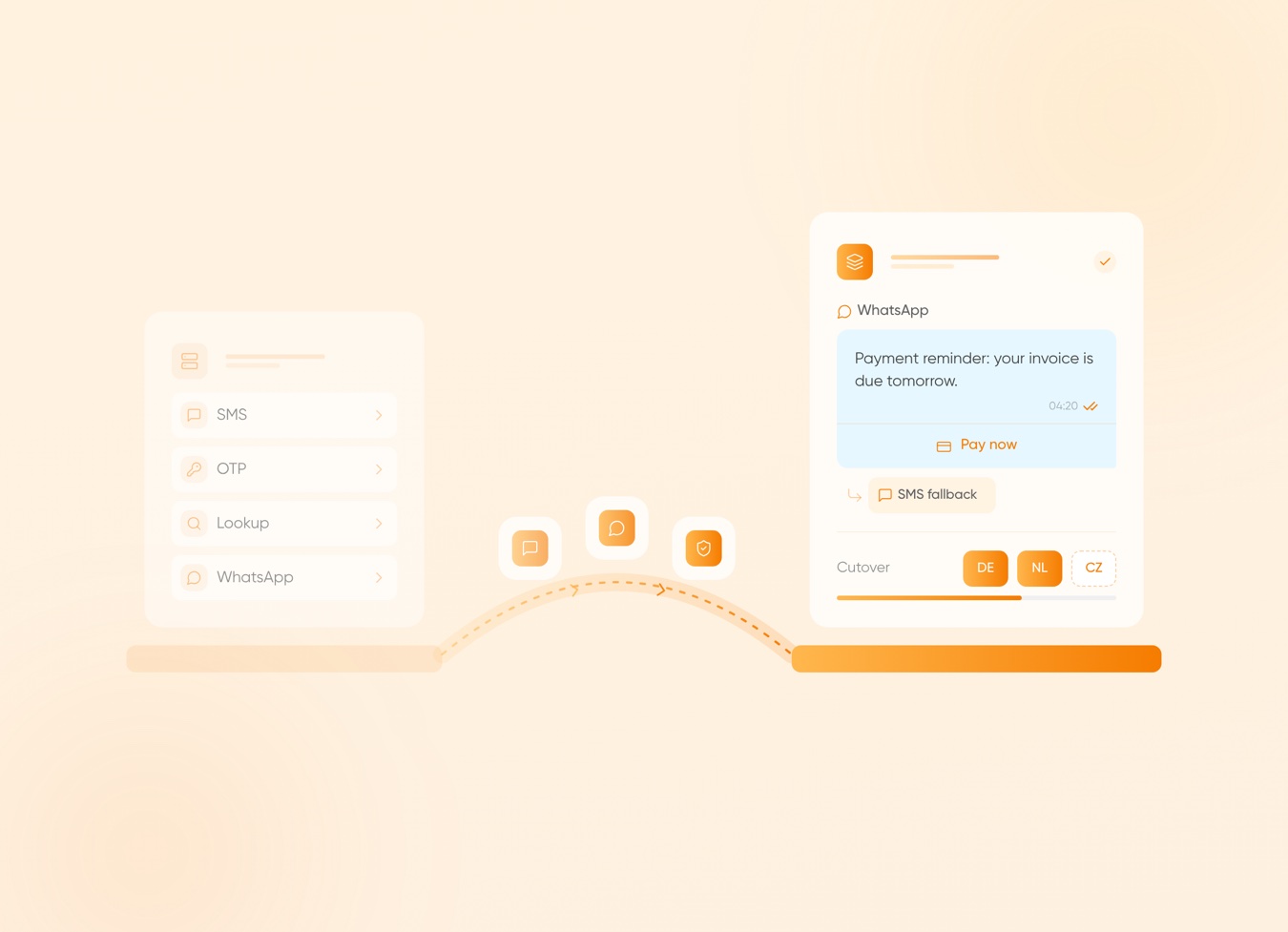
A five-step plan to move SMS, verification and WhatsApp traffic, with an export checklist and Sender ID rules by country.
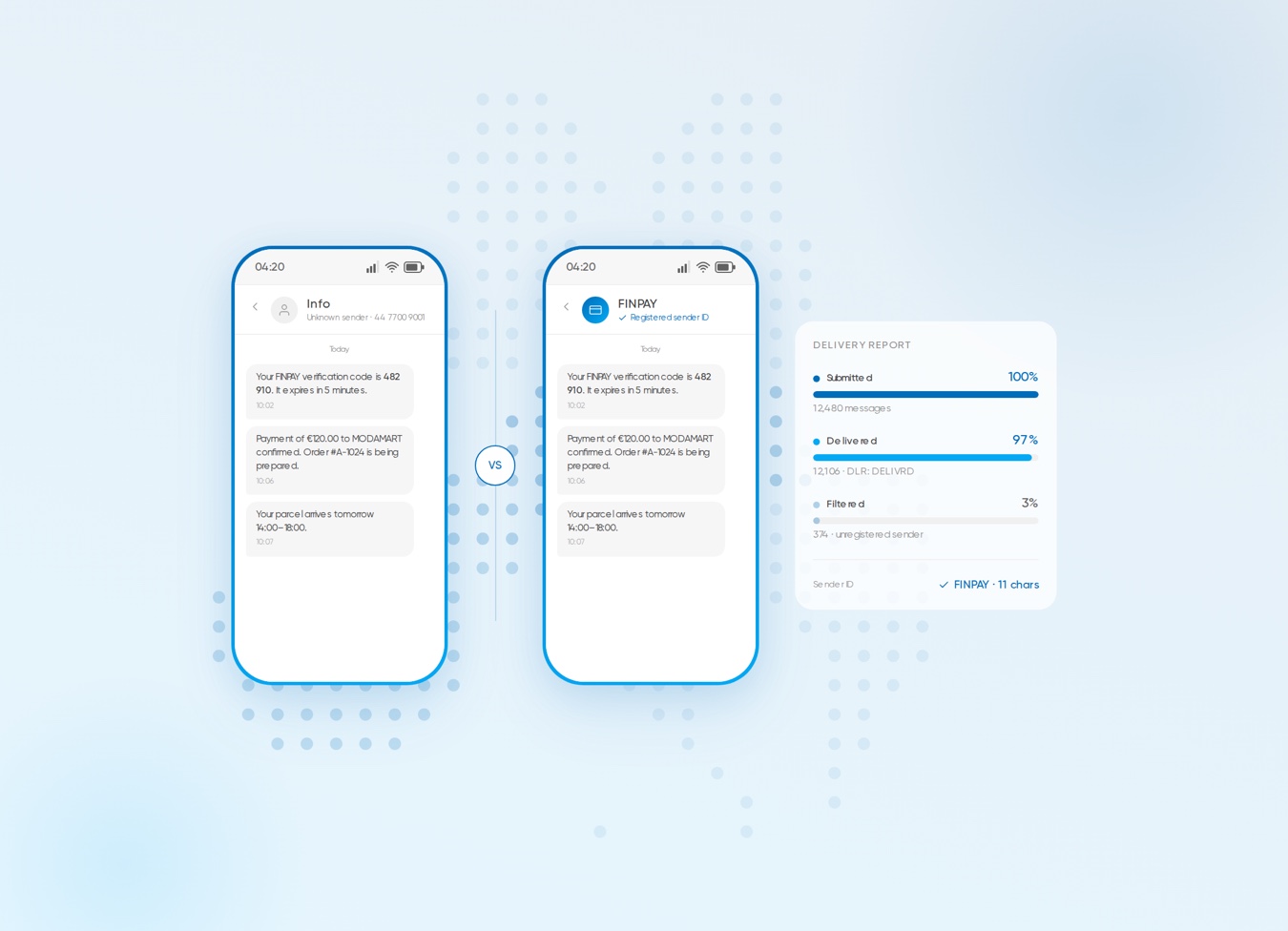
Why unregistered senders get filtered in the EU and UK, and what each country requires for sender ID registration.
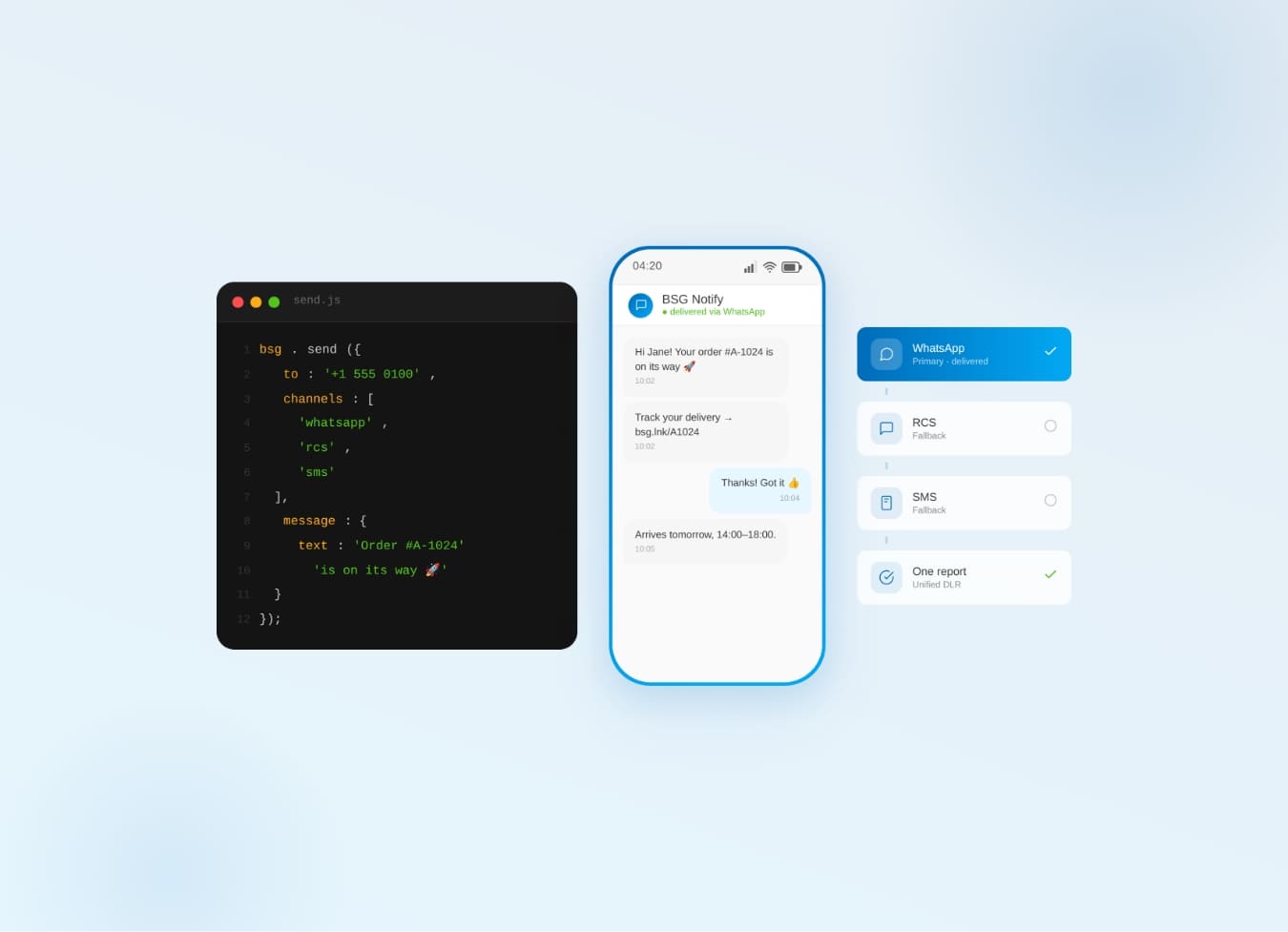
Why one communication API for SMS, WhatsApp, Viber & RCS beats five separate integrations — cascade fallback, unified reports.