




SLA
What is SLA?
A service-level agreement (SLA) is a contract between a service provider and its customers that documents the services the provider will furnish, the performance standards the provider is obligated to meet, and the remedies available to customers if these standards are not met. An SLA is an agreement between two or more parties, usually a service provider and a customer, that outlines the services to be provided and the expected level of service.
SLAs outline the scope of the service, service levels, and performance metrics, the responsibilities of both parties, and the remedies available if the service provider fails to meet its obligations.
The SLA also outlines the duration of the agreement and any applicable fees or charges. Additionally, the SLA can include escalation processes, dispute resolution procedures, and other measures to ensure compliance with the agreement. The SLA is designed to protect both the customer and the service provider and to ensure that each party understands and agrees to their respective responsibilities.
SLA typically defines a mean time between failures (MTBF), mean time to recovery (MTTR), or repair. It identifies the party responsible for reporting faults or paying fees; responsibility for various data rates; throughput; jitter, etc.
A provider's SLA is usually backed by a broader compliance framework like ISO 27001, which governs how they handle data and security day to day. For the practical side of this, check out BSG's Internet Security Trends in 2024 - Insights from BSG Product Manager.


Interested in a special offer?
Ready to reach further?
Let’s talk


Related Terms
Explore BSG Solutions
Useful Materials
![WhatsApp Business API: Complete Guide — Setup, Pricing, Use Cases [2026]](/assets/img/blog/whatsapp-business-api-setup-pricing-use-cases-guide_avatar.jpg)
WhatsApp Business API for 2026 — setup steps, the new per-message pricing model, and proven use cases by industry.
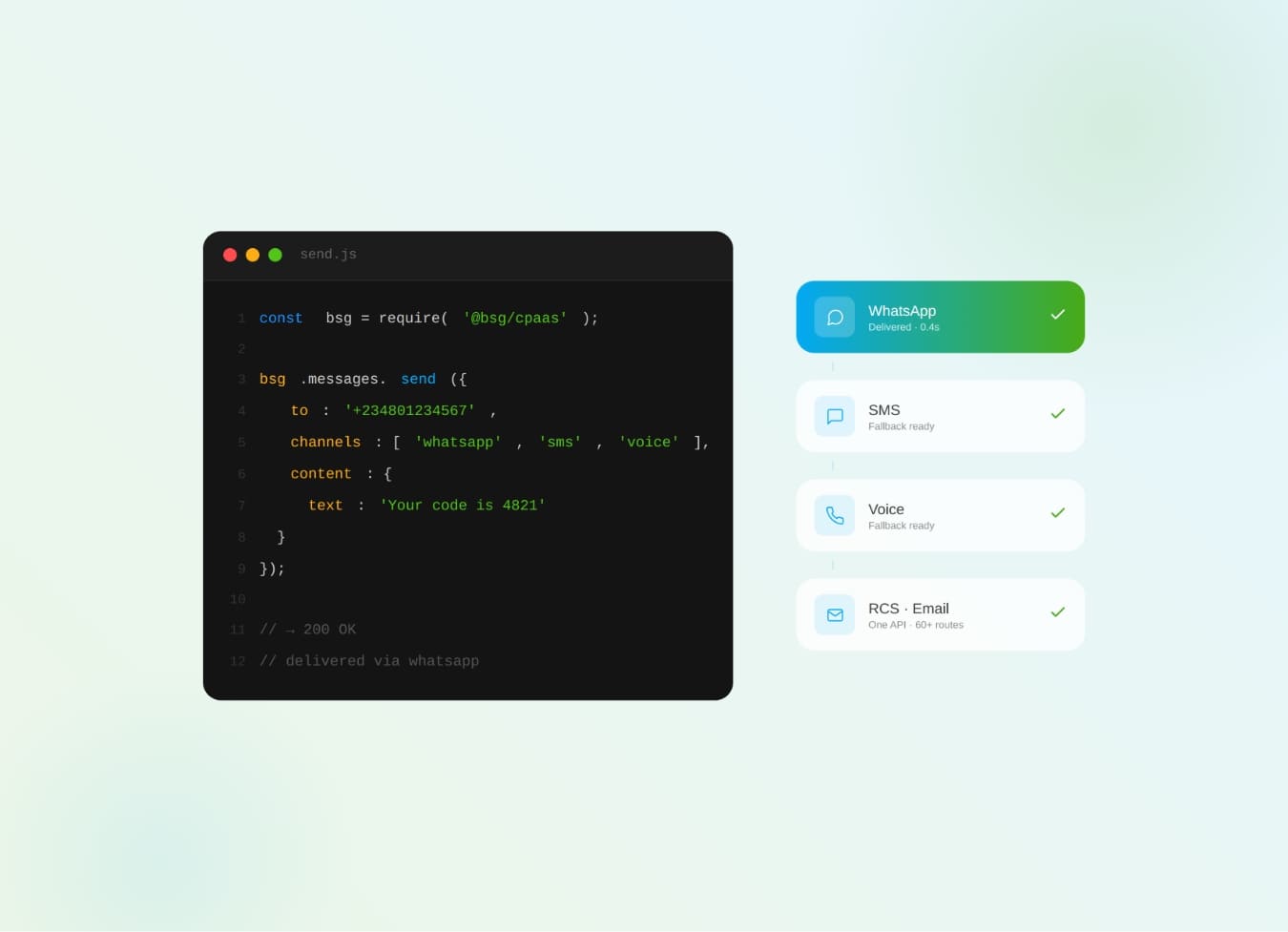
What is CPaaS? The cloud API layer that adds SMS, WhatsApp, voice & OTP to your apps — how it works and why it beats a multi-vendor stack.
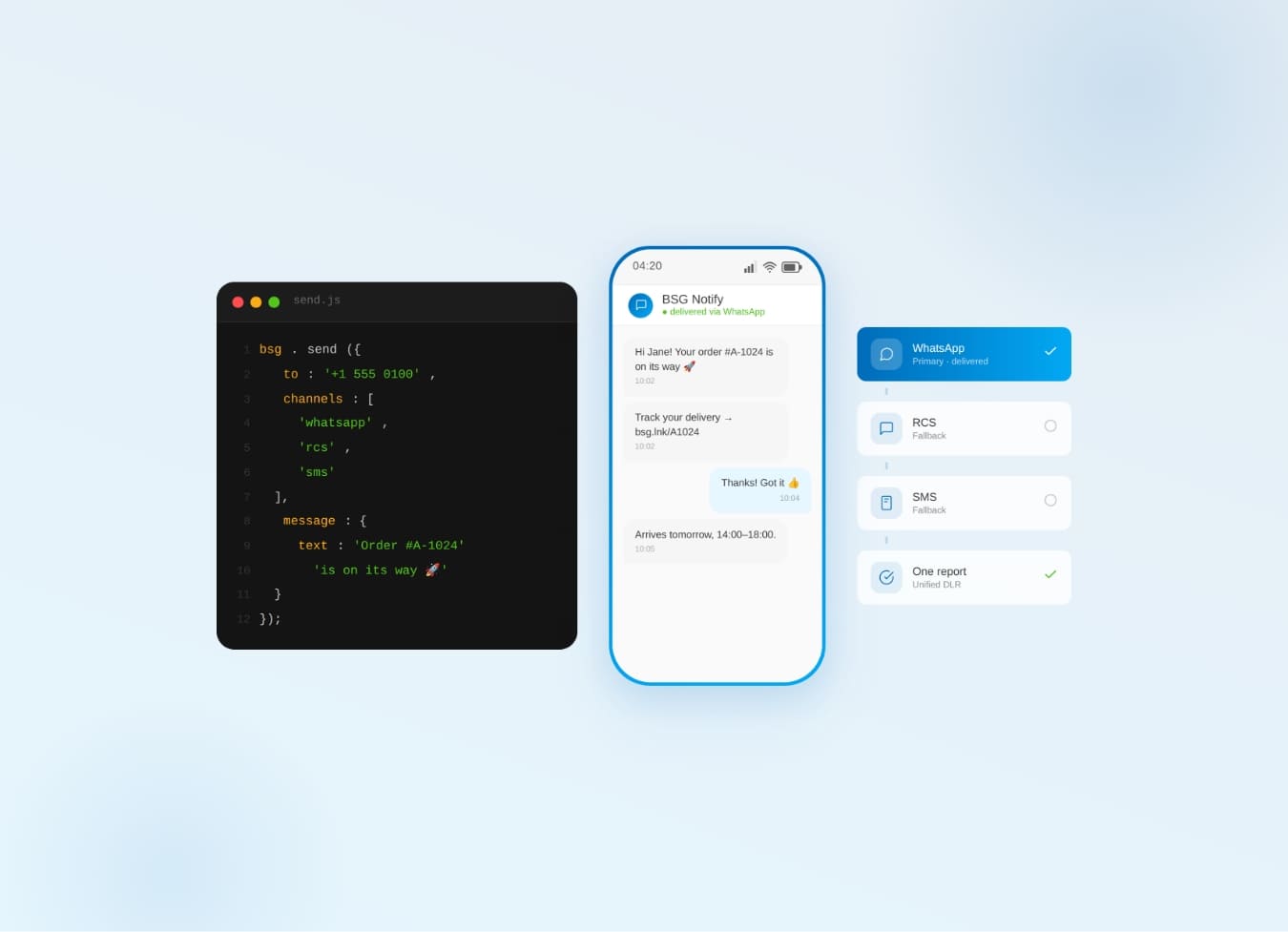
Why one communication API for SMS, WhatsApp, Viber & RCS beats five separate integrations — cascade fallback, unified reports.