




VPN
What is VPN?
VPN stands for Virtual Private Network. It is a secure connection between two or more devices over the internet. It allows a user to securely access a private network and share data remotely through public networks. It is commonly used to provide secure remote access to a corporate network, such as from a home office or remote location. How BSG secures its own infrastructure and data flows is described in its security overview.
The same encryption principle underpins compliance frameworks like ISO 27001, which require providers to protect data in transit, not just at rest. See BSG's Internet Security Trends in 2024 - Insights from BSG Product Manager for a closer look at how this plays out in practice.
How does it work?
A VPN works by creating a secure, encrypted tunnel between your device and the VPN server. All of the data that is sent between your device and the server is encrypted so that it remains secure and private. This encrypted tunnel also helps to protect your data from being monitored or intercepted by any third parties. Additionally, VPNs can be used to bypass geographic restrictions, allowing you to access content that may be blocked in your location.
Here are some use cases
- Bypassing internet censorship: Many countries have strict internet censorship laws and regulations in place, which can limit the content that users are able to access. By using a VPN, users can bypass these restrictions and access any content they desire. A popular example is the 8-month-long Twitter ban in Nigeria. Young people had to use VPNs to access Twitter.
- Protecting your online privacy: Using a VPN will help to protect your online privacy by encrypting your data and hiding your IP address. This makes it difficult for third parties to monitor your online activities, ensuring that you stay safe and secure online.
- Accessing geo-restricted content: Many streaming services and websites restrict content based on your location. By using a VPN, you can mask your IP address and make it appear as if you’re located in a different country, allowing you to access this content.
- Preventing ISP throttling: ISPs often throttle your internet speed based on the type of content you are accessing. By using a VPN, you can prevent your ISP from throttling your connection, allowing you to enjoy faster speeds.
- Ensuring secure remote access: A VPN can be used to provide secure remote access to a corporate network, allowing employees to access information and resources from anywhere.
- Enhancing online security: A VPN can help to enhance your online security by encrypting your data and making it difficult for hackers to access it.
- Encrypting online communication: By using a VPN, you can encrypt your online communication, ensuring that your conversations are secure and private.


Interested in a special offer?
Ready to reach further?
Let’s talk


Related Terms
Explore BSG Solutions
Useful Materials
![WhatsApp Business API: Complete Guide — Setup, Pricing, Use Cases [2026]](/assets/img/blog/whatsapp-business-api-setup-pricing-use-cases-guide_avatar.jpg)
WhatsApp Business API for 2026 — setup steps, the new per-message pricing model, and proven use cases by industry.
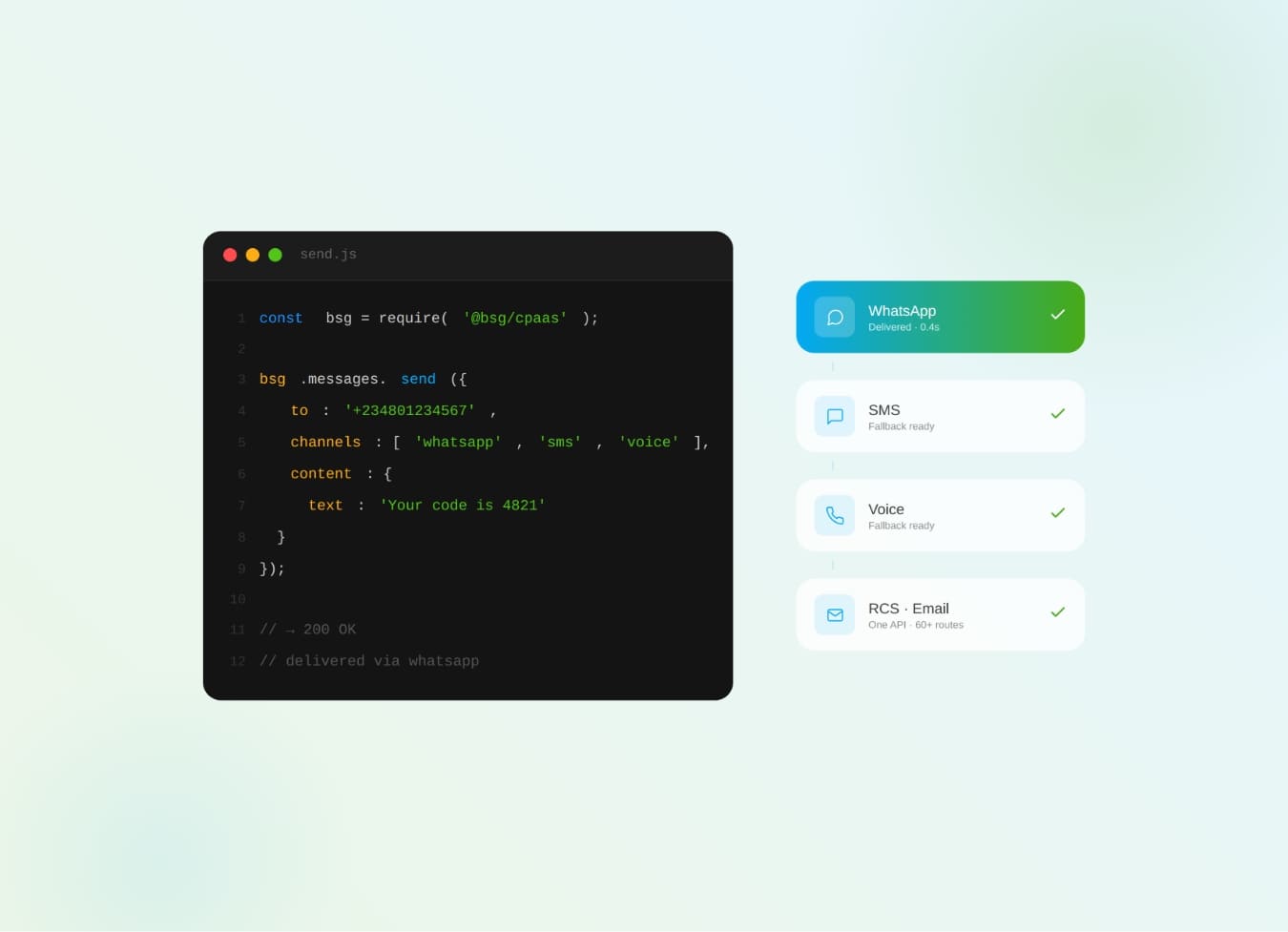
What is CPaaS? The cloud API layer that adds SMS, WhatsApp, voice & OTP to your apps — how it works and why it beats a multi-vendor stack.
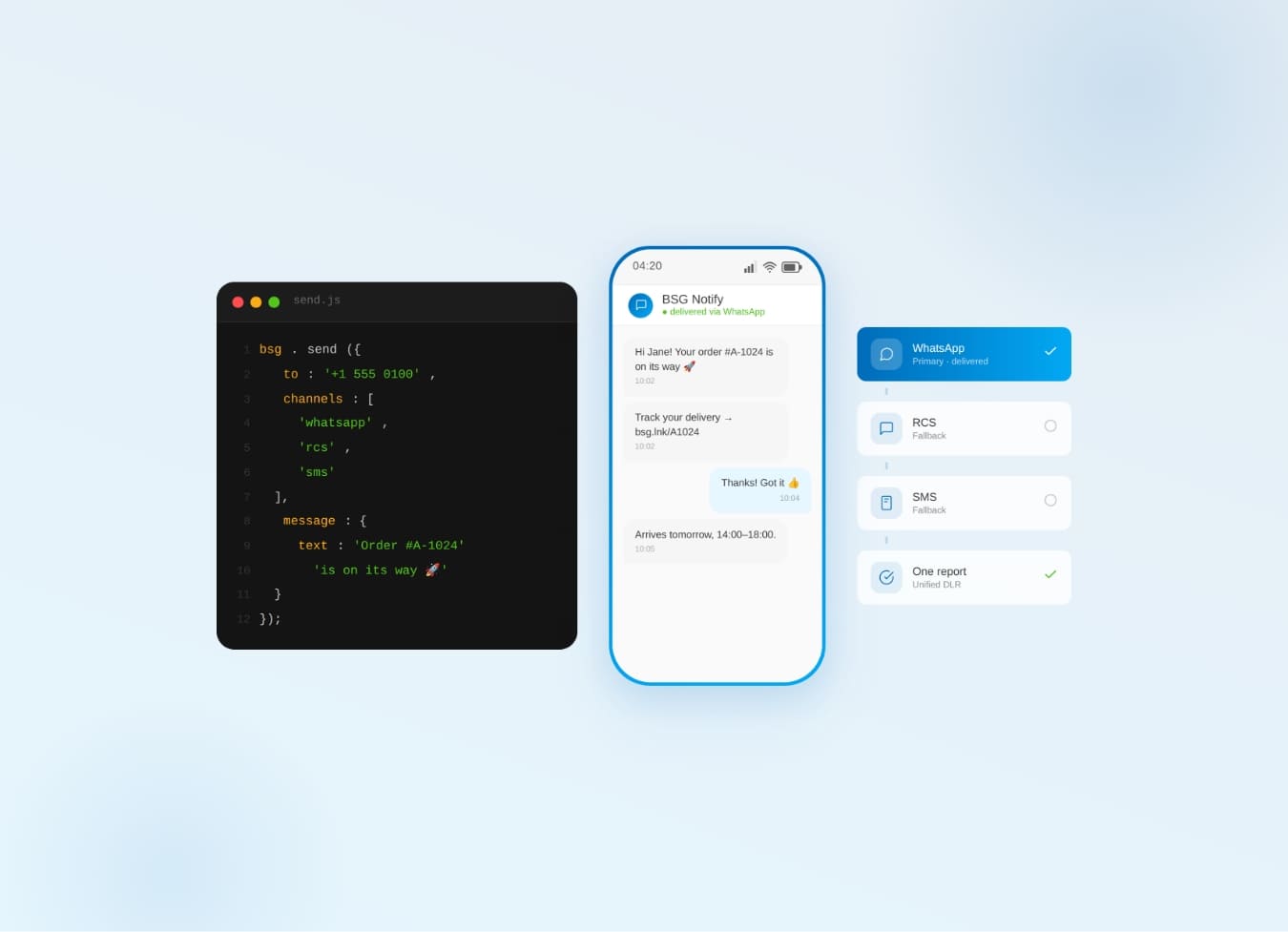
Why one communication API for SMS, WhatsApp, Viber & RCS beats five separate integrations — cascade fallback, unified reports.