




Utility Template
What is a utility template?
A utility template is a pre-approved WhatsApp message template that follows up on a specific user action or request — an order, account or service update — and contains no promotional content.
How do utility templates work?
Meta sorts WhatsApp message templates into three categories: marketing, utility and authentication. A utility template sits in the middle. To qualify, it must meet two conditions: it must be non-promotional, and it must be either specific to the user — clearly tied to their order, account, service or transaction — or essential to them, such as a safety alert. Typical utility messages confirm an order, update a delivery, remind a customer about a scheduled payment or deliver a certificate after a completed course.
The category matters because Meta prices and governs categories differently, and it reviews content after approval. Any template that mixes a service update with an offer, upsell or renewal push is treated as marketing. Meta can recategorise a utility template as marketing automatically, and businesses that repeatedly misclassify templates can face restrictions on utility messaging.
Example
An online school sends "You stopped at lesson 3 — continue from the same spot" as a utility template. If the same message added "and get 20% off our next course", it would become marketing and require marketing consent.


Interested in a special offer?
Ready to reach further?
Let’s talk


Related Terms
Explore BSG Solutions
Useful Materials
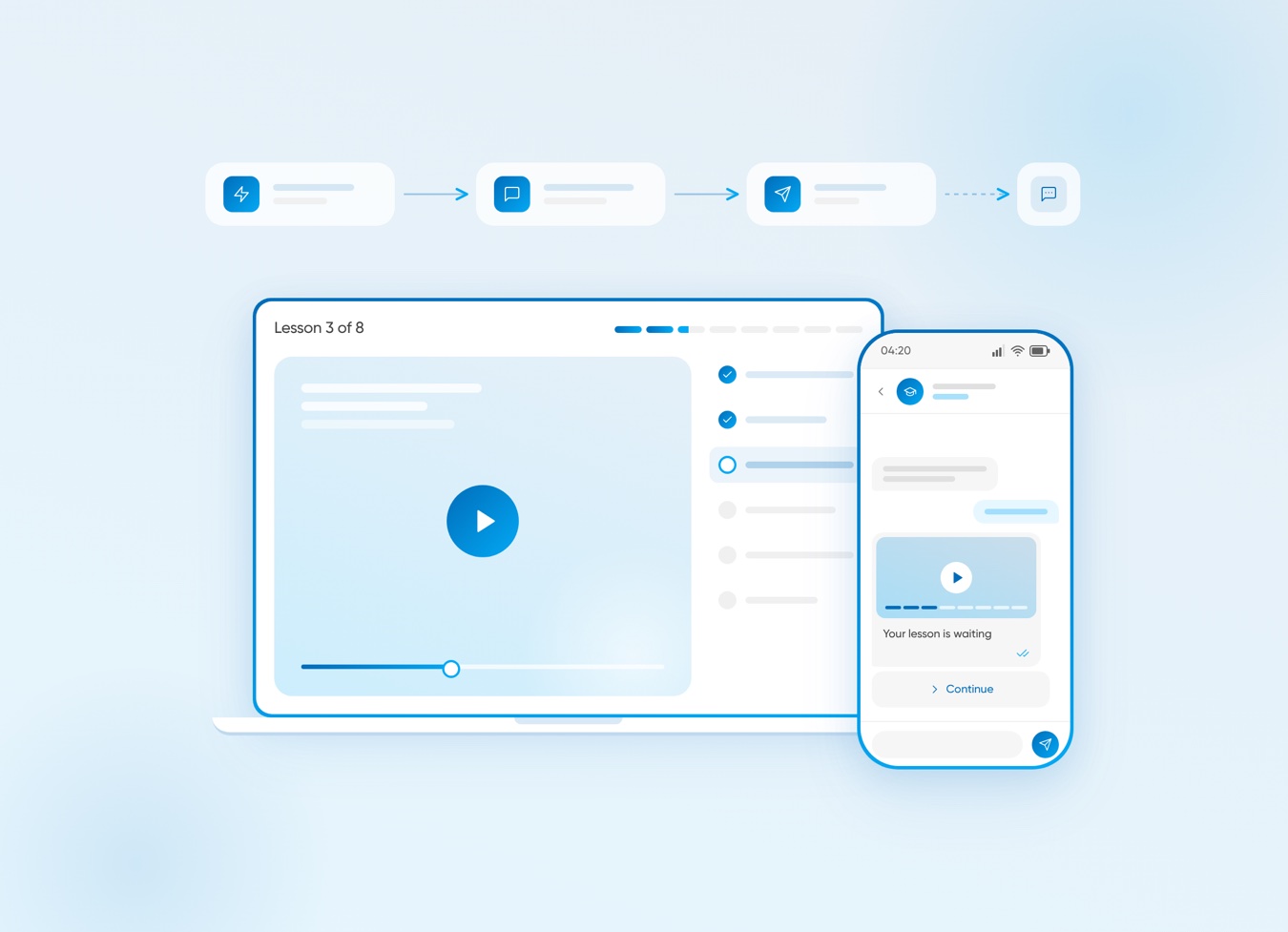
A 5-node WhatsApp and SMS flow with 8 ready texts, GDPR opt-in and metrics to cut course drop-off.
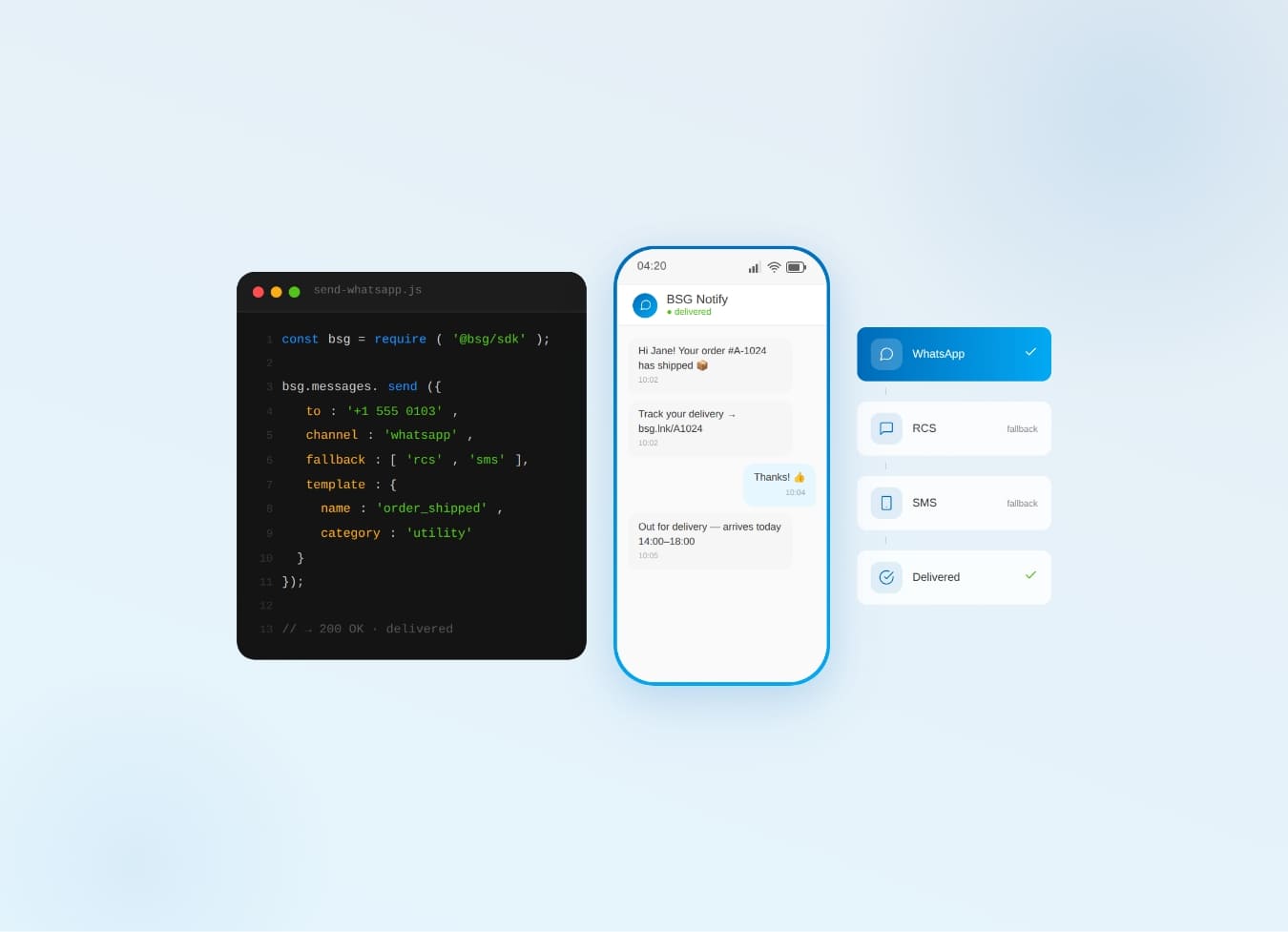
WhatsApp Business API for 2026 — setup steps, the new per-message pricing model, and proven use cases by industry.
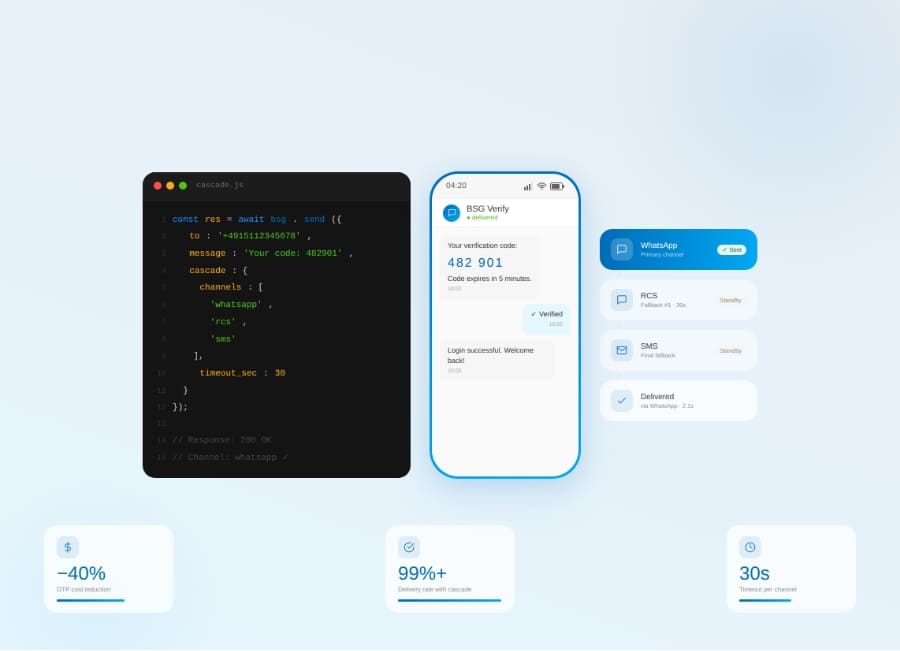
Server-side cascade routing across WhatsApp, RCS, and SMS — how it cuts OTP costs 20–40% with one API call.