




Binary SMS Messages
Understanding Text Messages in Binary
What is a Binary SMS?
A “binary SMS” or binary message is a type of digital communication that uses binary code messages, which are composed of 0s and 1s—the fundamental units of digital data. In binary messaging, these messages serve as a medium for transferring various types of information and commands between digital devices and systems.
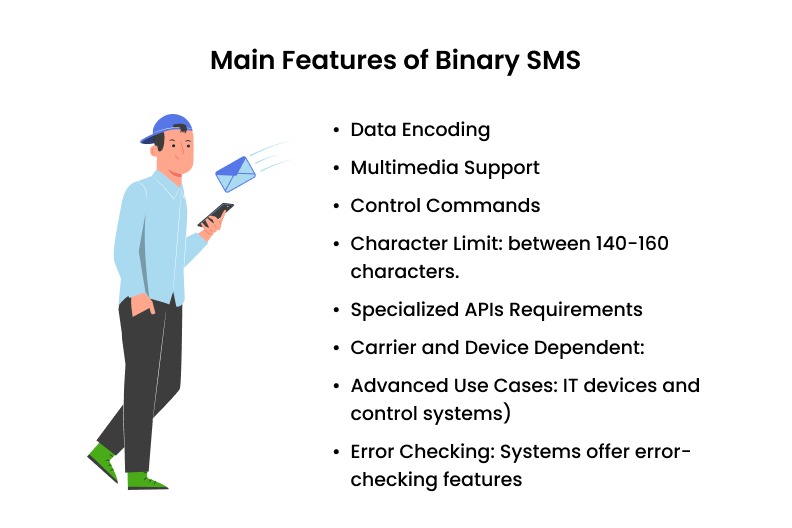
The Key Attributes of Binary SMS Messages
Binary SMS messages are unique in their efficiency and compactness. They operate on the principles of binary communication and can transmit various data types, including multimedia and control commands. SMS messaging is often conducted through specialized APIs that accommodate the SMS binary message format, ensuring secure and accurate data transfer.
What is the Character Limit for Binary Messages?
When it comes to binary messaging, the character limit is usually between 140-160 characters. This may vary depending on your mobile carrier and the specific API or service you are using for sending binary messages.
How to Send Binary SMS?
To send a binary SMS, you would need to use a specialized API or service specifically designed for this type of messaging. These services can be integrated into your existing system or application for seamless sending of binary messages.
What is the Difference Between Binary Messages and Text Messages?
The chief distinction between binary messages and regular text messages is the format of the data being transferred. While regular SMS is in plain text format, binary SMS uses a specific binary message format for more complex data types, fulfilling the binary message definition.
Are Binary Messages More Expensive than Text Messages?
Sending binary SMS could be slightly more expensive than sending regular text messages due to the extra data that is often involved. The cost is generally dependent on the mobile carrier and the specialized service used for sending binary messages.
Can Binary Messages Be Sent to All Phone Numbers?
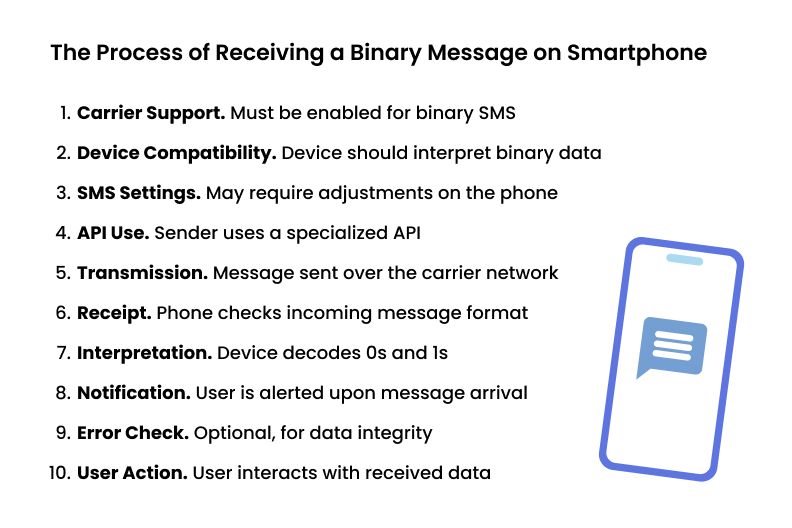
It is generally possible to receive a binary message on a modern smartphone. However, the process and compatibility can vary depending on several factors like the device being used and the mobile carrier. Below is an outline how this process typically takes place:
- Carrier Support. First and foremost, your mobile carrier must support binary messaging. This is the foundational step before your smartphone can receive any binary messages.
- Device Compatibility. The smartphone device you are using must be capable of interpreting binary data. Most modern smartphones come with this capability.
- SMS Settings. Sometimes, you may need to adjust your phone’s SMS settings to enable the receipt of binary messages. This can usually be found under the messaging settings on your device.
- API or Specialized Service. On the sender’s end, a specialized API or service that supports such messaging must be used. This API encodes the message in binary format before sending it.
- Message Transmission. Once sent, the binary message traverses the carrier’s network and is delivered to your smartphone, much like any other SMS would be.
- Message Receipt : Your smartphone receives the incoming data and checks if it’s in a binary format.
- Message Interpretation . If the phone and carrier support binary messages, your device will interpret the 0s and 1s accordingly—be it as text, multimedia, or command instructions.
- Notification. You’ll typically receive a notification, and you can then access the binary message from your messaging app, depending on what form the binary data takes (it could be a text, image, or control command).
- Error Check. Some smartphones and services offer an error-checking mechanism to ensure that the binary data has been received correctly.
- User Interaction. Finally, the user interacts with the received binary message, which could be anything from reading a text to executing a command on a smart home device.
While most modern smartphones can indeed receive and interpret binary messages, the actual process is shaped by multiple variables including carrier policies and device capabilities.
What are Common Use Cases for Binary Messages?
Binary messages are versatile and find applications across a diverse range of technological fields. Here are some common use cases:
- Computers . Binary messages serve as a fundamental form of communication between computer systems and their peripherals.
- The Internet . In web-based applications and services, binary messages are often used to handle data transfer and command issuance.
- Smart Devices . Smartphones, tablets, and other smart devices use binary messages for a variety of tasks including receiving updates and communicating with other devices.
- Automotive Systems . In modern cars, binary messages are used in control systems to communicate between various electronic components like sensors and actuators.
- Household Appliances . Appliances like smart refrigerators, air conditioners, and home automation systems employ binary messages for controlling various functionalities.
These various applications showcase the broad utility and adaptability of binary messages in contemporary technology. In fact, SMS messages currently play a vital role in various industries and have povers to improve a technical capabilitiesies.
How Do I Send a Binary SMS? (For Developers)
For developers interested in how to send binary SMS, specialized APIs exist for this very purpose. These APIs can be integrated into existing software environments and allow for this type of messaging in various formats.
Here are some quick steps:
- Choose an API: Pick one that supports binary SMS.
- Integrate: Add the API to your software with minimal code.
- Authenticate: Use API keys or tokens for security.
- Prepare Message: Draft the content you want to send.
- Encode: Turn the content into binary format via the API.
- Send: Execute the API call to send the binary SMS.
- Confirm: Check API return for successful send status.
By adhering to these simplified steps, developers can effectively use APIs to send binary SMS for various applications.
Binary Messages Examples
Binary SMS examples could include control commands for smart devices, multimedia files like images and videos, or even complex sets of instructions for computer systems. These exemplify the versatility and complexity that binary messages can offer.


Interested in a special offer?
Ready to reach further?
Let’s talk


Related Terms
Explore BSG Solutions
Useful Materials
![WhatsApp Business API: Complete Guide — Setup, Pricing, Use Cases [2026]](/assets/img/blog/whatsapp-business-api-setup-pricing-use-cases-guide_avatar.jpg)
WhatsApp Business API for 2026 — setup steps, the new per-message pricing model, and proven use cases by industry.
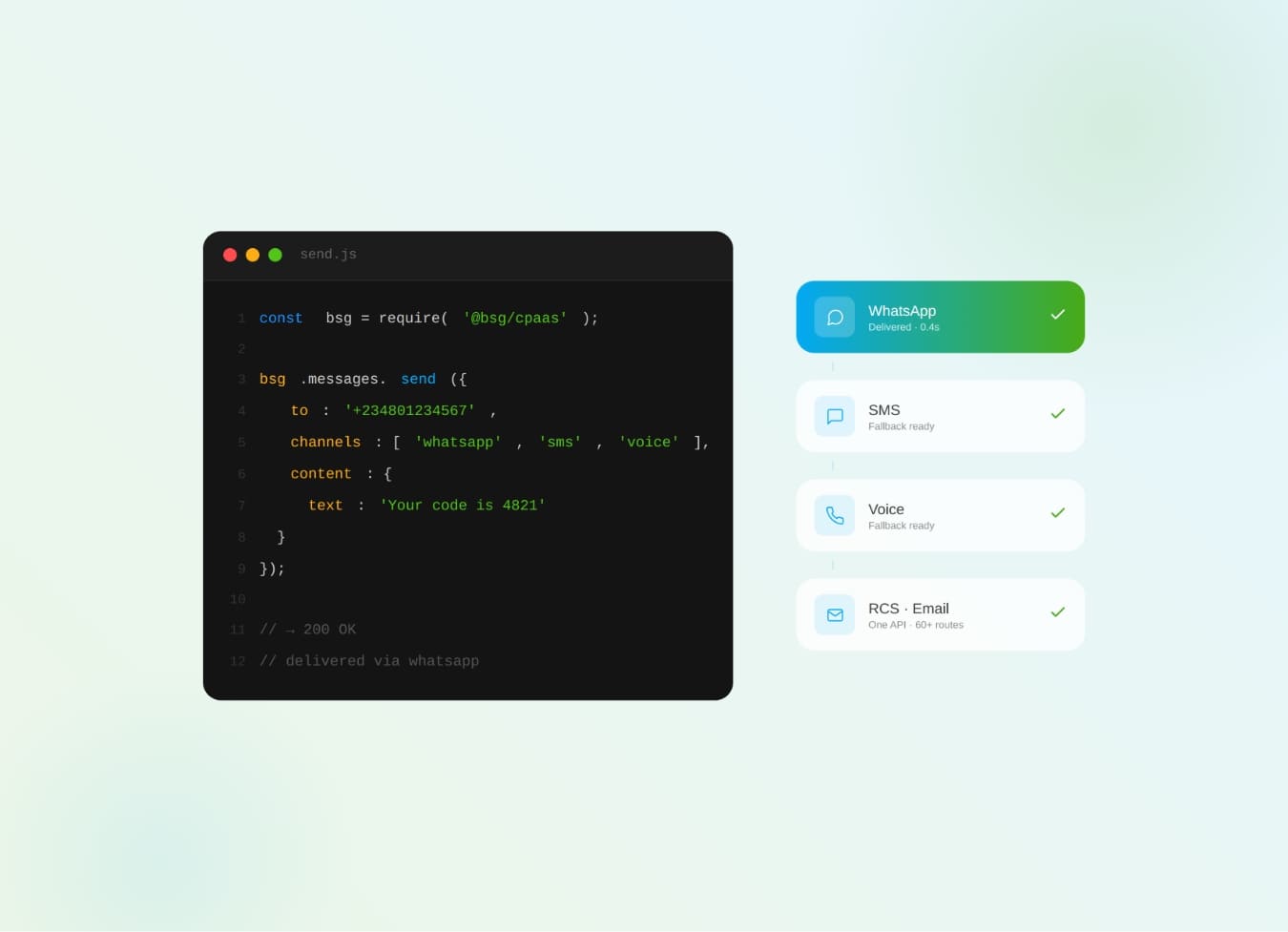
What is CPaaS? The cloud API layer that adds SMS, WhatsApp, voice & OTP to your apps — how it works and why it beats a multi-vendor stack.
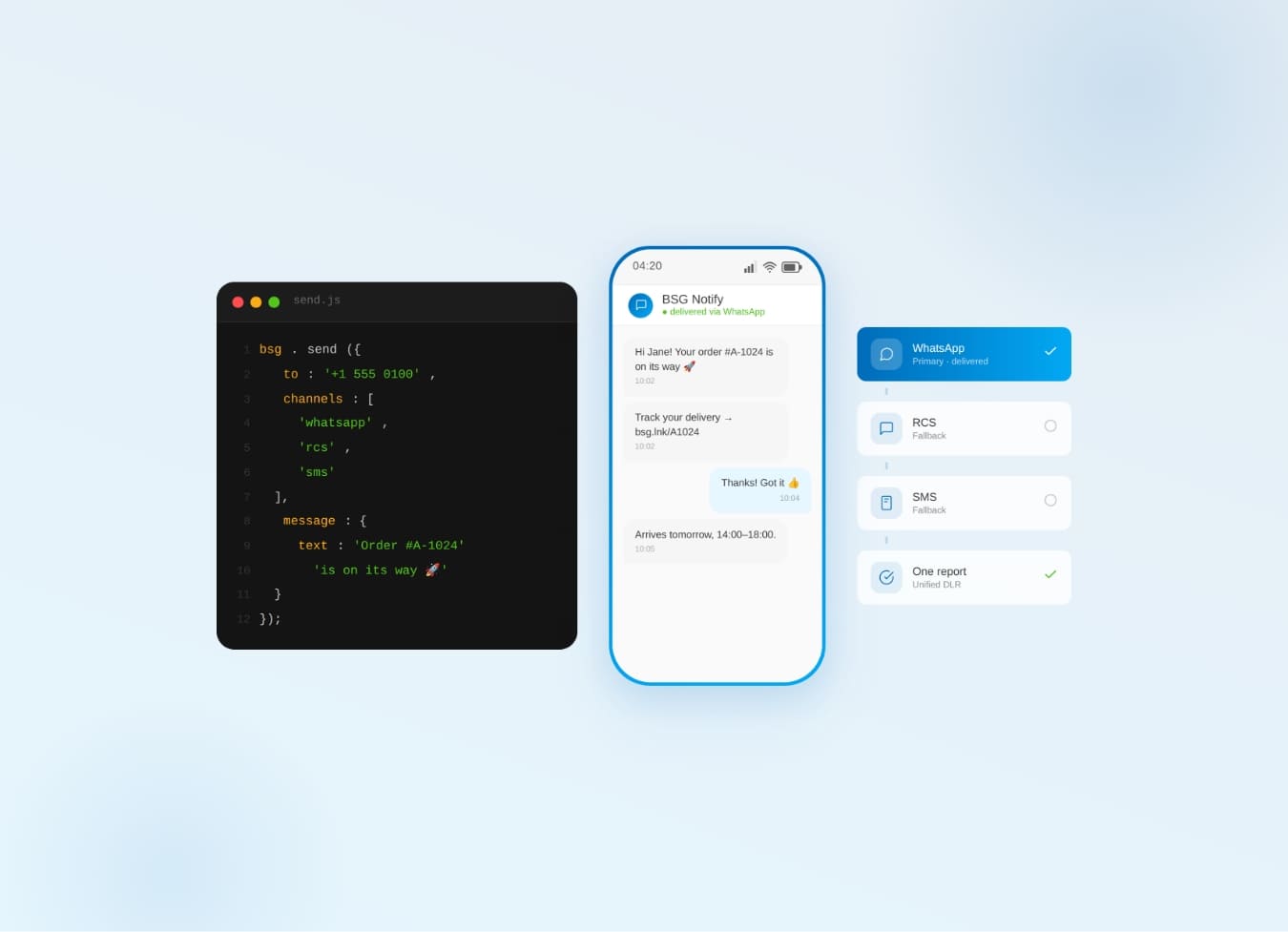
Why one communication API for SMS, WhatsApp, Viber & RCS beats five separate integrations — cascade fallback, unified reports.