




Wap Push
WAP Push is a type of communication technology used in mobile networks.
What does WAP stand for?
WAP stands for Wireless Application Protocol. It is a standard developed in the late 1990s for accessing information over a mobile wireless network. Essentially, WAP is a protocol that allows mobile devices to access internet content and services, similar to how computers use HTTP and web browsers. While WAP has been largely superseded by more advanced technologies, it was a key step in the evolution of mobile internet.
For the practical side of this, check out BSG's What is SMS API and how to use it to scale your bulk SMS campaigns?.
What is Wap Push used for?
WAP Push is primarily used for sending notifications to mobile devices. These notifications, often referred to as WAP messages or WAP text messages, can include a variety of content, such as service messages from network operators, multimedia messages, or alerts from various services. The primary purpose of WAP Push is to deliver timely information or content to users without them needing to actively request it, making it a precursor to modern push notification technology.
How does Wap Push work?
WAP Push works by using a special SMS service to deliver a message that includes a link to a WAP address. When a user receives WAP Push notifications, their device automatically accesses the linked content via the WAP browser. This process is somewhat analogous to clicking on a link in an email or text message, but it is optimized for the limited capabilities and screen sizes of early mobile devices. The WAP Push service is a part of WAP messaging, which allows for more interactive and multimedia-rich content compared to traditional SMS.
In summary, WAP Push represents an early method of delivering rich content and notifications to mobile devices. Although its usage has declined with the advent of more advanced mobile technologies, its impact on the evolution of mobile communication and internet access is significant.


Interested in a special offer?
Ready to reach further?
Let’s talk


Related Terms
Explore BSG Solutions
Useful Materials
![WhatsApp Business API: Complete Guide — Setup, Pricing, Use Cases [2026]](/assets/img/blog/whatsapp-business-api-setup-pricing-use-cases-guide_avatar.jpg)
WhatsApp Business API for 2026 — setup steps, the new per-message pricing model, and proven use cases by industry.
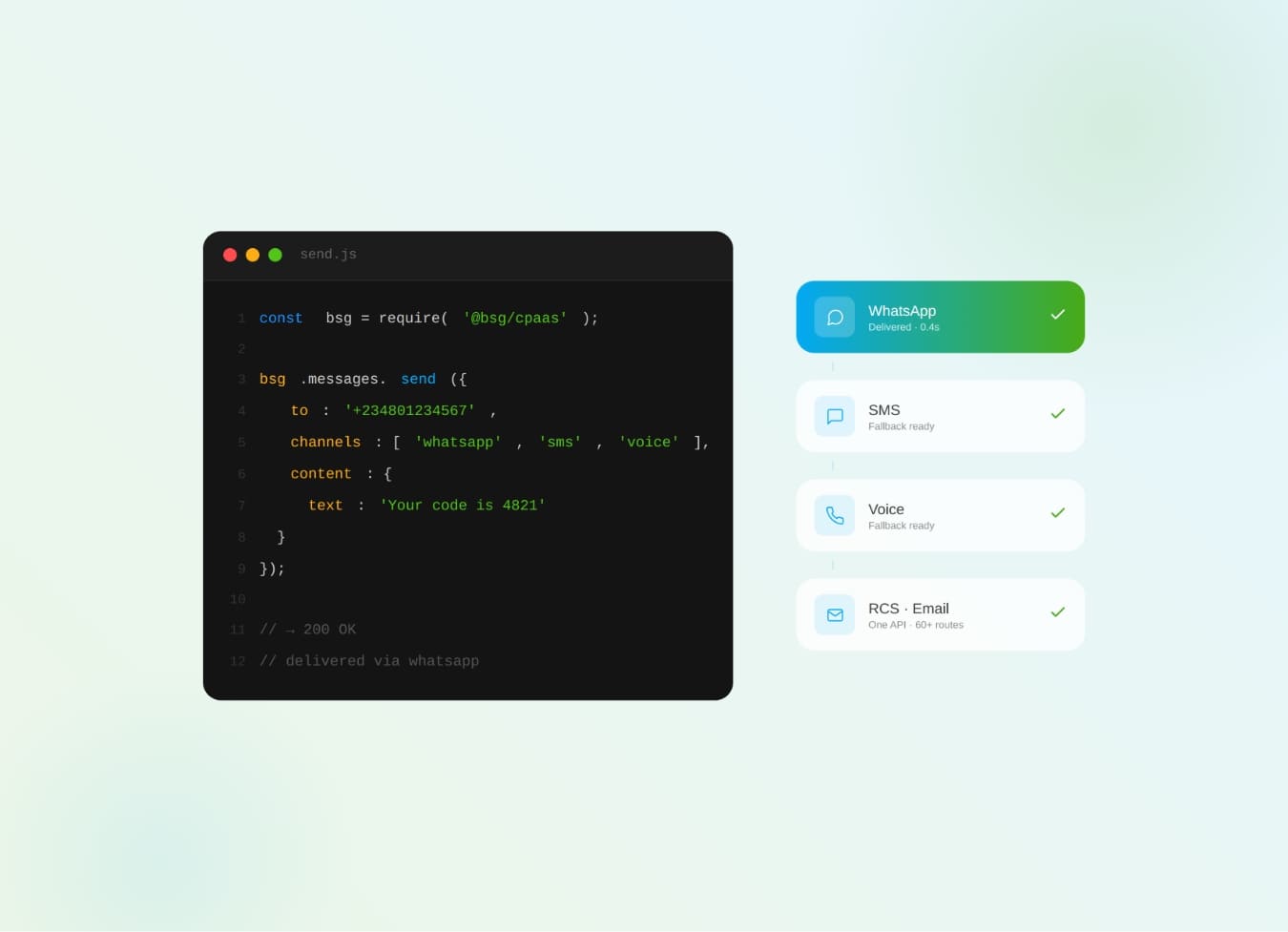
What is CPaaS? The cloud API layer that adds SMS, WhatsApp, voice & OTP to your apps — how it works and why it beats a multi-vendor stack.
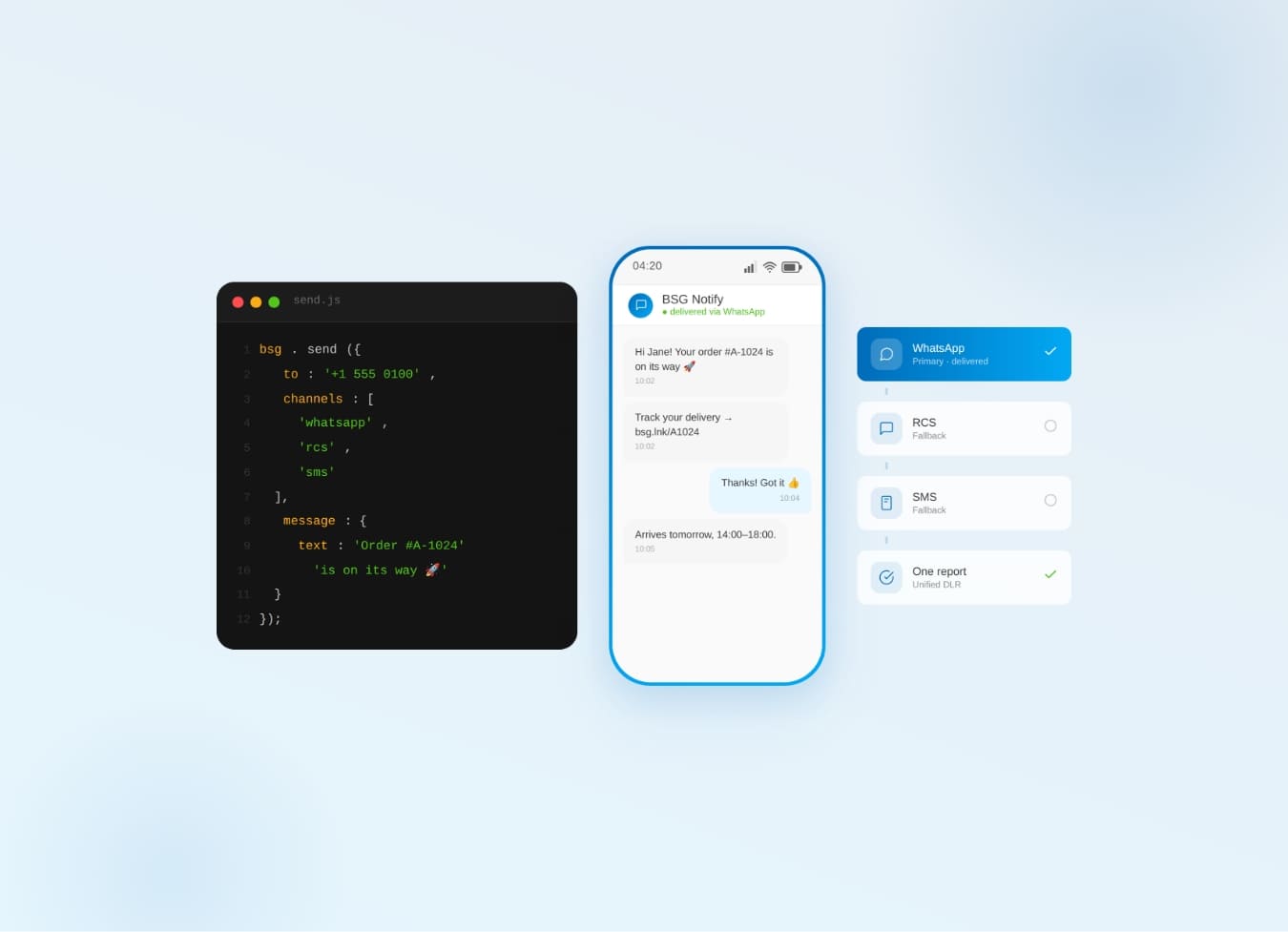
Why one communication API for SMS, WhatsApp, Viber & RCS beats five separate integrations — cascade fallback, unified reports.